Showing posts with label Chris Hedges. Show all posts

Thursday, September 19, 2019

Erratic WSJ Screed Against Socialism Merely Indicts The Author (Roger Kimball) And His Irrelevant Arguments

There's no avoiding the fact the debased Neoliberal media goes to extreme lengths to try to deform public perceptions of both socialism and capitalism.  Hence, for the latter they try to tie in "freedom" and "wealth" for all whereas the truth is more how Chris Hedges has described it.  I myself  had little conception of  corporatist capitalism  until writing  'The Elements of the Corporatocracy' - later converted into a book.  My motivation was to expose the many lies that attempted to instill in citizens a false consciousness that twisted socialism into a terrifying caricature while extolling capitalism.

One of the hallmarks of a religion is that its dogmas and tenets are accepted without question, or challenge. These arrive from 'on high' so are presumed beyond experimental test, or testing via personal experience in the real world.  On account of the absence of reality testing even its myths are thereby integrated into a person's belief matrix and become unquestioned tropes.  In this sense, Bill Maher's  June 2, 2016 comparison of capitalism to religion in the final segment of his Real Time was spot on.  

For those seeking an in depth exposure of capitalism's multitude of defects there is Chris Hedges' book, 'The Empire of Illusion'.  Hedges pulls no punches in showing how  - when it comes to being "incurious"  - the corporate media gets medals, i.e. in demeaning democratic socialism while blindly elevating capitalism to preposterous heights. 

 Enter now a recent(Sept. 3rd) WSJ essay by Roger Kimball, entitled 'Socialism is for the Incurious' (p. A17).  The piece trots out assorted quotes from Jean-Jacques Rousseau, Joseph Stalin, and Sir Roger Scruton - to end up with this nonsense:

"Human reality is drained of dignity and becomes material to be shaped and formed according to the scheme of utopian power."

But socialism is hardly utopian!  It is the practical means by which capitalism is inhibited from becoming a metastatic malignancy to the detriment of public welfare.   A sober essay  perspective is offered by Robert Freeman:

"Anybody here ever used the Internet? That was created by a government agency, the Defense Advanced Research Projects Agency. The technology itself was invented during the Nixon administration. Nixon was a Republican president. It was turned on by the same agency in 1983, under Ronald Reagan, another Republican president. That is socialism.

Anybody here ever been made safer by the military, or felt safer knowing that police or fire or first-responder services were there? That’s people coming together to solve problems that none of us could solve on our own. Socialism.

Anybody here ever fly on an airplane? Guess what, your safety was guaranteed by thousands of standards set by the FAA, and by air traffic control, run by the same agency. Socialism. Anybody here ever used prescription drugs, or drunk water or breathed air or eaten food that was made cleaner or safer by government rules and standards? Guess what? That’s socialism.

You get the idea. The truth is that without some elements of socialism, capitalism doesn’t work. It literally collapses of its own predatory greed. Don’t take my word for it.

That’s what happened in the 1930s. Capitalism, left to its own devices, destroyed itself. That’s what we call the Great Depression. It was the greatest economic event of the past century. And you know how it was solved? It was solved by socialism.  Roosevelt created Social Security (notice the word “social” in the name), unemployment insurance, regulations so that bank deposits would be safe, public service employment programs, and more. All socialist to the core."

For the take of a Danish woman, which echoes the above points, in answer to a fearful question on socialism by Oprah,  see e.g.

By contrast, with so many citations of different actors from different epochs, it's no wonder that Kimball - at the end of his erratic screed- ends up with a miasma of disjointed,  incoherent rants.  For example:

"The cruel and suffocating intrusiveness of those dystopian experiments against reality are not so seamlessly or thoroughly implemented in American society as elsewhere."

What "cruel experiments"?  Kimball doesn't specify but because he earlier refers to "revolutionaries trading only in masses not individuals" we can infer he means any 'experiment' that attempted to right inequality - economic or other. So include Jacobo Arbenz'  nationalization of  Guatemala's resources in 1954 - which caused the CIA to overthrow him.  Or Premier Mohammed Mossadegh's efforts to nationalize Iran's oil fields in 1953 - which got him assassinated and paved the way for theocracy.   "Dystopian" experiments?  That's hardly the way Arbenz or Mossadegh saw it. They rather saw their mission as providing a more equitable distribution of resources for their own people - as opposed to fodder for capitalist profits.

But by mounting this warped jeremiad against "socialism" - or indeed any national effort ("experiment") to strive for civil betterment- it's no surprise Kimball also can write at the end of his previous remark:

"But anyone who looks around at the vast, unaccountable, self-engorging bureaucracy of the so-called administrative  state ... cannot help but mark the parallels with the remorseless incuriosity that stood behind the totalitarian juggernaut as it systematically discounted truth for the sake of the accumulation of power."

Seriously?   After reading this fulsome codswallop one wonders if Kimball was on an MJ  high maybe mixed with Oxy.  Maybe he vaped both, who knows?  Let's clarify by first asking what he's railing against when he cites the "so-called administrative state".


Far from being "so-called" this is the system of taxes, regulations and agency oversight the current structure of government supports. In other words, all those elements of the federal "bureaucracy" that ensure your milk is free of fecal matter, your burgers not infected with  E Coli., your drinking water not fouled by cow manure, perchlorates or lead.  Oh and your canned tuna free of botulism. Also that medical devices are properly manufactured and sterilized to acceptable standards (FDA regs), i.e. so when you get your colonoscopy the colonoscope didn't just come directly from insertion into another patient.


Taken literally, Kimball is conflating this protective bureaucracy-  recall that as economist George Lakoff has pointed out, e.g.

Regulations are protections.

With some kind of ersatz Stalinism or some skewed, warped view of socialism  Worse, he's renouncing the Preamble of the Constitution wherein the central clause (general welfare) is an effective working government that has the general welfare as a primary role.  

So one can rightly say on this basis that any "remorseless incuriosity" - and even palpable ignorance-   is wholly on Kimball's side.  In effect, what started as a scattershot attack on statism and socialism ends up a hollow screed that is self-indicting and I'd add, self -refuting. 

Charles Reich poignantly notes in his book, Opposing the System, Crown Books, p. 103:

"When society itself comes to be modeled on economic and organizational principles, all of the forces that bind people together are torn apart in the struggle for survival. Community is destroyed because we are no longer 'in this together' because everyone is a threat to everyone else. "

This is the de facto model Kmiball would have us embrace, assuming we took his gibberish seriously..

See also:

Tuesday, March 19, 2019

College Cheating Scam - Another Case Of Americans' "Elitist" Neurosis & Addiction

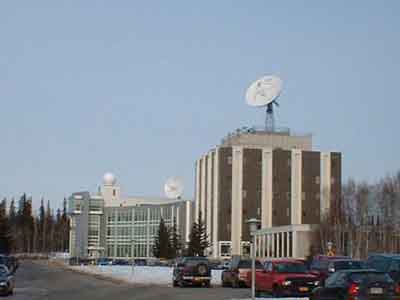
Related image
The Geophysical Institute at the University of Alaska -Fairbanks. UAF isn't  listed in U.S. News & World Report's Annual College ranking but that doesn't mean it's not a great university 


"Getting an A in biology — and being awakened, in the process, to the wonders of the natural world — doesn’t matter if a committee of strangers at Stanford isn’t sufficiently impressed?

Being student body president — and reaping valuable lessons in leadership and teamwork — is a waste if it can’t be translated into a ticket to Cambridge, Mass.? 

For these kids, education isn’t an opportunity to wring more meaning from life and make a more constructive impact on the world. It’s transactional. It’s a performance. If the right audience doesn’t clap, there was no point in even taking the stage. This is what the modern madness of attributing magical, make-or-break powers to a school with an acceptance rate of 15 percent or 10 percent or even 5 has wrought."  Frank Bruni,  'The Moral wages Of The College Admissions Mania', NY Times, Sunday

"Tennessee Tech is an amazing school. And no one breaks the law to get admitted."  - Peggy Noonan, 'Kids, Don't Be Success Robots', WSJ March 16-17, p. A13) 


That the Varsity Blues scandal was an atrocity that saw wealthy cheaters screw decent,  hardworking families and  kids out of their own (presumed)  slots at elite schools is something we can basically agree on.  We've since seen the DOJ  indict 50 people, including 33 parents, a college administrator, college athletic coaches, test proctors - and mastermind Rick Singer- in the odious scam.  But there's another aspect that requires attention: Why this yen of so many- whether upper middle class or working class - to get a slot in the Ivies anyway?  Why is it so damned important, including that some (often wealthier) parents are willing to cough up $1,000 an hour for LEGAL coaching to help their charges get into Harvard, or Yale or Stanford?  

The real question, however,  is how so many could go so nuts- to the point of lawbreaking -  just to try to get kids into a big name school.  Well, there are various theories for this annual  elite school feeding frenzy. 

One is parental "projection" : pressuring their kids to go all out in applications to the so-called top schools, to go to a place that is status for them - but not necessarily the kid.  These parents, often sensing themselves as "losers" or second rate because they didn't get into an Ivy, push their kids to ridiculous lengths to attain the status they couldn't. According tot a 2013 study appearing in the journal PlOS One, this behavior is peculiar to parents whose identities are too closely intertwined with their kids'.  

These parents seem not to process that it's much more important for the student to be involved in his or her school - and feel at home on arriving  - than to be seen "making it" at a highly selective place like Harvard.   As one parent discovered when she dragged her kid to a potential Ivy  (WSJ March 18, p. A13) and asked if these were people he might like to hang out with.  She was dumbfounded when her kid said 'No' he'd "rather hang with kids who wore Nikes and not Doc Martens."

Moral of the story? Parents need to keep their own neurotic needs and snobby impulses concerning college out of their kids' decisions and lives.   Parents also need to lay off the hyper-excellence("perfection")  syndrome and let their progeny achieve at the level they're able - even if it means not getting into a "select" school.

Psychologist Erica Komisar, for example (WSJ, 'The Sickness Behind the College Scandal', p. A17) cites the case of a decent HS student who "only" got 29 out of 36 on the ACT, and whose parents wanted more.  Well, because they wanted him in an Ivy.  The pushy, pressuring parents asked about medication but were informed: "The problem wasn't his performance. His panic attacks were a response to intense pressure".  From his parents.


Again, it turns out when one beholds parents like this  - using money, influence, neurotic pressure to get a kid into an Ivy "without considering whether it's the right academic environment for the child"  it's  more about their own status.  They're insecure and upset if little Annie of A.J. doesn't get ace the SAT (or ACT) because they're convinced it reflects on them.  This is indeed a sickness, a pathology,  which needs addressing.


Mr. Bruni even points out correctly the Varsity cheating scandal is just an outlier  - an extreme, illegal example  -  of lesser scheming on a broader scale. As he writes:

"There’s nothing unusual about using big sums of money — for private tutors, for application whisperers, for “donations” — to get a leg up on the competition."


One of the best takes is from WSJ op-ed columnist Peggy Noonan ('Kids, Don't Be Success Robots', March 16-17, p. A13) , who sometimes manages to get to the core of an issue, scandal or problem. In this case, the advice she gives is fairly well grounded:


"My advice to students still considering college in the year 2019: Avoid elite universities if you can.  They're too often indoctrination mills anyway.  Aim at smaller, second tier colleges, place of low key harmony, religiously affiliated when possible - and get a real education.   Every school has a library. Every library has books. That's what you need."

But this is also somewhat oversimplified.  The problem, really, is too many kids (and parents) today  have tunnel vision in terms of academia.  They focus in the most high profile,  most selective "elite" universities,  while forgetting that the genuine match is between a student and the specific area of endeavor, or specialty. 

A case in point was the University of South Florida ca. 1968-75 featuring the best quality work in astrometry in the nation, thanks to its Chairman, Prof. Heinrich Eichhorn. (Astrometry is that  branch of astronomy that deals with accurate determination of stellar positions, i.e. for the purpose of creating reliable star catalogues.)  This work is crucial for broad astrophysics research as well as  astrodynamics, celestial mechanics. 

Flash forward to the present: If one searches the annual U.S. News & World Report rankings for the University of Alaska-Fairbanks, the chances are it will not be found. The lame conclusion based on the ranking elite bias will then be it is not a place worth attending, but this would be a gross error. In terms of specific fields, atmospheric science and space physics, there is perhaps none better. We are talking here not only about the quality of the staff but the resources, e.g. available at the Geophysical Institute.
UAF, for example, has been at the forefront of Arctic atmospheric research - much of which is conducted at the Climate Research Center, e.g.

There is also Poker Flat, the world's only scientific rocket launching facility, e.g.

The rockets launched from here enable more detailed studies of the aurora, magnetic substorms. For space physics in general, including the study of the aurora, substorms,  and solar-terrestrial dynamics it has all the resources the dedicated researcher needs, see  e.g.


Given UAF's  location and its facilities you won't find a better place for studies in ionospheric, infrasound and magnetospheric physics, as well as space weather. Harvard certainly can't compete in these specialized fields, nor does it have comparable resources, such as a rocket range. 

All of this underscores points I made three years ago concerning a fact too many wannabe collegians and their parents overlook: it makes very little difference which university you attend (assuming it isn’t a ‘for profit’ or online version). It is more the cachet and reputation of the specific department.  

This take was amply supported in a WSJ report from 3 years ago

(February 1, 2016 p. R1) is that the extent to which one benefits  from university really depends on one's major - and whether the chosen school matches up well in staff, resources.   The Journal looked at about 7,300 college grads ten years after their graduation and divided their major into several categories: business, engineering, social sciences, humanities, education and 'other'. They also cross-referenced three categories for college type: "selective" (covering elite schools), midtier, and "less selective" (covering schools with open enrollment - e.g. like the University of South Florida, my Alma Mater).

As the Journal authors (Eric R. Eide and Michael J. Hilmer) put it:


"What we found startled us. For STEM-related majors, average earnings don't vary much among the college categories. For example, we found no statistically significant differences in average earnings for science majors between selective schools and either midtier or less selective schools."

This is truly amazing and also important. It means, basically, that one will not be significantly better off with earnings in the physics field - for example - graduating from Harvard than the University of South Florida. He or she may actually be worse off graduating from Harvard if one has only minimal financial help (other than loans) to pay back the hefty debt incurred from the purchase of all that name prestige.


As the authors write (p. R2):


"Our findings are crucial for families to understand because chasing a prestigious STEM degree can leave students burdened with huge amounts of unnecessary debt."


This also conforms to a May, 2011 MONEY magazine investigation which found it is more the name and reputation of the specific department that conferred benefits than the school itself. As the MONEY authors put it:


"Don't assume an Ivy League education is better than one from a public or state university."


 MONEY found that  'bang for the buck' included college graduation rates and post-college success rates - which compared favorably to - or exceeded  - what one obtained from the hallowed Ivies. Alas, this has still not trickled down into the mainstream media where we still find "Best Colleges" lists spread around with the Ivy Leagues on top - then all the rest. So no wonder students and their parents are neurotically driven to believe the Ivies are the  only route to success. 

Meanwhile, Frank Bruni, in his recent piece,  cites a Harvard Graduate School of Education’s Making Caring Common Project  which points out:

"The biggest problem in college admissions is that huge numbers of young people, especially low-income and first-generation students, struggle to access or simply can’t afford college, or land in colleges that aren’t committed to their success.”


 In fact, about two-thirds of Americans over 24 never started or completed a four-year college.   Technically, that ought to put ANY graduate of a decent 4-year public university in a driver's seat for future success. So why the mad rush to pile into only a few schools perceived as "exceptional" ? Basically, it's all branding and PR, spread by inflated rankings given excessive prominence in the media.  See, e.g.

Let's get back to Peggy Noonan's claim of the elite universities more often being "indoctrination mills".  Reinforcing this is Chris Hedges' Ch. 3 in his remarkable book, 'The Empire of Illusion' where in he observes the "Ivies" (Harvard, Yale, Brown etc.) are often the source of regimented thinking elites dropping questionable tropes, theories and memes into the national narrative - on politics, economics and business.  (Recall it was Glenn Hubbard, a prof from the Columbia Business School, who dreamed up Bush's destructive supply side tax cuts.)   Then there is Martin Feldstein  of Harvard - whose extreme monetarist stance I've criticized numerous times already.  See e.g.

http://brane-space.blogspot.com/2018/03/americas-debt-disease-prof-marty.html

The effect has been to reinforce the hegemony of the financial elites and their stranglehold on the country, as well as fueling the ongoing inequality.  

Can the nation afford even more of these delusional, entitled twits? I doubt it.  (Thankfully, the STEM areas of these schools remain relatively uncontaminated of elitist manipulation and PR. Unless they're in areas which receive corporate grants to support oil shale drilling, or promoting GMOs.)

Hedges sums up the total negative impact of the indoctrinated thinking in the elite schools on page 89 of his key chapter (3), 'The Illusion of Wisdom', e.g.


The multiple failures that beset the country, from our mismanaged economy to our shredding of Constitutional rights to our lack of universal health care to our imperial debacles in the Middle East, can be laid at the door of institutions that produce and sustain our educated elites. Harvard, Yale, Princeton, Stanford, Oxford, Cambridge, the University of Toronto and the Paris Institute of Political Studies.  

These along with most elite secondary schools, do only a mediocre job of teaching students to question and think. "

Adding:


Response for the collapse of the global economy runs in a direct line from the manicured quadrangles and academic halls in Cambridge, New Haven, Toronto and Paris to the financial and power centers of the world.”


These are  breathtaking accusations but Hedges can fully back them up with his examples and citations. Nor is this simply a matter of “sour grapes from a loser” since Hedges did in fact lecture at Princeton for years. But what he shows is that the tolerance for divergent thinking in these assorted elite faculties and enclaves is almost non-existent. Hence,  the examples he provides shed light on the extent to which all the above named schools disdain honest inquiry – which is by its very nature distrustful of authority, fiercely independent and often subversive.”

I think this gets to the heart of Ms. Noonan's  argument on  indoctrination. It also interjects the weakness of the incoming students themselves, when she writes, for example:

"An irony is that the success robots once wound up and pushed forward, often struggle.  The president of an elite college told me recently the most surprising thing about recent classes is the number of students that ask for an need psychological services. They seem said the president, unusually dependent on their parents."

Which may not be altogether surprising if these coddled kids were aware of  the money spent by their parents (often up to $1,000 an hour) to coach them into elite entry fold.  They'd feel beholden, both materially and psychologically.  Alas, they'd likely also feel that they'd need permission from Mom and Dad on when to even take a dump.

Contrast this situation with Noonan's example of Tennessee Technological University, which no one is beating down the doors for entry. But the school's effects on the students are vast and positive, i.e. when Noonan visited three years ago and found:  "They are often the first of their families to go to college.  They are so mature, gracious, welcoming, quick with smart questions"

And no dependency issues, or need for psychological counseling, wonder of  wonders.  

Meanwhile, Denver Post columnist Krista Kafer ('Overcharging for prestigious degree is also a scam', Mar. 14, p. 13A) makes the point that (regarding the gung- ho parents who tried to cheat to get their kids into elite schools):

"My first thought about the Varsity Blue scandal is that the parents overpaid: Their children would have had the same success if they had enrolled at a decent public university, worked hard and persevered. .. Research published in The Quarterly Journal of Economics (2002) found that expected salary gains from attending a very selective school were 'generally indistinguishable from zero" when taking into account other student characteristics.

 What lesson can we take away, if any, from the Varsity Blues scandal and the larger societal obsession with "elite" universities,  to the exclusion of looking at any others?  I would say that one must conclude the myopic pursuit of an elite college entry and degree is misplaced and over inflates its importance, including to learned values  - moral and academic.  It is also toxic, given it contributes to academic (as well as moral) tunnel vision. With such tunnel vision, transgressions inevitably with be large, even if the consequences may not be immediate.  

A recent iteration of this distorted thinking appeared in a "debate" format in Journal Report (WSJ, p. R4, March 18, 'Should All College Admissions Be Need Blind?') delivered in the 'Yes' corner by Catharine Bond Hill. According to this president emeritus of Vassar College, the 'yes' is obvious because, well, so many will be pounding at the doors to get into the Selects. In her skewed perception:

"The benefits of attending a selective college are vast as these schools often have the greatest resources to devote to students, faculty, staff and amenities."

To which my response would be 'fiddlesticks and twaddle'. The benefits,  such as they are,   are more in the realm of PR branding and status perceptions.  In the latter case, unhealthy one-upmanship games likely emerge, and then who gets to decide "which elite schools carry the most social cachet?"  From this specious nonsense a whole spectrum of idiotic parlor games can be played by the fatuous and insecure.

But for every Ivy that Ms. Bond Hill can name with ample resources,  I can name twenty public universities with vastly more to devote to their students, faculty. USF, for example, is now a multidisciplinary top international research university- in areas from biomedical and business to ocean resources, climate climate change.  Those interested (especially parents!)  can check out its academic resources here:

https://www.usf.edu/academics/academic-resources.aspx

Getting such information out into the public domain is crucial, in my opinion, to breaking the stranglehold and fixation on the Ivy League schools as the sole repositories of educational quality.

It is clear that to break from that pathological tunnel vision, Americans who value college education need to also break their addiction to the perception (and PR branding) that only elite universities with high name recognition (or reputation) matter.  Given the corollary is that all others are "dumpster" schools. 

 This sort of skewed thinking leads to a toxic nation with toxic values...and toxic thinking.  It leads to the perverse drive to get an "edge", and even cheat to get one's progeny into schools believed to have the only value for success. But as Krista Kafer put it:

"Their children would have had the same success if they had enrolled at a decent public university, worked hard and persevered."

Besides, there is absolutely no assurance once a kid gets into Harvard, Brown or Yale he or she will be taught by the best profs anyway. More likely it will be a  (graduate student) teaching assistant, or adjunct prof.  $80 grand a year to be taught by a TA. 

Think of that!


Thursday, April 28, 2016

Capitalism IS A Zero Sum Game - It's Time Its Apologists Understand That


Despite Bernie Sanders' campaign bringing some degree of enlightenment to the 2016 presidential race (by making it okay to criticize capitalism), much more needs to be done. That includes holding its sundry apologists to account for the loose thinking, and false logic they consistently display.. One such case emerged in the August 15th issue of The Economist in a review of John Plender's book: Capitalism: Money, Morals and Markets.

The anonymous reviewer observed how "capitalism lacks defenders while protests against it have fresh vigor" forgetting that most of those protests have not occurred in the mainstream media but in the marginal media or blogs, as well as on the streets. Hence, it's debatable how much of an impression has been made.

What we can say is that when an illustrious person like Pope Francis speaks out on capitalism's ills, or a Thomas Piketty (in his books) then it's more likely the mainstream news takes note - but more often than not criticizes the critics for their short sightedness. Thus, in the review of Plender's book do we see a faint damning of ancient critics like Socrates who "declared that the more men think of making money, the less they think of virtue."

Which is probably true for most humans, just look at the tallies of those who win giant Powerball jackpots then blow them on booze, drugs, unwise gambling or unwise investments (often in the same category as the previous one).  Money -sighted people then, as I've often found, are basically two dimensional operating on the existential axes of time vs. money and seldom express an original thought outside this reference frame,

Gordon Gekko, of 'Wall Street'  movie fame,  may be something of a caricature but his basic persona is often replicated in many of the Street's money men (bond traders, investment bankers - once referred to as "big swinging dicks" by one of them in a FORTUNE piece, or plain old stock brokers.)   Their failure in morals then, if it transpires, usually occurs by virtue of a failed larger vision or perspective. One that transcends their yearly bonus and where they will spend their grand vacation or how - killing protected lions in Zimbabwe, or going on a week -long million dollar golf binge at a St. Kitts resort, while their wives enjoy $250k each rose and wine wraps - with or without cucumbers.

Usually, the defenders of these guys just plain fail to see the vast harm of which they are capable. Consider just the credit meltdown and freeze of 2007-08. How many attribute the cause to the correct source? Very few! Usually the lazy media (often right wing) blames it on poor dopes who had maybe $100 in an account but were offered sub-prime mortgages by unscrupulous scheisters (such as depicted in the film, 'The Big Short'. Based on the excellent book by Michael Lewis).

Seldom (either) do they look at the pseudo-intellectuals or “quants” that helped develop the Gaussian Copula formula (see embedded graphic at top) who were quite confident that when they applied it to the development of credit default swaps (a bastardized form of credit derivative)  they’d be virtually home free. On account of the lingo used and the complex nature of the underlying formula – few ordinary mortals would figure them out before it was too late.

To refresh memories, these nasty devices were geared to enable commercial banks (the ones that hold your passbook savings) to leverage their assets to preposterous ratios, sometimes as high as 33:1.  In other words, their generation of profits would largely be based on phantom money – since they lacked the reserves to make good if the bets (which is what the credit defaults swaps were) failed. In the meantime, the Gaussian formula itself allowed the credit derivatives to be sliced and diced numerous ways to package them throughout ordinary securities such as collateralized mortgage obligations.  The failure of the credit agencies themselves to be onto the junk bond nature of CMOs and allowing the presence of one fraction of ‘AAA’ bonds in each – then designating the whole AAA - led directly to the collapse of the credit markets in 2008.

 Since then  it’s become ever more evident why elite economics is a failure and can’t even be regarded as a science like Physics, or even in a “pre-scientific phase” . If it had then the main practitioners of the dismal science ought to have been able to predict the effect of their CDS on a vulnerable home debt market. They didn't.

 In the case of the Gaussian copula, invented by David X. Li  -  while working at JP Morgan Chase and articulated in his (2000) paper: ‘On Default Correlation: A Copula Function Approach”  -  it wasn't even a true mathematically sound equation analogous to those used in physics or celestial mechanics.. It was more an intellectual Frankenstein monster that never should have seen the light of day any more than a four-headed baby with a pointed tail. For example, Li's misuse of the distribution functions (FA(1)) and (FB(1)) would appall any genuine mathematician or physicist. Each is actually based upon significant uncertainties via survival law distributions which can vary enormously. There is no way to normalize any probability based on (TA, TB so there is no way to equate Pr[TA, TB] to anything on the left side. The equal sign is dangerous recklessness masquerading as math. Did the illustrious economists or "quants" know any of this when they cranked out credit default swaps? Or assigned the bonds in which they were buried AAA ratings? The evidence of failure to predict the 2008 credit crash shows they didn't.

 
All of which supports Chris Hedges’ condemnation of these mental zombots, i.e. p. 98, The Empire of Illusion:

“They cannot grasp that truth is often relative. They base their decisions on established beliefs such as the primacy of an unregulated market or globalization, which are accepted as absolutes.”

 
In other words, these money men and derivative inventors inhabit a self-confected, solipsist world of illusion devoid of critical empirical testing or critical thought. I mean, Jeez, if any one of these so-called geniuses would have just taken the time to understand WHAT he was doing in applying the Gaussian Copula to credit derivatives he’d likely have seen it was the equivalent of a physicist taking a tiny piece of special relativity and trying to inject it into areas that had no relevance because the primary criterion (speeds near c, the speed of light) were not being  met.

But see, at least physics has and uses empirical testing before advancing – so the odds are less that physicists will make asses of themselves. Not so with these economic, political elites.   Unlike astronomers,  who can accurately predict the position of Jupiter or Mars in 2050 or the next lunar eclipse or occultation of a star, the economists can't even predict simple stuff in their immediate domain - say like forecasting the growth would be 3.2 % in 2011 when it was only 1.7%
 
Remarkably, Plender is aware of the cost of high finance on capitalism's rep and this is pointed ou by the reviewer (p. 75):
 
"It's not just that few people can see the benefits of complex financial products like credit default swaps. He adds that 'bankers have undoubtedly done their best to give capitalism a bad name. The extraordinary scale on which big banks have been rigging interest rates and foreign exchange markets and ripping off their customers is almost beyond comprehension."
 
Fair enough, but it still doesn't let the system itself off the hook, which breeds these tactics and the money men who use them.  This leads to a blindness about perceptions of capitalism.
 
For example, the reviewer's claim - echoing Plender- that the financial crisis was the latest example of "the inherent stability of capitalism", i.e. "allowing it to benefit from creative destruction". In fact, the financial crisis was just the opposite, a glaring example of capitalism's instability.  We actually came within a hair's breadth of another Depression and only barely escaped because the political system and party in control at the time was enabled by votes to use taxpayer money (nearly $897b) to bail the system out and interject liquidity.
 
In the same manner, if a series of nuclear reactors were to "nearly melt down" - governed by the same computerized control algorithms - one would not argue or assert the "system is stable" or "shows stability".  But no one - after all the taxpayer money was spent - came after the clowns that nearly wrecked the financial system, leaving it open to future predations.

Why do we keep paying attention to these clowns? Just because they have Harvard, or Cambridge or Stanford or whatever degrees after their names? Mainly, yes – and also because the politicos who achieve high office tend to install them in their cabinets so instead of being relegated to some corner office behind the walls of ivy, they have the ear of Presidents and Prime Ministers. These clowns can then help determine national policy which is usually to the detriment of the rest of us.

At root of it all, which none of them or the bought out media will tell you, is that the trillions of bucks circulating in the capitalist markets represents  FORCE. A force that can crush opponents underfoot, including presidential campaign opponents who dare to bring its nefarious consequences (to our electoral system) to light.

They also don't want too much exposed because they know deep down as capitalism ramps up it generates millions of losers a year, not to mention destroys what's left of our natural environment. As Naomi Klein has pointed out, it's no coincidence that a capitalism has spread and consumerism reached exponential levels, the planet's atmosphere has been laid waste to via the Greenhouse effect.

The Economist reviewer's claim then that (ibid.):

"For all its faults capitalism has raised the living standards of billions of people since the 18th century and improved their life expectancy"

Is only a half truth, since it ignores the other side: that this enhancement of living standards and life expectancy has come at the cost of the planet as a habitable future abode. These long lived consumers (no longer seen as citizens) now plunder the planet to the tune of the equivalent of 1.5 Earths' worth of finite resources per year. They are driven by capitalist-based advertising to do so, as it generates ever more 'wants' as opposed to fulfilling actual needs. Thus, every manjack has to have his own car to drive and pollute  with CO2. Every unused computer or 'Barbie' tossed into the landfill - along with soiled diapers and plastic bags - creates ever more waste and hazards.

It is no surprise that pollution and cancers have reached a peak now as ever newer weedicides and pesticides have to be created - not to mention GMO crops - to feed a growing population in which food sources must keep up with numbers.

But the other perverse aspect is that capitalists love overpopulation because it means - n their minds- vast "markets" of global consumers to buy their ever larger quotas of crap, that ever lowers Earth's store of non-renewable resources.

Perhaps no one has better explained the connection of global warming, especially, to capitalism, than Naomi Klein. Readers who are interested should get hold of her book, This Changes Everything: Capitalism Vs. Climate Change.  Basically, as Klein argues, capitalism is unable to affect or alter  the course of climate change due to its dependence on fossil fuels and need for continuous growth. Also,  the time for marginal fixes has expired, thus forcing us to now make radical changes in how we live.

 We simply don't have the luxury of using all the carbon that lies in the Earth. Yet capitalism's never ending growth engine would demand we do so to support the expansion of new markets for exploitation and wanton consumption.  Failing to note that the more we take from the Earth the less real wealth we have left: a zero sum game.

Thursday, March 31, 2016

Seniors On A Gun Buying Binge? A Bad Idea!

Image may contain: 1 person
The WSJ article ('Seniors Head To Gun Ranges', March 30, p. A3) was disturbing to say the least. In it we learn that those over 65 are heading to gun dealers in droves to buy the latest Glocks as well as rifles. The good news (at least) is that most seem to be signing on for NRA- provided firearm training. The bad news is most will end up either shooting themselves (most likely in a suicide) or a loved one (generally by accident, especially with bad eyesight and in the dark.).

One 71 year old Okie interviewed for the piece, when asked why he had to buy two Glock semi-automatic pistols, said he "felt threatened by strangers" (actually teens, in a crowd Mall scene) and added that he was especially worried about those with "mental problems" and "radicals". (Hmmmm....he didn't specify but I guess he means Islamic).  He then added for effect:

"You see it every day on the TV news!"

Ah yes, the news of daily fear pumped out by the mainstream corporate media.

Chris Hedges in his terrific book, ‘Empire of Illusion’ (p. 45) noted the media's warp and woof accurately:

Hour after hour, day after day, week after week, we are bombarded with the cant and spectacle pumped out over the airwaves or over computer screens by highly paid pundits, corporate advertisers, talk show hosts, and gossip-fueled entertainment networks. And a culture dominated by images and slogans seduces those who are functionally literate but who make the choice not to read…….

Propaganda has become a substitute for ideas and ideology. Knowledge is confused with how we are made to feel. Commercial brands are mistaken for expressions of individuality.   It’s in this decline of values and literacy, among those who cannot read or have given up reading, that fertile ground for a new totalitarianism is seeded.”

Of course, the first imperative for a gestating fascist state is to sow fear. That's what Hitler did with the Jews, and Trump has done more recently with Muslims. All one needs is endless TV scenes of stark fear and even terror - plus a screeching demagogue -  to make them take form.

But let's get back to why it's a bad idea for poor eyesight seniors - many of whom may also be on the verge of Alzheimer's disease, not to own or try to use guns for protection.

1) Older farts are naturally antsy and trigger happy. This is like an axiom, and it's also why many can't handle crowds either at Malls or parks. The noises and loud background talk terrify them, and too many people plays havoc with their amygdalas. Most are not military-trained and even if they are, many have forgotten the basics (when to put the safety on, take it off).  NRA training is only good up to a point, but if they have failing memories and can't recall what the expert said about using the Glock 9mm, it can spell disaster.

They often will keep their weapons either in an easily accessible place - subject to theft - or some hidden place making it useless if an intruder does enter. Add to that senior nerves, say if confronted by a genuine intruder, and you have the makings of a real bad scene - especially likely if Gramps is confronted before he can get his glasses on.

2) Many older people are already in the early stages of dementia. You really want to trust these geezers with guns? By one estimate appearing in the AARP Bulletin, up to 20 percent of seniors over 65, 30 percent over 70, are already in the early stages of dementia - which implies poor judgment. Not all of this is from Alzheimer's, some is from vascular dementia (google it) and another good fraction from diabetic effects.

3) Many don't understand just  how hard it is to shoot an intruder or assailant in the actual situation. Firing at paper men on a target range is one thing, doing it for real - when confronting three or four thugs equipped with Mac-10s in your own home, after a home break in, is another. Take the crappy senior eyesight, combine it with fading memory (likely not even recalling the exact place the Glock was stored) and nerves that are aged and frayed and it's a disaster waiting to happen.

As Harvard Prof David Hemenway, quoted in the article, put it:

"If they're running at you, you have maybe a half second at the most to react."

This, despite most senior reaction times being as much as 1 second or greater (and that's for those in superb mental, physical condition!)

This is why Prof. Hemenway also made clear (ibid.):

"The evidence is pretty strong that owning a gun isn't going to help you."

Adding that having a gun at home increases the risk for suicide and accidental shootings.Melissa Jeltsen of the HuffPo assayed all shootings between 2009 and 2015. She found that 70 percent occurred in the home. Of these, 57 percent involved a family member or current or former intimate partner. 81 percent of the victims were women and children. These killings were not done by 'crazies' but usually normal people who simply lost it in the midst of a heated argument and reached for the weapon nearest and dearest - a gun.

Hemenway's advice?

"Get a dog, get a good lock, get good neighbors, get a cell phone."

Take away or reduce the seniors' fear quotient, from watching too much TV news, and then if they read more - like the AARP Bulletin- they'd see the much bigger threat to them is the scammer over the phone.  This is the much bigger risk (by a factor of 9 or more) than being held up on the street by a "radical" or mugger.

See also: