"Fauci is an American hero. He gave invaluable advice to seven presidents — from Reagan to Biden — through anthrax attacks, Ebola outbreaks, SARS scares, and the COVID-19 pandemic. He devised the U.S. global attack plan against AIDS. George W. Bush gave him the Presidential Medal of Freedom for his work on HIV and AIDS.
Senate Republicans promote Blanche and shit on Fauci? What the hell is going on?_ - Robert Reich, 'Criminals in Control', Substack
"Look, Fauci was no more wrong than any other health official" - Scott Galloway response to Bill Maher's claim that Fauci "lied" on Real Time, Friday night.The real Covid scandal was the way in which Trump handled
the crisis, which was a disaster and increased the number of deaths
significantly. The origins are interesting, but once Covid started to spread,
the top priority should have been to contain it, not pass blame. Now, 6 years
later, the Republicans are trying to pass blame again while concurrently
destroying our public health infrastructure.- WaPo comment
What a ridiculous witch hunt! First, going after an 85-year
old man is just wrong. Second, he worked with the best information we had at
the time. This is going to make the next pandemic more dangerous, for public
health officials will be worried to take any proactive step in fear of being
thrown in jail years later. Rand Paul should be held in contempt for these
theater antics!- .- WaPo comment
They asked if Fauci was wearing a tie and whether there was
a folder on the table, the answers to both being plainly visible, then they
removed his attorney, likely violating a right to counsel. That left absolutely
no doubt that their goal was to entrap Fauci. Answering any question after
invoking The 5th revokes the invoke and opens the witness to abusive charges of
contempt. Hawley, Rand, and the others are performative mules, nothing more. .-
WaPo comment
Hahaha ...[Trump] 𝘪𝘯𝘷𝘰𝘬𝘦𝘥
𝘩𝘪𝘴
𝘍𝘪𝘧𝘵𝘩
𝘈𝘮𝘦𝘯𝘥𝘮𝘦𝘯𝘵
𝘳𝘪𝘨𝘩𝘵
𝘢𝘨𝘢𝘪𝘯𝘴𝘵
𝘴𝘦𝘭𝘧-𝘪𝘯𝘤𝘳𝘪𝘮𝘪𝘯𝘢𝘵𝘪𝘰𝘯
𝘮𝘰𝘳𝘦
𝘵𝘩𝘢𝘯
440 𝘵𝘪𝘮𝘦𝘴
𝘥𝘶𝘳𝘪𝘯𝘨
𝘢
𝘤𝘭𝘰𝘴𝘦𝘥-𝘥𝘰𝘰𝘳
𝘤𝘪𝘷𝘪𝘭
𝘥𝘦𝘱𝘰𝘴𝘪𝘵𝘪𝘰𝘯
𝘤𝘰𝘯𝘥𝘶𝘤𝘵𝘦𝘥
𝘣𝘺
𝘵𝘩𝘦
𝘕𝘦𝘸
𝘠𝘰𝘳𝘬
𝘈𝘵𝘵𝘰𝘳𝘯𝘦𝘺
𝘎𝘦𝘯𝘦𝘳𝘢𝘭
𝘓𝘦𝘵𝘪𝘵𝘪𝘢
𝘑𝘢𝘮𝘦𝘴'
𝘰𝘧𝘧𝘪𝘤𝘦
𝘰𝘯
𝘈𝘶𝘨𝘶𝘴𝘵
10, 2022
No doubt Trump invoked the 5th Amendment many more times
that we don't know about. If anyone should be "held in contempt" it's
Trump. Oh wait he already is held in contempt by most of the world, and most
Americans. .- WaPo comment
In the U.S. mainstream Media
now an idiot is ‘born’ every minute. In this case Peggy Noonan – in her latest
WSJ column (Anthony Fauci Unmasks Himself)- where she blurts:
“It wasn’t good for Anthony Fauci or anybody else that he took the Fifth at his Senate hearing this week. That plus his diary may well have been a reputation-destroying event."
Uh, only in your fetid imagination, Pegs, especially given that hearing - dominated by Repuke assholes like Rand Paul (gunning for Fauci since the Covid outbreak)- was just a McCarthy-style gutter show and sham.
While we're at it let's recall Miss Peggy was the dumbo who six years ago actually trotted out this twaddle:
Seeking to defend Trump's mocking of the fallen (when he went to Bellau Wood for a memorial) by appeal to the "family" script for The Godfather Pt. II. Noonan outdoes herself for pure stupidity, nonsense and gullibility when she devotes an entire fourth of her Sept. 16, 2020 WSJ column to the Godfather II script to provide fictional support for Dotard denigrating troops.
She resorted to this pathetic ploy to try to make the specious case that - like Sonny's family loyalty, i.e. to the Don (Vito Corleone)- Trump is also about family loyalty which trumps (no pun intended) any military service, or higher respect for the military.
Don't buy it? Then check the relevant segment below for
yourselves:
And we're supposed to take her potshots at Anthony Fauci seriously now? Because he justifiably took the Fifth? Give me a freaking break.
But sometimes, maybe not often in this country of media chaos, one steady voice using facts and reason can stem the torrent of lies and political attacks. So kudos to Dr. Celine Gounder for appearing yesterday on CBS Mornings to defend Dr. Anthony Fauci amid rabid Reep Senate
attacks led by the Fauci-obsessed Rand Paul.
What brought the Fauci-obsessed Paul to the apoplectic state he displayed yesterday? Well, evidently - according to him - "scrutinizing the release" of
Dr. Fauci’s private diary - then claiming
falsely Fauci been trying to hide the “fact” of secret NIH funding to the Wuhan
lab in China. This was for “gain of purpose” vaccine research – which he claimed led to
the Covid virus escape from that lab.
All of which is recycled horse shit.
As Dr. Gounder patiently explained to the CBS hosts yesterday morning, the gain of purpose
vaccine strategy is well known to try to anticipate the next mutations of a
virus, say like influenza. That is done to be able to have ready a more effective vaccine should a hitherto unknown form emerge.
As for
Dr. Fauci’s diary she informed the hosts she’s read the whole of it (500 pages, not 1,000) and noted
the total NIH funding for the Chinese lab over 6 years came to barely $600,000 – or $100, 000
a year. A minimal amount. She also pointed out, again in a calm and steady voice, that the bulk of Dr.Fauci's notes concerned his background efforts to deal with the virus (such as masking) but also the volume of threats to himself and his family.
Why didn't the only remaining living, breathing Senator from Kentucky mention that - or ask about it? Or even condemn the threats on Dr. Fauci's life? Well, because those moves would diminish his grandstanding act to appease the traitor occupying the White House.
To her credit, Dr. Gounder further argued that ongoing political attacks have left
U.S. public health "devastated" and criticized the Reep-dominated hearings as
partisan witch-hunts rather than constructive reviews. Gounder—an infectious disease specialist,
epidemiologist, and CBS News medical contributor—spoke out alongside a letter
signed by over 150 medical professionals supporting Dr. Fauci against ongoing
harassment. Gounder further made
clear that unlike the bipartisan 9/11 Commission which sought genuine lessons
and actual information, these congressional probes (led by Reeps) aimed to vilify scientists.
As evidence of the effects of the vilification and ongoing misinformation campaign (mainly by the Trump cabal) she pointed to the multifold damage done by
defunding vaccines and sowing even more misinformation, including efforts trying to tie
the MMR vaccine) - vaccine to autism. As per a WSJ piece yesterday ('Trump Turns Up Heat On RFK Jr. To Cut Back On Childhood Vaccines, p. A1):
"Trump asked Health and Human Services Secretary Robert F. Kennedy Jr. why he wasn't doing more to probe the alleged connection between vaccines and autism. Kennedy was take aback.....
Chief among the president's desires: Do more to reduce the number of shots that federal guidelines recommend for children."
In other words, the demented lying turd wants the current Measles outbreak to spread even further and with more dire medical consequences like brain swelling, blindness. Why else push to reduce the federal guidelines for the number of shots? But recall, this is the same fungal felon who 6 years ago advocated injecting bleach to remove the virus:
https://www.youtube.com/watch?v=M9kWsUwTcj8
This sort of crap and deliberate assaults on science and Dr. Fauci - with the attendant misinformation - is one reason, as Gounder noted, for the current
spread of Measles. As well as failures across the board to monitor foodborne diseases
– such as with the current cyclospora outbreak. (After decimating the FDA office charged with monitoring spread of such illnesses as E. coli, salmonella, campylobacter etc.)
Of course, Rand and the Reeps continually harangued Dr. Fauci about his 5th amendment invocations. But WHY? Dr. Fauci, as was his Constitutional right - repeatedly
invoked the Fifth Amendment during a Senate hearing Wednesday - because he was perceptive enough to see these dolts were trying to lay a trap for potential prosecution. The only way to avoid the trap was to take the 5th - yes, 110 times - but people forget Trump took the 5th 440 times in one case against NY Attorney General Letitia James in 2022.
Basically, the tired shtick of the Reeptards was to press Fauci for three hours on on whether he was sufficiently
truthful in past testimony about the coronavirus pandemic. He made it clear then, over hundreds of hours, his mandate was purely to inform the basis for recommendations for optimal public policy. It was up to state and local officials to carry it out if they felt the information was justified. Many, including former NY governor Cuomo did, as well as former NYC Mayor De Blasio.
But from years
past, Dr. Fauci knew the Reeptards like Rand Paul were trying to set a perjury trap for him and then use whatever
response he gave against him. In any
case, as Dr. Celine Gounder noted, Dr. Fauci had answered hours of questions 6
years earlier when the Reeps questioned him about his Covid 19 safety recommendations.
(Dr. Gounder also noting in her interview it was STATE and Local officials who
enacted them, not Dr. Fauci.)
Paul, a longtime adversary of Fauci,
concluded the nearly three-hour hearing by saying the committee is planning a
vote next week on whether to hold Fauci in contempt of Congress. Of course this is pathetic, performative yammering horse
manure.
You cannot file a contempt of congress against a citizen who is invoking his
constitutional right! You may be frustrated, you may not like it, but you are obliged to suck it up. As Fauci
proclaimed to the assembled rabid Reepo rats driving the bogus hearing::
“Under the advice of my attorneys, I will invoke my right
under the Fifth Amendment of the Constitution to refrain from answering your
questions,”
Rancid Rand acknowledged to GOP colleagues that there were legal
questions about whether Fauci could be held in contempt — citing President Joe
Biden’s preemptive pardon of Fauci last year. But the imp contended that Fauci should
have just answered questions on Wednesday, even if it meant admitting to a past
lie or other wrongdoing.
No, fucktard, he should not have answered any of your already answered (from 6 years earlier) questions. Especially given he knew you were trying to lay a trap for his prosecution. This is given
you quislings, traitors, cowards and Trump pecker suckers have no spines to stand on your own.
Hell's bells, why aren't you going after Donnie Dotard for trying to poison people by suggesting the injection of 'disinfectants' in 2020? Huh? Well, because a gaggle of cowards and quislings can't hold their senile master to account.
Fauci’s lawyer, David Schertler, correctly noted that Paul was
fixated on Fauci after their clashes at the height of the pandemic — referring
to a 2021 incident in
which the two men traded accusations of lying — and that the senator’s sole
purpose for the hearing was to punish Fauci and see him in prison.
“The accusations that Chairman Paul continues to propagate are
false and disgraceful, and we will examine all options to hold him
accountable,”
True to their misinformation Zeitgeist, Trump and his criminal White House
have embraced the already torpedoed lab leak bunkum, creating
a website that calls a lab leak the “true” origin of the pandemic,
without sharing any definitive proof.
The true fact is there isn't a scintilla of believable evidence for it. See e.g.
Was coronavirus bioengineered in a lab? Tulane scientist debunks this conspiracy theory
It’s abundantly clear to even the most profound ignoramus that
the Reeptards are desperate to relitigate many of the oldest (and already settled) controversies
about the Covid response: the safety of mRNA vaccines, the lab leak theory, the
lockdowns. Oh, and Dr. Fauci’s alleged role in them, which as I noted was to inform public policy NOT carry it out.
They’d be better served
asking why Trump deliberately suggested poisoning millions with his bleach
injection. Or do they treat that as ‘Trump just being Trump’? Or just a joke?
But no, they lack the balls as well as spines. Especially Josh Hawley who got off on asking Dr. Fauci what color tie he was wearing to try to mock his taking the 5th. This was the same Hawley who ran frantically to escape the Trump mob of traitors and insurrectionists as they breached the Capitol back on Jan. 6, 2021.
They’d rather use the bogus
hearings to disparage Fauci personally, to try to paint a picture of him as
having pursued fame and
money at Americans’ expense, and mocking him for taking the Fifth Amendment. These same delirious maggots would now likely be pushing up mud had it not been for Fauci's rigorous defense of masking as well as vaccines after Covid struck.
And huge kudos to CBS Medical correspondent Dr. Celine Gounder for ripping an asteroid -size hole in the GOP's phony Covid narrative - while neutering their attacks on Dr. Anthony Fauci.
As more news of the McCarthy-style Senate sham hearing seeps into Americans' awareness, they will surely wonder why these numbnuts and losers ceded more power to Trump in his Iran War in a vote last week. As well as wasting precious Senate time - performing like trained monkeys - to appease their orange Fuhrer.
That as opposed to helping them with ever rising prices in groceries and gas. My bet is that these performative pretenders will pay big time in November, losing BOTH Senate and House. You can make book on it.
See Also:
by Thom Hartmann | August 1, 2026 - 4:57am | permalink
— from The Hartmann Report

Republicans went totally nutso on Dr. Anthony Fauci this week, trying to catch him with a perjury trap before the US Senate. They called him names, citied lies and pseudoscience, and attacked his integrity.
He withstood asinine statements like Josh Hawley, in an extraordinary bit of projection, saying:
“You became a narcissist and a megalomaniac and a liar! You’ve done more to harm science than anybody in my lifetime!”
Throughout it all, he retained his composure and refused to take any of their bait.
» article continues...
And:
by Heather Digby Parton | August 2, 2026 - 4:52am | permalink
— from Salon

Six years ago, Match.com released an ad in which the devil met his true love: 2020. The couple spent their courtship sharing fun Covid-era activities, like stealing toilet paper, enjoying empty cinemas and stadiums, and taking selfies in front of dumpster fires, all to the tune of Taylor Swift’s “Love Story.” In a memorable tagline, Satan said, “I just don’t want this year to end.” Released in December, only weeks after the presidential election between Donald Trump and Joe Biden, it reflected the national mood perfectly: horror at what we’d all been through, and vast relief that it was almost over.
Sadly, it seems we are destined to live in that damned year until the end of our days.
» article continues...
And:
And:
by Amanda Marcotte | July 10, 2021 - 7:37am | permalink
And:
Jon Stewart's 'Lab Leak' Rant On Colbert Confirms He's No Covid Expert (brane-space.blogspot.com)
And:
New Research On Laotian Bats Pokes Final Holes Into Covid Lab Origins Codswallop
And:
by Matthew Rozsa | July 27, 2026 - 5:17am | permalink
— from Alternet
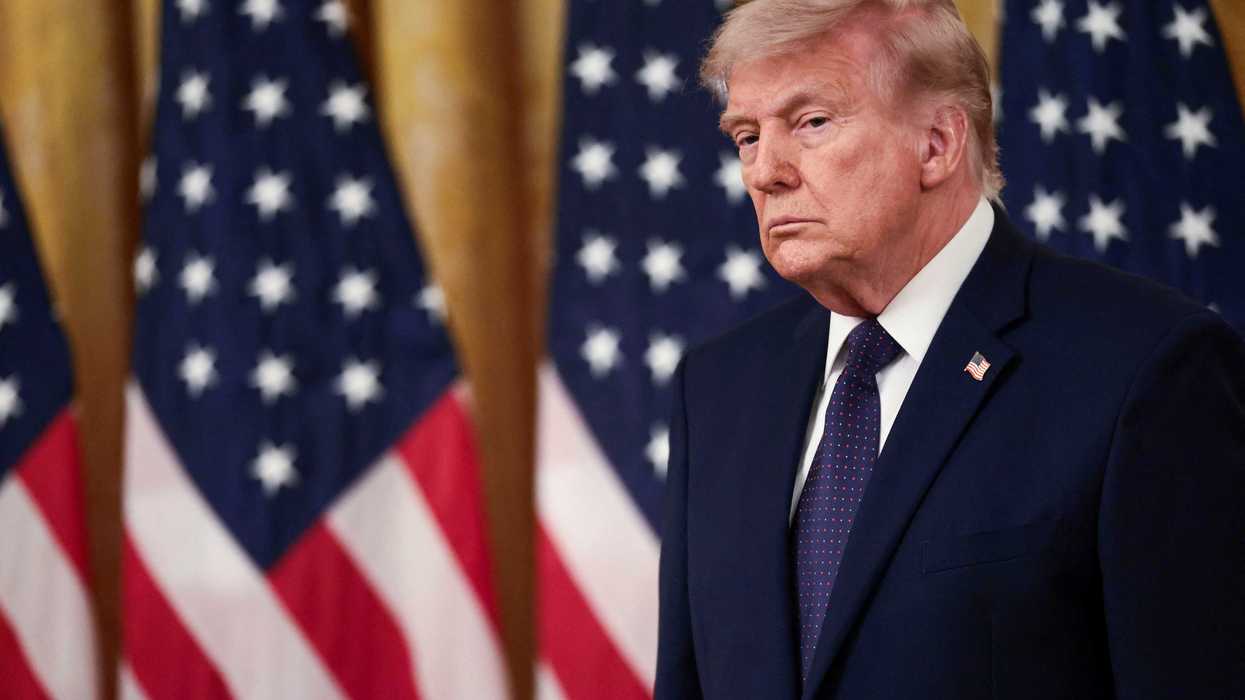
President Donald Trump is going to be the main issue in the 2026 midterms, but experts disagree as to whether the impending electoral disaster will be experienced by the Republicans or the Democrats. Now an election expert is shedding light on the situation.
“It’s a competitive situation in both the Senate and the House,” DDHQ’s chief elections analyst Geoffrey Skelley told The Hill's Julia Mueller on Sunday. He later added that “the big question is: will the Iranian conflict … will people being concerned about that ratcheting up, is that going to create reverberations in things like the generic ballot that signal ‘OK, Democrats’ advantage is growing again’?”
» article continues...