From my Aug. 24, 2015 Blog Post:
Who would have believed the Editors of the WSJ would for once write an editorial with which I could agree? But they did. No bloviating about the evils of Obamacare, the scourge of entitlements, the wrong-headedness of the Iran nuclear deal or the folly of Obama's student loan solution. For once the WSJ editors and I were in agreement ('Born in the USA', Aug. 21, p. A14).
This was regarding the matter of "anchor babies" and birthright citizenship that several GOP candidates, especially Donald Trump, have been sowing nonsense about. Trump, in a recent bombastic tirade deplored that fact that "300 Mexican babies were being born each day" in the U.S. and he wanted to stop it. These :anchor babies" were growing up to take American college spots, as well as jobs.As the WSJ put it, regarding Trump's gibberish on the 14th amendment:
"Donald Trump fomented the mayhem when he told Bill O'Reilly on Fox News that the Fourteenth Amendment is unconstitutional . 'It's not going to hold up in court, it's going to have to be tested' e said. The distinguished legal scholar added that 'I don't think they have American citizenship, and if you speak to some very, very good lawyers some would disagree - but many of them would agree with me- you're going to find they do not have American citizenship"
And, of course, this is exactly what those 20,000 Trump turkeys at the stadium in Mobile, as the WSJ noted "nearly half the GOP field apparently believes Mr. Trump has found a winning political message."
The WSJ Editors then proceed to educate these turkeys:
"The Fourteenth Amendment begins, 'All persons born or naturalized in the United States, and subject to the jurisdiction thereof, are citizens of the United States and of the State wherein they reside'. This is the common law doctrine of juris soli, and the meaning of the language is straightforward..
Further:
"'Jurisdiction' defines the territory where the force of law applies and to whom - and this principle is well settled to include almost everyone within U.S. borders, regardless of their home country or the circumstances of their birth....By the circular restrictionist logic, illegal immigrants could not be prosecuted for committing crimes because they are not U.S. citizens."
This is a crucial point and shows the nuttiness of the Trump et al "restrictionist" position. Because clearly, if they are not under jurisdiction according to the 14th amendment, then they would not be technically under the force of law where born or residing, so could not be prosecuted for crimes - since they would not be citizens. Only U.S. citizens can be so prosecuted.
The WSJ editorial notes that "in 1898 the Supreme Court confirmed the Amendment's original meaning ...and it reaffirmed it as recently in 1982 in Plyler vs Doe."
The WSJ then hoisted all these bozos on their own petards:
"If the candidates are as committed to the Constitution and the rule of law as they say they are, then they should propose a constitutional amendment on birthright citizenship. Refresher: This requires a two -thirds majority vote of both houses of congress and ratification by 38 states. Getting Mexico to pay for a wall along its border is more plausible."
One can almost sense in the sarcasm the ridicule the Journal holds for all the wacko GOP candidates who hold this sappy position. Confirmed with this send off:
"The futility of ending birthright citizenship is part of the cheap political appeal. Republicans can pose as MacGruff the Border Crime Dog, signal that they are also mad as hell and slipstream on Mr. Trump's poll numbers....The immigration hawks are correct that birthright citizenship is unusual among nations - but since when did Republicans dump their belief in American exceptionalism?"
Damn! I just knew there had to be a situation where the American exceptionalist rot would come back to haunt the 'pukes - and the WSJ exposed it! Now it appears ('Green Card Applicants Told To File Overseas', WSJ, P. A3, May 23-24) the Trump bunch understands the coming Supreme Court ruling will not go their way on this issue. Their plan B? Making most green card applicants go abroad to apply for permanent residency to the U.S. rather than filing from within the U.S. as they do now. In which case:

“The destruction of a man’s rights, the killing of the judicial person in him, is a prerequisite for dominating him entirely.”
—Hannah Arendt in The Origins of Totalitarianism.
Clarity in language is never immune to the treachery of sinister intentions. “Truth will set you free” and “Work will set you free” are clear, noble statements. The first is from the gospels. The second is from an 1873 German novel by Lorenz Diefenbach. Both are forever defiled by the Nazis hanging the work slogan above the entrance to the Auschwitz death camp. A similarly bigoted motive is behind Trump’s defilement of the clear language of the 14th Amendment in the birthright citizenship case.
It is not just about birthright. It is about anyone’s citizenship.
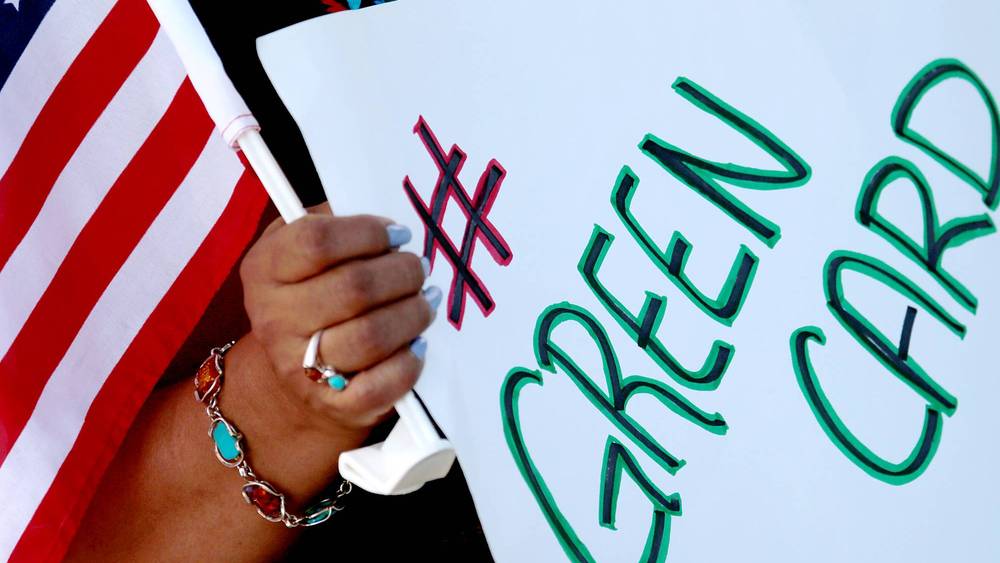
On May 22, the US Citizenship and Immigration Services issued a policy memo announcing a major shift in immigration policy. As USCIS Spokesperson Zach Kahler explains: “From now on, an alien who is in the US temporarily and wants a Green Card must return to their home country to apply, except in extraordinary circumstances. This policy allows our immigration system to function as the law intended instead of incentivizing loopholes.”
This new policy is unlawful, immoral, and xenophobic. Under the Immigration and Nationality Act (INA) as well as the LIFE Act, Congress created various pathways for immigrants to apply for “adjustment of status.” This allows a temporary legal resident to apply for legal permanent resident (LPR) status without having to leave the US.
Such adjustments are not limited to “extraordinary circumstances.” As the USCIS Policy Manual makes clear:
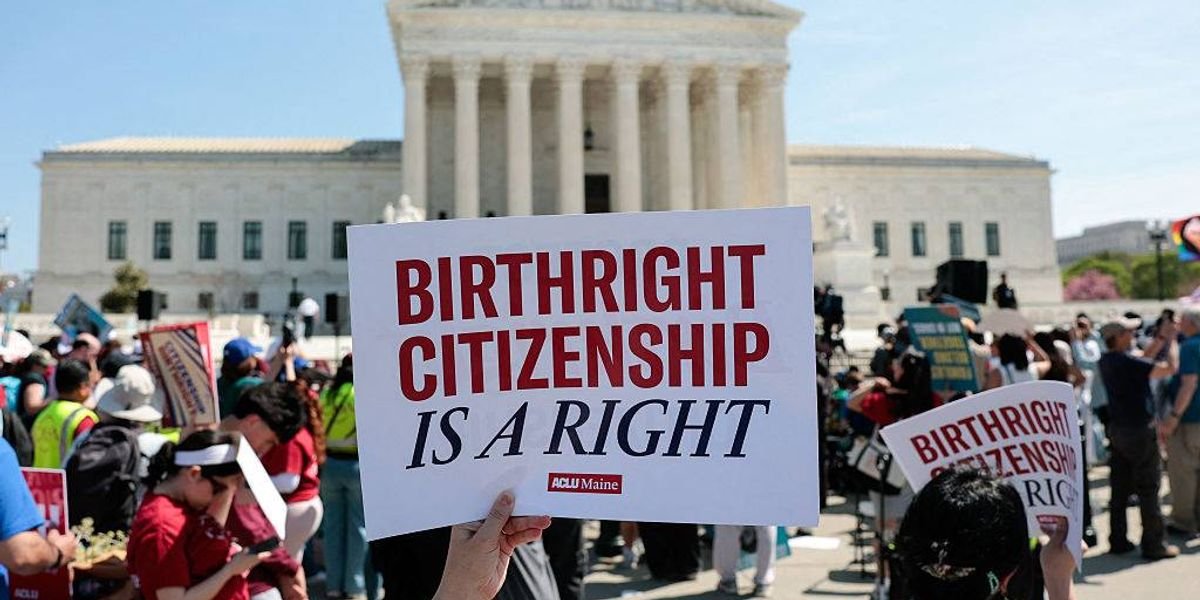
On May 6, 1866, exactly one hundred and sixty years ago today, Thaddeus Stevens, US Congressman from Pennsylvania and the leading Radical Republican in the House of Representatives, rose to introduce the Fourteenth Amendment of the US Constitution on the floor of the. Stevens, chair of the powerful House Ways and Means Committee, was also co-chair of the Joint Committee on Reconstruction set up by Congress, in late 1865, to promote a radical Reconstruction, a program advanced over the consistent objections of President Andrew Johnson.
Here is how Stevens introduced the Amendment:

