Showing posts with label Doomsday Clock. Show all posts

Monday, January 27, 2020

Why Lawrence Krausse Is Wrong On The "Doomsday Clock" - Why It Needs To Keep Ticking


The Bulletin of the Atomic Scientists website recently warned ('Why The World Is Closer Than Ever To Doomsday'')


"On Thursday, the Bulletin of the Atomic Scientists, which takes stock of the threats posed by nuclear war and climate change each year, moved the Doomsday Clock to 100 seconds before midnight. We are now measuring how close the world is to catastrophe in seconds -- not hours, or even minutes. It is the closest to Doomsday we have ever been since the clock was created in 1947.
The Bulletin of the Atomic Scientists, which was founded by those who worked on the Manhattan Project during World War II, and now includes 13 Nobel Laureates on the board, issued a statement on Thursday that read, "Humanity continues to face two simultaneous existential dangers—nuclear war and climate change—that are compounded by a threat multiplier, cyber-enabled information warfare, that undercuts society's ability to respond. The international security situation is dire, not just because these threats exist, but because world leaders have allowed the international political infrastructure for managing them to erode." 
But physicist Lawrence Krausse isn't buying it (WSJ, 'Time To Stop The Doomsday Clock', Jan. 23), p. A15, writing:
"The Bulletin of the Atomic Scientists is resetting its “Doomsday Clock,” which has stood still since 2018 at two minutes to midnight. I was a member of the Bulletin’s Board of Sponsors for a dozen years and chaired it from 2009 through 2018, and I think it’s time to retire the clock."

He then quotes founding editor Eugene Rabinowitch, who explains the clock's purpose:

“The Bulletin’s Clock is not a gauge to register the ups and downs of the international power struggle. It is intended to reflect basic changes in the level of continuous danger in which mankind lives in the nuclear age.”

Let's also note that no serious scientist treats it as an exact quantitative measure of danger. It is more  an analog -based estimate of probability embodied in an image anyone can grasp.  (Much like the descending ball in NYC on New Year's Eve is purported to be a chronological countdown to the New Year.)   The Doomsday Clock then embodies a potential countdown for humanity's end (as opposed to the end of an expired year) - factoring in the differing probabilities for the cumulative threats facing us.  

A more precise interpretation might be as an analog estimate of the multiple correlation of mounting dangers to the time we have left to address them,  before they lead to our extinction.   One can even conceive of the clock as a kind of pictorial - image based multiple regression scenario of the cumulative threats at a given time, t. In this latter one is aware of not one but multiple (regressor) variables in relation to the predicted danger of "doom",  D.  These regressors  constitute  a set of threat variables, ranging from a Torino 9 asteroid  strike ('x1'), to all - out nuclear war ('x2'), to runaway greenhouse effect, 'x3', to uncontained bird flu pandemic 'x4', etc.

Krauss continues:
"Early on, it often did. It moved forward in 1953, after the U.S. and the Soviet Union developed the hydrogen bomb, or in 1974, when missiles with multiple warheads became a reality. But gradually it broadened focus beyond the physical dangers of nuclear weapons and began taking account of political questions such as arms-control treaties and tensions between India and Pakistan, and, since 2007, of other military threats such as bioterrorism, as well as the global existential dangers of climate change. The 2019 announcement also cited “fake news” and Donald Trump."

Here, Krausse seems to want to sideline these political threats but they are very real.  For example, the nuclear threat  involving India and Pakistan could easily expand to a larger nuclear war.  Bioterrorism also is not to be underplayed, given we would not like to see the release of a weaponized smallpox or Ebola virus - or the bubonic plague. 

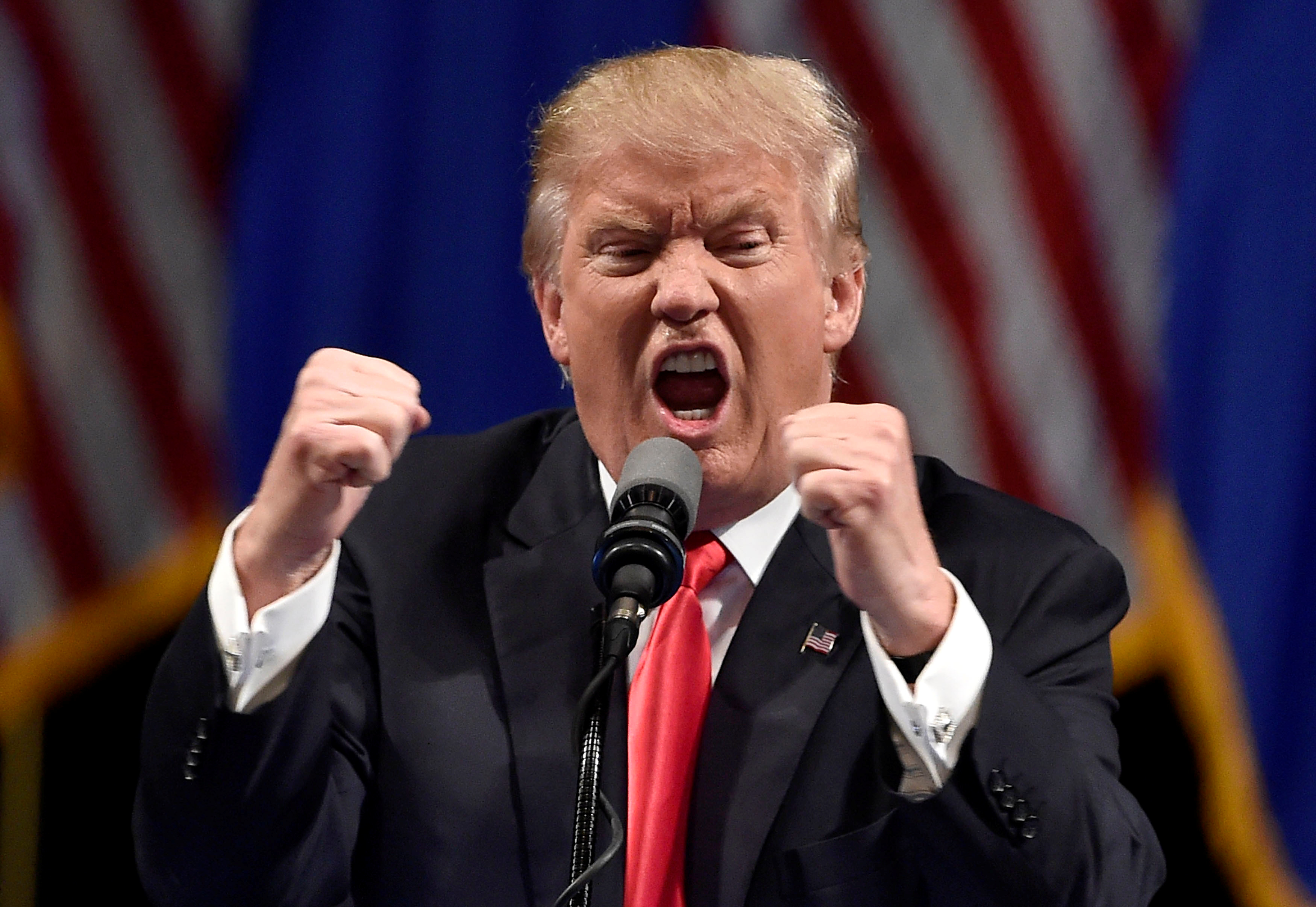
 As for Trump, common sense would alert the sentient citizen to the intolerable risk of a narcissist egomaniac who has control of nearly 6000 nuclear warheads- but no control of himself, or self-awareness in respect of his limitations.  In a real manner of speaking, so long as Trump is around we are all living with a ticking human time bomb - and no one knows when it will go off, or what will set it off.

Krausse again:
"This multiplication of threats has heightened the sense of alarm. The Doomsday Clock time is now much closer to midnight than it was during the Cuban Missile Crisis (seven minutes), when the world really was on the precipice of a nuclear holocaust. At the same time, a clock that has moved back and forth while lingering frighteningly close to midnight for more than 70 years strikes many as crying wolf. At two minutes to midnight, the clock can’t move much further forward, even if threats increase."

Here I beg to differ with Lawrence that the Cuban Missile Crisis (which I lived through while living in Miami, FL in October, 1962) is equal to the nuclear threat that exists now.  The reason?  At the time the U.S. and USSR combined had a total of roughly 200 nuclear warheads- and long range ICBMs (e.g. Atlas missiles) to deliver them.  Cuba had an estimated 93 intermediate range missiles (IRBMs compliments of the Russians) which it was prepared to use IF the U.S. had tried to invade or attack. (Fortunately we had JFK at the helm and not the likes of the bellicose buffoon Trump.)  Had war been unleashed it would have been bad for sure - with up to 100 million dead or dying -but not anything near the 5 billion that would perish today  because of 10,000 nuclear warheads (in an all out nuclear war) and a likely "nuclear winter" to follow.

The back and forth movement of the clock to which Krausse refers is not "crying wolf" but simply acknowledging that the probability of  incipient threats can vary over a long time- and even year to year.   The proximity to midnight merely indicates  the variability of this threat potency and also  that we haven't done a damned thing to address the most catastrophic, namely proliferation of nuclear weapons, and the approaching runaway greenhouse effect.  Worse,  we now face the specter of hypersonic ICBMs which leave virtually no early warning time before nuclear strikes- radically amplifying nuclear threats.

Add in the latter, say the Russians - then the U.S. - developing thousands of them, and the clock can indeed move much closer to midnight - say 30 seconds or even closer. What else would you expect from thousands of such hypersonic weapons each with a megaton or larger warhead that could strike any U.S. city within minutes?  
"More to the point, the threats the clock now purports to measure are different in kind. Nuclear weapons could end human civilization in a day. The generation of greenhouse gases associated with human industrial activity won’t. It is increasingly likely to have devastating impacts, but these will emerge over the long term and be spread unevenly across the globe."
Krausse is right in a way, but not totally.  It is true nuclear weapons in general would have a more catastrophic (and immediate)  effect than climate change - but not necessarily.  It is conceivable an all out nuclear war - say carried out in hours - could take many lives but still leave 2-3 billion alive, for a time. However, if nuclear winter sets in those lives too would be snuffed out in 10-20 years.  Analogously, if climate change isn't controlled it may lead to the runaway greenhouse effect by the end of the century (say with a  6C increase in global mean surface temperatures) that could end the existence of most humanity within 10-20 years. 
"Psychologist Steven Pinker argues—and the bulletin admits—that the clock is anything but a scientific instrument. In Mr. Pinker’s view, the annual announcement is a publicity stunt that demeans the scientific community and makes the world seem more dangerous than it actually is."

I have already dispelled Pinker's Pollyannish views in a previous blog post, e.g.
And shown the world is indeed as dangerous and replete with threats as it appears to the sentient and aware citizen. 

Back to Krausse:
"The clock is a publicity stunt—and a successful one. That was the point. The public hardly ever debates the ever-present danger of a world with 10,000 nuclear weapons. People would rather not think about it."
Yet there’s a deeper problem. Not only is the Doomsday Clock unscientific; the factors of its setting are now dominated more by policy questions than scientific ones. The former may be important, but claiming the authority of “atomic scientists” is appropriate only for the latter."

I totally disagree with Larry's take the clock is a "publicity stunt",  because there is no stunt aspect to it, as I described in my opening paragraphs.  If anyone wishes to behold a publicity stunt look no further than Trump's lawyers' performance at his Senate impeachment trial. There you will see a blizzard of lies, disinformation, distractions and propaganda the likes of which would do Goebbels proud. A publicity stunt for the ages and in the service of treason.

Krausse would do better to move away from his 'cartoon' view and see the clock instead  as a compact pictograph synthesizing  a multiple regression outcome for incipient threats at any one time. These threats are real - albeit variable in potency and imminence- hence the (visual) device which incorporates them is no "stunt". Further, it is based on rational interpretation and decision-making (including on policies that affect scientific quality, outcomes)  so shares with science - atomic,  astrophysics or other - the critical attribute of reason.

 Further, policy decisions can and do impact scientific ones - often adversely.  For example, Krausse cannot deny that the Trump cabal's policies, e.g.  on climate change,  have actually worsened the climate situation globally.   The dilution of many regulations including allowing more CO2 and methane to be discharged into the atmosphere, not to mention easing of water pollution standards for rivers, streams,  are not in anyway helpful to averting the worst climate scenarios - including the runaway greenhouse effect.

Add in the Trumpists' savage attack on the ACA ("Obamacare") which could conceivably leave up to 30 million without any health care and you have the makings of a human catastrophe set to become vastly larger in the event of the next flu pandemic.  See e.g.
Krausse again:

"But today the clock’s setting is determined more by concerns about how superpowers can engage in arms-control talks, about potentially reckless statements by world leaders, or about what policies would best reduce carbon emissions. These are important questions, but not ones on which scientists can claim special authority."

OK, admittedly they are not questions on which scientists can claim an exclusive  ("special") authority - but they are certainly ones on which they can claim a pre-eminent authority. Hence, would in general carry much more insight than a politician's - say in terms of how carbon emissions beyond a certain threshold would lead to the runaway greenhouse effect. Or how the future failure of arms control talks - say to do with hypersonic ICBMs- may pave the way for much greater likelihood of a nuclear holocaust

"The group announcing the clock reset includes a former president of Ireland, a former United Nations secretary-general and members of the Elders, an organization founded by Nelson Mandela that describes itself as “independent global leaders working together for peace and human rights.” These like-minded people—along with various intelligence and climate policy experts, and one atomic scientist—can make informed recommendations, and I largely agree with them. But this is public policy, not science."

Again, Krausse confuses the clock with an actual scientific  paper, argument or measuring device -  which it is not. It is a quasi scientific, public policy tool that adopts an easy to grasp visual representation  ("clock") to estimate the variable probability of humanity's proximity (in time) to ultimate perdition.  
"So why not retire the clock? An icon with some fixed value, say, five minutes to midnight, might serve as a permanent reminder of a dangerous world. Nuclear weapons aren’t disappearing any time soon, and climate change is already occurring on a massive scale. Other threats will emerge, even as technology creates opportunities for revolutionary improvements in the human condition."
The clock cannot be retired precisely because leaving it at a fixed position (say 5 minutes to midnight) would erroneously convey the message of a fixed probability for  future collective threats. Thus, a 5 minutes to midnight full stop would lull most citizens of the planet into thinking all further movement toward midnight had ceased. So all is well and let's party! 

This then would also ensure the world more likely falls into a complacent attitude and makes no attempt to curb nuclear proliferation or significantly reduce carbon emissions hurling us toward the runaway greenhouse.  It is exactly the wrong thing to do and I am amazed a guy that actually was part of the process at one time would advocate this.

No, nuclear weapons aren't "disappearing" anytime soon, but that doesn't mean inroads can't be made, say in halting or removing the threat of hypsersonic delivery systems.  And while climate change is indeed already occurring on a massive scale there is still time to avoid the calamity of the runaway greenhouse - if we act now to do so.  But fixing the clock at one position is an invitation to do nothing because well, 'Hey look! It ain't moving any closer to the witching hour so why worry?'

"The Bulletin of Atomic Scientists can continue to play a useful role by focusing on providing accurate information on technology and science to be used as a basis for public policy. Or it could rename itself The Bulletin, acknowledge that it is an advocacy organization, and make the best case for its well-intentioned proposals."

This is a non-starter. "The Bulletin"?   Seriously? People who thrive on 'clickbait'  and spend most days buried in their smart phone screens for the latest buzz would simply yawn and move on.  The power of the doomsday clock is precisely because the IMAGE of motion toward midnight catches attention.  And attention in these hurly- burly,  distracted times is hard to capture.  Hence, Krauss'e prescriptions here are basically equivalent to remaining silent (or out of sight) in spite of the  sundry variable threats and their changing probabilities.

Sorry, no can do, Lawrence.

Thursday, January 25, 2018

The Doomsday Clock: Now Moved To Two Minutes To Midnight

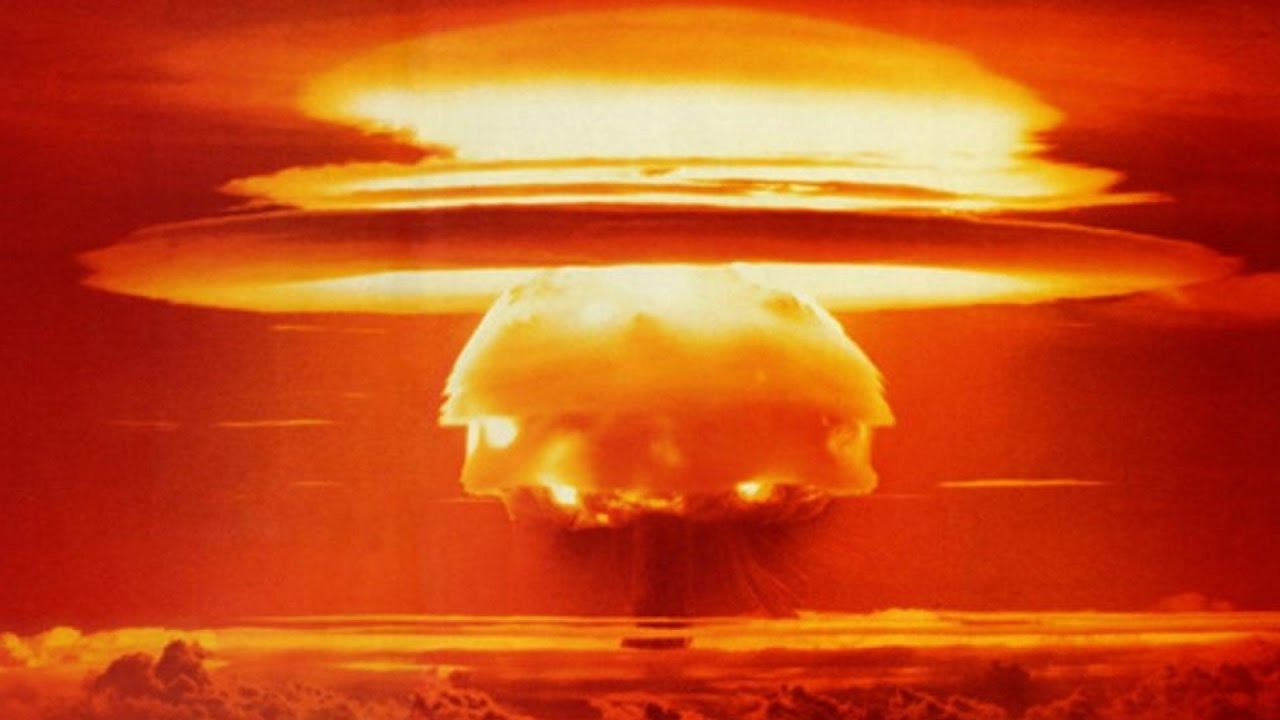
Image result for H-bomb blast images

Today The Bulletin of the Atomic Scientists moved the "Doomsday Clock" 30 seconds closer to midnight then it had been one year ago.   As I noted at that time (Jan.. 26 blog post):

This morning at 10:00 Eastern time, in news that ought to send chills down ever citizen's spine, The Bulletin of the Atomic Scientists moved the second hand of the Doomsday Clock another half minute closer to midnight. Hitherto it had been set at 3 minutes to midnight, since 2015.  The new setting marks metaphorically the acknowledgement of the highest danger facing the planet since 1953, when the U.S. and U.S.S.R. conducted multiple H-bomb tests in the atmosphere.
A global failure to fight climate change and concern over Donald Trump’s cabinet picks were cited as reasons for the increased threat to the planet.

For background reference, the group was founded in 1945 by University of Chicago scientists who helped develop the first atomic weapons as  commissioned by the Manhattan Project.  Two years later the "Doomsday clock" was created using the imagery of a clock striking midnight (translated into apocalypse) and the contemporary idiom of a nuclear explosion to convey threats to humanity and the planet.   The decision to move (or to leave in place) the minute hand of the Doomsday Clock is made every year by the Bulletin’s Science and Security Board in consultation with its Board of Sponsors, which includes 15 Nobel laureates. The Clock has become a universally recognized indicator of the world’s vulnerability to catastrophe from nuclear weapons, climate change, and new technologies emerging in other domains.

Each year the basis for moving the minute hand is given in an accompanying statement. This year's statement is given below:


To: Leaders and citizens of the world Re: Two minutes to midnight Date: January 25, 2018:

In 2017, world leaders failed to respond effectively to the looming threats of nuclear war and climate change, making the world security situation more dangerous than it was a year ago—and as dangerous as it has been since World War II.

The greatest risks last year arose in the nuclear realm. North Korea’s nuclear weapons program made remarkable progress in 2017, increasing risks to North Korea itself, other countries in the region, and the United States.  Hyperbolic rhetoric and provocative actions by both sides have increased the possibility of nuclear war by accident or miscalculation.

But the dangers brewing on the Korean Peninsula were not the only nuclear risks evident in 2017: The United States and Russia remained at odds, continuing military exercises along the borders of NATO, undermining the Intermediate-Range Nuclear Forces Treaty (INF), upgrading their nuclear arsenals, and eschewing arms control negotiations.

In the Asia-Pacific region, tensions over the South China Sea have increased, with relations between the United States and China insufficient to re-establish a stable security situation.  In South Asia, Pakistan and India have continued to build ever-larger arsenals of nuclear weapons.

And in the Middle East, uncertainty about continued US support for the landmark Iranian nuclear deal adds to a bleak overall picture.

To call the world nuclear situation dire is to understate the danger—and its immediacy.

On the climate change front, the danger may seem less immediate, but avoiding catastrophic temperature increases in the long run requires urgent attention now. Global carbon dioxide emissions have not yet shown the beginnings of the sustained decline towards zero that must occur if ever-greater warming is to be avoided. The nations of the world will have to significantly decrease their greenhouse gas emissions to keep climate risks manageable, and so far, the global response has fallen far short of meeting this challenge.

Beyond the nuclear and climate domains, technological change is disrupting democracies around the world as states seek and exploit opportunities to use information technologies as weapons, among them internet-based deception campaigns aimed at undermining elections and popular confidence in institutions essential to free thought and global security.

--------------------------\
The Bulletin of the Atomic Scientists Science and Security Board believes the perilous world security situation just described would, in itself, justify moving the minute hand of the Doomsday Clock closer to midnight.
But there has also been a breakdown in the international order that has been dangerously exacerbated by recent US actions. In 2017, the United States backed away from its long-standing leadership role in the world, reducing its commitment to seek common ground and undermining the overall effort toward solving pressing global governance challenges. Neither allies nor adversaries have been able to reliably predict US actions—or understand when US pronouncements are real, and when they are mere rhetoric. International diplomacy has been reduced to name-calling, giving it a surreal sense of unreality that makes the world security situation ever more threatening.

Because of the extraordinary danger of the current moment, the Science and Security Board today moves the minute hand of the Doomsday Clock 30 seconds closer to catastrophe. It is now two minutes to midnight—the closest the Clock has ever been to Doomsday, and as close as it was in 1953, at the height of the Cold War.

The Science and Security Board hopes this resetting of the Clock will be interpreted exactly as it is meant—as an urgent warning of global danger. The time for world leaders to address looming nuclear danger and the continuing march of climate change is long past. The time for the citizens of the world to demand such action is now:  #rewindtheDoomsdayClock.

The untenable nuclear threat. The risk that nuclear weapons may be used—intentionally or because of miscalculation—grew last year around the globe.

North Korea has long defied UN Security Council resolutions to cease its nuclear and ballistic missile tests, but the acceleration of its tests in 2017 reflects new resolve to acquire sophisticated nuclear weapons. North Korea has or soon will have capabilities to match its verbal threats—specifically, a thermonuclear warhead and a ballistic missile that can carry it to the US mainland. In September, North Korea tested what experts assess to be a true two-stage thermonuclear device, and in November, it tested the Hwasong-15 missile, which experts believe has a range of over 8,000 kilometers. The United States and its allies, Japan and South Korea, responded with more frequent and larger military exercises, while China and Russia proposed a freeze by North Korea of nuclear and missile tests in exchange for a freeze in US exercises.
The failure to secure a temporary freeze in 2017 was unsurprising to observers of the downward spiral of nuclear rhetoric between US President Donald Trump and North Korean leader Kim Jong-un. The failure to rein in North Korea’s nuclear program will reverberate not just in the Asia-Pacific, as neighboring countries review their security options, but more widely, as all countries consider the costs and benefits of the international framework of nonproliferation treaties and agreements.

Nuclear risks have been compounded by US-Russia relations that now feature more conflict than cooperation. Coordination on nuclear risk reduction is all but dead, and no solution to disputes over the INF Treaty—a landmark agreement to rid Europe of medium-range nuclear missiles—is readily apparent. Both sides allege violations, but Russia’s deployment of a new ground-launched cruise missile, if not addressed, could trigger a collapse of the treaty. Such a collapse would make what should have been a relatively easy five-years ago unimaginably more intractable.
------------------------------------

Let's hope that all citizens and leaders pay attention to these threats and seek to turn the hands of this clock backward instead of forward.  But we'll have to strive for a rewind despite the news of a leaked Pentagon draft describing additions to the U.S.  nuclear arsenal including: 'low yield' (tactical) nukes that can be mounted to Trident submarines and a new submarine launched cruise missile (SLCM).  These new weapons are estimated to cost $1.2 trillion over the next 30 years to build and maintain according to the Congressional Budget Office.


Monday, September 25, 2017

Any College Prof Who Equates Trump's Tweets To Proper Writing Ought To Be Fired!


Twitter Troll Trump is spewing cartoon garbage in his tweets - not "poetry" or "concise writing" according to one demented professor.

When Trump's last stream of tweets received segment attention on the NBC Saturday evening news - criticizing the NFL and its players who refuse to stand for the national anthem, wifey had had enough. Sitting across in her recliner, she spat: "The day that tweets get the same respect as regular prose is the day we are all for the high jump!"  "High jump" a Bajan expression for "the end' as in jumping off a high cliff or tall building.

I couldn't bear to tell her that in the weekend WSJ (Sept. 23-24, p. A13) one idiot professor (Crispin Sartwell) at Dickinson College in Carlisle, Pennsylvania, actually tried to make that ignorant case ('Texting and Twitter Make This A Golden Age For the Written Word').   The title alone had me prepared to lose my breakfast, but I felt this fool at least deserved a chance to make his case. Within three paragraphs I was forced to lump him with the other extremist contrarians who need to create unhinged arguments of absurd positions to rise above the attention din.  They reason that too many write about the same things so why not pick out a fringe idea to get reads or clicks and defend it with sophistry and specious analogies. 

Such was the case with Sartwell's piece, as when he writes:

"Texting - to say the obvious - is writing. Snapchat conversations are written with thumbs, but they are written. Twitter seems to be getting blamed for many ills, including those of the Trump administration. But whatever else the president does as he tweets, he is definitely writing. Barack Obama composed a couple of decent memoirs, but he is not as prolific an author as Mr. Trump, a master of his chosen genre.

It strikes me that Twitter is not only a social media platform, it is a poetic form, like haiku or a sonnet."

At this point I had to wonder what Sartwell was on when he wrote this unmitigated hogswill. I suspect it must have been a combination of MJ edibles and maybe booze. No sane human, certainly not a professor, could compare a bunch of incomprehensible, misspelled,  cartoon tweets to Obama's memoirs - unless he wasn't in his right mind.  And to compare a tweet to a sonnet carries false analogy to the same level as comparing a can of Alpo to a 5-course gourmet meal for a human. It is simply bare bollocks. Utter nonsense.

Sartwel's arguments fall on many grounds but I will confine attention to two: i) the danger of trying to make policy by tweet, and ii) the fact no university admissions office in its collective right mind would accept a tweet or series of text messages as a substitute for an admissions essay.

The first is most important, and I refer here to an earlier post in which I  made reference to Trump's "verbal looseness"  epitomized by his  reckless December tweet on expanding U.S.  nuclear capacity, e.g.

"We need to strengthen and expand nuclear capacity until the world comes to its sense regarding nukes."

What the hell is he yapping about? Expand nuclear capacity? Is he nuts, ignorant or just stupid? As a number of strategic analysts have pointed out, including staff from The Bulletin of the Atomic Scientists, the U.S. already has just under 5,000 nuclear warheads in its active arsenal and more than 1,550 deployed strategic warheads. This is more than enough to turn the world to ash about six times over.

Meanwhile the clueless media, especially on TV, kept showing the tweet on large HD screens in bold relief, as they scratched their heads, openly wondering what the hell he meant. No surprise here. As I pointed out earlier (Nov. 23rd  post) Twitter is essentially a cartoon language medium by which I mean its 140 character limit basically excludes any complex thought. and most facts.  Or, I might add, any basis for proper explication of what one is communicating.  One is basically reduced to the equivalent of a series of language cartoons.  This also harkens back to the medium used  constituting the basis of the message, as Marshall McLuhan first pointed out in Understanding Media: The Extensions of Man

Thus, no surprise the Trump team itself was scurrying to impose some semblance of meaning on the word jumble expelled.  In fact, as a Denver Post release noted, the "Trump team offered only slightly more explanation of the comment later in the day when communications director Jason Miller said Trump was 'referring to the threat of nuclear proliferation and the critical need to prevent it'"


Well, if that is what he meant, why didn't he write in a proper written format?  Well, because he's a lazy sot and can't even read properly!  The tweet then is the lazy person's form of writing, and certainluy no sonnet or haiku even.   The use of emojis also, which Sartwell defends (comparing them to Egytpian hieroglyphs, if you can believe it) is a shortcut to proper communication offered in actual cartoon form.

Does one really need an I.Q. higher than a hamster's to grasp that tweets  (and most texts) are an inappropriate medium for making nuclear policy Must it really be spelled out for Sartwell?

Let's be clear  that no sane person ought to be propounding nuclear policy via a cartoon language medium. The very choice to do so indicates that person lacks all his marbles. I would add that any person who defends such use also must be questioned as to his "lost marbles".

Trump's tweets, never mind their abbreviated form that Sartwell actually claims comports with the principles of The Elements of Style', lacked any inclusion of relevant facts  But this begs the question of how or why such a truncated medium would be able to to justice to facts in the first place.

In response to Trump's nuclear policy tweets, The Bulletin of the Atomic Scientists replied:

We understand that Mr. Trump has been in office only days, that many of his cabinet nominees are awaiting confirmation and that he has had little time to take official action. But Mr. Trump’s statements and actions have been unsettling. He has made ill-considered comments about expanding and even deploying the American nuclear arsenal. He has expressed disbelief in the scientific consensus on global warming. He has shown a troubling propensity to discount or reject expert advice related to international security

This was part of  the Bulletin's basis for moving the Doomsday Clock closer to midnight. The fact an inept, ignorant fool was trying to tweet nuclear policy, devoid of facts, and subject to misinterpretation.

Lastly, I do give credit to Sartwell for at least offering one solid, sober perspective on what genuine authorship means, e.g. of real writing:

"Authorship, whether of great novels, fundamental works of history and philosophy, poems that set the soul afire,  or blog posts- can be a lonely journey, It's hard, but all truly rewarding things are."

Yes but that does not include tweets or texts which take minimal effort. The real message of what Sartwell is writing ought to be that those written contributions or communications that take great effort are worthy of being considered platforms for authorship.  Tweets and texts are not because the same effort doesn't go into a message that can be fired off in mere seconds or minutes. Am I saying genuine writing is proportional to the effort put into it? Yes, I am.  If it takes seconds or minutes to do sorry it is not really writing in the manner of actual, serious communication.

And as I pointed out, no college to my knowledge has yet accepted a series of tweets or texts as a substitute for its essay- composition requirement. Case closed!

Tweets may be cutesy modes of communication for the Millennials and many others but they don't make the cut as genuine writing -  any more than a dog's or ape's random paint splashes on a canvas make even a passable work of abstract art.


Friday, April 28, 2017

For Donald Trump The 25 Million Souls Of Seoul Are Expendable In A North Korea Conflict


Related image"There's gonna be a major, major conflict! And I'm sorry about Seoul! Tough luck there! But their sacrifice'll make me look more presidential!"

As The Financial Times reported yesterday, the bellicose Trump bunch wants Jimmy Carter to stay out of any peace -making deals with North Korea. This despite the war rhetoric reaching new heights. In a Reuters interview yesterday, the egomaniacal baboon- in- chief grunted, then growled: "We're heading for a major, major conflict with North Korea. Absolutely!'

And as I posted earlier, this hotheaded maggot doesn't possess the skill, background historical knowledge or intelligence to steer clear of a conflagration with a nuclear state that would unleash a pitiless assault not on the U.S. (which is too far away to strike) but on its South Korean ally. Specifically, the 25 million citizens of Seoul, the "most densely populated city on Earth" according to one general reporting to the Senate Armed Services Committee. 

Does Trump care one whit about any of those innocent civilians when Kim Jung-Un unleashes a barrage of tens of thousands of shells from 4,000 artillery pieces? Of course not! For him, they are in part or all at once expendable pawns on the grand "chessboard" on which he's playing the mighty "sheriff" of the world. Having been stoked to the brim with his Syria cruise missile strike, he now believes he can unleash a more devastating one on North Korea. But he's a damned fool and idiot because it is the millions of Seoul who will pay.

Yes, the U.S. would ultimately come out ahead but it would be a Pyrrhic victory. Meaning the costs would exceed the brief moment of victory, mainly for the South Koreans who'd have to body bag the dead (what body parts they could find) and rebuild their devastated city. And I'm assuming here no nuclear weapons would be used which might be pie in the freaking sky.

The Bulletin of the Atomic Scientists (the same group that operates the ‘doomsday clock’ and has now moved it two and a half minutes to midnight) estimates the North possesses twenty weapons in the 10 – 20 kiloton range or roughly the same magnitude of yield as the atomic bomb that reduced Hiroshima to ashes in 1945.

 Would they actually use it? 12 days ago in an interview with CBS’ Ben Stacy, the North Korean Defense minister when asked about any response if the U.S. made a pre-emptive strike didn’t bandy words: he said there would be a total nuclear retaliatory strike.  How serious should he be taken?

 First, they are estimated to be at the most primitive, early stages of A-bomb development. According to the most recent Physics Today (April issue) their existing weapons would deliver a yield of roughly 0.08 kt/ kilogram. That is yield per actual bomb mass.  This means they’d need to be able to launch or carry (via plane) at least 100 kg of bomb mass to get an 8 kiloton A -blast, or 200 kg to get a 16 kt yield.   This is feasible with their existing bombers and might also be with their most advanced (solid fuel) missile. However, none of these weapons could reach the U.S. presently – though they could wreak havoc on Seoul, South Korea – with the potential to obliterate over 20 million people as well as all U.S. troops stationed in S. Korea.
Clearly, this is a cost and risk no sane leader would visit on a vulnerable ally. And yet Trump, who fancies himself Dictator of the world, has no qualms about doing so - from his rhetoric- nor any sympathy for the South Koreans who will be caught in the line of fire as a possible mini nuclear holocaust plays out.

 Second, that they would make such a retaliatory strike is beyond question. As numerous commentators have pointed out – e.g. Sue Mi Terry - former CIA North Korean analyst, they’d regard it as a matter of survival. Much like Castro during the Cuban Missile Crisis in October, 1962 who told former Kennedy Defense Secretary Robert McNamara in 1992 (during a 30 yr. reunion) he’d have launched 93 nuclear-armed IRBMs had the U.S. invaded. (JFK was being pushed at the time to bomb and invade Cuba by his Joint Chiefs of Staff).

 When asked in an MSNBC interview 2 weeks ago if Trump would actually attack North Korea, Sue Terry responded:

 “I can’t see him following through on this and that is the problem with the brinksmanship policy. Because you’re putting yourself in a bind. You will either have to back down and lose credibility or you are stuck on a ledge with a military option which is very, very risky.

 North Korea is not Syria. It’s not Afghanistan. It’s going to have very devastating consequences.  North Korea will retaliate to any kind of military option. They will retaliate against South Korea given seventy percent of its ground forces are deployed within 100 kilometers (60 miles) of the DMZ.  And there’s twenty thousand U.S. military in South Korea and twenty million people in Seoul”

 But if his words yesterday are taken seriously, and there's no reason to believe this insane maggot is bluffing - given his ego-- then the South can expect ferocious blowback and devastation. Trump then is not  a rational actor like JFK was during the Cuban Missile Crisis. He’s an imperious,  impetuous braggart and clueless numbskull narcissist not even aware of recent history. He operates according to an unstable  “high conflict” personality which one psychologist (Bill Eddy) has said makes him a “more dangerous politician  than Adolf Hitler”.  In other words, unlike with JFK, we can only assume Trump will make exactly the opposite decision in a nuclear game of high stakes poker.

The sad and sorry Truth is that Donald Trump cares no more about the lives of those millions living in Seoul, than he did about the gassed kids in Syria prompting his cruise missile attack. Those kids were  merely transient blips on his cable TV screen arousing a transient emotion then a brief brain "rupture"  which saw that if he made a bold response he might profit. And profit he did! The media backed off its close scrutiny and criticism and suddenly saw this POS as "presidential" .

Expect him to play "double or nothing" with the Korean standoff, but we know already who the real losers of this charlatan's  game will be.
----------------------------------------------
To understand the full background, read this handy collection of some of the world's leading experts published by the Bulletin of the Atomic Scientists. Feel free to forward links to others:

North Korea in the news again: a time to reflect,
edited by Dan Drollette

Will South Korea go nuclear?
Robert Einhorn, Duyeon Kim

North Korea's nuclear weapons: What now?
Roundtable with Shen Dingli, Chung-in Moon, Andrei Lankov

Hecker assesses North Korean hydrogen bomb claims,
Siegfried Hecker

The North Korea that can say no,
Bruce Cumings

Getting North Korea wrong
, Bruce Cumings


Thursday, January 26, 2017

"Doomsday Clock" Moved Closer to Midnight


This morning at 10:00 Eastern time, in news that ought to send chills down ever citizen's spine, The Bulletin of the Atomic Scientists moved the second hand of the Doomsday Clock another half minute closer to midnight. Hitherto it had been set at 3 minutes to midnight, since 2015.  The new setting marks metaphorically the acknowledgement of the highest danger facing the planet since 1953, when the U.S. and U.S.S.R. conducted multiple H-bomb tests in the atmosphere.

A global failure to fight climate change and concern over Donald Trump’s cabinet picks were cited as reasons for the increased threat to the planet. Of course, none of this ought to surprise the intelligent, high information citizen who is able to reason and discern fake news from the genuine form.

While the BAS historically has rejected that "one individual" can move the clock, it is clear to me that they have been alarmed following Trump's mid-December tweet that:

"We need to strengthen and expand nuclear capacity until the world comes to its sense regarding nukes."

As a number of strategic analysts had pointed out, including staff from The Bulletin of the Atomic Scientists, the U.S. already has just under 5,000 nuclear warheads in its active arsenal and more than 1,550 deployed strategic warheads. This is more than enough to turn the world to ash about six times over.

Given that Russia, according to the same strategic sources, "has 400 more nuclear warheads than the U.S. does", one might assume that Trump - via his tweet - really meant overtaking the Russians. But to the scientists of the BAS it may also have meant tearing up the new START Treaty which limits strategic weapons to 1,550 each by February, 2018. At least these would be the possible interpretations IF one assumed Trump knew that the Russians had a 400 -nuke advantage and also knew what the START Treaty was. But since he doesn't even read his daily briefs, that's unlikely.

The only conclusion to draw from the BAS staff' reasoning for citing Trump's cabinet then is that they don't believe any of them possess the gravitas or wherewithal to influence Trump in any way - say to stay his hands from entering the nuclear codes if he felt the need to do so.  The BAS own words confirm this:

"We understand that Mr. Trump has been in office only days, that many of his cabinet nominees are awaiting confirmation and that he has had little time to take official action. But Mr. Trump’s statements and actions have been unsettling. He has made ill-considered comments about expanding and even deploying the American nuclear arsenal. He has expressed disbelief in the scientific consensus on global warming. He has shown a troubling propensity to discount or reject expert advice related to international security. And his nominees to head the Energy Department, the Environmental Protection Agency and the Office of Management and the Budget have disputed or questioned climate change."

As I pointed out in the previous post, the man is out of touch with reality -hence certifiably insane by any sensible definition. His cabinet picks for EPA, Energy Dept. are not much better. Hence, the dire clock warning.   As the BAS statement continued:

"Last year, and the year before, we warned that world leaders were failing to act with the speed and on the scale necessary to protect citizens from the extreme dangers posed by climate change and nuclear war. During the past year, the need for leadership intensified but was met with inaction and brinkmanship."

Climate change, of course, enters as the more slow rolling form of human extinction. Indeed, in my Nov. 4 post from last year I cited Economic and psychology expert George Loewenstein, who was typical of the risk assessment experts consulted in an AP study. He called climate change "a problem that threatens the very existence of the human race and is already having devastating consequences around the world".

The results of the AP survey were similar to a larger survey of 750 experts conducted earlier last year by the World Economic Forum. Their Global Risks Report 2016 found that the five biggest global risks in terms of impact were: 1) climate change, 2) weapons of mass destruction, 3) water crises, 4) large scale migration, and 5) severe energy price shocks.

The contributors to the Bulletin of the Atomic Scientists also cited the threat posed to democracy by fake news and the influence exerted on elections as reasons for the new setting, according to a panel of scientists involved in the process.

The appropriate symbolic time is deduced each year by The Bulletin of the Atomic Scientists. The new reading brings the threat closer to midnight than it’s been since the height of the Cold War – when it reached 11:58pm.

When asked what was the single biggest factor in moving the hands forward, Professor of Meteorology David Titley said the dissemination of facts and science expressed through a “verbal looseness” was a particular threat.

“Policy that is sensible requires facts to be facts,” one theoretical physicist added.

And, of course, "verbal looseness" is epitomized by Trump's reckless December tweet on nuclear capacity.  As I pointed out no sane person ought to be propounding nuclear policy via a cartoon language medium. The very choice to do so indicates that person lacks all his marbles. Hence, if I were the BAS I'd be hitting the panic button over Trump's verbal looseness too! Anyone who uses Twitter to bloviate on nuclear forces and capacity has several screws loose.

How would humanity actually hitting midnight look? The best fictional portrayal of such a catastrophe was probably in the 1983 movie 'Threads'. The film is about 1hr and 47 minutes long, Brit-made,  but if it doesn't scare the bejeezus out of you, you are either already: a) brain dead, or b) a zombie and amongst the walking dead.

'Threads' is set in the industrial city of Sheffield, UK, and to be sure one needs to get adjusted to the peculiar accent. But once one does, he or she will be granted an inside look at a future none of us want to face. (One U.S. reviewer said that "Threads makes 'The Day After' look like a day at the races".) Having seen both,  I concur.

Threads is not for the squeamish or faint-hearted but I do think all those yammering for war or confrontation with Iran, North Korea or China (the Trumpies want to battle over the Spratley Islands) need to see it and let its message soak in. In fact, I think every critically-thinking red blooded citizen ought to see it, if for no other reason to be motivated to let reps know this thing isn't on - not now or ever.

Though based on a hypothetical Soviet-Russian invasion of Iran, which possibility is no longer - since the present day Russians have plowed enormous investment monies into Iran and its reactors, the projected invasion of a U.S. and NATO strike force is accurate to any unfolding future scenario. From the initial strikes on a nuke reactor at Isfahan, to the accidental sinking of the Russian ship Kirov in the Straits of Hormuz, to the accidental exchange of 2 tactical nuclear weapons (with radiation blowing over Pakistan) and the escalation to a full scale nuclear war - with 3,000 megatons exchange (210 megatons on the UK alone) this movie will keep you on the edge of your seat.

The last segment of the film - following the timeline after the missile exchange and when nuclear winter occurs, discloses there are some prices that are simply too much to pay. Most graphic are the scenes of the sorry victims of radiation sickness in Sheffield, UK and the final scene when a young woman that manages to survive gives birth to an infant with a frog-like face, pointed furry ears, scales and rat nose. As she screams in horror at her mutant, grunting offspring, the film pans to black and the credits roll.

DO we really want this future? Then by all means we need to heed the warning conveyed by the Doomsday clock.

See also:

http://thebulletin.org/timeline

Excerpt:

'The probability of global catastrophe is very high, and the actions needed to reduce the risks of disaster must be taken very soon.' That probability has not been reduced. The Clock ticks. Global danger looms. Wise leaders should act—immediately".