

Why are soon -to- be graduated astronomy and physics students depressed and uncertain of their futures - or even whether they go into their chosen fields? The answers have gradually emerged since what scholars call "the pandemic years" - when even university lectures were reduced to Zooms - and many undergrads ended up paying as much tuition for long distance classes as for regular ones.
Two recent (2025) Physics T oday news stories:
Physics, astronomy graduate admissions in the US expected to shrink amid funding uncertainty and
Funding uncertainties muddle graduate admissions .
shed some much needed light on the reasons and especially primary sources of uncertainty. It turns out these areas of angst can be reduced to three main sources:
1) The relentless intrusion of AI and automation into research domains, jeopardizing future employment,
2) Professional-academic employment opportunities cratered by Trump regime's massive funding cuts, i.e. to NASA, physics and astronomy department.
3) On account of serious stress experienced, and academic demands, a compound feeling of "impostor's syndrome" and unease about physics (and astronomy) as viable career paths.
To evaluate the degree and extent of concerns the Society of Physics Students (SPS) and Sigma Pi Sigma, organizations of the American Institute of Physics (AIP, publisher of Physics Today), conducted a survey last year at the Physics and Astronomy Congress at the University of Denver. This has typically been the largest conference for undergraduate physics and astronomy students. Echoing the surveys that had been conducted at the 2016, 2019, and 2022 congresses, the 2025 survey asked undergraduates to identify the two most important issues currently facing students.
The latest survey was completed by 483 students. The first question asked students to identify the two most important issues facing them, their physics and astronomy clubs, and their colleagues. Students couldn’t select more than two.
These turned out to be: (a)the rapid integration of AI and automation into the academic sphere - which we already saw an example of in math when an Open AI model solved the 80-year old Erdos problem, e.g.
Open AI Model Solves 80-Year Old Erdos Problem - And Mathematicians Freak Out
And: (b) Upending of the physics and astronomy labor markets , mainly by the widespread shredding of research support funding. (See links at bottom)
Less noted in earlier meetings, but now a top topic for angst are the academic stresses even at undergrad level which have led some to even consider whether pursuing further advanced degrees is worth it. And this in itself breeding a nascent "impostor syndrome". (The belief one's achievements are exaggerated or 'fake' - in any case one's success is not as real as perceived.) Indeed, many have questioned whether their education has prioritized grades over understanding, applicability and joy.
As for stress, by 2022, students identified burnout as a critical systemic hurdle. For example, one student said, “Students are expected to do internships, REUs [Research Experiences for Undergraduates programs], research, conferences, presentations, et cetera, et cetera, to even have a shot at graduate school or a career". This has been compounded as a consequence of many departments pursuit of unrealistic norms combined with inadequate support and a constant pressure to compete in an increasingly constrained (e.g. by federal funding) system.
Add to that the fact that students are increasingly stressed by the overarching uncertainty of science’s future and the severe competition for a withering number of academic placements, and one can begin to grasp the level of mental health issues faced by physics and astronomy Ph.D. students, as well as undergrads. For an analysis of the mental health issues faced by physics and astronomy PhD students, see the April 2026 Physics Today article “Building graduate programs that support mental well-being ,” by Patrick Banner, Kellen O’Brien, and Chandra Turpen.
One student noted in the 2025 survey, for example, “the feeling that there aren’t enough jobs and that most will be unemployed or forced to work outside the field.”
The fear of having to work outside one's field is clearly justified, given - as many students reported - there is insufficient preparation for pursuing career paths outside of academia. Though most recipients of physical sciences bachelor’s degrees end up in the private sector, students said that they felt unprepared to translate their skills to industry, that they lack career pathway exposure, and that they see graduate school as both the only option and increasingly unattainable.
Such uneasiness about physics and astronomy as viable career paths, combined with unstable funding in the Trump era, not to mention technological disruptions - risks a significant brain drain as students may pivot away from research toward more stable or lucrative majors and roles.
Students overwhelmingly identified unstable funding as a root cause of concern about internships, graduate admissions, and long-term careers, with 31% of respondents selecting research funding among their top two concerns. Many students also stated that they perceive physics as an elite, shrinking field where opportunity depends more on timing or funding than on merit. Which in many cases is absolutely true. After all, widespread reductions in funding for graduate students and basic science have led to shrinking research opportunities, department closings, and a decreasing number of graduate seats.
One student wrote, “I think that as of today many
physics students are worried about finding viable careers. It seems that every
job that a physics major applies to requires a PhD or postdoc, leaving many of
us who desire to enter industry feeling like backup options to engineering or
data science majors.”
Not surprisingly, many respondents also reported that anti-intellectualism is directly threatening the future of science. Well, how can they not be stressed by this when they see it played out nearly every day in this country: from the denials of vaccine efficacy, to the attacks on climate science, and Trump even closing down a critical climate research institute here in Colorado, i.e.
Dismantling Of Premier Climate Research Facility Here in Colorado Will Have Repercussions Worldwide
See Also:
And:
Alas, The U.S. Brain Drain Is Real & Thanks To Dotard Is Becoming The World's Gain
And:
The Real Reasons The Trumpists Are Targeting Scientific Journals
And:
Anti-Intellectualism In The U.S. - A Real Concern Or Hyped Worry?
And:
AAS Press Release expressing concerns about the proposed budget: https://aas.org/press/aas-statement-nasa-cuts
And:
by Henry Giroux | July 27, 2026 - 4:36am | permalink
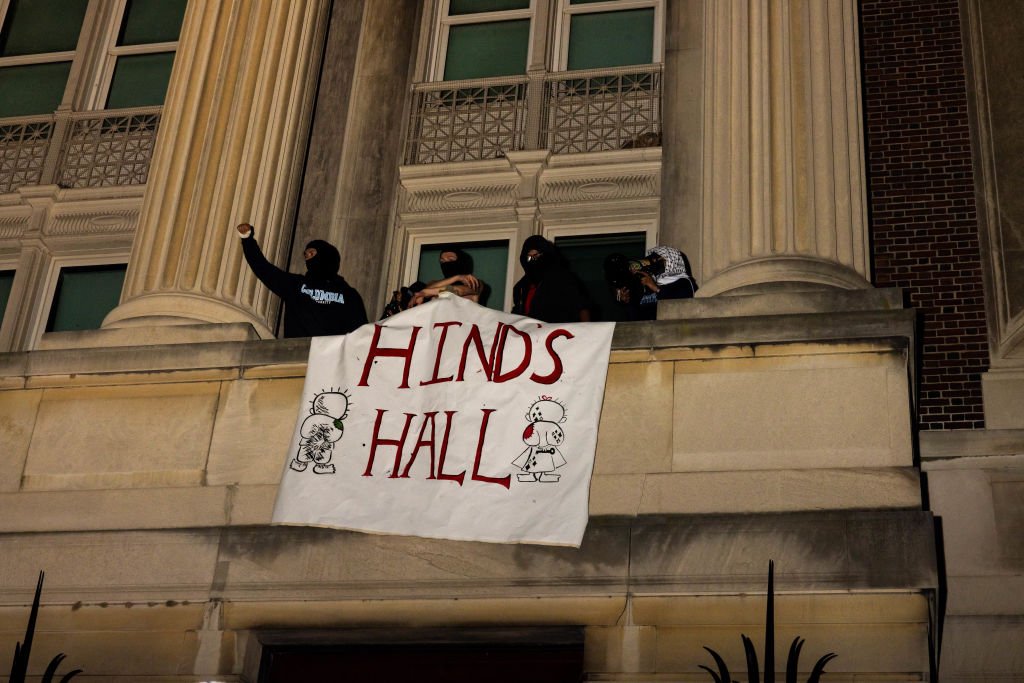
Across the United States, and increasingly in other democracies under siege, higher education faces a coordinated assault unlike anything witnessed in generations. State governments are prohibiting the teaching of histories that confront slavery, colonialism, Indigenous dispossession, structural racism, and widening inequality.
Books are disappearing from classrooms and libraries. Diversity, equity, and inclusion (DEI) initiatives are being dismantled. Faculty are encountering political intimidation, ideological surveillance, and threats to their employment. Students who have protested Israel’s devastating assault on Gaza have been suspended, arrested, disciplined, and treated less as citizens exercising democratic rights than as enemies of public order. Universities themselves are facing threats of financial retaliation if they refuse to conform to the demands of increasingly authoritarian governments.

No comments:
Post a Comment