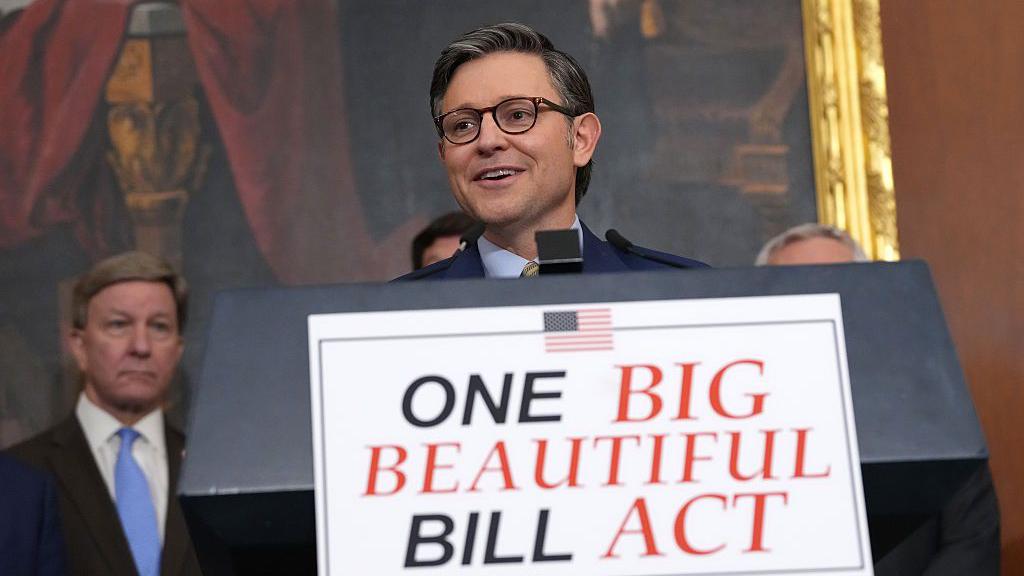
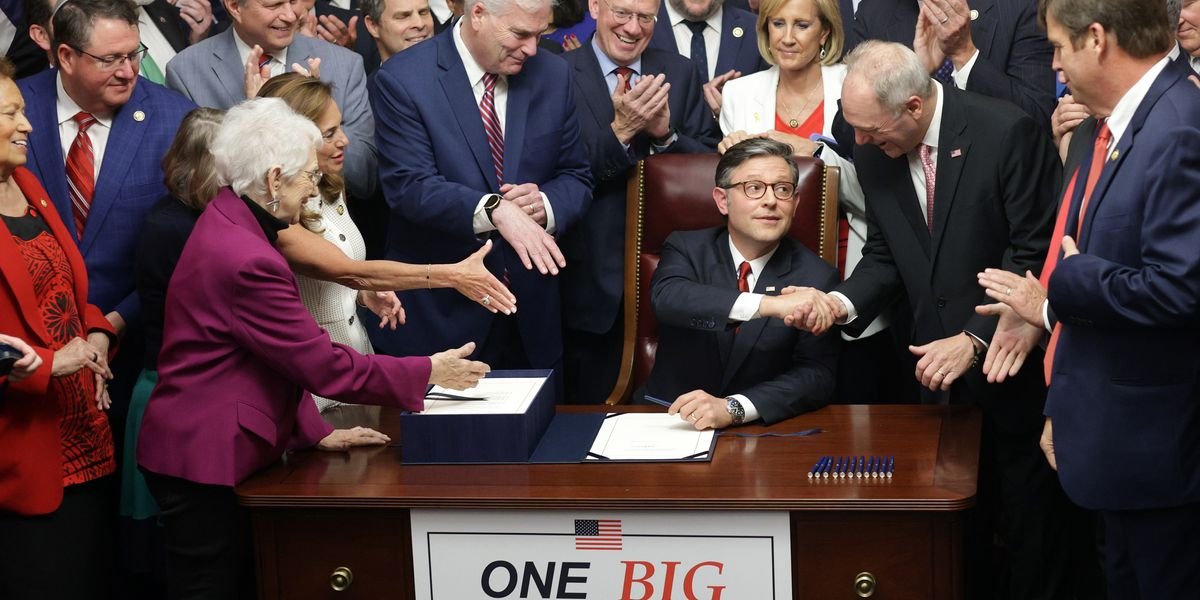
Monday, July 7, 2025

"No One Is 'Gutting' The Safety Net" - How The Wall Street Journal Editors Went Adrift In Their Own Codswallop


 The recent (July 5-6) WSJ Editorial title ("No One Is 'Gutting' The Safety Net",  p. A14) had all the earmarks of clever sophistry, but it took a careful reading to confirm it. Therein, I detected these giveaways to the specious arguments made to try  to nulllify the worst parts of Trump's Megabill giveway to the wealthiest. (Let us note here that a specious argument is one that has the apparent ring of truth but in fact is deceptive, misleading.)

We begin with:

1) "Medicaid spending has risen by roughly 60 percent since 2019 and the bill's sole intent was to bend that spending back to the 'bad old days' of 2020."

 Here, the WSJ editors play fast and loose with economic facts, specifically trying to get the unwary reader to expect medical spending on a large population not to increase rapidly. In other words, ignore the entire arena of ongoing medical inflation - from prescription drugs to lab tests, to treatments (including for cancers), to exams to nursing care and serious long term care, e.g. kids with cerebral palsy, epilepsy or other physical debility - which require extensive caretaking.  Hospital care alone, including treating serious diseases like Covid, influenza, accounts for nearly one third of Medicaid spending. Meanwhile, prescription drugs make up another one fourth, and while the number of prescriptions per Medicaid enrollee has decreased, net spending on prescription drugs has risen. Why? Because Big Pharma continues to raise the prices of their drugs.

  Do the editors really expect such expenses to remain static? If so, they need to terminate themselves because no one that ignorant ought to be writing for a financial journal.

Another canard:

2) "Don't buy the Democratic talking point that the working poor will be lost in red tape as they try to prove they're on the job."

In fact, the difficulty is not "proof they are on the job", most on Medicaid already are, if only as caretakers of sick or disabled family.  For example, a 2015 Forbes article highlighted how 40 million family caregivers in the U.S. are putting their own careers on hold to provide unpaid care — sometimes for decades.   The estimated  total value of the care has been put at nearly $1 trillion. This isn't reckoned into the GDP.

The bugbear is actually in completing the necessary forms online twice a year. A major impediment glossed over by the Righties but which John Oliver describes in brutal detail, including the critical need for home health care, personal medical assistants:

John Oliver on Trump’s ‘big beautiful bill’: ‘Death by a thousand cuts’ | John Oliver | The Guardian

More disingenuous twaddle:

3) "Democrats and some Republicans have offered cynical distortions that pregnant women in poverty and disabled children will suffer. But Republicans are trying to address the program's enormous Obamacare expansion to prime age adults above the poverty line."

  Here we have for once the bare truth - NOT "cynical distortions" (1st sentence) - combined with the real basis for the editors' chicanery.  That is, using a backdoor method to gut the ACA.  In John Oliver's last show (link in (2)) we see a couple who are "prime age adults"  - but making only $20,000 each.  Barely above the current poverty line - but then that poverty line remains lowballed as it has since the late 60s. As the couple makes clear, they would not be able to afford their meds minus Medicaid (via Obamacare), and also the roof over their head, far less groceries. So what the WSJ editors have cynically done is target "prime age" adults barely a hair above the poverty line to try to justify cutting Medicaid for all who accessed it via the ACA expansion.

And yet more misinformation:

4) "The other main provision is tamping down state scams to Hoover up more federal dollars."

El wrongo!  States have no 'scams' to hoover up money other than what has already been earmarked for them to spend to support their Medicaid residents.  What the WSJ editor really means to say is:

"The other main provision is tamping down state Medicaid needs to enable more tax cut money for the richest."

As I already noted, Colorado alone will be hit with a $ 1/2 b shortfall it will have to make up, most likely by severe cuts - including to pregnant woman and with disabled children. The Office of State Planning and Budgeting  has estimated Trump's Megabill will decrease state revenues by as much as $500 million but also increase costs to the state by around $500 m. Even if the Trump farce hadn't passed, nonpartisan economic forecasters estimate the state will face a $700 m deficit meaning a host of cuts - to Medicaid, education, health services etc. will be needed.  The most critical cuts would likely be to home health care.

And the final chunk of codswallop which is hard to swallow:

5) "The bill's changes to food stamps are also modest and rooted in the tenet that work is central to upward mobility."

Nope, total hogwash.  The bill's changes are far from modest -cutting the Supplemental Nutrition Assistance Program by 20 percent. As I noted in my earlier post about this travesty:

"This vile bill which passed the House and is currently in the Senate, would require states to pay 75% of the cost to administer the Supplemental Nutrition Assistance Program, or SNAP, which offers low-income people a monthly allowance to purchase food.

Currently, the federal government splits the cost evenly with states. If the ratio shifted, Colorado would have to come up with an additional $47 million to fund the workers at county human services departments who determine SNAP eligibility.

The bill would also require states to start paying a share of the food benefits themselves. The state estimates it could have to come up with anywhere from $130 million to $259 million annually to pay its share, depending on the language in the final bill. Colorado can’t come up with that amount of cash.

The cuts may force some states to lower SNAP eligibility or cut access to the program altogether.  Could local food banks fill the gap?  Not a chance.  As one food bank manager told John Oliver, SNAP generates more than 4 times the food support as food banks. So there's no way food banks could make up the difference.  (As Mr. Oliver notes, "They've not long survived a global pandemic").

John Oliver also makes clear that the work requirement (20 hrs. per week) is not the impediment, but rather the real 'millstone' is regular reporting requirement. Oliver cites a survey of people eligible but not participating in SNAP currently to show "40 percent were deterred by the paperwork involved. While another 37 percent said the paperwork was too time consuming given their family and work responsibilities."

I mean, Jeebus. Who's fooling who here?

 People need to watch that segment especially as he notes the paperwork 'tweaks' alone will lead to more than 5 million losing at least some support from the SNAP program. One couple featured who earn $20,000 each and have five kids (the limiting income is $52k) said they remain ineligible because the paperwork demands extend to proving prior employment which the husband can't because the companies no longer exist.  In John Oliver's words:

"So this bill is taking all that bureaucratic bullshit and making it worse."

 The aim is to reduce federal spending on supplemental nutrition by $287 b over ten years - to allow the extension of the Trump tax cuts to the richest.

To do this, as Oliver notes, the bill expands the work proof requirements from the age of 54 to 64. In addition, the bill strips the current exemptions for veterans, people experiencing homelessness and those who recently came out of foster homes. So again, the bill's changes are "modest"?  Total horse manure churned out by the WSJ op-ed nabobs, who confirm it when they babble at the end:

"Democrats think they can ride the Medicaid scare into a Midterm victory, but there's still time for the GOP to lay out the facts."

Problem is, the Trump Cult GOOPS have no 'facts', only delusions like their master, Donnie Bonespurs, and the clueless WSJ editors.

To get back to some measure of sobriety (and sanity) one needs to go to the Journal's regular pages, i.e. outside the delusional op-ed environs.  Starting with the front page: 'Wall Street Worries About Crisis-Level Budget Deficits' - wherein one reads: 

 "The new legislation adds $3.4 trillion in federal deficits through 2034 compared to a scenario in which congress did nothing, according to the Congressional Budget Office."

Adding: "Republicans forged ahead anyway, defying warnings from Wall Street to Washington that they were pushing the country down a dangerous fiscal path."

That path begins and ends with the reactions of the bond market which will make the country pay for the folly of the Re-pigs. That will be when the tax cuts and spending are made permanent adding $5.5 trillion to deficits through 2024 -  pushing debt to 127% of GDP. In effect, your children and grandchildren will become debt slaves to the bond markets paying off that debt in perpetuity.

See Also:

by Sarah Anderson | July 10, 2025 - 4:43am | permalink

— from OtherWords

by Sarah Anderson and Lindsay Koshgarian

The GOP’s “One Big Beautiful Bill,” which narrowly passed Congress and was recently signed by President Trump, represents the largest transfer of wealth from the poor to the rich since chattel slavery.

Here are just 10 of the worst things about it.

1. It’s going to kill people.

Cuts to Medicaid and the Affordable Care Act, combined with new administrative hurdles, could result in an estimated 51,000 preventable deaths per year. The new law and other actions by the Trump administration will strip health insurance from 17 million people.

2. It will be an apocalypse for rural hospitals.

The budget restricts the provider taxes that many states use to fund Medicaid. The threat is particularly severe for rural hospitals, which rely heavily on Medicaid revenue. More than 700 rural hospitals are already at risk of closure — and at least 338 are at increased risk due to changes in this budget.

3. It takes food from the mouths of hungry people.

New work requirements for SNAP benefits will take food assistance from millions, including children and veterans. As with Medicaid, new work requirements for SNAP will have little effect on employment, but will cause more children to go hungry.

4. It squeezes states on SNAP.

For the first time, states will have to take on a significant share of funding SNAP. This unprecedented shift will likely lead many states to cut enrollees or even terminate food aid altogether.

» article continues...

And:

by Les Leopold | April 29, 2025 - 5:05am | permalink
I recently wrote about a somewhat mysterious group of financial traders known as the bond vigilantes. Their actions caused Donald Trump to abort many of his Liberation Day tariffs, but that does not make them the good-guy defenders of democracy. In fact, they are quite the opposite.

Many understood that point, thankfully, but others wondered about the government bond market, how it worked, and why the value of something fully backed by the faith of the U.S. government might be mutable in value.

Readers had questions and the answers will help us understand why Trump flinched when the bond vigilantes drove up the interest rates on government bonds. As we shall see, what seems like a small change in interest rates has a very big impact on the value of outstanding bonds, causing the loss of trillions of dollars in a flash.

» article continues...

And:

Opinion | The bond market just sent a big warning for Trump - The Washington Post

Excerpt:

“Investors started dumping U.S. government bonds. They sold and sold and sold. This is not normal. Typically, U.S. government bonds are a safe haven. Whenever stocks tank or there’s turmoil around the world, investors rush to buy plain vanilla bonds from the U.S. Treasury. It’s the equivalent of chicken soup for unhealthy markets. But suddenly, those bonds turned bitter. Ultimately, Trump caved to the bond markets. He didn’t want to follow the fate of British Prime Minister Liz Truss, who resigned in humiliation in 2022 after a similar bond market fiasco in reaction to her policies.

This unsleeping, unfeeling, unsentimental voting bloc forced Trump to change course on his tariff tornado. Other forces sagged into exhaustion in the face of Trump’s obsession, but the votes of the bond markets kept piling up, second by second, hour by hour, day by day. Forget about memes, sick burns and capital letters on Truth Social. The market eschews parades and petitions and marathon speeches. It is an endless murmur of individual transactions, each one a vote, and a landslide swept Trump away.

Trump and his team tried to happy-talk their way past the stock market collapse, but the tireless voters weighed in. His attempt to brush off his defeat in the bond markets by saying that traders had gotten “yippy” fell flat. This is the world’s infrastructure of finance we’re talking about, and it’s built on the value of government promises. Yips have nothing to do with it.

And the pillar of this infrastructure is the credibility of the United States.”

And:

by Thom Hartmann | July 4, 2025 - 5:27am | permalink

— from The Hartmann Report

Societies are typically organized along one of two lines: “We” or “Me.” We societies drive wealth and rights from the bottom up; Me societies do it from the top down, much like the kingdoms of old.

It’s a choice every nation must make. Franklin Roosevelt turned America into a We society with the New Deal; Reagan began the process of turning us into a >Me society with the Reagan Revolution. And his and the GOP’s efforts are now coming to full fruition.

Imagine this:

Your grandmother — 87 years old, Alzheimer’s setting in, barely able to recognize your face — is being wheeled out of the nursing home she’s called home for three years. Not because she’s better, but because the home is closing. The Medicaid funding dried up. The next available care facility is three hours away and it doesn’t take Medicaid. You work full-time. You have kids. You don’t have the money, or the time, or the training to care for her full-time.

» article continues...

And:

Attack of the Sadistic Zombies - Paul Krugman

Excerpt:

The belief that many Americans receiving government support are malingering, that they could and should be working but are choosing to be lazy, is a classic zombie idea. That is, like the claim that cutting taxes on the rich will unleash an economic miracle, it’s a doctrine that should be long dead. It has, after all, been proved wrong by experience again and again.

But right-wingers simply refuse to accept the reality that almost everyone on Medicaid is either a child, a senior, disabled or between jobs. A recent article in the Times by Matt Bruenig had a very illuminating chart:
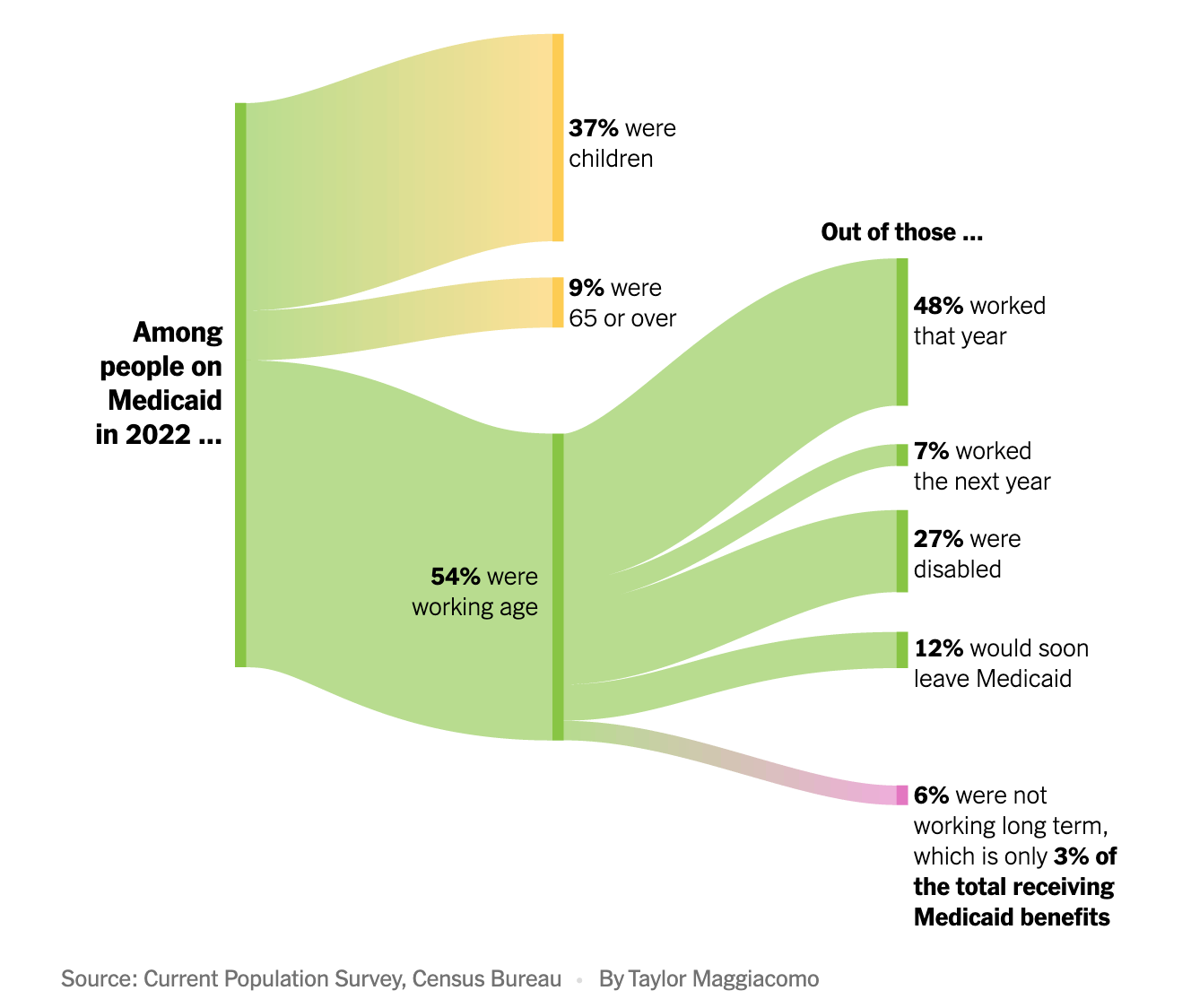
Only 3 percent of Medicaid recipients were non-disabled working-age adults persistently not working — the kind of people right-wingers imagine infest the program. And it’s a good bet that a fair number of these people had extenuating circumstances of some kind.

As I see it, right-wingers’ rhetoric about the budget deficit is a lot like their rhetoric about antisemitism. It’s not something they actually care about. It’s just a club they can use to bash their opponents.

But in that case, why the cruelty toward less-fortunate Americans? Well, as I see it the cruelty, as opposed to the dollars saved, is actually the point. Inflicting harm on the vulnerable isn’t something they do with regret, it’s something they do with a sense of satisfaction.

And:

Opinion | GOP tax bill is a big, fat warning sign to bond market - The Washington Post

There are many unpopular features in the GOP’s One Big Beautiful Bill, including draconian cuts to Medicaid and food stamps, higher energy prices and trillions of dollars in additional debt. Both Republican lawmakers and President Donald Trump seem to realize this, given that they’re jamming the bill through with little time for the media (and, by extension, voters) to catch up to what’s in it.

They’ve also spent recent weeks smearing the refs, including the Congressional Budget Office and the Joint Committee on Taxation, the professionals tasked with crunching numbers on the bill’s consequences. And on Sunday, Republicans hid from the Senate parliamentarian to avoid hearing her latest rulings about the cost of their bill.

On Monday, GOP lawmakers went a step further. As they had previously signaled they might do, they voted to stop pretending to care about what the bill costs or what the parliamentarian rules. Instead, they simply declared huge chunks of it to be free. Here’s how:

The package’s tax provisions alone would cost, on net, $4.5 trillion over the next decade. But Republicans said, “Eh, most of that tax package [about $3.8 trillion of it] shouldn’t really count as costing anything.”

That’s because Republican lawmakers had passed similar provisions in 2017, which are scheduled to expire at the end of this year. Republicans argue that Americans got used to having that part of the tax code around. So extending these lower tax rates wouldn’t, you know, feel different.

As I’ve explained before, this is not how budgets work. It’s like saying renewing your Netflix subscription should count as free, because you got used to having the streaming service already. Or each time you buy another Starbucks coffee, it doesn’t cost you anything, because you’ve enjoyed Frappuccinos before. Or if your current car lease expires, getting a new one is now complimentary, because you already got used to the convenience of having a car.

Under this logic, it doesn’t matter if you’ve already allotted every penny of next week’s paycheck to other expenses (as Congress has). You don’t need to make room in your budget to pay for these goodies because you’ve gotten used to them.

The reason we’re discussing these arcane accounting acrobatics is that when Republicans first passed their regressive tax-cut package in 2017, they deliberately scheduled their tax cuts to “turn off” early, in 2025, rather than last forever. They did this to make the cost of what they were doing look smaller. What to do when those tax cuts expired — and how to pay for them — would be tomorrow’s problem.

But the tide might be turning. In May, Moody’s, the last outstanding major credit agency that had still considered U.S. debt to be effectively riskless, finally downgraded it. Moody’s specifically cited the expectation that Congress would extend these costly tax cuts — the ones that senators are calling “free” — as a reason for its decision.

Thursday, July 3, 2025

ESA Solar Orbiter Produces Hitherto Unseen Views of Sun - With The Potential To Improve Space Weather Forecasts


                                        Artist's rendering of ESA Solar Orbiter


The recent news (e.g. WSJ, June 14-15) that the European Space Agency's Solar Orbiter has captured the first ever images of the Sun's south pole was exciting to any solar physicist. That includes the more than 100 researchers assembled at the SDO - 2025 conference I attended in February, e.g.


Their excitement would be understandable given how the prospect of any significant findings - i.e. connected with the solar poles-  would almost certainly tie into their own research using the Solar Dynamic Observatory. The range of potential areas ranged from solar inertial modes and their relation to the Sun's differential rotation, to the occurrence of sympathetic flares, and eruptivity of solar flares.

To that end, the ESA's solar spacecraft - like the Solar Dynamic Observatory - represents the ability for us to get observations of the Sun's atmosphere and surface that will help enhance space weather predictions. (Space weather being the term for the near Earth effects of solar eruptions such as associated with coronal mass ejections (CMEs) and solar flares.  

Indeed, just last year (May) the Sun erupted in a series of highly energetic solar flares and CMEs that severely disturbed Earth's magnetic field - enough to disrupt GPS-guided tractors used by farmers.  The events also intense currents through power grids, overheating transformers.  The combined effects also temporarily thickened Earth's atmosphere to the extent several thousand satellites had to adjust their orbits to avoid the drag created by the solar conditions.

On Wednesday two weeks ago the European Space Agency released the first clear images of the Sun’s south pole, which were captured in late March by its Solar Orbiter spacecraft. The $550 million (€500 million) Solar Orbiter, the size of a car and carrying 10 scientific instruments, launched on Feb. 10, 2020,.  In order to get into an orbit that enabled south polar views of the Sun the craft had to fly by Venus multiple times for a "sling shot" effect.  In this way Venus' mass could provide the gravitational "kick" needed to escape the Earth's orbital plan (or ecliptic).  Thus enabling it to push itself out of the ecliptic plane and into a higher angle to view the Sun's  poles. The change in views resulting are pronounced, e.g. compare the view from Earth:


Careful comparison of the two images will show that the lower one - from the Solar Orbiter - has the Sun's south pole slightly tilted upward.  This is also confirmed by the slightly more curved solar latitude and longitude lines. (Indicating the Orbiter has by now escaped the orbital plane using the sling shot effect).   This then enabled the even more well defined image of the south polar region shown below:

                       Sun's  south pole captured from solar orbiter.


Here, close examination shows tiny jets erupting from the surface, which we call spicules. These are dynamic bursts of solar plasma the origin of which is still being studied by solar physicists.  Another more detailed view of intense magnetic effects is shown below:


Look carefully and you will see mixed red and blue areas, also distinguished by intensity. In this case, the darker the color the stronger the magnetic field - which is along the line of sight from the Solar Orbiter to the Sun. The close study of these areas may well unravel the role of the solar dynamo in producing the 11-year and 22 -year solar cycles. See e.g.

And:

Studying the Sun's polar regions should help solar physicists – such as the groups attending the SDO -2025 conference-  probe the varying strengths of solar maximums. Being able to anticipate the intensity of each 11-year cycle could warn humanity of the dangers posed to satellites and ground infrastructure from space weather.

By October, scientists will receive views of the north solar pole that have already been taken by the spacecraft but have yet to be sent to Earth. Their goal is to look for differences between the two poles. In 2027 and 2029, Solar Orbiter will reach even higher inclinations, first 24 degrees and then 33 degrees, when the sun is heading toward solar minimum.

 It's an exciting time to look forward to for solar physicists.

 See Also:

Solar Orbiter gets world-first views of the Sun’s south pole

 And:

We FINALLY Saw the Sun's South Pole... and It’s Terrifying!

 And:


And:


And:

Wednesday, July 2, 2025

Free Will - Does It Exist and If So What Is Its Extent?

 As pointed out in previous posts (see links at bottom), philosopher Jean-Paul Sartre's core concept, in his book Being and Nothingness:


 was "bad faith" and he emphasized it in his Loyola debate with Christian Existentialist Gabriel Marcel. The most serious transgression an authentic being or person could make, according to Sarte, was to succumb or surrender to bad faith. By "bad faith" Sartre meant going against your own interior barometer to find an authentic Self.  In other words, taking the easy or conformist path, to "go along to get along". 

Above all, Sartre promoted his conviction that the central principle of existential philosophy was the individual's choice of being. Or as he repeated in various forums (not just his Loyola University debate) : "I am my choices."   This, obviously, presumes a measure of free will - given we exert choices -  and with them concomitant individual responsibility for them..  

 This topic came up earlier this year when the editor of Integra - the journal of Intertel - asked for member inputs on the topic of free will. My contribution is shown below, after which I will tie it into Sartre's concept of free will:


In my book  Dialectical Atheism, I wanted to probe more deeply into loose ends related to atheistic ontology. So I read Alex Rosenberg’s The Atheist’s Guide to Reality.  The book, predicated on an ultra-atheist perspective, sought to show why a meaningful conscious experience of reality couldn’t work and why there is no genuine free will.

Rosenberg based his claim on documented experiments, such as those by Lüder Deecke and Hans Helmut Kornhuber in 1964, showing that all human actions precede conscious decisions to perform them. 

For example, Rosenberg argues, in his discussion concerning neural time delays, that a simple action like flexing a wrist can’t be done at the instant one consciously thinks of doing so[1]. Instead, there’s an inevitable time delay of about 200 milliseconds from conscious willing to wrist flexing and finger pressing[2].  He adds that the cortical processes responsible commence 500 ms before that!  The obvious implication: Consciously deciding to do something is not the cause of doing it.

        By extension - according to Rosenberg-  if there is no real will, there can be no willpower. Rosenberg adopts this as a grounding for his notion that we are beings entirely governed by blind sight[3]. In other words, all our sensory outputs are based on ex post facto- conducted neural process corrections to much earlier sensory inputs.

A more radical concept of free will - as well as consciousness - has been defined by quantum physicist Evan Harris Walker (The Physics Of Consciousness), W  the "will channel" - measures "the channel capacity that can affect things and events. directly and globally, through space and through time." Adding (p. 266):

"Both stem from the same kinds of things, quantum mechanical events going on at the synapses."

 He estimates a transfer (data) rate for the will stream:

W = 2.35  x 10 3   Bits/ sec    

And  for the consciousness stream:

  C,  = 4.75  x 10 6   Bits/ sec

So that the ratio:  W/ C,  = 0.00124

  According to Walker W / C is always too small to effect alteration of reality. The signal is small compared to the noise of our everyday consciousness, influenced as it is buffeted by a multitude of competing distractions.  As he describes the effect:

"Our will images are so dim compared to those of our daily conscious existence that they are almost always lost in the daily consciousness stream."

Hence, we may entertain a desire to influence one event or another, but generally that desire perishes in an ocean of 'noise' from the distractions bombarding us.  Thus while the will image may enter or consciousness it ultimately has little or no effect there.

----------

The truth in the end is we know very little - in an exact sense - of how our will operates, including the extent it is free. But I suspect Evan Harris Walker comes closest to referencing that extent from a physics point of view. At the same time, I will take Sartre's philosophical interpretation over Rosenberg's any day. Why?

Rosenberg’s conjectures can be invalidated using a reductio ad absurdum approach. Basically, following his logic, all our fine cogitating, ruminating and writing translates to a torrent of meaningless effluent or gibberish. All our millions and billions of volumes of books, e-books and scientific or other journals amount to culminations of massive forest destruction or wasted bytes. With no introspection, the products of human thought have no interpretative dimensions. They’re merely elaborate chemical-physical automatons operating under the illusion of genuine choices.

But if this were true, how would the brain be able to work out a multi-body framework, i.e. using the Delaunay variables, to compute perturbations affecting celestial bodies, i.e. 


So if equations such as in celestial mechanics have no interpretative (or synergistic) origins,  dimensions, how did we manage to use them to send spacecraft to Mars, Mercury, Venus?   This is a question I reckon Mr. Rosenberg. can't answer    The point, of course, is that working through multi-body interactions in celestial mechanics requires serious choices and a skill beyond use of automatic processes.

 A less radical interpretation (than Rosenberg’s) appeared 12 years ago in the excellent Mensa Bulletin article ‘Will Power’ ( July, 2013 p. 24) by member Mark Chmielewski. According to Mark, our belief that we’re actually determining our actions in real time is an illusion generated by recourse to a set of pre-programmed algorithms in the prefrontal cortex. He observes:

 “The main functions of the prefrontal cortex involve planning responses to complex and difficult problems. It takes past events stored in those billions of neurons and present experiences, runs them through brain-created algorithms and sends a response to the body – which acts accordingly.”

In other words, no individual is capable of just randomly making a decision. The bottom line:

 ”every living human being’s decision is based on past information assimilated by the brain. The responses come from the brain based on the perceived situation.”

The Mensan author then finally arrives at the only acceptable definition of free will, which is one with which I can tacitly concur: “Free will is decision making absent past brain input”.

Again, true, but these limits of past brain dynamics, say overlaid on current brain patterns and behaviors, do not eliminate fundamental choices in the sense Sartre uses the term, nor do those limits majorly impact our fundamental capacity for choices. As Sartre would respond, based on notes from his Loyola debate in 1965:

"The fact that the ultimate term of existential inquiry must be a choice renounces the supposition that prior mechanical causation acts on the subject under consideration."

Further:

"Existential inquiry is a method destined to bring to light - in a strictly objective form - the subjective choice by which each living person makes himself a person. That is, makes known to himself what he is. Since what the method seeks is a choice of being at the same time as being, it must reduce particular behavior patterns to fundamental relations - not of will to power -but of being expressed in this behavior. It is then guided from the start toward a comprehension of being and must not assign itself any other goal than to discover its being and the mode of being confronting this being. It is forbidden to stop before attaining this goal."

 But that attainment of said goal, individual personhood different from all others ('being for itself), can be parlous. Two quotes from Sartre's April, 1965 Playboy interview are germane here:


The gist of what he's about is that the very nature of being truly human is to accept peril in making our own choices.  That in essence is freedom. What it means is that a measure of will is required to make such perilous choices that may not redound to our benefit or self -esteem. "Perilous" because they're often in divergence from how others perceive us. And hence these choices to be a certain kind of person can be inimical to our status or security. This is via defining us outside the bounds of what others will accept or support.  

E.g. "Jeez, I didn't know you were an atheist! I will pray for you!"

So yeah, past information plays a role for sure, but it does not negate the capacity to make current bold choices and the ability to fulfill (or not) at least some of our intentions. We surely cannot - at this time - exert a personal free will say to stop Trump's "Big Beautiful Bill - which is an abomination.  But we can hope- perhaps - enough courageous congress critters exist in the House to kill it. In other words, CHOOSE to kill it with their votes. Their choice, their WILL, is then exercised to support the national welfare and not Trump's ego.

The bottom line is that we as humans are still able to make our choices, whether in good faith or bad, there to define ourselves as separate individuals. So I choose to write this blog post myself, for example, instead of letting an A.I. bot do it.


[1] Rosenberg: The Atheist’s Guide to Reality- Enjoying Life Without Illusions, 152

[2] Ibid..


See Also:

How The Loyola U. Visit Of Existentialist Philosopher Jean-Paul Sartre Propelled My Path To Atheism

And:

"The Saint and the Atheist" (Thomas Aquinas and Jean-Paul Sartre) - There Need Be NO Connection At All

And:


All You Need To Know About The 'Big, Beautiful Abomination' - And Why It Must Be Slain In The House


 In my June 19th post I already had sized up the atrocity misnamed "the big, beautiful bill" which has just passed the Senate - thanks to cowards like Sen. Lisa Murkowski. She, who put her own state of Alaska's interest above those of the country. See e.g.

Murkowski Casts Decisive Vote for Trump Policy Bill, Making an ‘Agonizing’ Choice - The New York Times

As I noted in my earlier post about this travesty:

"This vile bill which passed the House and is currently in the Senate, would require states to pay 75% of the cost to administer the Supplemental Nutrition Assistance Program, or SNAP, which offers low-income people a monthly allowance to purchase food.

Currently, the federal government splits the cost evenly with states. If the ratio shifted, Colorado would have to come up with an additional $47 million to fund the workers at county human services departments who determine SNAP eligibility.

The bill, backed by President Donald Trump, would also require states to start paying a share of the food benefits themselves. The state estimates it could have to come up with anywhere from $130 million to $259 million annually to pay its share, depending on the language in the final bill.

Colorado can’t come up with that amount of cash, particularly given the state’s constitutional limits on raising taxes, Polis — a Democrat — and 10 people working in human services and agriculture said in the letter. State lawmakers had to close a $1.2 billion budget hole for the upcoming fiscal year, and warned that Colorado could face an even bigger gap next year, with fewer options to fill it."

But even that barely exposes the hell ordinary Americans will have to endure just to get enough SNAP benefits to avoid nutritional deficiencies in their kids.  The key lies in the administrative burdens the Repukes are imposing which are elaborated in John Oliver's recent show:

John Oliver on Trump’s ‘big beautiful bill’: ‘Death by a thousand cuts’ | John Oliver | The Guardian

Basically, if one doesn't complete the online forms in a timely fashion and fulfill all related demands, food stamps will be cut - same goes for Medicaid benefits.

Now we go to other voices on this ghastly perfidy which essentially insults and spits on the graves of all the soldiers who fought for our freedoms, whether at Iwo Jima, Corregidor, Buna Gona, Utah Beach at Normandy, or Belleau Wood.

From Ezra Klein:

Opinion | The Disaster That Just Passed the Senate - The New York Times

"This bill is a bad piece of legislation — trillions of dollars in tax cuts, very much tilted toward the rich, with savage cuts to Medicaid, nutrition assistance and green energy. Even with those cuts, we can expect more than $3 trillion to be added to the national debt over 10 years. And befitting a policy like that, the bill is hugely unpopular: A poll from late June found nearly two-to-one opposition to the bill. Vulnerable Republicans do not seem excited to run on the wreckage it’s going to create.

But bad policy only matters if people know about it, and a lot of people don’t. Those of us hearing about this bill — even those of us covering it — can’t keep the whole package in mind. The Times has a great list of nearly all the provisions, and a lot of them would be major policy fights on their own. But in part because of that — and because the Trump administration is flooding the zone with so many other major policy fights — it has been hard to focus attention on what is passing and what can actually be done about it.

From Robert Reich:

by Robert Reich | June 30, 2025 - 5:58am | permalink

— from Robert Reich's Substack

Friends,

One of my objectives in this daily letter is to equip you with the facts you need. As the Senate approaches a vote on Trump’s giant “big beautiful” tax and budget bill, I want to be as clear as possible about it.

First, it will cost a budget-busting $3.3 trillion. According to new estimates by the nonpartisan Congressional Budget Office, the Senate bill would add at least $3.3 trillion to the already out-of-control national debt over a decade. That’s nearly $1 trillion more than the House-passed version.

Second, it will cause 11.8 million Americans to lose their health coverage. The Senate version would result in even deeper cuts in federal support for health insurance, and more Americans losing coverage, than the House version. Federal spending on Medicaid, Medicare, and Obamacare would be reduced by more than $1.1 trillion over that period — with more than $1 trillion of those cuts coming from Medicaid alone.

All told, this will leave 11.8 million more Americans uninsured by 2034.

Third, it will cut food stamps and other nutrition assistance for lower-income Americans. According to the CBO, the legislation will not only cut Medicaid by about 18 percent, it will cut Supplemental Nutrition Assistance Program (food stamps) by roughly 20 percent. These cuts will constitute the most dramatic reductions in safety net spending in modern U.S. history.

Fourth, it will overwhelmingly benefit the rich and big corporations. The CBO projects that those in the bottom tenth of the income distribution will end up poorer, while the top tenth will be substantially richer.

The bill also makes permanent the business tax cuts from the 2017 legislation, further benefiting the largest corporations.

Finally, it will not help the economy. Trickle-down economics has proven to be a cruel hoax. Over the last 50 years, Congress has passed four major bills that cut taxes: the 1981 Reagan tax cuts; the 2001 and 2003 George W. Bush tax cuts; and the 2017 Trump tax cuts. Each time, the same three arguments were made in favor of the tax cuts: (1) They’d pay for themselves. (2) They’d supercharge economic growth. (3) They’d benefit everyone.


by Robert Reich | July 4, 2025 - 6:02am | permalink

— from Robert Reich's Substack

President Donald Trump’s 940-page Big Ugly Bill was passed today by the House and is now on the way to the White House for Trump’s signature.

It is a disgrace. It takes more than $1 trillion out of Medicaid—leaving about 12 million Americans without insurance by 2034—and slashes Food Stamps, all to give a giant tax cut to wealthy Americans.

It establishes an anti-immigrant police state in America, replete with a standing army of Immigration and Customs Enforcement agents and a gulag of detention facilities that will transform ICE into the most heavily funded law enforcement agency in the government.

It will increase the already-bloated deficit by $3.4 trillion.

It’s also disgraceful because of how it came to be.

» article continues...


From WaPo Columnist Catherine Rampell:

Opinion | GOP tax bill is a big, fat warning sign to bond market - The Washington Post

There are many unpopular features in the GOP’s One Big Beautiful Bill, including draconian cuts to Medicaid and food stamps, higher energy prices and trillions of dollars in additional debt. Both Republican lawmakers and President Donald Trump seem to realize this, given that they’re jamming the bill through with little time for the media (and, by extension, voters) to catch up to what’s in it.

They’ve also spent recent weeks smearing the refs, including the Congressional Budget Office and the Joint Committee on Taxation, the professionals tasked with crunching numbers on the bill’s consequences. And on Sunday, Republicans hid from the Senate parliamentarian to avoid hearing her latest rulings about the cost of their bill.

On Monday, GOP lawmakers went a step further. As they had previously signaled they might do, they voted to stop pretending to care about what the bill costs or what the parliamentarian rules. Instead, they simply declared huge chunks of it to be free. Here’s how:

The package’s tax provisions alone would cost, on net, $4.5 trillion over the next decade. But Republicans said, “Eh, most of that tax package [about $3.8 trillion of it] shouldn’t really count as costing anything.”

That’s because Republican lawmakers had passed similar provisions in 2017, which are scheduled to expire at the end of this year. Republicans argue that Americans got used to having that part of the tax code around. So extending these lower tax rates wouldn’t, you know, feel different.

As I’ve explained before, this is not how budgets work. It’s like saying renewing your Netflix subscription should count as free, because you got used to having the streaming service already. Or each time you buy another Starbucks coffee, it doesn’t cost you anything, because you’ve enjoyed Frappuccinos before. Or if your current car lease expires, getting a new one is now complimentary, because you already got used to the convenience of having a car.

Under this logic, it doesn’t matter if you’ve already allotted every penny of next week’s paycheck to other expenses (as Congress has). You don’t need to make room in your budget to pay for these goodies because you’ve gotten used to them.

The reason we’re discussing these arcane accounting acrobatics is that when Republicans first passed their regressive tax-cut package in 2017, they deliberately scheduled their tax cuts to “turn off” early, in 2025, rather than last forever. They did this to make the cost of what they were doing look smaller. What to do when those tax cuts expired — and how to pay for them — would be tomorrow’s problem.

But the tide might be turning. In May, Moody’s, the last outstanding major credit agency that had still considered U.S. debt to be effectively riskless, finally downgraded it. Moody’s specifically cited the expectation that Congress would extend these costly tax cuts — the ones that senators are calling “free” — as a reason for its decision.

From Other Voices:

by Ailia Zehra | July 2, 2025 - 5:29am | permalink

— from The Hartmann Report

As Republican lawmakers near final approval of President Donald Trump’s “Big, Beautiful Bill,” experts warn that his core supporters will feel its impact most acutely.

An analysis published in The New York Times on Tuesday highlighted concerns that the sweeping fiscal package disproportionately benefits the wealthy while imposing sharp social safety net cuts on working-class and rural Republicans — the very demographic that forms Trump’s foundation.

Analysts quoted in the report emphasize that Trump's base, particularly rural residents of less-educated, lower-income MAGA-voting communities “stand to bear the brunt of its negative consequences."

Bobby Kogan of the liberal-leaning Center for American Progress told the Times it was “the biggest cut to programs for low‑income Americans ever,” warning the bill will decimate supports like Medicaid and the Supplemental Nutrition Assistance Program (SNAP, or food stamps).

» article continues...

And:

by Heather Digby Parton | July 2, 2025 - 4:58am | permalink

— from Salon

People think that Donald Trump is responsible for blowing up the democratic system of checks and balances, but he was actually a late comer to that game. It was establishment Republicans like former Senate Majority Leader Mitch McConnell, R-Ky., also known as the “gravedigger of democracy,” who can take credit for that. From the moment he became the Republican minority leader in 2007, he laid out the roadmap for the modern GOP to achieve its goals by throwing bipartisanship on the trash heap and setting it on fire. As minority leader, McConnell believed in one thing: Obstruction. And when the GOP attained the majority, he pushed through the Republican agenda by any means necessary — norms, rules, even laws be damned.

Over the years, McConnell ended up having his differences with Trump. But this past week, as the Senate grappled with the bloated “big, beautiful bill” under Trump’s arbitrary July 4 deadline, McConnell shared with his Senate colleagues a bit of tactical wisdom he’d learned over the years. Asked about the danger of massive cuts to vital government programs to their reelection prospects, McConnell reassured both his party and the American people by saying, “they’ll get over it.”

» article continues...

And:

by Ailia Zehra | July 3, 2025 - 5:22am | permalink

— from Alternet

President Donald Trump appeared to misjudge the effects of his “Big, Beautiful Bill” on Medicaid on Wednesday, even as the legislation advances.

NOTUS reported that Trump appeared unclear about the bill’s actual impact during a White House meeting on Wednesday with moderate Republicans and members of the Main Street Caucus.

According to three individuals present, he asserted that Republicans should avoid changing three programs ahead of upcoming elections: “Medicaid, Medicare and Social Security.”

“But we’re touching Medicaid in this bill,” one member pushed back directly, per the report.

» article continues...

The time now is for ANY House Reeps with a semblance  of spine to come to the aid of their country - which means ignoring  Captain Bonespurs bluster and threats and slaying this beast one time.  The future of this nation is riding on it, and no, that ain't histrionics - not if you seriously read and processed the various contributions in this post.  Let's hope it happens by July 4th so we have a real Independence Day - from Trump's America- Wrecking Abomination