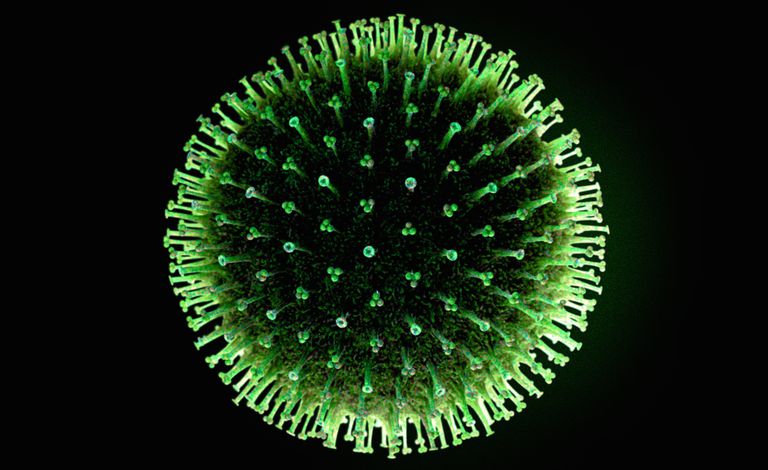
John M. Barry's book, 'The Great Influenza', ought to be one of priority interest for every citizen, especially in a government shutdown - even one spawned by a monumentally stupid unforced error committed by arguably the worst president in American history. As NY Times columnist Paul Krugman described it in a recent column:
"There have been many policy disasters over the course of U.S. history. It’s hard, however, to think of a calamity as gratuitous, an error as unforced, as the current federal shutdown."
In terms of influenza - which now appears to be flickering out in the U.S. (WSJ, 'Flu Season Looks Less Dire Than Last One', Jan. 11, p. A3) we also know that in 1918 the first emergence of what was to become "the Great Influenza" began with a weak initial foray (akin to a 'mild flu' today) in the spring. It then abated, and returned with a vengeance in the fall.
How bad was it near the end? Barry's description of the scene in Philadelphia in the winter of 1918-19 says it all (p. 326):
"The corpses had backed up at undertakers, filling every area of these establishments and pressing up into living quarters; in hospitals morgues overflowing into corridors; in the city morgue overflowing into the street. And they had backed up in homes. They lay on porches, in closets, in corners of the floor, on beds."
Obviously no corpses were actually counted but best estimates - according to Mr. Barry and other researchers -put the infected global total at 500 million, and up to 100 million dead. If this is an upper limit estimate it means 5 % of the world population dead from this flu pandemic. (The lower limit is generally taken to be 1.9 % of the world's population dead.) By contrast, the Black Death which raged from 1347- 1351, is estimated to have wiped out over a third of Europe's population, and reduced the global numbers from 450m to between 350 m and 375m. At the upper limit this means up to 22 percent of the world's population removed by this pestilence. In other words, while the Black Death took out a larger proportion of the world's population, the 1918 Influenza pandemic took out more in sheer numbers - but not as a proportion of the total (estimated at about 1.5 b at the time).
Why is this germane now? Well, because a government shutdown with reduced resources, for example at the TSA (to check for biological material or infected victims) leaves us more exposed than it would otherwise.
Now it is true that the influenza winding down has been much less virulent than last year. According to the previously cited WSJ piece: "As many as 7.3 million have fallen ill" and there've been about 12,000 deaths. Last year's H3N2 outbreak felled 48.8 million and killed over 80,000. Maybe we were fortunate - at least thus far- that the H3N2 epidemic did not occur this year with the shutdown going on.
Anyway, the question we ask here is what manner of pestilence was this 1918 influenza that it could have bodies piled up like cordwood in many cities (estimated 675,000 dead in the U.S.) . Barry translates this death toll - more than killed in the Civil War (620, 000 in the line of duty) - to 1,750, 000 in the context of our proportionately greater population today. This is a bit larger (by roughly 200,000) than the population of Philadelphia today.
So how account for this horror which felled so many humans and caused more deaths than the Black Plague of the Middle Ages? The best way to appreciate the magnitude of the catastrophe is to go inside Barry's medical records and descriptions of the time, and in particular to see the literal holocaust this influenza inflicted on human bodies in its 1918 fall re-emergence.
First, an idea of the relative proportion of flu deaths relative to others (p. 238): "During the course of the epidemic, 47 percent of all deaths in the United States, nearly half of all those who died from all causes combined, resulted from influenza and its complications."
In other words, the toll from influenza exceeded that for cancer, heart disease, stroke, tuberculosis, accidents, suicide and murder.
Another curious aspect of the re-emerged influenza lay in the age groups targeted, not so much the elderly or the very young but rather the young, healthy adult. From p. 239:
"The single greatest number of deaths occurred in men and women aged twenty -five to twenty nine, the second greatest number in those aged thirty to thirty four. The third gresatest in those aged twenty to twenty -four."
One of the myths circulated in the ensuing years about the 1918 pandemic is that it killed just about everyone infected. This misconception, given the actual death rate was closer to 3- 5 percent, likely got started when people saw or read headlines of the accumulated dead, e.g. p. 223: "Undertakers, themselves sick, were overwhelmed. They had no place to put bodies. Grave diggers were either sick or refused to bury victims."
Or (p. 224): "In homes, corpses were wrapped in sheets, pushed into corners, left there sometimes for days, the horror of it sinking in deeper each hour. People too sick to cook for themselves, too sick to clean themselves, too sick to move the corpse off the bed- often lying on the same bed with the corpse"
Reading this would even prompt many today to believe that anyone who contracted the 1918 flu was killed by it. In fact, the 1918 virus' reproduction number (an estimate of its transmissibility) was only slightly higher (1.8) than the H1N1 (1.4 to 1.5) that caused the 2009 pandemic - and for which Obama declared a legitimate national emergency . (For reference, a reproduction number of 1.0 means that each person infected will, on average infect one other person). Still, the slightly higher transmissibilty meant (p. 231): "This virus is transmitted so effectively that it exhausts its supply of susceptible hosts". Which meant that tens of millions had been sickened in the U.S.
The point missed here, is that our civilization stands on a much more tenuous threshold than many believe, say between stability and chaos and collapse. In other words, it doesn't take a 100 percent or even 50 percent fatality level to bring us to our knees. Five percent or ten percent can do it, especially if critical manpower is affected. Then yes, corpses will "pile up" and there won't be the people to deal with them, or the space, venues. Let's again hope no Avian flu (H5 N1) outbreak occurs during this stupid Trump-McConnell-Ann Coulter shutdown.
Moving on, it's instructive to read the level of carnage inflicted on the organs of many victims by this newly spawned H1N1 influenza virus.
E.g. p. 227: "Most striking was the cyanosis, the patients sometimes turning almost black. After gasping for several hours they became delirious and incontinent, many died struggling to clear their airways of a blood tinged froth that sometimes gushed from their mouth and nose."
P. 235: "In Proceedings of the Royal Society of Medicine, a British physician noted 'one thing I have never seen before - the occurrence of subcutaneous emphysema - pocket of air accumulating just beneath the skin. Beginning in the neck and spreading sometimes over the whole body'. "
Further (ibid.):
"Those pockets of air leaking through ruptured lungs made patients crackle when rolled onto their sides. One navy nurse later compared the sound to a bowl of Rice Crispies."
And(ibid.): "Extreme earaches were common. One physician noted inflammation of the middle ear - marked by pain, fever and dizziness- 'developed with surprising rapidity and rupture of the drum membrane' was observed sometimes a few hours after the onset of pain....Discharge of pus from the ear was also noted."
Further (p. 236):
"Then there was the blood spurting from the body. To see blood trickle, and in some cases spurt from someone's nose, mouth, even from the ears or around the eyes had to terrify. ...."
P. 237: "In U.S. Army cantonments, from 5 to 15 percent of all men hospitalized suffered from epistaxis - bleeding from the nose, as with hemorrhagic viruses such as Ebola. There were many reports that blood sometimes spurted with such power to travel several feet."
"Female patients had a hemorrhagic vaginal discharge - which was at first considered to be coincident menstruation. But later was interpreted as a hemorrhage from the uterine mucosa."
P. 240: "In the meantime this influenza, for after all it was only influenza, left almost no internal organ untouched. One distinguished pathologist noted blood flooding from the brain, probably because of an out of control inflammatory response.... the virus also affected the pericardium, the sac of tissue that protects the heart.
"The amount of damage to the kidneys varied but at least some damage 'occurred in nearly every case'. The liver also was sometimes damaged. The adrenal glands suffered 'necrotic areas, frank hemorrhage and occasional abscesses...muscles along the rib cage were torn apart both by internal toxic processes and the external stress of coughing.... even the testes showed striking changes encountered in nearly every case."
And p. 241: "Only one known disease - a particularly virulent form of bubonic plague called pneumonic plague, which kills approximately 90 percent of its victims - ripped the lungs apart the way this disease did."
The preceding documentation leads us to ask what aspect of the virus led to its sheer lethality and violence - especially for young adults. Barry provides the clues on pages 247-48, and these have to do with an over reaction of a too strong immune system. As he writes, "the immune system is at its core a killing machine. It targets infecting organisms with an arsenal of weapons...and can behave like a SWAT team that kills the hostage along with the hostage taker."
Such is the case when an invader like the 1918 flu virus enters the lungs given the first line of defense involve the entire respiratoruy tract and lungs - which cells "secrete enzymes that attacks bacteria and viruses - including influenza - or block them from attaching to tissue beneath the mucus."
The problem is that this attack can lead to unintended consequences, as if a biological SWAT team - comprised of macrophages and 'natural killer cells"- targeted the body instead od the invaders. As Barry writes (p. 247):
"The virus was often so efficient at invading the lungs that the immune system had to mount a massive response to it. What was killing young adults a few days after the first symptom was not the virus. The killer was the massive immune response itself."
He then describes the mechanism of inflammation that unleashes the so called 'cytokine storm' which has the most devastating effects on young organs:
"Once an infection gains a foothold the immune system responds
with inflammation .The actual process of inflammation involves the release of proteins called 'cytokines'. .. When cytokines bind to receptors in the hypothalamus, body temperature goes up, the entire boy becomes inflamed. In influenza, fever regularly climbs to 103 and even higher."
He then points out that cytokines themselves "can have toxic effects." This means the typical symptoms of influenza, e.g. wracking cough, headache, body aches are "not caused by the virus but by cytokines." Hence, your own body's defense mechanisms are what's making you feel so god awful. And these defenders can kill as well, turning the lungs into a bloody mass by destroying the alveoli and wreaking other havoc in the aforementioned cytokine storm. His description of the immediate process is stunning and bears repeating (p. 249):
"The same capillaries that moved blood past the alveoli delivered this attack. The capillaries dilated, pouring out fluid, every kind of white blood cell, antibodies, and cytokines into the lung.. Then these cytokines and other enzymes virtually obliterate the capillaries. Even more fluid pours into the lung...The cells that line the alveoli are damaged even if they survive the virus itself.
Pink, glassy membranes, called hyaline membranes, form on the insides of the alveoli. Once these form, surfactant - a slippery, soap like protein that reduces surface tension and eases the transfer of oxygen into red blood cells - disappears from the alveoli and more blood floods the lungs."
And there you have- in blunt and brutal biological prose - how a young adult (most often) drowns in his or her own fluids - while fighting the flu. In this case the misnamed "Spanish flu". The purpose of this post has been to provide blog readers with an oversight of what transpired 100 years ago with the pandemic that wiped out more people than any other. It is also, hopefully, to encourage you to get hold of Barry's book or any other (like Pale Rider: The Spanish Flu of 1918 and How It Changed the World) because I believe all these works contribute to a better understanding of a history that's too often been ignored or de-emphasized. We need to understand these pandemics - especially of influenza - in the event an even more virulent and deadly virus awaits.
In their book, 'The End of Epidemics', authors Jonathan D. Quick and Bronwyn Fryer argue that the most frightening future risk is the potential for a new, highly contagious and deadly influenza arising from a "viral stirring pot". Such a "pot" would include avian, animal (e.g. swine) and human-infecting viruses. They also note the opportunity for such mixing abounds as beasts, birds and humans rub shoulders in places like factory farms. Like Dr. Sanjay Gupta's ominous warning given some years ago. e.g.
https://www.cnn.com/2017/04/07/health/flu-pandemic-sanjay-gupta/index.html
Excerpt:
"Pandemic flu is apolitical and does not discriminate between rich and poor. Geographical boundaries are meaningless, and it can circle the globe within hours. In terms of potential impact on mankind, the only thing that comes close is climate change. And, like climate change, pandemic flu is so vast, it can be challenging to wrap your head around it."
Dr. Quick's take is this is not a matter of if but "when". All of us need to pay attention, and hope to Hell that when that monster bug strikes we are not in the middle of another government shutdown dictated and orchestrated by Ann Coulter and Donald Trump.
Addendum: Virologist Vincent Racaniello has a list of pet peeves about a number of Barry's claims which you can find on his "Virology blog". My take is most are far too technical to cause readers of Barry's fine book to lose sleep, and even Racaniello admits they should not detract from reading it. See e.g.