
Several posts ago (July 18) I highlighted how our space weather forecasts are rendered replete with errors by virtue of changing magnetic fields. These can be localized solar region fields such as occur near sunspots (and which trigger large flares) or larger scale solar magnetic fields that interact with Earth's magnetosphere. In any case, space weather research is motivated by the quest (and need) to understand the proximate and distal effects that solar activity has on the near Earth space environment. It also includes the effects on our electronic infrastructure.
In my June 10, 2012 post I noted that the CME (coronal mass ejection) you don't want to see is the one that smacks our planet broadside, sending power grids crashing down like so many tenpins, knocking out GPS satellites, and in general making life miserable for millions. As I noted in an earlier blog:
http://brane-space.blogspot.com/2012/01/monster-plasma-blob-headed-for-earth-is.html
We narrowly dodged such a monster six months before that blog post was written. Less well known is that barely five weeks later, on July 23, a solar storm manifested which had a magnitude comparable to the classic Carrington event. It narrowly missed Earth but provided an object lesson on the need to plan and monitor for such intense events.
While it is some comfort to know that flare energy (as well as that to power coronal mass ejections) is limited by the magneto-hydrodynamic potentials available on a star like the Sun, this is not really much consolation if and when a major energy burst whacks us straight on broadside with 1 million amp field-aligned induction currents that have the potential to take out all our power grids in a cascade of failures. Space weather aficionados call such maxi-catastrophes "Carrington Events" after the signature original event that transpired in September, 1859. This event incepted geo-magnetic currents so large that for days telegraph operators could actually disconnect their equipment from battery power and send messages solely via the emergent "auroral currents".
In our own current situation, we've become a more vulnerable society by constructing mammoth, interlocked power grids which can crash if the right combination of factors is imposed. While we do have high voltage transformers that connect directly to the ground (zero or earth potential) to neutralize power surges from lightning strikes, these don't afford any protection against powerful geo-magnetic currents that are induced in the earth and flow upward into the grid. Then ...one such mammoth event, could spark calamity.
Over the last two years of the scientifically savvy Obama administration, notice was taken of these solar events and a strong impetus provided to monitor space weather and devise strategies for forecasts and dealing with impacts. In October, 2015, for example, the White House Office of Science and Technology released the National Space Weather Strategy:
http://bit.ly/space-weather-strategy
And also an accompanying action plan:
http://bit.ly/space-weather-action
Subsequently, an October 13, 2016 executive order called for space weather preparedness and efforts to minimize the extent of economic loss and human hardship from adverse space weather events such as powerful CMEs. See, e.g.:
http://bit.ly/space-weather-EO
One thing all workshop participants agreed on even then is that despite major developments in space weather modeling, the forecasting is still in its infancy. As I pointed out in my previous post on space weather, a lot of this can be attributed to inadequate data or observations by which to construct theoretical models. Let us note here that these are the gold standard for prediction, as opposed to relying on brute statistics - often using ex post facto methods.
One of the shortcomings which I noted before is the dearth of space craft between Earth and the Sun. One of the primary monitoring craft we have is confined to the L1 (Lagrangian) point i.e. where Earth's and Sun's gravities balance out. This is the Advanced Composition Explorer (ACE) satellite which can measure the intensity and magnetic orientation of any CME that sweeps by it. There is also the Deep Space Climate Observatory (DSCOVR) and the Solar and Heliospheric Observatory (SOHO).
A huge current problem is that ACE is nearly on its last legs and a replacement monitor is needed, lest we become "blind" to the killer CME with our name on it.
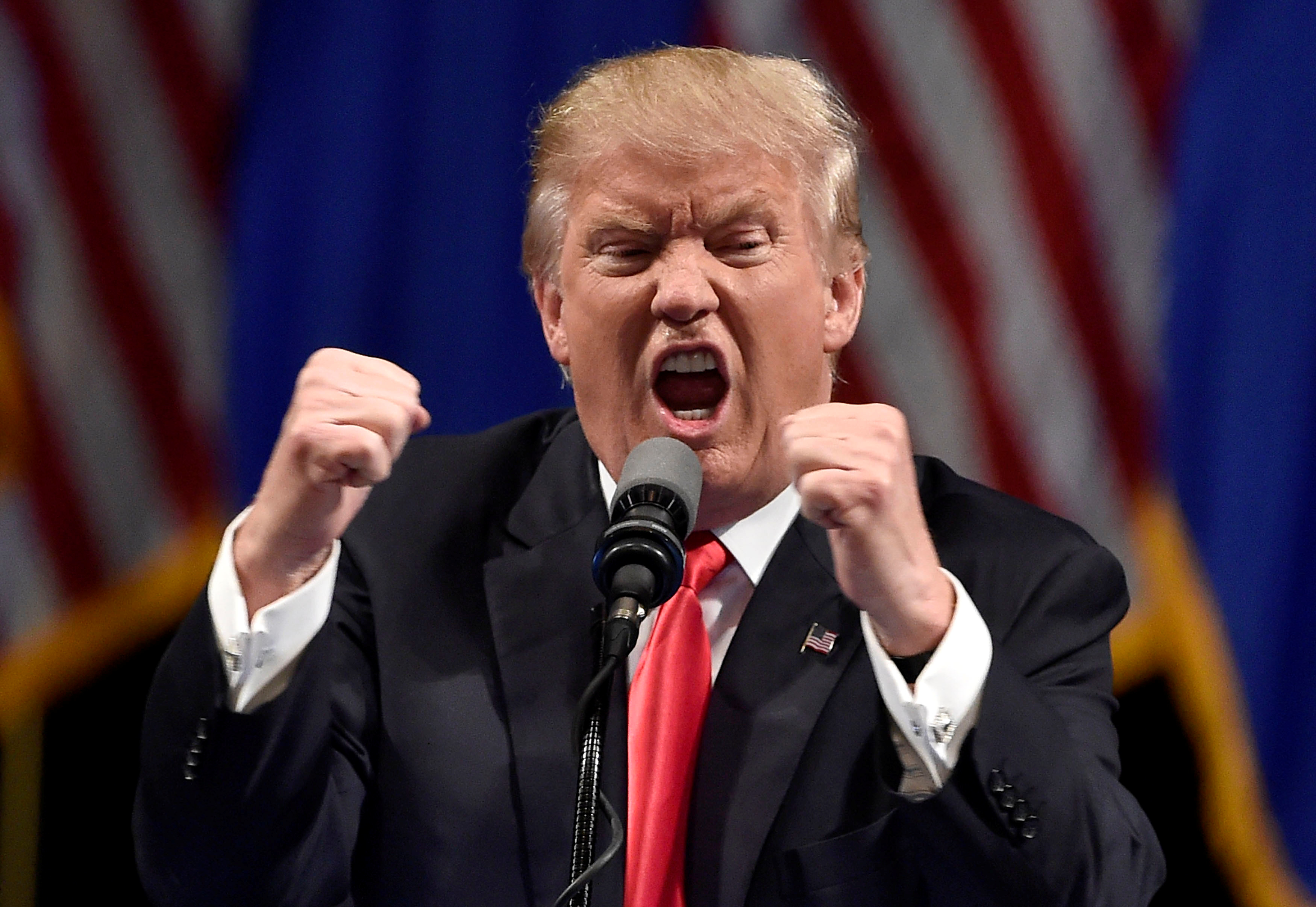
Is the Trump bunch doing anything to repair the ACE or ensure the other craft remain in prime monitoring positions? We don't know but it appears all these programs have been left to languish along with the development of forward strategies to deal with space weather cataclysms. One thing we do know is the space budget has been cut and severely.
The biggest need currently is open access to models in space weather research. Such models being readily accessible to the space weather community will ensure we move forward expeditiously in forecasting, testing and validating models.
On the positive side, . Ed Perlmutter (CO-7th) introduced the Space Weather Research and Forecasting Act. The Act strengthens space weather research by directing federal agencies to develop new tools and technologies to improve forecasting and set benchmark standards to measure space weather disturbances and their potential impacts to Earth. The legislation outlines clear roles and responsibilities for the federal agencies which study and predict space weather events, including the National Aeronautics and Space Administration (NASA), the National Oceanic and Atmospheric Administration (NOAA), the National Science Foundation (NSF), the Department of Defense (DOD), and the Federal Aviation Administration (FAA).
Additionally, the legislation enhances the relationships between federal agencies, academic researchers and the commercial industry. The legislation also directs NOAA to develop plans to provide a back-up for the aging Solar and Heliospheric Observatory (SOHO) satellite, the only currently operating satellite providing imagery of space weather that could impact Earth.
Even if by some small chance the Act passes the House, we have to hope it also passes the Senate and that Trump manages to muster enough sense to sign it. Don't hold your breath.
See also:
http://www.spaceweather.com/

