Showing posts with label Hisaki Space Telescope. Show all posts

Tuesday, September 19, 2017

Particle Beams Over Jupiter's Poles Incite Questions

Image result for brane space, Jupiter aurora
Infrared image of auroral oval above Jupiter's southern polar regions.

In earlier posts, I examined some of  the research into the appearance of aurorae on Jupiter. For example, on Nov. 21, 2015 I cited some of the earliest research done, by two astronomers  (Ray S. Clary and James H. Hunter Jr.)  from the University of South Florida, e.g.
No photo description available.
Their paper, Hydrogen Alpha Auroral Activity on Jupiter', appeared in The Astrophysical Journal (Vol. 199, p. 517) and dealt with the attempted detection of auroral activity on the largest planet.  They carried out their observations from April through November, 1972 "usually with Jupiter 2 hours or less  from the meridian". This would have ensured the optimal seeing conditions since Jupiter's altitude would be displaced enough from the horizon to avoid atmospheric effects, and enable the greatest clarity.

The pair ended up making a total of 100 hours of observation yielding some 2,000 photographs of Jupiter, most of them prior to the planet's opposition on June 24 of that year. Still "observations were often interrupted by clouds or haze"  Alas, the results themselves were ambiguous. Examining their prime plates published in their paper (4 pages in all) I could detect nothing remarkable or any features that stood out - even in the polar areas.

Contrast this limited observational condition with one of the highly enhanced images of Jupiter's aurorae (at N. and S. poles)  visible in the Hubble Space Telescope photograph below e.g.

Image result for brane space, Jupiter aurora
A major difference is that unlike Earth's auroras, those on Jupiter are nearly continuous - driven by the planet's rapid rotation and its volcanic moon (Io),  which spews out sulfur and oxygen ions as well as electrons into space, The latter speed along the planet's magnetic field lines and - if powerful enough - slam into the atmosphere causing its particles to glow.

Tao et al (Journal of Geophysical Research -Space Physics, Oct. 2015, p. 1002), using the Japanese Hisaki Space Telescope, measured variations in the brightness of the Jovian aurorae. They reported observing two kinds of auroral pulses. In one, the aurora brightened for up to several days at a time, and the authors attributed this to the solar wind. Thus, as it 'washes over' the planet, the charged particles are buffeted and compress Jupiter's magnetic field. This is very similar to what happens on Earth.

The team also observed much more rapid variations, with pulses typically lasting less than ten hours. By comparing the Hisaki images with images taken simultaneously by the Hubble Space Telescope, Tao et al could see these variations arose from the aurora brightening at lower altitudes, at the bottom of the auroral arc and as reported by Kimura at al (op. cit.)

Another mystery that emerged was the fact that the ultraviolet (UV) radiation intensity appeared much brighter than the UV from the Sun.  How can this be? A planet's UV radiation intensity greater than a star's?

Last August, NASA’s Juno spacecraft deepened that mystery: In a close flyby of Jupiter’s poles, it found powerful angular beams of electrons above the aurora, extending in energy to greater than 1 million electron volts. These beams shoot upward over the polar caps and over the main aurora, even where a weaker downward component contains sufficient energy flux to generate the powerful emissions from the main aurora.

Now, as a contribution to a special Geophysical Research Letters section on Juno’s first encounter with Jupiter, Mauk et al. provide the most detailed analysis of this phenomenon yet. Although they don’t know the causes, they suggest it may be the key to understanding Jupiter’s intense auroras.

Juno’s close encounter came on 27 August 2016, just a couple months after it arrived at Jupiter to study the planet, its moons, and its enormous magnetic field. The spacecraft’s pass over the northern and southern poles took it above dancing ovals of aurora, allowing it to peek into the polar regions within.  Mauk et al analyzed data from the Jupiter Energetic Particle Detector Instrument, which measured the trajectories and energies of the charged particles whizzing past. As the craft approached the auroral oval from the more equatorward regions, it saw typical signatures of trapped electrons with up-down differences reminiscent of those generating faint diffuse auroras at Earth.

When the spacecraft passed directly over the bright main auroral oval, it detected two highly directional angular beams—for both downward and upward traveling electrons. When Juno fully crossed inside the oval, deep within the polar caps, the downward beams virtually disappeared, leaving only the upward beams, varying in intensity but always present. This is very unlike what happens at Earth, where spacecraft passing over the most intense auroras find electrons accelerated downward only into what are called energy beams.

The Jovian bidirectional angle beams indicate that Jupiter’s aurora are generated by a totally different process than on Earth—a much more random one where collisions and turbulence propel particles both down and up along magnetic field lines. The team hypothesizes that this may have been happening most strongly in the region below Juno’s position, which could explain why Juno saw the large up-down differences in the beams over the main auroral oval.

It's tempting to conjecture that the monodirectional electron angular beams emerging from the “polar cap,” can be modeled using something analogous to:
Image may contain: text
The diagram shows the orbital plane of the (25–800 keV) electron's motion, as well as the orientations of the local magnetic induction (B) - out of the plane (toward the reader), and the radiated E-field which is polarized parallel to the orbital plane.  The authors' abstract (Geophysical Research Letters, https://doi.org/10.1002/2016GL072286, 2017)  notes the energy spectra of all beams being monotonic and hard (i.e. not structured in energy), showing power law-like distributions often extending beyond ~800 keV.   They also make reference to "variable downward energy fluxes (below 1 RJ altitudes within the loss cone".


Note that the loss cones is an important device in space physics. One uses the sine of the loss cone angle to obtain the mirror ratio relating the magnetic inductions at the presumptive loop ends:

sin (q L ) = ± Ö (Bmin / B max )

If one finds that there are particles within the “mirrors” for which the “pitch angle” (a) has:

sin (a )  >  Ö (Bmin / B max )

then these will be reflected within the tube, On the other hand, those particles for which the “less than” condition applies will be lost, i.e. on transmission out of the mirror configuration.

For the Juno observations, the equation used (see paper at link below) was:

(B source / B Juno )  =   sin 2 (a source ) /  sin 2 (a Juno )

=   B Juno  /  sin 2 (a Juno )


where αsource = 90°, BJuno and αJuno are the magnetic field strength and the beam angle at Juno, respectively, we find that Bsource ≈ 8.1 G in the north and Bsource ≈ 7.2 G in the south

See also:

http://onlinelibrary.wiley.com/doi/10.1002/2017GL073180/full

Tuesday, October 4, 2016

The Aurora - The Linchpin Of Space Physics

With today commencing the recognition of World Space Week (Oct 4- 10) I plan to post space-related blogs each day on different space-related topics.


In Alaska in March, 2005, I took the above photograph of an auroral display just outside Chena Hot Springs, Alaska. I was glad my wife was with me to behold the sight (her first time) since it later evolved to an exciting electronic scene with bursts of red and green interacting and changing positions.  An even more impressive image is shown below:


While the aurora is a fantastic sight, few may realize that it also has served as a spring board to detailed studies of near Earth plasma - treated as magnetic storms. But mote on this in a bit.

How are these magnificent displays caused?

One can visualize the Earth as a giant spherical magnet, with magnetic field lines extending from its north to south magnetic poles, e.g.

No photo description available.
These magnetic field lines have the property that any charged particles (+protons, - electron or ions) that approach from the Sun, will spiral along them.

The Earth itself is "bathed" in the solar wind, a stream of high speed charged particles that flows into space, originating from the Sun's corona. (A hot, gaseous envelope that spews these particles out continuously – moresso when there is a violent explosion known as a Solar Flare)  Around the Earth the speed of these particles can reach 400- 500 km/second. (Because of its high temperature, over a million degrees, the corona gas is ionized so must consist of charged particles, mainly (+) protons, and (-) electrons).

During high solar activity (e.g. near sunspot maximums) a higher flux of these charged particles inundates the solar wind, and the region around the Earth. The Earth's magnetic field traps these charged particles, and the highest density is around the polar regions - which we refer to as the "auroral ovals". In these regions, very large electric currents are set up, as the charged particles start moving in unison about the magnetic field lines. These currents can easily reach a few million  amperes.

As this discharge occurs, one or more outer electrons is stripped from the atoms, for example from oxygen in the atmosphere - then recombines again - to form new (e.g. oxygen) atoms.

With this recombination - there is accompanying emission of light, for a certain part of the visible spectrum   For example, in the case of recombination of oxygen atoms - their emitted light is in the green region of the spectrum, such as seen in my photograph above. The remarkable red aurora is produced by emission at the 630 nm (nanometer) line of oxygen and at relatively high altitudes (e.g. 200-600 km) compared to green - which tends to form below 100 km and the oxygen line at 557 nm is excited.

Auroras can display as both diffuse and discrete. In the first case the shape is ill-defined and the aurora is believed to be formed from trapped particles originally in the magnetosphere which then propagate into the lower ionosphere via wave-particle interactions.

Thus, multiple- colored auroras can be explained by emissions from different atoms in the upper atmosphere, mainly in the region of the magnetic poles. This is also why, of course, they are more often seen in the vicinity of the N, S magnetic poles.

A great analogy has been given by Prof. Syun Akasofu-  former Director of the Geophysical Institute in Fairbanks, AK - who compared the generic aurora to an image on a TV screen. In this case the (polar) upper atmosphere corresponds to the screen and the aurora to the image that would be projected on it, say for a cathode ray TV. The electron beam in the TV  corresponds the electron beam in the magnetosphere. In the conventional TV motions of the image are generated by the changing impact points of the electron beam on the screen. Similarly, with the aurora, its motions – such as moving sheets or curtains- are produced by moving impact points of the magnetospheric electron beams.

In gauging the power and intensity of auroras at different times, it is useful to remember that ultimately the aurora derives its power and potential from the Sun and specifically the charged particles of the solar wind. This is why the most spectacular displays are usually near sunspot maximum. Around those times the currents I noted earlier are “amped” up – no pun intended- to 106  A or more. To give an example, during a quiet Sun interval (like we are in now)  the residual power for the magnetospheric generator is on the order of maybe a tenth of a megawatt. If we see a new cycle coming on and solar wind activated – we may get that power up to a million megawatts for a few hours.

In light of the above, it would be no exaggeration to say the aurora is the linchpin for the discipline of space physics. Generically, "space physics" refers to the study of plasmas that occur in the region of Earth's atmosphere. The most accessible (and visible) such plasma we know of is the aurora .

While computer simulations and numerical analysis have dominated auroral studies, such as at the Geophysical Institute of the University of Alaska, there are also space-based techniques which have provided significant data to refine the simulations as well as auroral- magnetic substorm models. At the University of Alaska - Fairbanks, for example, the Poker Flat rocket range serves as a critically important means to acquire plasma data from the plasma itself.  The image below shows the team assembled for one of the missions:

Readers interested in many more details of the Poker Flat rocket operations to do with auroral studies  can go to this link:

http://www.pfrr.alaska.edu/

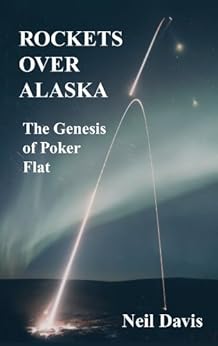
Or, get  hold of the book- 'Rockets Over Alaska' -  by Neil Davis:
ROCKETS OVER ALASKA, The Genesis of Poker Flat by [Neil Davis]

A less well known mode of auroral study entails injecting electrons artificially using a space -borne accelerator.  Few are aware that NASA has previously flown devices that have fired beams with energies of a few to tens of kiloelectron volts (keV).  In a new study, Marshall et al (Journal of Geophysical Research, Space Physics, 2014) have used computer simulations to explore the capabilities of a small but powerful particle accelerator positioned at an altitude of 300 km and aimed at the atmosphere.

This space-borne accelerator would feature energies three orders of magnitude greater than the actual ones already used by NASA. Thus, it would be capable of generating a beam with particles in the 0.5 - 10 MeV range via pulses lasting 0.1 microsecond and carrying 0.1 amp of current. The simulated specs for the device are based on the Compact Accelerator for Space Science (COMPASS) currently being designed by the SLAC National Accelerator Laboratory and the nonprofit research institute SRI international.

The authors note that deploying such a device would offer many scientific opportunities to study the behavior of particles in the upper atmosphere. We'd see, for example, the paths of injected electrons trace out the arcing field lines of Earth's magnetic field - illustrating how they bend and snap during intense geomagnetic activity caused by magnetic storms.

We'd also see how visible, aurora-like emissions would be generated as the particles descend into the Earth's atmosphere and strike atmospheric molecules. Make no mistake this is exciting stuff especially for those involved in space physics. If such a particle accelerator could shed more light on magnetic substorms it would be more than welcome.

How does space physics approach the aurora?

Given the aurora is basically regarded as a magnetic substorm we use what are known as "substorm models".  In most current ones some dynamo action is required which sends currents to specific regions to provide a Lorentz force: (J ⊥ X B) where J ⊥   is the vertical current density and  B  the magnetic induction associated with the system.. At a particular altitude then, these J ⊥ currents can trigger a substorm. In the proper space physics (magnetospheric) context, a “neutral wind” arises from a force associated with the neutral air of the Earth’s atmosphere  This force can be expressed:

F = mU f

where f is the collision frequency.If one solves for f above, and uses the magnitude of magnetic force (F = qvB) where B is the magnetic induction, and v the velocity one arrives at two horizontal flows for electrons and ions moving in opposite directions. mU f = qvB = (-e) vB = (e) vB

Thus,

v1 = mU f / (-e) B and v2 = mU f / (e) B

A terrific articulation of this process can be found in a paper by Syun-Ichi Akasofu ( Auroral Substorms: Paradigm Shifts in Research', Eos Transactions, Vol. 91, No. 31, August 3, 2010, p. 269) wherein the author points out:

"The transfer mechanism of solar wind energy to the magnetosphere...is now known to be a dynamo process that converts the kinetic energy of the solar wind to electrical energy on the magnetopause - because most auroral and geomagnetic phenomena are various manifestations of energy dissipation processes."

This amounted to a brilliant recognition of the energy aspects but more work needs to be done, especially in developing self-consistent models for "loading" and "unloading" processes.  These refer to two distinct energy paradigms, the B-v (driven) and E-J . In the former observations of the magnetic field and motions govern the models, in the latter it is the magnitude of currents or current densities (J ).

One of the most intriguing discoveries of recent decades has been the identification of auroras on Jupiter.  A major difference is that unlike Earth's auroras, those on Jupiter are nearly continuous - driven by the planet's rapid rotation and its volcanic moon (Io),  which spews out sulfur and oxygen ions as well as electrons into space, The latter speed along the planet's magnetic field lines and - if powerful enough - slam into the atmosphere causing its particles to glow.

One of the highly enhanced images of Jupiter's aurora is visible in the Hubble Space Telescope photograph below;
Image result for brane space, Jupiter aurora
Only recently Tao et al (Journal of Geophysical Research -Space Physics, Oct. 2015, p. 1002), using the Japanese Hisaki Space Telescope, measured variations in the brightness of the Jovian aurorae. They reported observing two kinds of auroral pulses. In one, the aurora brightened for up to several days at a time, and the authors attributed this to the solar wind. Thus, as it 'washes over' the planet, the charged particles are buffeted and compress Jupiter's magnetic field. This is very similar to what happens on Earth.

The team also observed much more rapid variations, with pulses typically lasting less than ten hours. By comparing the Hisaki images with images taken simultaneously by the Hubble Space Telescope, Tao et al could see these variations arose from the aurora brightening at lower altitudes, at the bottom of the auroral arc and as reported by Kimura at al (op. cit.)

Using Hisaki's onboard spectrometer, the Tao team was also able to estimate how fast the electrons were traveling on the basis of how deep in the atmosphere the light originated. They found that when the aurora flares up it's not because faster, more energetic electrons are penetrating deeper into the atmosphere. It is instead due to the overall increase in the number of electrons.

All of this indicates that Jupiter's most intense auroras occur when plasma is suddenly injected into its magnetic field, most likely from Io.

The aurora is a fantastic phenomenon for detailed plasma study that has not only aroused awe in Earthbound observers, but prompted the timely development of sophisticated space-based methods of detection.

Sunday, January 10, 2016

Jupiter's Pulsing Aurora

Image showing bright patches glowing associated with Jupiter's ultraviolet aurora - observed by the Hubble Space Telescope.

In an earlier post (Nov. 21, 2015) I noted the work of two University of South Florida astronomers (Ray S. Clary and James H. Hunter Jr.), on the attempted detection of auroral activity on Jupiter ('Hydrogen Alpha Auroral Activity on Jupiter') and published  in The Astrophysical Journal (Vol. 199, p. 517).  They noted correctly that given the correlation between Jupiter's radio emissions and solar outbursts nonthermal, visible emissions from the planet ought to have been detected. Most importantly, they pointed out that:

"At least the polar areas should be visible since aurorae should be most likely there"

They carried out their observations from April through November, 1972 "usually with Jupiter 2 hours or less  from the meridian".

However, their results were mixed, e.g. in  'Results and Conclusions' the authors wrote:

"Most of the pictures (> 90 percent) taken in H-alpha during the experiment showed no significant detail on the 'surface' of Jupiter."

They added that:

"Equatorial features should have been resolved if they were visible. Haze and /or clouds reduced the resolution and brightness of images and it was frequently necessary to discontinue an observing run."
One of their interpretations was:

"Apparent variations in Jupiter's emissions were observed but the effects must be deemed spurious doe to conditions at the observing site"

Decades later, and using appropriate space telescopes, those variations in emission don't seem to be spurious at all. Only recently Tao et al (Journal of Geophysical Research -Space Physics, Oct. 2015, p. 1002), using the Japanese Hisaki Space Telescope, measured variations in the brightness of the Jovian aurorae. They reported observing two kinds of auroral pulses. In one, the aurora brightened for up to several days at a time, and the authors attributed this to the solar wind. Thus, as it 'washes over' the planet, the charged particles are buffeted and compress Jupiter's magnetic field. This is very similar to what happens on Earth.

A major difference is that unlike Earth's auroras, those on Jupiter are nearly continuous - driven by the planet's rapid rotation and its volcanic moon (Io),  which spews out sulfur and oxygen ions as well as electrons into space, The latter speed along the planet's magnetic field lines and - if powerful enough - slam into the atmosphere causing its particles to glow.

The team also observed much more rapid variations, with pulses typically lasting less than ten hours. By comparing the Hisaki images with images taken simultaneously by the Hubble Space Telescope, Tao et al could see these variations arose from the aurora brightening at lower altitudes, at the bottom of the auroral arc and as reported by Kimura at al (op. cit.)

Using Hisaki's onboard spectrometer, the Tao team was also able to estimate how fast the electrons were traveling on the basis of how deep in the atmosphere the light originated. They found that when the aurora flares up it's not because faster, more energetic electrons are penetrating deeper into the atmosphere. It is instead due to the overall increase in the number of electrons.

All of this indicates that Jupiter's most intense auroras occur when plasma is suddenly injected into its magnetic field, most likely from Io.

We have to await further work to confirm these pulses and also more in-depth research into their causes.