Showing posts with label Apollo object. Show all posts

Saturday, October 21, 2017

If Trump Can't Help Puerto Rico Don't Look For Salvation In A "Zombie Apocalypse"

Image result for Zombie Apocalypse images
Artist's depiction of the "Zombie Apocalypse" : a generic term designed to embody all possible real apocalypses including from CMEs and extinction level asteroid strikes.
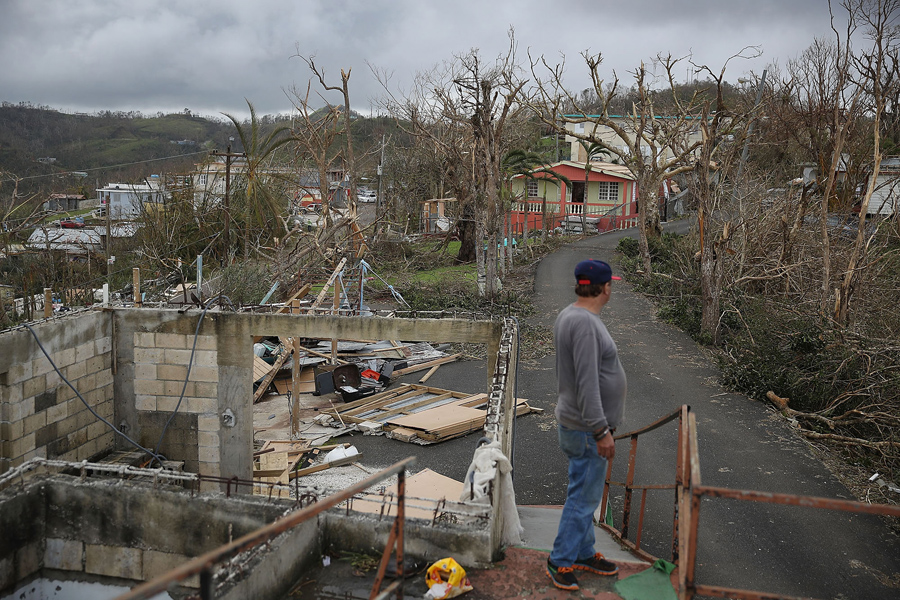
Image result for images of Puerto Rico damage
Devastation in Puerto Rico today - still 85 % without power, water after 4 weeks. How about waiting four YEARS for those essentials to arrive?

As the popular 'Walking Dead' series returns this Sunday, millions waiting with bated breath for Rick & Gang to hollow out the Saviors' skulls, the Zombie Apocalypse resumes once more.  Of course there is no actual possible apocalypse of that sort, i.e. with "walking dead" or  "biters" rampaging across the ravished terrain, though one sometimes wonders about the Trump followers. But we can acknowledge that the term kind of covers all generic end-of world scenarios in the sense of the remaining humans having to fend for themselves to survive day to day. 

In defining these I consider potential catastrophes that have the capability of halting all electric power, as well as water, not just for months - but YEARS. Given electric power can mean the difference between life and death - as we've seen in dozens of scenes from the island of Puerto Rico after Maria struck (mainly in hospitals), and water is essential for life (again as we've seen in Puerto Rico, i.e.


this is a no brainer.  And not a Zombie no brainer either.  Is Puerto Rico an outlier? I don't believe so, and let's dismiss right now Dotard's giving himself a "ten" for dealing with the aftermath. No, this egomaniacal simpleton earns a '1' if that much (disallowing fractional ratings). He's completely blown it, e.g.


If we get struck with any of the major catastrophes in Trump's miserable term, you can basically phone it in, as in 'all over'.

The major takeaway of this year full of catastrophes - from Harvey, to Irma, to Maria and the California wildfires is that counting on your federal government to help save or rescue you is a lost cause. Not if the catastrophe is in the mega class, or if you have to live amongst a lot of brown or black people. But forget even those differences, I am convinced - after seeing the pathetic response in Puerto Rico - NO one will be rescued after a major catastrophe. 

And look, FEMA is overstretched now with the aftermath of 3 major hurricanes and major wildfires, how would they be able to handle a mega catastrophe that wipes out the nation coast to coast?  Over the past decade alone, FEMA's denials and reversals have generated uncertainty and anger in many communities, left others (like in Puerto Rico) at the mercy of water borne diseases, and led to long rounds of appeals in others.

What major catastrophes are we looking at? I list them now in the order of their likelihood:

1) Dotard goes ape shit and in a moment of manic pique punches in all the nuclear codes.

This is likely to happen if the Dotard's minders are unable to control his worst, most degenerate impulses after he loses it. After John Kelly's performance two days ago, I am convinced no one - no "adult" - exists to put a leash on this asshole and stop him from exercising his most depraved instincts..

If he punches in all the nuclear codes, a la Greg Stillson's fantasy in 'The Dead Zone',  we are looking at over 11,000 nuclear warheads landing in a matter of hours from China, N. Korea, U.S. and Russia, Israel. All electric power be out as in vamonos after the first strikes - probably within 1-2 hours - from multiple EMPs (electromagnetic pulses from air burst) across continents.  To get an idea of what this will be like for any survivors, go and watch the movie 'Threads'.


The film is about 1hr and 47 mins long, Brit-made but if it doesn't scare the bejeezus out of you, you are either already: a) brain dead, or b) a zombie and amongst the walking dead.

'Threads' is set in the industrial city of Sheffield, UK, and to be sure one needs to get adjusted to the peculiar accent. But once one does, he or she will be granted an inside look at a future none of us want to face. (One U.S. reviewer said that "Threads makes 'The Day After' look like a day at the races".) Having seen both I concur.

Threads is not for the squeamish or faint-hearted but I do think all those yammering for war or confrontation with North Korea need to see it and let its message soak in. In fact, I think every critically-thinking red blooded citizen ought to see it, if for no other reason to be motivated to let reps know this thing isn't on - not now or ever. (In a recent poll, 46 % of Republican voters indicated they wanted Trump to launch a preemptive strike on North Korea)

Max. estimated time with no power or water: Up to 10 years.


2. Meridian- centered coronal mass ejection (CME)

The coronal mass ejection, such as shown in the image below:
Image result for brane space, CME you don't want to see

is the ultimate plausible nightmare catastrophe. While it is true it's unlikely to cause the loss of life such as for (1) in the worst case scenario you will be looking at months or years without electric power or water. In other words, you will be in the situation of Puerto Rico after a massive Cat 5 hurricane - except there'll be no place to go for succor or help.

We narrowly dodged such a monster five and a half years ago. But let's not fool ourselves, the day is coming when we may not be so lucky and can't expect to continue to escape with a glancing blow or solar "wrist slap" -  as we have.

While it is true - as I noted in previous posts - that flare energy (as well as that to power coronal mass ejections) is limited by the magneto-hydrodynamic potentials available on a star like the Sun, this is not really much consolation if and when a major energy burst whacks us straight on broadside with 1 million amp field-aligned induction currents that have the potential to take out all our power grids in a cascade of failures. Space weather aficionados call such maxi-catastrophes "Carrington Events" after the signature original event that transpired in September, 1859, which incepted geo-magnetic currents so large that for days telegraph operators could actually disconnect their equipment from battery power and send messages solely via the emergent "auroral currents".

In our own current situation, we've become a more vulnerable society by constructing mammoth, interlocked  power grids which can crash if the right combination of factors is imposed. While we do have high voltage transformers that connect directly to the ground (zero or earth potential) to neutralize power surges from lightning strikes, these don't afford any protection against powerful geo-magnetic currents that are induced in the earth and flow upward into the grid. Then ...one such mammoth event, could spark calamity. Possibly no electric power for days, maybe longer ...over vast swatches of North America.

In addition, if a monster flare hurls a super stream of charged particles along with the CME we could expect adverse effects on all GPS positioning satellites. Bear in mind that GPS, besides providing directions for road users, allows synchronized cell phone conversations, as well as orchestrates air traffic not to mention 'date stamping' on most financial transactions and guiding the dynamic positioning of the majority of deep sea oil drilling and gas operations.

Imagine then the same deep sea operations and financial transactions (say if you wish to redeem mutual fund shares) occurring when erroneous GPS info is received because a monster flare's radiation has knocked the timing off by even 1 millionth of a second (given the geo-spatial positioning measures accuracy to a few billionths of a second accuracy)? The resulting hundred fold or more time divergence would have catastrophic consequences.

Given the preceding a proactive solution would be advance protection of our power grids from upward directed geo-magnetic currents. Many experts agree a simple solution would be to install large enough resistor -capacitor systems at critical locations (e.g. near power plants or major cities)  in order to sever any CME-driven upward field aligned current connection to the grid. (Recall from my basic physics blog, e;g. http://brane-space.blogspot.com/2011/06/introduction-to-basic-physics-electric.html     that resistors act to limit current and also capacitors can do the same by collecting charge.)

The problem? Major U.S. power companies don't want to assume the cost for any voluntary installations, which could run $100,000 per transformer. Hence, the grid remains unprotected against the rare - but potentially calamitous - Carrington event CME that smacks us broadside. (As opposed to the glancing blow.)

Even a bit of help could be available if we knew the direction of an oncoming powerful CME event and had some time to prepare. Right now such an entity exists: the Advanced Composition Explorer (ACE) satellite which can measure the intensity and magnetic orientation of any CME that sweeps by it. The problem is that ACE is nearly on its last legs and a replacement monitor is needed, lest we become "blind" to the killer CME with our name on it.

Fortuitously, a fully -ready space craft that can undertake ACE's duties exists.  This Deep Space Climate Observatory (or DSCOVR) could stand between us and utter catastrophe. The problem? The Repukes may want to cut its budget to let it become another useless piece of junk   like the solar satellite shot down as part of a missile test back in the Reagan era.

Max. estimated time with no power or water: Up to 2 years.

3. Asteroid strike:

Of course, the ultimate catastrophe would be  a Torino scale 9 impact, i.e. an "Earth sterilizing event".  Such a calamity would most likely come from an Apollo object, especially a massive Earth orbit crossing object - perturbed out of the asteroid belt.   For example, a  Gaspra (12.5 x 7 x 7.5 miles)  e.g.

impact would obliterate all life on Earth - never to arise again. The crater and blast effects alone would eliminate most of the population on the continent it struck. An ocean strike, creating tidal waves upwards of 2 miles in height, would be even worse. The debris, for its part, would block out most solar radiation for years and probably usher in massive extinction of plants.

The size of object needed is >> 1 km, and an Explosive release: >> 100,000 megatons TNT equivalent.

This is an extreme case and fortunately the odds are in our favor  However, a mass extinction event which could render the entire North American continent rubble is a lot more probable.  The relevant Torino scale would require an object 330' diameter to 1 km (3330') dia. Also an explosive release of  100 Megatons to 100,000 megatons TNT equivalent.

Max. estimated time with no power or water: Up to 10 years.

Let's make this really simple and easy to grasp: the failure to provide power and water access to Puerto Ricans by now - even after 4 weeks after Maria's strike - means there is zero chance the government will help you get through in the case of any of the preceding cataclysms.  And when I write 'you" I refer to anyone in North America and the U.S. in particular.

Thursday, October 6, 2016

Asteroids: The Celestial 'Swords of Damocles'


.


Nearly forty years ago, my article on Earth -impacting asteroids ('Target Earth?') was published in the Barbados NATION newspaper, not long after I'd completed my Peace Corps service. For many citizens of the island nation it was the first time they'd ever been awakened to a potential threat from space.(Ten years later a more direct wake up call would arrive with the impact of a large (~ .5m wide) meteoroid in what became known as the "Mount Tenantry event" - which I helped investigate.

As I noted in my article the most worrisome class of asteroids were precisely the "celestial swards of Damocles" or Earth-crossers, otherwise known as Apollo objects.  How big a threat are the Earth-crossing asteroids?


First,  it is instructive to see how they can emerge as a threat when their orbits are perturbed as shown in the sketch above, e.g. for the asteroid known as Icarus.  What makes any large asteroid dangerous, is its mass in combination with its relative velocity or speed of approach. Thus, large Apollo objects (and other asteroids) would typically have relative velocities from 11,000 to 30,000 meters per second, or about 6.8 to 19 miles per second.

For an asteroid with a 1 kilometer (0.62 mile) diameter, at a density three times that of water, this would generate an equivalent energy on impact of one million Hiroshima sized atomic bombs. Since the Hiroshima explosion was equivalent to 13,000 tons of TNT, this means a larger asteroid would generate an explosive force of 13 thousand megatons. This already is roughly equal to the total equivalent of all U.S. nuclear warheads.

For a ten kilometer asteroid (roughly 6 miles across) the explosive equivalent would translate into 13 million megatons. This would dwarf all man-made nuclear stocks and warheads, and is rightfully called ‘planet –killer’. An asteroid about this size is believed responsible for the extinction of the dinosaurs nearly 65 million years ago. For present day inhabitants of Earth, the consequences would hardly be less startling or grave. A Gaspra (12.5 x 7 x 7.5 miles) impact would obliterate all life on Earth - never to arise again. On the Torino scale, which registers the magnitude of asteroid devastation we are talking about a Torino scale 9 - the maximum.

                                                 The asteroid Gaspra - A planet killer

The crater and blast effects alone would eliminate most of the population on the continent it struck. An ocean strike, creating tidal waves upwards of 2 miles in height, would be even worse. The debris, for its part, would block out most solar radiation for years and probably usher in massive extinction of plants-  including sea plankton – that account for ninety percent of our oxygen.


How probable is such a Torino 9 asteroid impact?

The calculation of the probability is based on an estimated 15 Apollo Objects acquiring an Earth-crossing orbit every million years. From this it has been reckoned that the odds of a given Apollo Object eventually hitting Earth are 5 in one billion. This works out to one impact, on the average, every 200 million years. But wait. There are about one thousand such objects in all so that the probability that any one will strike Earth is now: (1000) x (5/1000000000) = 5/1000000. This figure: 5 in one million means that time wise, 5 asteroids would be expected to strike Earth every million years, or one every two hundred thousand years.

The problem with statistics like this is that they can lull a person into a false sense of security. It is true that the impact rate is low, relative to the scale of recorded history, but it is comparatively high in the context of geological time (thousands of millions of years). To fix ideas, consider that the most recent crater formed by a true Apollo object (as opposed to a large meteoroid) is at Lake Bosumtwi basin in Ghana, Africa. This is about 1.3 million years old. On this basis, the Earth is certainly long overdue for another hit of staggering proportions. Indeed, from the mean frequency of collisions we have worked out, the Earth should have been struck at least six times since the last impact by an Apollo object.

I should point out that in all of these statistics no account has been taken of the colliding comet factor. However, estimates by the Ames Research Center suggest that- with comets included - there are at least 2,000 objects that can cross the Earth's path. (Recall the captured 1994 impacts on Jupiter were from a large comet). Since my calculations were based on 1,000 objects - e.g. asteroids only, the probabilities would increase by a factor two. The time interval between major collisions would be halved.

Of course, statistical behavior does not follow rigid rules. There is no statistical law that pre-ordains an asteroid impact on Earth with the precise regularity of a 200 thousand year interval. By analogy, there is absolutely no reason why I shouldn't get a run of heads if I flip a coin ten times. Maybe I will get six heads in a row in one such run. The point, and it is an important one, is that the string cannot continue indefinitely. Assuming the coin is "true" the probability of heads must average 1 out of every 2 tosses. Looking at 100 tosses, for example, the total heads and tails will probably be very close to 50 each. The run of heads at some stage would have been compensated for by a similar run of tails to balance out the "law of averages".

Somewhat similar conditions apply to asteroid strikes on Earth. The run we are currently experiencing: no major hits over 6 successive periods of two hundred thousand years each, can’t go on indefinitely. As certainly as heads become tails for coin tosses, "no impacts" must become registered impacts for Apollo objects approaching Earth. The next big hit could come at any moment from an undetected asteroid. Or, it may come in the year 2036 (April 13, to be exact)  when the near Earth asteroid  99942 Apophis that some forecasts have now assigned a 2.7 in 100 chance of striking Earth. Fortunately, even if such an impact occurred, the destruction would be localized, given the object's 325m diameter.

This highlights the reality that there are millions of smaller, less visible or less detectable objects, that can also wreak havoc.  Few may recall, but as recently as February, 2013,  our Earth faced not one but TWO cosmic shots over our planetary bow.

The first shot - now known as the Chelyabinsk object- occurred with the explosion of an 11 ton (~2.2. x 10 4 kg) meteoroid over the Russian Urals creating an airburst over Chelyabinsk, Russia  The blast broke windows in 6 cities according to an MSNBC report the morning of Feb. 15, and injured 1,000 people, while 3,000 buildings sustained damage mostly from the blast shock wave.

Some 3D simulations and analyses at Sandia National Laboratories in 2014 showed the following about the object, actually since designated a small asteroid:

The entry at 19 km/s meant that it originated from the asteroid belt between Mars and Jupiter - not from a ballistically launched missile whose velocity would only be about 11.2 km/s or a short period comet with a mean speed of 35 km/s.

-  The altitude of the blast indicated the object was small and weak. The diameter of 20 m (66 feet) was estimated base on the observed velocity factored together with the assumed density of the material.

- The asteroid first felt the presence of Earth's atmosphere while it was thousands of miles above the Pacific Ocean and for a dozen minutes the 10,000 ton rock fell swiftly and unobserved passing at shallow angle through the atmosphere where the molecular mean free path was much greater than the 20 m diameter.

- When it crossed over the border into Russia at 3:20:20 UT and was 100 km in altitude 99.99997 % of the atmosphere still lay beneath it.

- For the better part of 10 seconds the asteroid hurtled through the air as a rigid body moving at a shallow angle, 17 degrees relative to the horizon and descending 1 km for every 3 km of flight.

- At about 45 km altitude the entry dynamics began to change. The dynamic pressure then built up from 0.7 Mpa (millions of Pascals, where 1 Pa = 1 atm equivalent), Within a couple more seconds, below 40 km, pressure on the now fracturing asteroid increased past 1 MPa, breaking it into a number of smaller fragments.

- As the pressure then grew exponentially the process cascaded and formed ever smaller fragments that rapidly increased the surface to volume ratio. As the fragments ablated the hot gas between them built up finally resulting in a chain reaction and a massive explosion converting the asteroid's kinetic energy into heat and pressure (yielding the shock wave that shattered windows).

- Only one significant piece-fragment remained post-explosion. This continued to fall like a ballistic missile in 'dark flight' at terminal velocity until it punched through the ice of frozen Lake Chebarkul.  This 1.5 m diameter boulder thereby became the largest Chelyabinsk object found.

As noted by one of the simulation authors, reported in Physics Today, September, 2014 (p. 35):

"In Chelyabinsk, the energy deposition that led to the explosion took place in stages and was spread out over a long distance because of the shallow entry angle. Energy was deposited at linear densities greater than 1 kiloton per kilometer and rose to a peak of 80 kt/km; most of the energy deposition occurred at altitudes from about 38 km down to 23 km. It took four seconds for this to happen during which the asteroid left a 50 km wake of hot expanding gas and ablation products."

The incident recalled for many the Tunguska Siberian event in 1908 which knocked down nearly 80 million trees and decimated nearly 820 square miles, about two-thirds the size of Rhode Island.  And this was from an object perhaps ten times the size of the 11 ton meteoroid that just hit the Urals this morning.

Meanwhile, on the same date, a much larger asteroid, the one identified as DA 14 2012, appeared .:Image result for 2012 da14 asteroid

The trajectory of 2012 DA 14 passing close to Earth.

 It packed a mass of 130,000 metric tons (~ 2.9 x 10⁸  kg) and potential for an explosive release equivalent of a 20 megaton nuclear bomb.  Incredibly, the object was first discovered back in February, 2012  by a DENTIST using a high powered telescope. Why had no national scientific agencies made the discovery? What would have been the case if,  instead of a minor midget asteroid making this close pass, it was a planet killer 6 km across or larger? (As opposed to only 150'  or 45 m  DA 14 2012) Would we be ready to do anything other than piss, moan and pray?

Projects Space Watch and Spaceguard remain on funding life support, though a bit more largesse has come through in recent years. But mainly, asteroid tracking is the work of unsung, unpaid amateurs..Space Watch , had been based at the University of Arizona, and featured generous grant allocations in its early years when it  discovered over 1,300 approaching asteroids by 2002..  Later, as the austerity mindedness infected all science research areas, that capability  wound down a lot. Especially since the GOP takeover of the House in 2010, so. amateurs took over more of the load.  Not that the latter aren't observationally capable, but we also need professionals to spot these things and then (using the well known equations of celestial mechanics)  obtain the orbital elements as fast as possible. -.

Spaceguard extends asteroid detection to focus more on NEOs (near Earth objects) as opposed to singling out near Earth asteroids (NEAs).  Again budget limitations have loomed and imposed  truncated observation time frames and selectivity. Although there have been many discoveries of near-Earth asteroids  the Spaceguard Project has been criticized for not having an in-depth master plan if our humble planet is directly in the crosshairs of a giant asteroid. It has also been criticized of having false alarms that could lead to dangerous implications.

NASA published an article in April of 2001 to clarify many questions that have come up with this project. The report distinguished the difference between NEOs and NEAs, why the organization selected NEAs with a diameter of at least one kilometer in diameter, why the number of 90 percent was chosen and many other questions that have perplexed the general public.

Astronomer Paul Chodas, who works in NASA's Near-Earth Object program in Pasadena, Calif., decribed the Russian object as:

"....a tiny asteroid.  It would be very faint and difficult to detect — not impossible, but difficult."

Meanwhile, the actual asteroid DA 14 2012 that made a heart stopping close pass, was three times the size of the Russian object, and coming in at nearly 40,000 mph. Its blast -energy release was more like a 20 megaton blast.


Neither Space watch or Spaceguard is adequately funded, which means that either an NEO or NEA can escape through the observational 'net' and could wreak havoc, especially if the size and mass approaches that of the object that created the Barringer crater in Arizona, e.g.


The crater was formed by the impact of an iron-nickel object  50 m (165') across, coming in at 28,600 mph, generating an impact energy of 10 megatons. This crater, in other words, would have reduced a city the size of Boulder, CO to rubble. The impact occurred roughly 50,000 years ago. By comparison, the meteoroid that exploded over Russia was about 49 m in diameter, and Russian physicists estimate its explosive release at about 20 Hiroshima bombs of 10 kilotons each, or 200 kilotons - thus, a fifth of a megaton. Small change, in other words.

.Most disturbing , there is no formal, well-funded program or plan - of which anyone is aware  - for taking out a planet killer - say 6-10 km across, if one does target Earth. There have been past ruminations about using nuclear weapons to try to split the object into smaller pieces, but that was put aside when the ''architects" decided a number of smaller (1 km ) strikes might not be so good either. But still, a planet killer of 6 km arriving intact is not something to dismiss lightly and our space gurus may well have to opt on the side of losing half of the earthly populace to losing ALL of it, say from a nuclear winter onset as a result of some 10 28 kg of dust and debris in our atmosphere, cutting off sunlight

The worst nightmare is the Earth-sterilizing asteroid or "planet killer", with explosive equivalent of > 100,000 megatons. This will be from a rock greater than 10km across.  Some of the Torino scale levels and gradations (registered by mass and velocity) are as follows:

i) Regionally devastating impact, e.g. June 30, 1908 Tunguska impact. Devastation range approx. 10,000 sq. kilometers, killing crops, humans, animals.

Size of object: 20 m (~ 66') to 100m (~330') diameter .

Explosive release: 1 Megaton to 100 megatons TNT equivalent. Collision probability between ~ 1 in 100 yrs. and 1 in 1000 yrs

ii) Mass extinction impact: e.g. KT-boundary impact of 65 million years ago . Devastation range ~ 10 million sq. km., killing all extant dinosaurs and hundreds of other species.

Size of object: 100m (~330') diameter to 1 km (3330') dia.

Explosive release: 100 Megatons to 100,000 megatons TNT equivalent.

Collision probability: between ~ 1 in 1000 yrs. and 1 in 100,000 yrs.

iii) Earth Sterilizing Impact: Example......not yet. ("Black swan" territory? Errrrr.....no.)

Would annihilate every last species on the planet, and sterilize it for thousands of years to come. Devastation-affected area: > 50 x 10^6 sq. km.

Size of object: >> 1 km (3330') dia. (Likely source: any of one hundred Apollo asteroids whose orbits intersect with Earth's)

Explosive release: >> 100,000 megatons TNT equivalent.

Collision probability: Unknown but at least one asteroid specialist (Dr. Basil Booth) has predicted an Apollo asteroid collision some time in the next 250,000 yrs.

As one sees by surveying the preceding, this asteroid falls about midway into the "Mass extinction impact" range. In other words, if it struck the Earth, we'd be looking at a serious disaster indeed, whether water or land strike.

When my NATION article was published many readers in the aftermath asked: "How can any scientists actually know that one of these things could hit  us?" 

My answer - then and now  - is that these specialists (planetary astronomers)  make use of the highly precise branch of astronomy known as celestial mechanics. Especially that branch that has the objective of obtaining the perturbations which an astronomical object is likely to experience under the combined influence of the gravitational forces of other (e.g. larger, more massive ) objects acting upon it


While it is true that the probability of a monster rocks smacking us appears remote it ought not be too readily dismissed. This is because one never knows what sort of gravitational perturbations can affect existing orbits. We already know, for example, that an estimated 1,000 asteroids are perturbed from the asteroid belt each year to become Earth-crossers. A select subset of these are among the planet killing or mass extinction types. The smaller ones? Yes, they are nuisances, but we can deal with them if we have some long range planning wherewithal combined with alert observers.

And what are our illustrious politicos doing in the meantime?  Following the Chelyabinsk event in 2013, Rep. Lamar Smith, R-Texas, then chairman of the House Science, Space and Technology Committee called for a hearings "in the coming weeks". In his words:

"These events are a stark reminder of the need to invest in space science,"

Yes indeed, but we need a lot more than hearings. We need lots more technically-minded people with eyes on the skies.  Investing in their time, especially for professionals with the capability of computing orbital dynamics, takes money. Their services don't come free nor should we expect that.

Astronaut Rusty Schweickart, meanwhile, advised that NASA launch a $250 million-a-year program to survey asteroids and work up a deflection plan. The latter would be most effective for the lesser objects but may also help with the larger ones, of at least mass extinction scale. Ideally Russia and the U.S.  would combine their resources and work together for the planet's benefit - as opposed to more opportunistic war -making (to ramp up defense budgets), including endless stupid wars on terror.

Up tp now nothing has been done about this.  Schweickart noted at the time that "NASA now has $20 million" for searching out these potential cosmic  terrors, and added ... "It's peanuts."

Sadly, it may well take a monster meteoroid or small asteroid (like DA 14 2012) crashing into a populated area before NASA and other agencies, and especially our tightwad politicos,  wake up. That would then be our cosmic 9/11 and prompt us to get off our asses before the really BIG one arrives. Aka, the planet killer!

Incredibly, humans have mocked the fate of those dinosaurs extinguished in the wake of the Chicxulub   impactor event 65 million years ago, but we ourselves have basically done nothing to enhance our own survival chances - should an Icarus-scale asteroid impact. Maybe it's time we seriously begin paying some attention to those celestial "swords of Damocles", large and small.

Thursday, August 13, 2009

How Stupid Can You get?

Fig. 1

Fig. 2.

In today's paper there appeared a news story that bordered on the incredible. Under the headline: 'NASA's Pocket Lint Unable to Cushion Blow of Asteroids' it was reported that - while Congress charged NASA with spotting Earth-threatening asteroids four years ago, it never provided the money to build the necessary telescopes to do so! How stupid can you get?


How big a threat are the Earth-crossing asteroids?

First it is instructive to see how they can emerge as a threat, when their orbits are perturbed as shown in Fig. 2 above, for Icarus (Fig 1. shows a large asteroid, Gaspra, that - if it struck Earth - would annihilate all life on it).


What makes any large asteroid dangerous, is its mass in combination with its relativity velocity or speed of approach. Thus, large Apollo objects and other asteroids would typically have relative velocities from 11,000 to 30,000 meters per second, or about 6.8 to 19 miles per second.

For an asteroid with a 1 kilometer (0.62 mile) diameter, at a density three times that of water, this would generate an equivalent energy on impact of one million Hiroshima sized atomic bombs. Since the Hiroshima explosion was equivalent to 13,000 tons of TNT, this means a larger asteroid would generate an explosive force of 13 thousand megatons. This already is roughly equal to the total equivalent of all U.S. nuclear warheads.

For a ten kilometer asteroid (roughly 6 miles across) the explosive equivalent would translate into 13 million megatons. This would dwarf all man-made nuclear stocks and warheads, and is rightfully called ‘planet –killer’. An asteroid about this size is believed responsible for the extinction of the dinosaurs nearly 65 million years ago. For present day inhabitants of Earth, the consequences would hardly be less startling or grave. A Gaspra (12.5 x 7 x 7.5 miles) impact would obliterate all life on Earth - never to arise again.

The crater and blast effects alone would eliminate most of the population on the continent it struck. An ocean strike, creating tidal waves upwards of 2 miles in height, would be even worse. The debris, for its part, would block out most solar radiation and probably usher in massive extinction of oxygen producing plants including sea plankton – that account for ninety percent of our oxygen.


How probable is such a Torino 9 or so impact?

The calculation of the probability is based on an estimated 15 Apollo Objects acquiring an Earth-crossing orbit every million years.

From this it has been reckoned that the odds of a given Apollo Object eventually hitting Earth are 5 in one billion. This works out to one impact, on the average, every 200 million years. But wait. There are about one thousand such objects in all so that the probability that any one will strike Earth is now: (1000) x (5/1000000000) = 5/1000000. This figure: 5 in one million means that time wise, 5 asteroids would be expected to strike Earth every million years, or one every two hundred thousand years.

The problem with statistics like this is that they can lull a person into a false sense of security. It is true that the impact rate is low, relative to the scale of recorded history, but it is comparatively high in the context of geological time (thousands of millions of years). To fix ideas, consider that the most recent crater formed by a true Apollo object (as opposed to a large meteoroid) is at Lake Bosumtwi basin in Ghana, Africa. This is about 1.3 million years old. On this basis, the Earth is certainly long overdue for another hit of staggering proportions. Indeed, from the mean frequency of collisions we have worked out, the Earth should have been struck at least six times since the last impact by an Apollo object.

I should point out that in all of these statistics no account has been taken of the colliding comet factor. However, estimates by the Ames Research Center suggest that- with comets included - there are at least 2,000 objects that can cross the Earth's path. (Recall the recently photographed impacts on Jupiter were from a large comet). Since my calculations were based on 1,000 objects - e.g. asteroids only, the probabilities would increase by a factor two. The time interval between major collisions would be halved.

Of course, statistical behavior does not follow rigid rules. There is no statistical law that pre-ordains an asteroid impact on Earth with the precise regularity of a 200 thousand year interval. By analogy, there is absolutely no reason why I shouldn't get a run of heads if I flip a coin ten times. Maybe I will get six heads in a row in one such run. The point, and it is an important one, is that the string cannot continue indefinitely. Assuming the coin is "true" the probability of heads must average 1 out of every 2 tosses. Looking at 100 tosses, for example, the total heads and tails will probably be very close to 50 each. The run of heads at some stage would have been compensated for by a similar run of tails to balance out the "law of averages".

Somewhat similar conditions apply to asteroid strikes on Earth. The run we are currently experiencing: no major hits over 6 successive periods of two hundred thousand years each, can’t go on indefinitely. As certainly as heads become tails for coin tosses, "no impacts" must become registered impacts for Apollo objects approaching Earth. The next big hit could come at any moment from an undetected asteroid. Or, it may come in the year 2015 when 1989FC is brought into Earth's vicinity, after its 1989 close pass.


In addition, there is always the possibility that the odds could be altered by some external factor. For example, the projected encounter in 2015 may start out a near miss, but the sudden intrusion of a new comet could change it to a direct collision. The comet's gravitational effects would have re-oriented the direction of the asteroid. Of course, this could also work in reverse: the direct hit may be transformed into a 'graze' by the same comet. Or, the asteroid could perturb the orbit of the comet so that the comet nucleus hits the Earth instead.


Let us hope, while congress sits on its hands - no large, threatening asteroids approach or threaten us. We would then quickly behold what real worries can exist, above and beyond our political ones!