
In my June 19th post I already had sized up the atrocity misnamed "the big, beautiful bill" which has just passed the Senate - thanks to cowards like Sen. Lisa Murkowski. She, who put her own state of Alaska's interest above those of the country. See e.g.
As I noted in my earlier post about this travesty:
"This vile bill which passed the House and is currently in the Senate, would require states to pay 75% of the cost to administer the Supplemental Nutrition Assistance Program, or SNAP, which offers low-income people a monthly allowance to purchase food.
Currently, the federal government splits the cost evenly with states. If the ratio shifted, Colorado would have to come up with an additional $47 million to fund the workers at county human services departments who determine SNAP eligibility.
The bill, backed by President Donald Trump, would also require states to start paying a share of the food benefits themselves. The state estimates it could have to come up with anywhere from $130 million to $259 million annually to pay its share, depending on the language in the final bill.
Colorado can’t come up with that amount of cash, particularly given the state’s constitutional limits on raising taxes, Polis — a Democrat — and 10 people working in human services and agriculture said in the letter. State lawmakers had to close a $1.2 billion budget hole for the upcoming fiscal year, and warned that Colorado could face an even bigger gap next year, with fewer options to fill it."
But even that barely exposes the hell ordinary Americans will have to endure just to get enough SNAP benefits to avoid nutritional deficiencies in their kids. The key lies in the administrative burdens the Repukes are imposing which are elaborated in John Oliver's recent show:
John Oliver on Trump’s ‘big beautiful bill’: ‘Death by a thousand cuts’ | John Oliver | The Guardian
Basically, if one doesn't complete the online forms in a timely fashion and fulfill all related demands, food stamps will be cut - same goes for Medicaid benefits.
Now we go to other voices on this ghastly perfidy which essentially insults and spits on the graves of all the soldiers who fought for our freedoms, whether at Iwo Jima, Corregidor, Buna Gona, Utah Beach at Normandy, or Belleau Wood.
From Ezra Klein:
Opinion | The Disaster That Just Passed the Senate - The New York Times
"This bill is a bad piece of legislation — trillions of dollars in tax cuts, very much tilted toward the rich, with savage cuts to Medicaid, nutrition assistance and green energy. Even with those cuts, we can expect more than $3 trillion to be added to the national debt over 10 years. And befitting a policy like that, the bill is hugely unpopular: A poll from late June found nearly two-to-one opposition to the bill. Vulnerable Republicans do not seem excited to run on the wreckage it’s going to create.
But bad policy only matters if people know about it, and a lot of people don’t. Those of us hearing about this bill — even those of us covering it — can’t keep the whole package in mind. The Times has a great list of nearly all the provisions, and a lot of them would be major policy fights on their own. But in part because of that — and because the Trump administration is flooding the zone with so many other major policy fights — it has been hard to focus attention on what is passing and what can actually be done about it.
From Robert Reich:
by Robert Reich | June 30, 2025 - 5:58am | permalink
— from Robert Reich's Substack
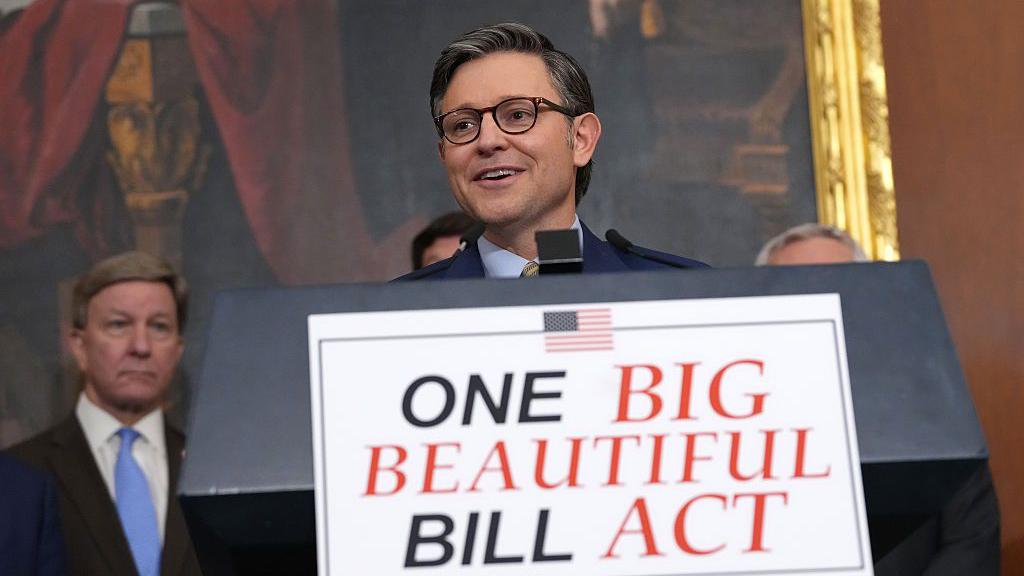
Friends,
One of my objectives in this daily letter is to equip you with the facts you need. As the Senate approaches a vote on Trump’s giant “big beautiful” tax and budget bill, I want to be as clear as possible about it.
First, it will cost a budget-busting $3.3 trillion. According to new estimates by the nonpartisan Congressional Budget Office, the Senate bill would add at least $3.3 trillion to the already out-of-control national debt over a decade. That’s nearly $1 trillion more than the House-passed version.
Second, it will cause 11.8 million Americans to lose their health coverage. The Senate version would result in even deeper cuts in federal support for health insurance, and more Americans losing coverage, than the House version. Federal spending on Medicaid, Medicare, and Obamacare would be reduced by more than $1.1 trillion over that period — with more than $1 trillion of those cuts coming from Medicaid alone.
All told, this will leave 11.8 million more Americans uninsured by 2034.
Third, it will cut food stamps and other nutrition assistance for lower-income Americans. According to the CBO, the legislation will not only cut Medicaid by about 18 percent, it will cut Supplemental Nutrition Assistance Program (food stamps) by roughly 20 percent. These cuts will constitute the most dramatic reductions in safety net spending in modern U.S. history.
Fourth, it will overwhelmingly benefit the rich and big corporations. The CBO projects that those in the bottom tenth of the income distribution will end up poorer, while the top tenth will be substantially richer.
The bill also makes permanent the business tax cuts from the 2017 legislation, further benefiting the largest corporations.
Finally, it will not help the economy. Trickle-down economics has proven to be a cruel hoax. Over the last 50 years, Congress has passed four major bills that cut taxes: the 1981 Reagan tax cuts; the 2001 and 2003 George W. Bush tax cuts; and the 2017 Trump tax cuts. Each time, the same three arguments were made in favor of the tax cuts: (1) They’d pay for themselves. (2) They’d supercharge economic growth. (3) They’d benefit everyone.
by Robert Reich | July 4, 2025 - 6:02am | permalink
— from Robert Reich's Substack
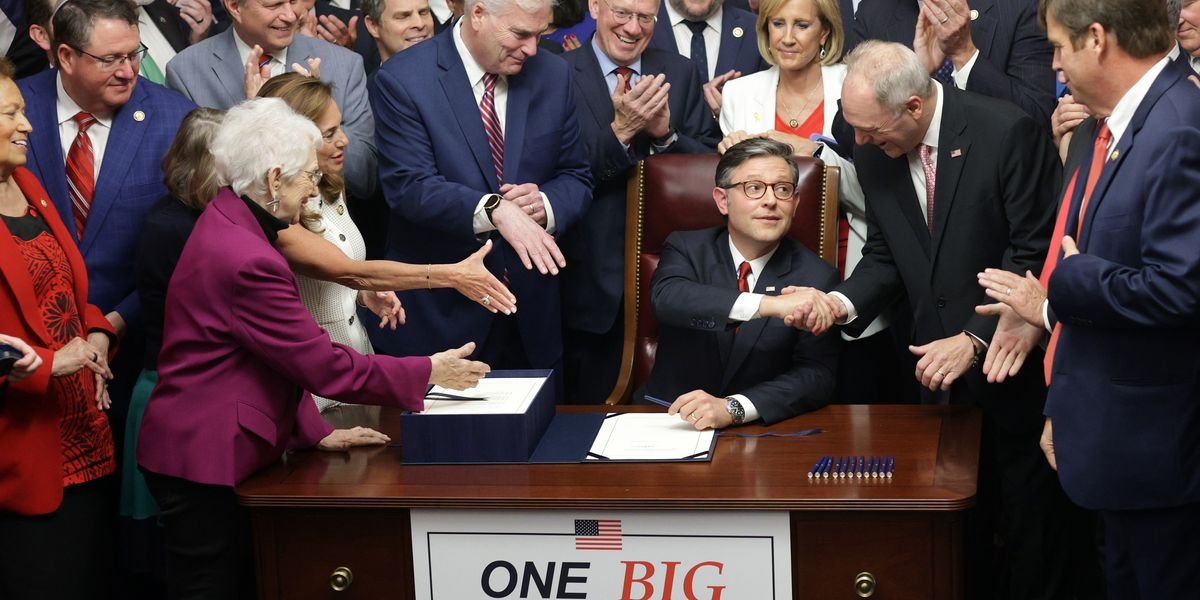
President Donald Trump’s 940-page Big Ugly Bill was passed today by the House and is now on the way to the White House for Trump’s signature.
It is a disgrace. It takes more than $1 trillion out of Medicaid—leaving about 12 million Americans without insurance by 2034—and slashes Food Stamps, all to give a giant tax cut to wealthy Americans.
It establishes an anti-immigrant police state in America, replete with a standing army of Immigration and Customs Enforcement agents and a gulag of detention facilities that will transform ICE into the most heavily funded law enforcement agency in the government.
It will increase the already-bloated deficit by $3.4 trillion.
It’s also disgraceful because of how it came to be.
From WaPo Columnist Catherine Rampell:
Opinion | GOP tax bill is a big, fat warning sign to bond market - The Washington PostThere are many unpopular features in the GOP’s One Big
Beautiful Bill, including draconian cuts to Medicaid and food stamps, higher
energy prices and trillions of dollars in additional debt. Both Republican
lawmakers and President Donald Trump seem to realize this, given that they’re
jamming the bill through with little time for the media (and, by extension,
voters) to catch up to what’s in it.
They’ve also spent recent weeks smearing
the refs, including the Congressional Budget Office and the Joint Committee
on Taxation, the professionals tasked with crunching numbers on the bill’s
consequences. And on Sunday, Republicans hid from the Senate
parliamentarian to avoid hearing her latest rulings about the cost of their bill.
On Monday, GOP lawmakers went a step further. As they had
previously signaled they might do, they voted to stop pretending to
care about what the bill costs or what the parliamentarian rules. Instead, they
simply declared huge chunks of it to be free. Here’s how:
The package’s tax provisions alone would cost, on net, $4.5
trillion over the next decade. But Republicans said, “Eh, most of that tax
package [about $3.8 trillion of it] shouldn’t really count as
costing anything.”
That’s because Republican lawmakers had passed similar
provisions in 2017, which are scheduled to expire at the end of this year.
Republicans argue that Americans got used to having that part of the tax code
around. So extending these lower tax rates wouldn’t, you know, feel different.
As I’ve explained
before, this is not how budgets work. It’s like saying renewing your
Netflix subscription should count as free, because you got used to having the
streaming service already. Or each time you buy another Starbucks coffee, it
doesn’t cost you anything, because you’ve enjoyed Frappuccinos before. Or if
your current car lease expires, getting a new one is now complimentary, because
you already got used to the convenience of having a car.
Under this logic, it doesn’t matter if you’ve already
allotted every penny of next week’s paycheck to other expenses
(as Congress has). You don’t need to make room in your budget to pay for these
goodies because you’ve gotten used to them.
The reason we’re discussing these arcane accounting
acrobatics is that when Republicans first passed their regressive tax-cut
package in 2017, they deliberately scheduled their tax cuts to “turn off”
early, in 2025, rather than last forever. They did this to make the cost of
what they were doing look smaller. What to do when those tax cuts expired — and
how to pay for them — would be tomorrow’s problem.
But the tide might be turning. In May, Moody’s, the last outstanding major credit agency that had still considered U.S. debt to be effectively riskless, finally downgraded it. Moody’s specifically cited the expectation that Congress would extend these costly tax cuts — the ones that senators are calling “free” — as a reason for its decision.
From Other Voices:
by Ailia Zehra | July 2, 2025 - 5:29am | permalink
As Republican lawmakers near final approval of President Donald Trump’s “Big, Beautiful Bill,” experts warn that his core supporters will feel its impact most acutely.
An analysis published in The New York Times on Tuesday highlighted concerns that the sweeping fiscal package disproportionately benefits the wealthy while imposing sharp social safety net cuts on working-class and rural Republicans — the very demographic that forms Trump’s foundation.
Analysts quoted in the report emphasize that Trump's base, particularly rural residents of less-educated, lower-income MAGA-voting communities “stand to bear the brunt of its negative consequences."
Bobby Kogan of the liberal-leaning Center for American Progress told the Times it was “the biggest cut to programs for low‑income Americans ever,” warning the bill will decimate supports like Medicaid and the Supplemental Nutrition Assistance Program (SNAP, or food stamps).
And:
by Heather Digby Parton | July 2, 2025 - 4:58am | permalink

People think that Donald Trump is responsible for blowing up the democratic system of checks and balances, but he was actually a late comer to that game. It was establishment Republicans like former Senate Majority Leader Mitch McConnell, R-Ky., also known as the “gravedigger of democracy,” who can take credit for that. From the moment he became the Republican minority leader in 2007, he laid out the roadmap for the modern GOP to achieve its goals by throwing bipartisanship on the trash heap and setting it on fire. As minority leader, McConnell believed in one thing: Obstruction. And when the GOP attained the majority, he pushed through the Republican agenda by any means necessary — norms, rules, even laws be damned.
Over the years, McConnell ended up having his differences with Trump. But this past week, as the Senate grappled with the bloated “big, beautiful bill” under Trump’s arbitrary July 4 deadline, McConnell shared with his Senate colleagues a bit of tactical wisdom he’d learned over the years. Asked about the danger of massive cuts to vital government programs to their reelection prospects, McConnell reassured both his party and the American people by saying, “they’ll get over it.”
And:Donald Trump
by Ailia Zehra | July 3, 2025 - 5:22am | permalink
President Donald Trump appeared to misjudge the effects of his “Big, Beautiful Bill” on Medicaid on Wednesday, even as the legislation advances.
NOTUS reported that Trump appeared unclear about the bill’s actual impact during a White House meeting on Wednesday with moderate Republicans and members of the Main Street Caucus.
According to three individuals present, he asserted that Republicans should avoid changing three programs ahead of upcoming elections: “Medicaid, Medicare and Social Security.”
“But we’re touching Medicaid in this bill,” one member pushed back directly, per the report.
The time now is for ANY House Reeps with a semblance of spine to come to the aid of their country - which means ignoring Captain Bonespurs bluster and threats and slaying this beast one time. The future of this nation is riding on it, and no, that ain't histrionics - not if you seriously read and processed the various contributions in this post. Let's hope it happens by July 4th so we have a real Independence Day - from Trump's America- Wrecking Abomination


.jpg)


