
"For me, evil is that which dominates, oppresses and harms any part of creation. What causes evil? People who use their power and wealth to gain more power and wealth, people who use fear to get one group of people to hate another. Perhaps most of all, people who remain silent, doing nothing to stop this." - Rev. Nori Rost (Unitarian Universalist Church)
"Evil originates in the human mind and reflects a belief in separation from the Holy. When our minds are unhealthy, we take on beliefs and behaviors that are unhealthy." - Rev. Ahrianna Platten (Unity Spiritual Center, Colorado Springs)
"There is evil because we call something evil. It's hard to defend the position that something exists independent of the perceptions of people. If it did, we wouldn't perceive it. So 'evil' is a conventional category created by human thought, It's not a self-evident portion of the existing world." - Prof. David Gardiner (Colorado College Religion Dept.)
The vicious slaughter of an innocent mother of three (Renee Nicole Good) in Minneapolis by a supposed "agent" of the federal government, has again forced many of us to contemplate the sources of human evil. This takes me back to a conversation 14 years ago about 'sin' and the nature of evil between myself, my atheist friend Rick, and Krimhilde, my Eckist sister -in law, e.g,
We all basically agreed that sin is a Macguffin invented by conventional religions to keep humans in an inferior state as opposed to attaining mastery over their lives. Sin is also a ridiculous concept. As Rick put it, "How can a finite tiny flesh being 'offend' a supposed infinite Being?" It's totally ludicrous.
Further, we agreed that there is no such thing as "original sin" since infants can't enter the world with any such millstones. Original sin is merely a confection of theological idiots who take the "Adam & Eve" fable literally.
When the topic of "natural evil" arose, i.e. tsunamis like the one in 2004 that killed over 200,000, we all concurred that such random, geological events (as well as earthquakes) not to mention weather events (tornadoes, hurricanes) that kill many thousands a year, are in the end simply violent natural events onto which vulnerable humans impose "evil". Thus, no natural evil exists in the objective sense, even when a person is suffering from a horrible disease like brain cancer. It is simply part of the slings and arrows to which flesh is heir to, inhabiting a world rife with bacteria, viruses, toxins etc.
Focus then turned to "human evil" and we all agreed that humans bear a measure of responsibility for their actions - i.e. in terms of those actions clearly harming fellow humans. Hence, it's not the same to compare 200, 000 killed in a gas chamber during World War II to 200,000 killed in the Indonesian tsunami in 2004. The first was engineered by conscious entities with choice and will, the latter transpired via a purely natural displacement of an undersea fault line.
In my last book on moral philosophy (Beyond Atheism, Beyond God) in the section Practical Reason and Human Evil I noted that one of the canards circulated about human evil is that it’s "irrational". If the person only knew better, or reasoned properly, he’d arrive at the generic good, and we'd all be better off. I cited philosopher John Kekes who disposes of this myth quite forcefully (The Roots of Evil, p. 156.) As Kekes observes, abundant historical examples disclose that people often robustly justify their actions on the basis of a good perceived in their minds, but which in retrospect turns out to be evil. Therefore it’s not the lack of reason or rationality that infuses their actions but instead the false beliefs that supported the reasoning!
In effect what we behold is the lesser evil of blatant lies being used to cover up or justify the more serious evil of murder of an innocent person. (Especially when we behold the ICE guy casually walking away from the wreck after Ms. Good's car crashes when she's killed).
Clearly, we are also seeing that the “banality of evil” also applies to an entire society like the U.S., especially when faced with the ascension to power of an authoritarian narcissist. We have now seen Trump murdering Caribbean fisherman in small boats by blasting them with drone strikes, then invading a sovereign nation to take control of its oil, and lately proclaiming he can even take Greenland by force if he so wishes. All this on top of his invasions of U.S. blue cities inciting violence and events such as we beheld in Minneapolis. See e.g.
Trump Takes America’s ‘Imperial Presidency’ to a New Level - The New York Times
Excerpt:
"Nearly 250 years after American colonists threw off their king, this is arguably the closest the country has come during a time of general peace to the centralized authority of a monarch. Mr. Trump takes it upon himself to reinterpret a constitutional amendment and to eviscerate agencies and departments created by Congress. He dictates to private institutions how to run their affairs. He sends troops into American streets and wages an unauthorized war against nonmilitary boats in the Caribbean. He openly uses law enforcement for what his own chief of staff calls “score settling” against his enemies, he dispenses pardons to favored allies and he equates criticism to sedition punishable by death."
The question now upon us, especially the American media, is to what extent we will tolerate Trump's fascist transgressions - allowing them to be normalized or appear so? Thus, this banality emerges when conscious and critical thought is dispensed with. Reality is no longer based on the gathering of facts and evidence. It is based on ideology. Facts are altered. Lies become true. A media which in normal times might have reported a leader's lies and crimes, now seeks to overlook them in a perverse thrust to render them banal or unexceptional. After all, why mount attacks on an iron-fisted, egomaniacal boor if he hasn't even built concentration camps for journalists or protestors yet? But who says if he isn't stopped that stop won't be next? Then the question arises as to what degree we all are responsible for any ensuing greater evil?
The destruction of rational and empirically based belief systems is fundamental to the creation of all totalitarian ideologies. Certitude, for those unable to cope with the uncertainty of life, is one of the most powerful appeals of the movement. Dispassionate intellectual inquiry, with its constant readjustments and demand for evidence, threatens certitude. For this reason incertitude must be abolished. “What convinces masses are not facts,” Arendt wrote in “Origins of Totalitarianism,” “and not even invented facts, but only the consistency of the system which they are presumably part. Repetition, somewhat overrated in importance because of the common belief in the masses’ inferior capacity to grasp and remember, is important because it convinces them of consistency in time.”
TO the extent we are conscious of these issues, we can reduce the totality of harm inflicted by our fellow humans on others. And to that degree, "evil" - however it is perceived- can be reduced as well. To avoid the banality of evil in the case of Trump and his henchmen, we must never ever allow their forthcoming crimes, constitutional transgressions to be seen as "banal." Or not deserving of our total attention,
See Also:
by Thom Hartmann | January 7, 2026 - 6:24am | permalink
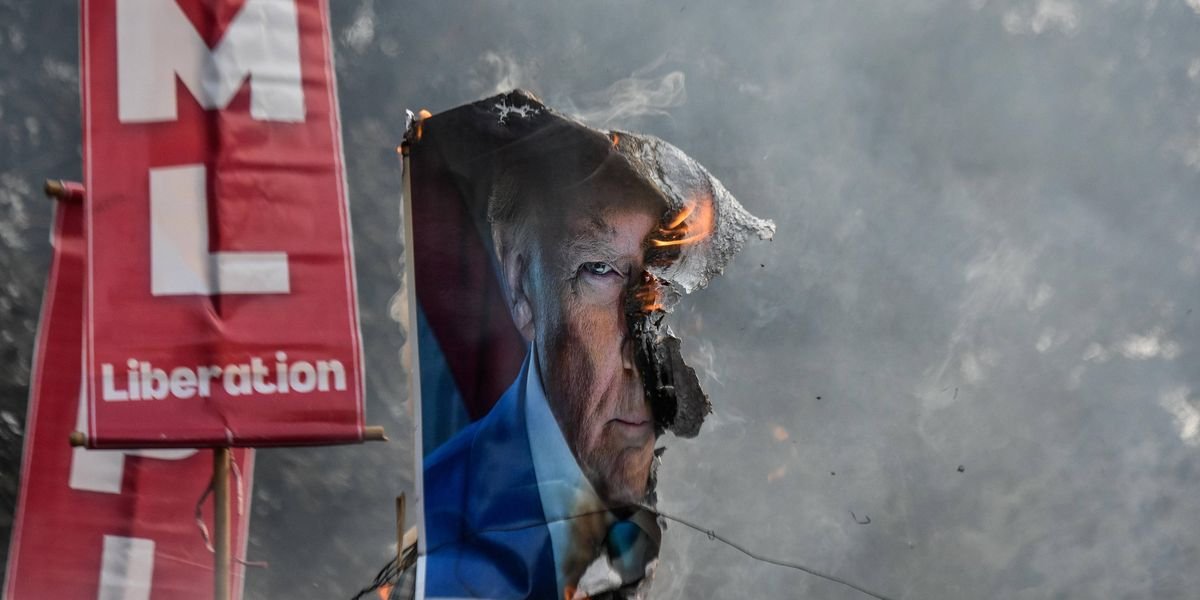
When Louise and I lived in Germany in the 1980s, we visited Neuschwanstein Castle, the fantasy palace perched on a Bavarian cliff that looks like it escaped from a fairy tale. Tour guides will tell you about its beauty and its role as an inspiration for Disney, but they’ll also share a more unsettling story that today echoes Donald Trump.
Neuschwanstein was built by King Ludwig II, a ruler who withdrew from reality, governed through spectacle instead of policy, ignored his ministers, and bankrupted Bavaria by indulging his own grandiosity and a never-ending stream of construction and renovation projects. (Neuschwanstein was only one of three castles he built.) Bavaria eventually dealt with Mad King Ludwig: his own government declared him mentally unfit to rule and removed him from the throne.
That memory of Ludwig and his architectural obsessions has been haunting me lately, and it’s frankly astonishing that more people in the media aren’t asking the same question I’m bringing up here (and people are constantly calling into my radio/TV show about): “Is Trump losing his sanity?”
by Heather Digby Parton | January 7, 2026 - 6:34am | permalink
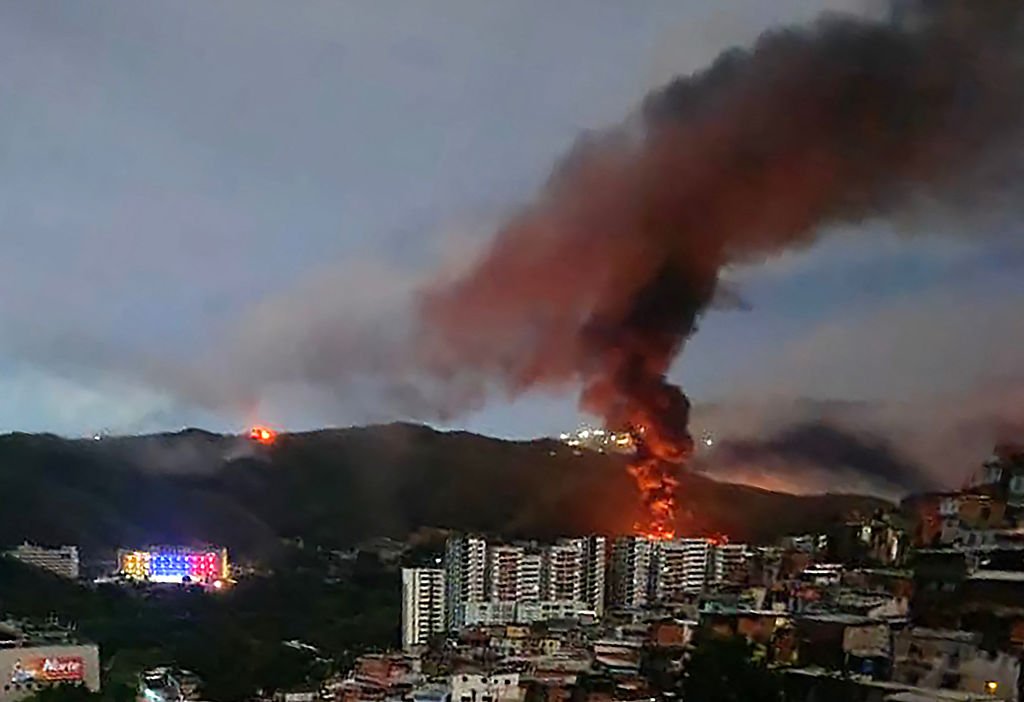
None of this should have come as a surprise. The series of boat strikes and murders on the high seas that have taken place in the Caribbean and eastern Pacific since September were a pretty clear sign that Donald Trump was planning to seize control of Venezuela, a sovereign nation, and depose its strongman president Nicolás Maduro. But after the success of the U.S. military’s Operation Absolute Resolve, which was launched in the wee hours of Saturday morning without congressional — legal — authorization and saw the arrest of Maduro and his wife, Cilia Flores, and claims by Trump that the U.S. would run the country, the American president swiftly turned his attentions elsewhere.
Trump, along with Secretary of State Marco Rubio, made it clear that Cuba, which has a very close bond with Venezuela, is next on the agenda. The country, Trump said, is “ready to fall” and might not require U.S. intervention. But it’s certainly possible an assisted splendid little regime change could happen there as well.
And:
— from Robert Reich's Substack

Friends,
While Trump and his henchmen are stripping Americans of our constitutional rights and illegally taking over other nations, America’s supposed leadership class is silent. Or worse, they’re helping Trump.
Too many university presidents are silent or caving to Trump’s demands. Too many senior managers of law firms have surrendered to his tyranny. Too many directors of large nonprofits are remaining silent. Almost all Republican leaders are rubber stamping his authoritarianism. Too many Democratic leaders are barely putting up a fight.
The worst offenders are the CEOs of some of America’s most powerful and influential corporations.
Some stood up with the rest of America against Trump when he tried to overturn the 2020 election. Now they’re silent about what Trump is doing to our democracy and international law. Or they’re actively enabling him in order to protect and pad their bottom lines.
The Trump administration announced Wednesday that it will
withdraw the United States from dozens of international organizations and
bodies associated with the United Nations as Washington retrenches from global
cooperation on everything from climate change to cotton.
In total, according to the White House, the United States will withdraw from 66 organizations or
bodies. Of that number, 31 are entities associated with the United Nations. The
White House said in a statement the U.S. will withdraw from the bodies and halt
any funding because they “operate contrary to U.S. national interests,
security, economic prosperity, or sovereignty.”

No comments:
Post a Comment