
It was Robert McChesney in his 'The Problem of the Media' who first pointed out that when media are taken over by corporate interests diverse viewpoints are the first to go. In retrospect he might have added that the broadcast industry's aversion to diverse viewpoints - to the extent of knocking out competition - caused them to sign their own 'death warrants' vis-a-vis free speech. His original warning about corporate media networking remains trenchant today, i.e.
"Given this networking system it is safe to say that the media in the United States effectively represents the interests of corporate America and that the media elite are the watchdogs of what constitutes acceptable ideological messages, the parameters of news and information content, the general use of media resources."\
But now may need to be extended. According to a recent Wall Street Journal op-ed piece:
ABC vs. Trump and the Broadcasters’ Free-Speech Sellout - WSJ
It appears at the very inception of U.S. radio broadcasting, the industry sold out. According to the Journal:
"The First Amendment lawsuit ABC filed against the Federal Communications Commission looks straightforward. The network claims the commission is tying up speakers hostile to the president in red tape. With the licenses of eight ABC-owned TV stations in jeopardy—threatened by extensive DEI evaluations, years-early renewal reviews, and presidential condemnations of “fake news” and “media offenders”—the battle lines are drawn.
President Trump complains that the host of late night’s “Jimmy
Kimmel Live” and the ladies of daytime’s “The View” are biased against him, in
the pockets of Democrats, and hence should cost ABC the “privilege” of holding
licenses the FCC issues according to the “public
interest.”
Seems crystal clear, right? After all, Jimmy Kimmel and ABC prevailed the last time the FCC top honcho Brendan Carr came down on them (last year) after a Kimmel segment following the Charlie Kirk killing.
But not so fast. As Clemson University professor of economics Thomas Hazlett goes on to point out:
"But there's a loophole. While most media operate in a laissez-faire regime, terrestrial radio and television are licensed and their airwave access has at times been deemed a privilege not a right. Harvard Law's Laurence Tribe traces the anomaly to a technical error: 'a profound fallacy about spectrum scarcity' or as comedian George Carlin once put it: 'Radio and television are the only two parts of American life not protected by the free speech provisions of the First Amendment to the Constitution.'".
How can this be? Well, Robert McChesney would probably call it the greed of the corporate interests in the broadcast industry at the time. So greedy were they for lucrative free licenses and reduced competition they traded they traded away their free-speech rights. As Prof. Hazlett goes on to note:
"The broadcasters traded freedom of speech for free licensing and a lucrative, protective market. As a result, upstart rivals (in the 40s, 50s) were suppressed - then cable and satellite TV in the 1960s were also suppressed. This while only a handful of viable stations were assigned more than 80 TV channels. In return, regulators gained clout over an industry and influence over content."
I warrant not many Americans, especially who cheered on Kimmel's campaign last year, are aware of this. McChesney surely is as he made reference in his book to the 1927 Radio Act. As well as the fact that the public interest language in it was written by the National Association of Broadcasters.
As for Prof. Hazlett, he goes on to ask: How violent a violation of the First Amendment is America willing to countenance. Well, I suspect not much.
Recall that after Disney (owner of ABC) pulled his show off the air last September. This followed remarks he made about "the
MAGA gang trying to score political points" off of the fatal
shooting of far-right activist Charlie Kirk, a public backlash ensued. To wit, millions of Kimmel-ABC viewers began a boycott of Disney programs, especially the costly streaming shows. The pain to profits was too much and Disney / ABC removed the suspension.
There' s good reason to believe ABC will succeed in its new battle with Trump and the FCC. As the prof writes: "Leave it to Donald Trump to up the ante radically and tweet out his worst."
Basically, highlighting an even worse free speech excess. So no surprise at the end Hazelett writes:
"Best of luck, ABC. May free speech soon, finally, be yours."
And I am confident it will, since most sane Americans have already extended that right to broadcasting, especially since last year's Jimmy Kimmel brouhaha. The critical takeaway from the Kimmel episode is that public push back is effective and is the key to preserving our free speech rights under the first amendment. So the 'technical error' of the industry decades earlier may now require another Kimmel campaign to fight for free speech. Even if radio- TV broadcasting wasn’t originally under that umbrella.
See Also:
And:
Disney Has Lost BILLIONS After Canning Jimmy Kimmel
And:
John Oliver DESTROYS Trump & ABC Over Kimmel Firing
And:
by Ailia Zehra | September 25, 2025 - 5:41am | permalink
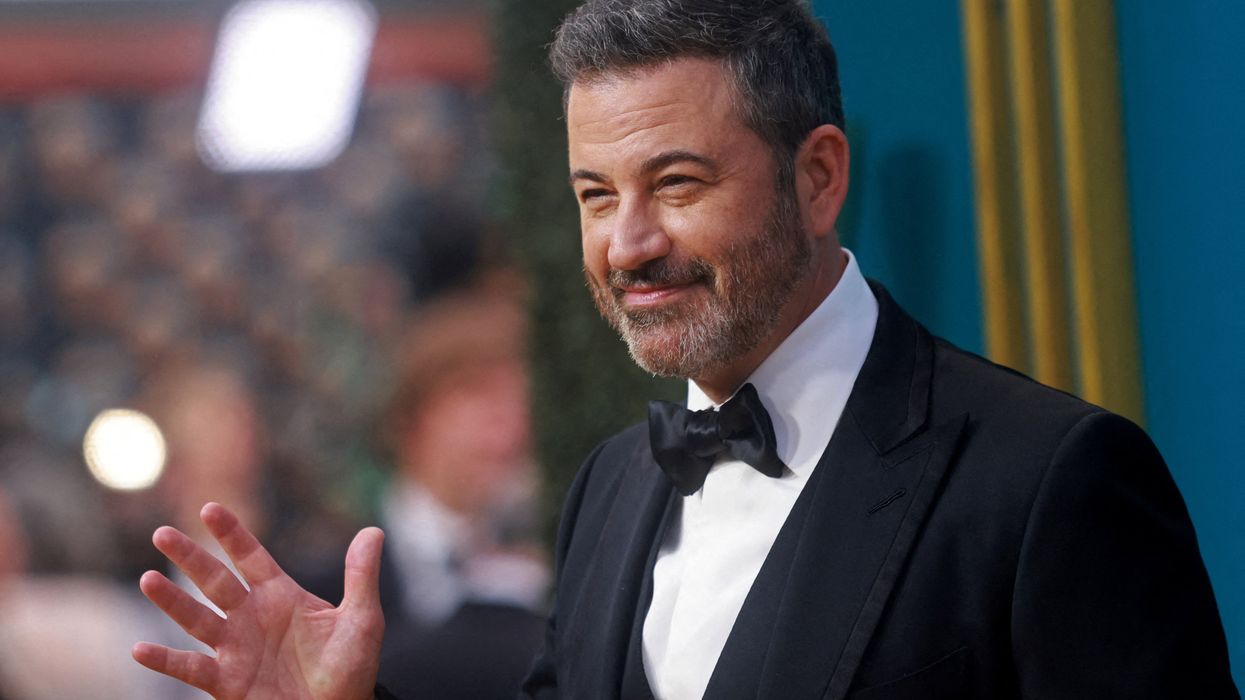
Late-night host Jimmy Kimmel’s return to "Jimmy Kimmel Live!" drew 6.2 million viewers on Tuesday night, nearly four times the show’s usual audience, according to preliminary Nielsen figures.
The episode was Kimmel’s first since ABC and its parent company, Disney, suspended the program last week following backlash over remarks he made about the man accused of killing conservative activist Charlie Kirk. The suspension sparked a national debate over free speech.
The New York Times noted in a report that more than 20 percent of ABC affiliates did not air the episode. Nexstar and Sinclair, two major station groups, said they would continue to pre-empt the show, though Nexstar said Wednesday it was in talks with Disney.
Online interest was also strong: his monologue drew more than 17 million views on YouTube within a day.

No comments:
Post a Comment