Showing posts with label MONEY magazine. Show all posts

Friday, September 23, 2016

Yes, College Rankings Are A Marketing Ruse - And Joke

Related image
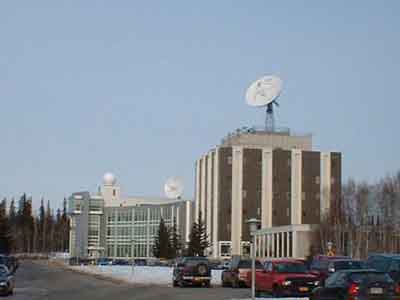
The Geophysical Institute at the University of Alaska -Fairbanks. Most likely you will not find UAF listed in U.S. News & World Report's Annual College Listings - but that doesn't mean it's not a great university.

Frank Bruni's NY Times' Review Op-Ed 'Why College Rankings Are A Joke' (Sept. 18, SR3) merits commendations for exposing the annual college rankings marketing racket.  From numerous points of view Bruni skewers the commonplace trope that a media listing of colleges, universities can provide a seminal insight into quality. And, of course, which schools always end up at the top? Well, the Ivies because they peddle their brand most ardently and invest the time in advertising, and marketing that brand to too many gullible parents- who then join battle with tens of thousands of other parents. All intent on getting Junior or Missy into the "best" school.

But most of this effort is doomed to end up merely with outstanding college debts, and the graduates will leave without having received the specific education they expected. Whereas, if they hadn't been blinded by the brand they might have made a more judicious pick.  As Bruni puts it:

"The rankings nourish the myth that the richest, most selective colleges have some corner on superior education."

Bruni's beef is that this annual high branding exercise fails to recognize excellent public institutions - especially those that may evince superiority in a specific field, discipline. A case in point was the University of South Florida ca. 1968-75 featuring the best quality work in astrometry in the nation, thanks to its Chairman, Prof. Henirich Eichhorn.    Astrometry is the branch of astronomy that deals with accurate determination of stellar positions (in Right Ascension and declination), for the purpose of creating reliable star catalogues. It also entails analysis and determination of the proper motions of celestial objects, as well as highly specific motions including: precession of the equinoxes, lunar libration and astronomic nutation. Prof. Eichhorn also brought in astronomy staff from Yale including Sabatino Sofia, James. H.  Hunter and Carol Williams, launching USF into the top tier of astronomy departments.

Flash forward to the present: if one searches the annual U.S. News rankings for the University of Alaska-Fairbanks, for example, the chances are it will not be found. The lame conclusion based on the ranking elite bias will then be it is not a place worth attending, but this would be a gross error. In terms of specific fields, atmospheric science and space physics, there is perhaps none better. We are talking here not only about the quality of the staff but the resources, e.g. available at the Geophysical Institute.

UAF, for example, has been at the forefront of Arctic atmospheric research - much of which is conducted at the Climate Research Center, e.g.

http://climate.gi.alaska.edu/


There is also Poker Flat, the world's only scientific rocket launching facility, e.g.

http://www.pfrr.alaska.edu/

The rockets launched from here enable more detailed studies of the aurora, magnetic substorms.

For space physics in general, including the study of the aurora, substorms and solar-terrestrial dynamics it has all the resources the dedicated researcher needs, see  e.g.


Given the UAF location and its facilities you won't find a better place for studies in ionospheric, infrasound and magnetospheric physics, as well as space weather. Harvard certainly can't compete in these specialized fields, nor does it have comparable resources.

All of this underscores points I made two years ago concerning a fact too many wannabe collegians and their parents overlook: it makes very little difference which university you attend (assuming it isn’t a ‘for profit’ or online version). It is more the cachet and reputation of the specific department.

From the May 2011 issue of MONEY magazine: "Don't assume an Ivy League education is better than one from a public or state university."

MONEY found that  'bang for the buck' included college graduation rates and post-college success rates - which compared favorably to - or exceeded  - what one obtained from the hallowed Ivies. Alas, this has still not trickled down into the mainstream media where we still find "Best Colleges" lists spread around with the Ivy Leagues on top - then all the rest. So no wonder students and their parents are neurotically driven to believe the Ivies are the  only route to success.

From Bruni's piece, it is highly instructive to see the assorted factors - all highly subjective- that are used to arrive at the rankings.  For example, one is how highly officials at peer institutions rank said school. But as Bruni observes, if they know little or nothing about it (especially for the specific field) why would you expect anything other than a low to mediocre rank?  In such a case it is more plausible they'd go by the "reputation" - but where does that originate? Well, usually from earlier US News rankings! So it's a case of subjective brand incest piled atop more perception incest.

In toto, the cumulative parameters drive perceptions in one direction. To quote Bruni again:

"Intentionally or not, they fuel a frenzy to get into the most selective schools. But they can't adjust for how well certain colleges serve certain ambitions."

What if a high school student then, has an intense interest to study the aurora? Maybe he saw images of it firing up the Arctic sky in a PBS documentary, and now wants to study the physical mechanisms driving it in detail. Will he be able to do this at Harvard, or even MIT? Not very likely. At least to the same extent as actually being in the Arctic and having access to resources such as provided by the Poker Flat rockets, or HAARP (High Frequency Active Auroral Research Program).  As noted in the Wiki article on the program:

"According to the HAARP team, this (research) will advance the study of basic natural processes that occur in the ionosphere under the natural but much stronger influence of solar interaction,"

My point, and I believe Bruni's, is that it would be a crime to dispatch this student to some university which would not be able to fully satisfy his intellectual curiosity, and provide him a future trajectory for productive work and research. But if his parents only go by selective US News rankings, that negative outcome is very likely.

One of the worst travesties of the annual rankings racket exposed by Bruni is that "many college presidents, provosts and deans of admissions express disdain for the rankings...but participate in them nevertheless."

The Existentialist Jean -Paul Sartre would have a precise word for that: "bad faith". At his Loyola University appearance in 1964 he defined it as a person deceiving himself into being convinced he lacks real freedom of choice, usually because he harbors a fear of potential adverse consequences. Thus, the college provosts, presidents  admissions staff etc. know the 'best college' rankings are just media branding bunkum but nevertheless kowtow to them because they believe their peers will look askance at their hostility, perhaps question their credibility.

Perceptive citizens, especially parents, shouldn't be so hamstrung because they have nothing to prove to anyone else. If they are truly dedicated to the welfare of their charges they will do what is best for them- and that means securing the best college for their particular talents.

Sunday, September 27, 2015

Profile Of An Upper Middle Class Family Living Beyond Its Means

In previous posts I've called attention to the 'Cult of the Kid' in this country and how in many Middle Class families the kids rule and their desires take precedence over the family's well being including financial, e.g.

http://brane-space.blogspot.com/2012/03/middle-class-american-parents-need-to.html

Now in the latest MONEY magazine (October, 2015, p. 71) we read of the travails of the Jones family of Folsom, CA.  A family with a combined income of $146,000 /yr. But which can barely make ends meet, "going month to month with little or no money to spend" or "hardly any time to spend on anything else".  The worst part is the parents (Steve and Siobhan - he an Intel engineer, she a teacher) have virtually nothing set aside for retirement, barely $9,500 put away for emergencies, and just $7,000 for college for their four boys - which they estimate will eat up nearly a half million smackeroos based on where these kids want to go.

When one reads the article, one beholds it's a classic case of a family living well beyond its means because they have allowed their soccer fanatic boys to "rule the roost" and basically enabled their "passion for soccer" to dictate the priorities of the family pocketbook. Are we supposed to feel sorry for this family? I think not. The only thing I really bemoan is the parents' inability to read the 'riot act' to these brats and tell them if they love soccer- fine- there's large play lots out there so form a neighborhood game and go for it.

Thus, as in my previous post, I have to declare these parents wimps. According to studies disclosed in a 2012 WSJ piece ('A Field Guide to the Middle Class U.S. Family', p. D2, March13), this is the nature of the American middle class now: perpetual wimps - giving in to anything their kiddies want, and worse, sometimes even acting as their slaves. The Jones parents, Steve and Siobhan, certainly appear to be soccer slaves to their 4 boys.

So let's get to particulars. Exactly what are these jokers doing to have dug themselves into such a hole? They're shelling out some $17, 400 a year for "soccer related activities" for their kids to play in an "elite"  Youth Soccer Association. This  includes: "specialized private coaches, $100 cleats, fees alone running $675 a month,  and $6,200 in one year to travel to eight tournaments".

Reading all this it's no wonder these knotheads have nothing left for emergencies, or their sons' future college - or their own retirement.

What to do? MONEY's genius expert recommended "tapping into their home equity" to jump start  college savings, along with "extending the terms of their mortgage". Nothing, not one word about telling the four brats to give up the elite coaching and  soccer league baloney and stick to humble play in their own neighborhoods. (The boys evidently believe, well at least one, he may get a special NCAA  scholarship to college based on his soccer skills, totally ignoring the reality that most of these scholarships "barely cover fees and books"(ibid.).

Have the parents ever sat down with Junior to tune him into reality? Likely not, because the bane of most American Middle Class parents is to prevent any reality from breaking into their kids' lives and disrupting the delusions.

But clearly it's time they did because pandering to the bratskies' passions is not doing this Jones bunch any good, so it's time for tough love.

In our day my brothers and I craved sports too. Hell, we'd go out every chance we got to play sandlot baseball with the neighbor kids.  But we never ever entertained any freaking delusions that we'd one day win college baseball scholarships or ever play in the Minors, far less Major Leagues. Mind you, there were none of these exclusive junior sports associations and clubs back then either - to suck up a family's money and make them believe simple competition was the path to later success.

According to the parents, on justifying their lavish, spendthrift soccer ways:

"They get to mix with quality kids, they're doing something good for them and they're learning life skills that will help them get on in the world."

Please, spare me the drivel. They can mix with 'quality kids' closer to home without traveling all over the damned place via some interleague competitions. They can do "something good" by maybe volunteering in a soup kitchen or mounting clothing drives for the homeless like a lot of other kids. They can learn life skills in sundry other ways that don't require $6,200 a year tabs for taking them to soccer tournaments.

But letting these little fools have the time of their little lives with their soccer fantasies while ruining the family finances and future plans is just plain nuts.

Again, a case of parents spoiling their twerps and you can be sure they will also mutate into 'helicopter parents' when they reach college - if they ever do.

Friday, February 27, 2015

No - You Don't Need A Million To Retire!


It has been pointed out before by various finance skeptics, but needs to be again (contrary to the worrywarts), that people do not need $1 million to retire. Yet to many this has almost been adopted as a norm, which ought not be challenged.  Thus, it was encouraging, to see in the MONEY magazine investment issue (Jan-Feb, p. 48) , that the authors also are trying to steer the masses away from the idea that stock investment is the only solution and one needs a minimum of one million bucks to achieve any degree of comfort.

A repeated trope that is 99 percent balderdash.

Indeed, author Michael Lewis, author of The Big Short, has noted it was all "built on quicksand, and people who invest in stocks are not paying serious attention to the underlying fundamentals."  Instead they're being mesmerized by flickering numbers on crawl screens, and carried away by temporarily inflated share prices and think this will net them compile a hearty retirement nest egg. Hardly, because if this bubble bursts as I believe it will, many will lose even more of their nest eggs - especially 401ks- than they did three years ago.

Apart from that,  monies accrued in stocks are never real until actually redeemed. This is why we refer to it as "phantom money". You can't build a secure income stream around it because it's variable. - from day to day and week to week. Apart from that it's been estimated ('Surviving the Coming Mutual Fund Crisis') that only 5 % of mutual fund holders manage to redeem their shares in time to reap gains.

The authors of the MONEY piece cite the finding that "more money makes you happier, but once you amass a comfortable nest egg, the effect weakens".  This according to Wes Moss, author of 'You Can Retire Sooner Than You Think: 5 Money Secrets of the Happiest Retirees'. Moss, in his survey study found that yes, the happiest retirees had the highest net worths, but the happiness quotient diminished after a net worth of $550,000. In other words, that amount was quite enough to fund a comfortable retirement.  As Moss put it, cited in the article:

"Once you reach a certain level, more money doesn't buy a lot more happiness".

And 550k is that level, at least according to Moss' findings.

But the MONEY authors add that where your money comes from is as important as the amount of savings you amass. As Moss finds (ibid.):

"Retirees with a predictable income - a pension, say, or rental properties - get more enjoyment from using those dollars than from a 401k or IRA"

Well, of course, given 401k and IRA monies are generally invested in mutual funds which are subject to variation as phantom money, as I noted. Hence, you cannot be sure that the IRA money you use (say in a yearly redistribution) won't go down the next year because of the underlying stocks plummeting. Thus, you are gambling with your IRA nest egg and you know it.

By contrast, getting regular, steady income - say from a pension or immediate annuity- means you can regularly budget for some enjoyment, e.g. holiday trips, and know how much you still have left.  This is confirmed as the MONEY piece notes:

"A Towers Watson happiness survey found that retirees who rely mostly on investments had the highest financial anxiety"

Again, not surprising since that anxiety will naturally arise given there is no predictable income stream on which to base financial projections or even basic budgeting, say for trips, special treats - nights out for a couple, or even buying a new car.

Lacking a pension income? You can still generate a "pension" equivalent by buying an immediate fixed annuity. As an example cited in the piece, a 65-year old man who puts $100,000 into an immediate fixed annuity (NOT a variable annuity!) will receive $500 a month throughout retirement.

Those who wish to check on the annuity which can be purchased for a given amount can go to this site:

http://www.immediateannuities.com/

Of course, to achieve even modest amounts for immediate annuity purchase requires diligent saving, which too many Americans haven't done. But if they ever do, they ought to know they don't need a million to retire and don't have to risk savings in the stock market.

Monday, November 17, 2014

H.S. Seniors Err By Over-Applying to Selective Colleges

    No automatic alt text available.
Me, as a high school senior: I didn't know at this time (March, 1964) that Pace had sent in my transcripts 2 weeks past the MIT deadline.

According to a recent NY Times piece, thousands of high school seniors across the land are going batshit nuts applying to 25 to 40 "select" colleges and universities each - somehow believing this scattershot approach will give them a better chance of getting into Bennington, Harvard or Dartmouth. It won't. But try telling them and their overweening, Type -A personality parents!

This compares to 50 years ago when the typical academic stream student applied to maybe 5 or 6 schools in toto. I applied to 5, received scholarship offers from three and accepted one. (One, for MIT, went unanswered and I later learned the Pace High admissions office had sent my transcripts in 2 weeks too late. I take it philosophically, and as wifey has wryly observed, had that not occurred I'd likely never have gone into Peace Corps, or met her and we'd never have married.)

Back then, bear in mind, the population pressure was much lower, there were roughly half the people now on Earth and the U.S. population was barely 185 m compared to over 315 m today. This meant there were naturally fewer applications going out and hence higher acceptance rates to the elite schools. Perhaps twice the rates seen today.

Today all that's changed. Every manjack now wants the best, best, best and won't settle for State U.  despite the fact that state universities are vastly less costly (think less student debt on leaving). The fact is, it makes very little difference which university you attend (assuming it isn’t a ‘for profit’ or online version). It is more the cachet and reputation of the specific department.  From the May 2011 issue of MONEY magazine: "Don't assume an Ivy League education is better than one from a public or state university."

MONEY found that  'bang for the buck' included college graduation rates and post-college success rates - which compared favorably to - or exceeded  - what one obtained from the hallowed Ivies. Alas, this has still not trickled down into the mainstream media where we still find "Best Colleges" lists spread around with the Ivy Leagues on top - then all the rest. So no wonder students and their parents are neurotically driven to believe the Ivies are the  only route to success. But it is absurd to believe hyper-application enhances chances of acceptance.

If the students themselves had the most remote inkling of probability they'd understand they are uniformly decreasing their odds.  Michael Carter of St. Stephen’s & St. Agnes School in Alexandria, Virginia, has correctly observed it's "not like the lottery". Ab initio in a lottery, every person who buys a ticket has an equal chance of winning. Never mind it's minuscule, the probability is equal per person. One can enhance the probability minutely by purchasing more tickets- say 150 as opposed to one- though the chances of winning are still relatively small.

By contrast, more applications sent out to colleges does not enhance the chance of "winning" and you can only send ONE application per select school. Thus, if tens of thousands of selective school wannabes flood the elite colleges (the same ones all their selective peers wish to attend) it does not bode well for any of them - and indeed, the acceptance rates have to plummet since they are a function of the number of students applying.

Consider: if 400 of 10,000 applicants are accepted each year by Elite U. and in the next year the applicants double to 20,000, then if the college doesn't change its intake numbers the acceptance rate must plummet, in this case, from 4 percent to 2 percent.

Maybe it's a case of adolescent brains not being fully developed. According to Lisa Sohmer, Director of college counseling at the Garden School in Jackson Heights, Queens, NY:

"The funny thing about 17-year-olds is when you tell them that only 10 percent of students are accepted to school X, they never make the connection — even the math ones — that 90 percent are denied.”

Maybe it's because they are eternal optimists!
Sohmer, quoted in the Times piece, said she had found that when students file 20 or more applications, “they’ve loaded on lots of ultracompetitive schools, so their list becomes disproportionately top-heavy. Or they throw in lots of schools at the end where they’re overqualified.”

A far better way to increase one’s chances, she asserts, is to come up with a manageable but carefully selected list of schools and get serious about them. That means actually going to visit them and inquire more fully about the programs in which one is interested.
Look at it also from the perspective of the elites' admissions offices. Thus dealing with students who have applied to 25 other colleges (apart from 'Elite U.')  can make it hard for admissions officers to manage their "yield" — the percentage of accepted students who actually enroll. That can hurt the college’s position in prestigious national rankings, since enrolled students are what count..
No surprise then many colleges have begun emphasizing “demonstrated interest”,  small but often telling indicators of how badly students really want to attend. In the words of Patrick O’Connor, associate dean of college counseling at the Cranbrook Kingswood Upper School in Bloomfield Hills, MI:
If they’re within a reasonable distance of the campus, did they visit? Did they attend a college night and fill out a card? Have they contacted a rep to ask some legitimate questions?”
Nine will get you ten that most of those doing the scatter shot approach for select universities haven't done any of these things.

Marie Bigham, director of college counseling at the Greenhill School in Addison, Texas, said, “You can’t be a competitive, strong applicant without demonstrating interest, and you can’t do that at 25 schools.”

Indeed. So why try to make believe you have that interest when your actions disclose you don't?

Last but not least, one of the sorriest stories I ever beheld concerned a young woman that finally got into the school of her choice (Tulane) but reaped little reward. This appeared about four years ago in the UTNE Reader. She had a spectacular four years and even graduated magna cum laude. And what was her story at the end? Over $100k in debt and yes, she was working as a barista.
Maybe students (and their parents) need to spend less time wasting money on application fees (up to $80 each) , gripped by "success panic" and more conscious time following the MONEY magazine advice. They may not get into Elite U., but they won't find themselves working as baristas with hundred thousand dollar debts either.
In a future blog post, I will deal with the need for the U.S. to get over its college obsession and to start looking at training more students (many more) in the vocational - technical arenas like Germany does. As reported in the Denver Post Saturday, Colorado now needs 47 percent more  workers to fill "middle skill" jobs: RNs, airplane mechanics, auto mechanics, electricians, plumbers etc.
A terrific aspect of the German "master craftsman" model is that once one gets through the program required - including taking a number of examinations- he receives the equivalent recognition (including a certificate) of a Bachelors' degree. This is achieved with no additional cost.
Something we all need to think about to reduce the spiraling student debt that has now exceeded $1 trillion.

Tuesday, October 7, 2014

Of Retirement Nest Eggs - And The Inadequacy Of Americans' Savings

Columnist Jonathan Clements in Sunday's Denver Post WSJ Section put forth a blunt question:

"If you lost 25% of your money invested in a stock market correction, would you be ok with it?"

He then put it another way: "If you had $200,000 in stock investments and lost $50,000 of it, would you be able to handle it?"

The questions are spot-on given many money and finance gurus expect a correction soon, maybe as early as January or February next year when the Fed will likely start raising interest rates - signaling the end of the cheap money era. Clements suggests many could survive the loss using the buy and hold strategy, but many ordinary workers who had piled it up in their 401ks might have to work ten more years.

But this is the problem with investing in the stock market. It is laden with volatility and your money rises and falls almost daily with the share value. Another reason many of us call it 'phantom money' because it isn't real until you actually cash out, redeem the shares. Another problem, of course, is that many clients get burned by investment advisers and even pension funds when these assume too high a return, often 8 percent or more per annum, when that simply isn't realistic on examining the global situation. The shareholder then has been led into the proverbial fool's paradise.

According to an article in MONEY magazine ('You Call This Retirement?', Feb-March, p. 49), citing stats from the Investment Income Institute,  there is a total savings accumulated for all Americans of $21.7 TRILLION. This sounds like a staggering amount of savings until one realizes that perhaps half of it is for those in the upper ten percent of earners and the rest for 90 percent.

And while 1 in 5 Boomers is already out of the work force, many who've been forced to retire because no one will hire them, the rest scramble to save enough to live off of for 25 or 30 more years.  As MONEY notes: "It's the best and worst of times for Boomers at retirement" - meaning the potential for up to 20 or more years of living (once one hits 65) and doing the things you never could before as well as "fulfilling your bliss" (Joseph Campbell's term)  in whatever ways suit your fancy.

The problem is that without sufficient money to live off,  it portends a time of genuine misery. It is true that for a tiny elite group of lucky Boomers who have a million or more stashed away the warning could be more like: "Don't be the richest corpse in the cemetery" - the warning for too many is "Don't end up a corpse too soon from eating cat food and fried kibbles".

Based on the earlier stats, Fidelity Investments claims that a person 55 or older who has been active in his or her 401k for the past 10 years, is likely to have only about $269,000. This sounds like a grand sum until you realize that a typical couple will need at least $220,000 to cover medical expenses that Medicare doesn't pay for. Most Americans don't have anywhere near that much saved anyway, and a recent WSJ article (Sept. 12) put the median savings at just over $50,000 for the worker aged 60 -64. This is pathetic and portends a life of "cat food" and poverty unless some other means of income is supplied. (Or, one has the advantage of a VA medical benefit which pays for all the things, e.g. dental, glasses etc., that Medicare doesn't)

Oh, and don't look for lotto winnings, the chance of winning even one ordinary lotto (not the Powerball)  is less than two asteroids striking Earth at the same time.

But MONEY has some encouraging words for those who won't be able - for whatever reason - to hit the magic number for retirement nest egg savings (generally computed as at least 80% of your mean salary for the last twenty years,  so if your salary was averaging $50k/ yr. you'd need to have $800,000 saved.):

"Retirement itself is a very modern concept, an artifact of postwar prosperity and longer life spans. For most of history, those lucky enough to reach an advanced age kept working until they were physically unable - so rural life and extended families provided the safety net."

Then the piece puts a downer meme into the mix, noting that the longevity revolution and industrial revolution put an end to that.

But left unsaid is the real problem or issue, which no finance column or magazine has ever had the balls to mention, at least those that I've read: That is,  the genuine problem is we have a population surplus, too many babies being produced, which is creating too many workers chasing too few jobs.  Just tally up the "population replacement" numbers by month since 2000  (avg. about 150,000) and look at the numbers of current unemployed and under-employed. A coincidence they're nearly the same? Hell no! But again, the Neoliberal media doesn't want people to see that, only to blame THEM if they can't secure a decent job to keep them off "entitlements" until they are 70 or so.

Stop the population surplus and you solve the problem Marc Freedman complained about at the end of the article, "too many people being warehoused who no longer have an economic role".

Something to think about!

Wednesday, January 15, 2014

Financial Tropes Exposed - and Some New Year's Money Heads Ups!


Exposing widely circulated financial tropes is always a thankless task and an endless battle. You are fighting not only against the co-opted (by corporatism) MSM and its lackeys, but also the blow-dried yellers and screamers inhabiting the Business cable shows. These bozos tend to pop out sporadically to yelp at the hoi polloi and question why they are still "sitting on the sidelines". 

Thus, it come to the point one must expose some of this nonsense, even though one's audience may already have been convinced the Street's snake oil salesmen are telling the truth.

Under Financial Tropes Exposed:

1) You Need to Save $1.8 Million or More for Retirement

Yes it is true that many people aren't saving enough. But at the other end too many people are saving too much, and likely postponing retirement when they could already be enjoying it. One story that recently caught my eye appeared in MONEY magazine  (Jan. -Feb.) and concerned a couple with current total assets of $1.8 million - but for whom the magazine felt it incumbent to offer advice on how to save more!

But the couple may be wasting time and ending up like the subjects described last week in a New York Times Sunday Review piece. That concerned people in an experiment on consumption and waste being offered chocolate pieces contingent on how many hours they listened to white noise, instead of decent music. Every two hours listening to white noise earned a chocolate piece while listening to proper music earned nada. At the end of the experiment (on average for a given bloc of time) a large set of subjects had compiled an average of 10.4 chocolates of which only 5 were eaten, the rest wasted - they could not consume them later. Moral of the story? People over-worked and over-earned but inevitably under-consumed.

Applied to the real world of finance: most people never felt secure enough to stop working, they always wanted more because they feared losing it. Yet the evidence showed the 'more'  one gained or earned,  the more was usually wasted (or left unused). (In the case of a retired person, it would mean leaving a huge sum of assets behind which your 'heirs' may collect, or the state - if you die intestate)

Now, according to Morningstar Investment Management's David Blanchett, the evidence is in that working people are making the same error regarding saving for retirement.  He especially takes issue with the "80 percent replacement" rule which asserts that prospective retirees need to plan to replace at least 80 percent of their pre-retirement income. So if your pre-retirement income was $50,000 a year, you had to plan to be able to receive at least $40,000 a year. If your projected retirement is 25 years, then this means you need:

($40,000/ yr) x 25 years = $1, 000, 000

But by Blanchett's analysis this formula could lead some workers to over save for their golden years by as much as 20 percent.

2)  Put More Money Into Stocks AFTER You Retire.

This is an incredibly bad idea, so it was even more incredible to see Jane Bryant Quinn pushing it in the most recent issue of the AARP Bulletin. Quinn cites some new study which appears to show retirees are less likely to run out of money if they have more money in stocks - after they retire - as opposed to being "too cautious" and easing out over time.

The inescapable fact, however, is that the retired ordinary person (as opposed to the rich one percenter) has virtually no time at all to make up losses after a stock crash-  should it occur. He is then left to try to scrape by however he can - especially if 55% invested in stocks as one person suggests. A far better strategy, if one doesn't wish to outlive his money - is to save aggressively and then use savings to purchase immediate annuities. These then create a stream of income you're unlikely to outlive. It is preferable to stock-mutual fund dependency because you are not hostage to some phantom money stream that will gyrate with any and all external events in the markets. And if a correction or crash occurs, you can get through it.

3) You Don't Need a Will - You're Too Young

Incredibly, nearly 2 in 3 Americans have no Will. Though they may pout and whine about the "government" taking their hard earned money, this is where it all gets exposed as nonsense-- since without a will that's exactly what you're allowing to happen!  No one likes to think about the inevitable (except maybe the crazed fundies in their salvation and 'Hell' phantasms)  but think about it you must - especially if a  Bird flu pandemic were to be facing you.   Among the myths that people buy into:  

"Joint ownership of accounts, property etc. makes a will unnecessary". 

This is a common misconception. In fact, joint ownership alone often creates needless state or federal estate taxes and may result in gift taxes being due. It may also deny you complete control over your property while you're still living. Thus, joint ownership is a poor substitute for a will but can work well in conjunction with one.  

"A Will is not needed for a small estate".

On the contrary, the smaller the assets or estate the more important it be settled quickly, since delays mean increased expenses cutting down the proceeds. In many cases, an estate is larger than the owner realizes, and it's often undervalued. Still have all those 1952 TOPPS baseball cards? Well, they are part of your estate and if in near mint condition, now worth over $55,000.  

Can you prepare a will - last will and testament- on your own? Yes, but it's not a good idea. The reason is that many do-it-yourself wills are declared null and void by the courts.   My wife and I got our original will done soon after our marriage (1975)  by an attorney  in Barbados, it took ten minutes and cost $100 Bds. We got our will revised about ten years ago, to take into account family-beneficiary changes etc. It was done by a local attorney for about $200 and took less than a half hour.  

Given such an important piece of the typical American's financial puzzle, it is incredible that more haven't done it. It's especially incredible that folks who otherwise are hyper money careful, watching every penny, controlling their credit cards etc., are prepared to let tens of thousands slip out of their fingers (to the state) because they are too lazy to prepare a will!


Under Financial Heads Ups:

1) Be Aware of How the Affordable Care Act Affects Medicare:

Many seniors aren't aware of how the Obama Affordable Care Act starts affecting Medicare this year. The primary effects will be on all Medicare Advantage plans, which the ACA subjects to a $156 b decrease in spending over ten years, The changes will already be seen by many Advantage members in more limited options, including for primary care physicians (already "thousands" have been cut from networks in 11 states according to the AARP Bulletin).  Another change you're likely to see is higher premiums, which some plans are likely to impose in order to preserve existing benefits and choices.

2) Make a Plan to Foil ID Thieves:

This ought to be on almost everyone's radar after the recent TARGET fiasco, with nearly 120 million people compromised in some way.  Some of the measures are pure common sense, but it doesn't hurt to repeat them:

a) Never provide any personal info, like your Social Security number, to anyone you don't know - or over the phone.

b) Get off all mailing lists for "pre-approves credit cards" - as they're a gold mine for identity thieves. To opt out you can call: 888- 567-8688 toll free

c) Access your free credit report at least once per year at:

www.annualcreditreport.com

If you don't plan to apply for new credit or loans then freeze your report so crooks can't get new accounts in your name. (Type in 'security freeze' at the websites for Experian, Transunion, and Equifax.)

d) Ask your credit card providers to issue you new smart cards with EMV chip technology. If unavailable, then replace existing cards with ones with your photos.

e) Shred all documents that contain personal information - use cross-cutting shredders if you can.


Hopefully this advice will help to avoid money issues, problems in this new year.