
Amidst increasing signs of unchecked AI debt and a mounting bubble, the 'banker of banks' has now weighed in ('An AI Bust's Effects on Global Economy Detailed', WSJ, July 1, p. B12). That bank of banks would be the Bank of International Settlements or BIS. According to the WSJ piece:
"If you're anxious about the AI-impending bubble and its global economic risks maybe don't read the latest annual report from the Bank of International Settlements. The report released on Monday, lays out in unsettling detail how an artificial intelligence bust could throw the global financial system into disorder.
It comes from an institution that has a good track record of predicting problems, including the 2008 financial crisis."
So what has the BIS so concerned? Basically, the ongoing, excessive investment in AI infrastructure from the tech company moguls - to the tune of hundreds of billions. (Open AI plans to spend $600 billion more on AI infrastructure by 2030 despite generating only $2b/ month in revenue - according to WSJ, July 7, p. A14)
Given that up to now the products are not measuring up to the outlays a pullback in financing (and with it lower stock prices) will ensue. In many ways this is reminiscent of the overselling of the notorious investment trusts in the 1920s - especially with the bankers lending money to those who couldn't afford them to buy them. Hence, a whole vast house of cards was created mostly using money the average person didn't have. A bubble was the result, and a very unstable one. As Andrew Ross Sorkin put it in a May, 60 Minutes interview:
As the WSJ article goes on to point out:
"There's nothing especially new about those concerns, but the BIS connects some other dots. For example, drawing lines between an AI bust and the unusually vulnerable state of consumers, governments and the global economy. U.S. households are significantly more exposed to stocks than in the past couple of decades, both relative to their wealth and their income."
Hence, any significant AI bubble bursting - especially if based on debt, could crater that paper wealth as well as real income. Apart from which those still rising (and already overpriced) U.S. stock prices during this AI boom could risk a major global erosion of wealth in the event of a U.S. tech-focused bust.
The further bad news is that these overspending tech companies are only the "tip of the iceberg", in the take of the BIS. Basically, if the tech honchos slow the pace of their inordinate capital spending it will spell contractions across a wide front. Specifically, construction contractors (building the AI data centers) with relatively weak balance sheets, would feel the pain quickly. This among other financial dominoes, all ready to fall.
The fact that - as in 1929 - debt has come to increasingly fuel investments (in this case for AI), means that there exists an even greater potential for destruction. Why? The BIS notes that government budgets in advanced economies are stretched as it is (especially with Trump's Iran war and reckless tariffs) which means any capacity to reinvigorate these economies via spending is severely limited. As the WSJ piece points out:
"Persistent elevated inflation and geopolitical uncertainty caused by the Iran war make it trickier to find a good response to disruption. These warnings are worth listening to because of where they come from."
Again, reminding readers the same BIS - a 'Swiss-based consortium for global central banks" - was instrumental in giving advance warning about the 2008 credit collapse. This was put out in a paper entitled 'Prime or Not so Prime':
Which detailed the risks posed by the securitization of subprime loans in the U.S. housing markets. The warning turned out to be prescient and let's just say the BIS could be prescient again in its AI bust warning.
See Also:
‘GLOBAL FINANCIAL CRASH’: Central Bank Issues DIRE WARNING About NEW GREAT DEPRESSION!! |
- And:
— from Robert Reich's Substack
Friends,
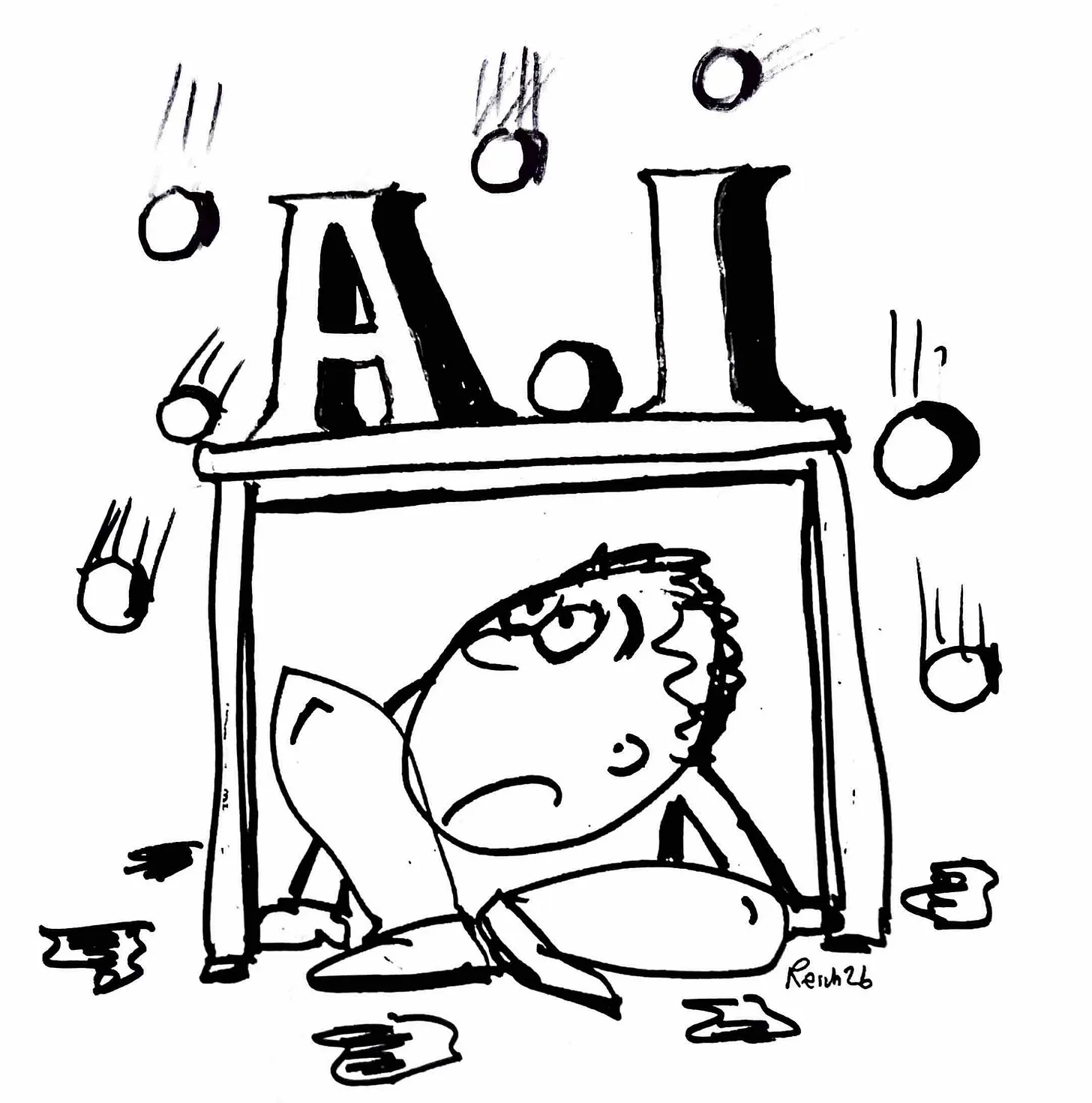
This daily letter to you doesn’t offer financial advice. And most of you have been so worried by the nation’s lurch toward dictatorship under loathsome Trump that it seems almost unfair to burden you with an alarm about the economy. But we’re facing a five-alarm fire that you need to know about.
Much of the United States economy is now based on A.I. — or, more specifically, expectations that A.I. will pay off very big in the near future. A.I.-related stocks have accounted for roughly half of the rise in the S&P 500 this year. And U.S. economic growth is dependent to a remarkable degree on A.I. infrastructure spending.
But it’s becoming a house of cards.
- A.I.-Bubble Angst Spills Into Bond Market - What It Means..
- And:
- A Brief History Of Bear Markets For (Primarily) Younger Investors

No comments:
Post a Comment