Showing posts with label Astrometry. Show all posts

Thursday, May 17, 2018

Selected Questions- Answers From All Experts Astronomy Forum (General Astronomy Information)

Question: i need information on astronomy, anything...what it is, it's history,
etc... thank you. Wolfie, Tacoma Park, Md


Answer:   'Astronomy' is actually quite a vast area to try to explain at one time
because it includes a number of large sub-disciplines:

astrometry - the study of star positions and how these change over time
with celestial coordinates

celestial mechanics - the prediction of the future positions of the
planets, Moon, etc. using orbital elements

 stellar astrophysics - the study of the physics of the stars, and their
evolution, changing properties

 solar physics - the study of the Sun, its physics and properties, as well
as terrestrial effects


radio astronomy - the study of celestial objects using sensitive antennas designed
 to receive signals  in the radio spectrum

galactic dynamics  - the study of the dynamics and physics of the galaxies, galaxy 

clusters, and their origin, evolution, 

cosmology - the study of the large scale structure, origin and evolution of the universe.

Each one of these - particularly the respective history of each sub discipline - 
would probably take several large books to even survey, far less 'explain'. 
What this shows is that like many other scientific disciplines, astronomy has grown
and developed beyond simple description or being one simple science. When
people become astronomers today, in fact, they have to specialize in one
area, say solar physics - they can't just do astronomy. It's too much!

As for the history, or any one part of it, as you can gather from the
above it's far beyond the scope of any practical (and even partially
complete) response here.  Hence, rather than expect a concise set of 
information it is better to go out and get basic books to learn the 
knowledge and master the principles on your own.


Many of the basic books are somewhat dated, but the essential (foundational)
 knowledge  and physical principles remain intact. One of the best is Sir Fred
 Hoyle's 'Frontiers of Astronomy' which  is  available online:

His textbook, 'Astronomy and Cosmology - A Modern Course' is also excellent
and very readable.  Both of these books provide astronomy insights across a wide
spectrum of subjects. 

As for a concise history of astronomy as an overall subject, an excellent book
 to read - which should be available at any public library- is:

'A Short History of Astronomy: From Earliest Times Through the Nineteenth
Century
' by Arthur Berry, Dover Publications, 1961.


If you are serious about garnering more information about astronomy and its
 many facets, the  approach I've outlined here will be a major help - as well as
 the books cited.  You can, of course, also find numerous other good texts on
your own simply by use of appropriate Google inputs.

Friday, September 23, 2016

Yes, College Rankings Are A Marketing Ruse - And Joke

Related image
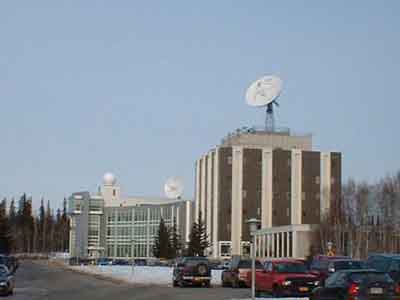
The Geophysical Institute at the University of Alaska -Fairbanks. Most likely you will not find UAF listed in U.S. News & World Report's Annual College Listings - but that doesn't mean it's not a great university.

Frank Bruni's NY Times' Review Op-Ed 'Why College Rankings Are A Joke' (Sept. 18, SR3) merits commendations for exposing the annual college rankings marketing racket.  From numerous points of view Bruni skewers the commonplace trope that a media listing of colleges, universities can provide a seminal insight into quality. And, of course, which schools always end up at the top? Well, the Ivies because they peddle their brand most ardently and invest the time in advertising, and marketing that brand to too many gullible parents- who then join battle with tens of thousands of other parents. All intent on getting Junior or Missy into the "best" school.

But most of this effort is doomed to end up merely with outstanding college debts, and the graduates will leave without having received the specific education they expected. Whereas, if they hadn't been blinded by the brand they might have made a more judicious pick.  As Bruni puts it:

"The rankings nourish the myth that the richest, most selective colleges have some corner on superior education."

Bruni's beef is that this annual high branding exercise fails to recognize excellent public institutions - especially those that may evince superiority in a specific field, discipline. A case in point was the University of South Florida ca. 1968-75 featuring the best quality work in astrometry in the nation, thanks to its Chairman, Prof. Henirich Eichhorn.    Astrometry is the branch of astronomy that deals with accurate determination of stellar positions (in Right Ascension and declination), for the purpose of creating reliable star catalogues. It also entails analysis and determination of the proper motions of celestial objects, as well as highly specific motions including: precession of the equinoxes, lunar libration and astronomic nutation. Prof. Eichhorn also brought in astronomy staff from Yale including Sabatino Sofia, James. H.  Hunter and Carol Williams, launching USF into the top tier of astronomy departments.

Flash forward to the present: if one searches the annual U.S. News rankings for the University of Alaska-Fairbanks, for example, the chances are it will not be found. The lame conclusion based on the ranking elite bias will then be it is not a place worth attending, but this would be a gross error. In terms of specific fields, atmospheric science and space physics, there is perhaps none better. We are talking here not only about the quality of the staff but the resources, e.g. available at the Geophysical Institute.

UAF, for example, has been at the forefront of Arctic atmospheric research - much of which is conducted at the Climate Research Center, e.g.

http://climate.gi.alaska.edu/


There is also Poker Flat, the world's only scientific rocket launching facility, e.g.

http://www.pfrr.alaska.edu/

The rockets launched from here enable more detailed studies of the aurora, magnetic substorms.

For space physics in general, including the study of the aurora, substorms and solar-terrestrial dynamics it has all the resources the dedicated researcher needs, see  e.g.


Given the UAF location and its facilities you won't find a better place for studies in ionospheric, infrasound and magnetospheric physics, as well as space weather. Harvard certainly can't compete in these specialized fields, nor does it have comparable resources.

All of this underscores points I made two years ago concerning a fact too many wannabe collegians and their parents overlook: it makes very little difference which university you attend (assuming it isn’t a ‘for profit’ or online version). It is more the cachet and reputation of the specific department.

From the May 2011 issue of MONEY magazine: "Don't assume an Ivy League education is better than one from a public or state university."

MONEY found that  'bang for the buck' included college graduation rates and post-college success rates - which compared favorably to - or exceeded  - what one obtained from the hallowed Ivies. Alas, this has still not trickled down into the mainstream media where we still find "Best Colleges" lists spread around with the Ivy Leagues on top - then all the rest. So no wonder students and their parents are neurotically driven to believe the Ivies are the  only route to success.

From Bruni's piece, it is highly instructive to see the assorted factors - all highly subjective- that are used to arrive at the rankings.  For example, one is how highly officials at peer institutions rank said school. But as Bruni observes, if they know little or nothing about it (especially for the specific field) why would you expect anything other than a low to mediocre rank?  In such a case it is more plausible they'd go by the "reputation" - but where does that originate? Well, usually from earlier US News rankings! So it's a case of subjective brand incest piled atop more perception incest.

In toto, the cumulative parameters drive perceptions in one direction. To quote Bruni again:

"Intentionally or not, they fuel a frenzy to get into the most selective schools. But they can't adjust for how well certain colleges serve certain ambitions."

What if a high school student then, has an intense interest to study the aurora? Maybe he saw images of it firing up the Arctic sky in a PBS documentary, and now wants to study the physical mechanisms driving it in detail. Will he be able to do this at Harvard, or even MIT? Not very likely. At least to the same extent as actually being in the Arctic and having access to resources such as provided by the Poker Flat rockets, or HAARP (High Frequency Active Auroral Research Program).  As noted in the Wiki article on the program:

"According to the HAARP team, this (research) will advance the study of basic natural processes that occur in the ionosphere under the natural but much stronger influence of solar interaction,"

My point, and I believe Bruni's, is that it would be a crime to dispatch this student to some university which would not be able to fully satisfy his intellectual curiosity, and provide him a future trajectory for productive work and research. But if his parents only go by selective US News rankings, that negative outcome is very likely.

One of the worst travesties of the annual rankings racket exposed by Bruni is that "many college presidents, provosts and deans of admissions express disdain for the rankings...but participate in them nevertheless."

The Existentialist Jean -Paul Sartre would have a precise word for that: "bad faith". At his Loyola University appearance in 1964 he defined it as a person deceiving himself into being convinced he lacks real freedom of choice, usually because he harbors a fear of potential adverse consequences. Thus, the college provosts, presidents  admissions staff etc. know the 'best college' rankings are just media branding bunkum but nevertheless kowtow to them because they believe their peers will look askance at their hostility, perhaps question their credibility.

Perceptive citizens, especially parents, shouldn't be so hamstrung because they have nothing to prove to anyone else. If they are truly dedicated to the welfare of their charges they will do what is best for them- and that means securing the best college for their particular talents.