Showing posts with label International Space Station. Show all posts

Tuesday, June 11, 2019

NASA Says "Come Fly With Me" - The Billionaire Would-Be "Astronauts" Better Think Twice

Image may contain: one or more people

As the government funding for the International Space Station is nearly ready to be pulled, it's clear NASA is now desperate to get  outside funding. The once stellar agency that fulfilled JFK's landing on the Moon goal, has now been reduced to grafting (at $50 million a pop, plus change) for space tourists to support its further endeavors.  Meanwhile, we have an idiot resident in the White House who doesn't wish to return to the Moon (say to set up permanent bases) and believes the "Moon is part of Mars".  That's how far this nation has regressed in a mere 50 years.  (The 50th anniversary of the first Moon landing - by the Apollo 11 crew- will be on July 20th.)

As for the space tourist trips, they've actually been under discussion for years. Recall some 5 years ago the Virgin Galactic maiden voyage crash (of "Spaceship Two") e.g.
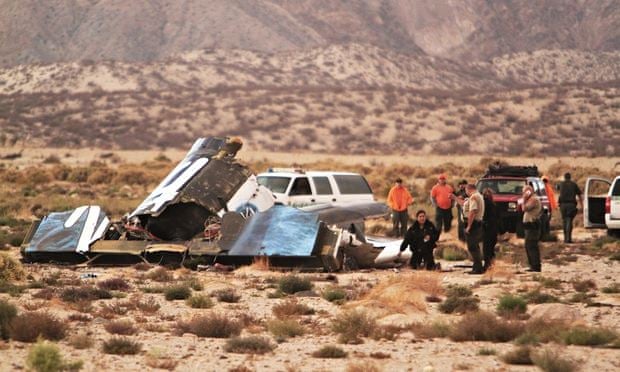
SpaceShipTwo crash

As I observed in that Nov. 1, 2014 post, the purpose:

"was to give wealthy hotshots a chance to say they'd at least been to the edge of space (to experience weightlessness) at a quarter million a pop. The total duration of each flight? Five minutes.  Must be nice to be able to burn a quarter million for a 5 minute romp just to say you've nominally been to space!"

I haven't budged from that, and pretty well side with Aussie astronaut Andy Thomas who referred to such stunts as  "dead-end and dangerous technology, "  Also - big deal! You are only getting to the edge of space, around 62 miles up, not into space itself.   Thus, mini treks like Virgin's Richard Branson have offered are merely glorified high altitude plane flights, again to use Thomas' parlance.

The NASA proposed adventures are different because if you're rich enough to afford the ticket ($50 million for up to 30 days on the space station, and $35,000 per day to cover life support - food, medical supplies etc.)  you actually do get to be in literal space - 254 miles above the Earth.  So you will get to see the actual sights the astronauts see, i.e. of  the Earth from high above, the continents, with cities scattered like bright specks. 

But is it really worth it?  First of all, to be able to actually enjoy the 30 day sojourn (bear in mind there will only be limited runs to the ISS from Earth, not like catching a bus to return to Earth when you want) you have to have some idea of what 30 days in space will be like.  If you're not conditioned you will be space sick almost continuously - and it will make sea sickness look like a day at the proverbial beach.  

Second, are you really going to be prepared to consume  mushy liquids out of tubes for 30 days, as opposed to eating real burgers, steaks? Is that what you're coughing up 50 million smackeroos for?   Really?   And what about using the space station toilet?  Are you prepared for that novel experience?  

The much bigger question is how are you going to get conditioned for the trip?  I mean think of this logically. In the opening of the space era more than 50 years ago - the era of the Mercury and Gemini astronauts - training typically lasted weeks to months.  NASA didn't just recruit guys like Alan Shepherd and John Glenn and plop them into rockets and send them off.  They had to undergo serious physical training including being spun in centrifuges to prep them. And then there was the ability to sustain the g forces at liftoff.

Are any of these billionaires going to be ready for that?  Or, will they get heart attacks as soon as they experience 10 gs?  And sorry, unlike on prosaic jet planes, there will be no doctors likely to take care of you on the spot, at that instant. If that heart attack comes on under those g -forces at liftoff you are likely dead.  One billionaire cadaver to have to send back with the return rocket.

Perhaps the biggest issue is what exactly these well-heeled private visitors will do for thirty days  - assuming they survive liftoff.  All the ISS team of astronauts actually have specific jobs, so they aren't lollygagging looking out of windows the whole time. They are recording flight data, conducting experiments, planning others, and may even need to do a space walk or two to fix any technical problem that arises.

The billionaires who line up for these space station junkets are a different breed. They are most likely already retired, have no special technical or scientific skills or abilities. So what will they do for thirty days? Read?  Look out of windows?  Play their Ipods?   I suspect after 3 days or so when the novelty of the first images and sensory experiences wear off they'll be utterly bored. 

That's a pity because given a roughly $3 billion annual cost to operate the station (maintaining and supplying it), NASA will need 60 rich guys to sign on each year. That's assuming it will cost $50 million a pop. Even to support the $200 million in research projects utilizing the space station will take at least 4 trip per year at the same rate.

The true pity would be to allow the ISS to become  defunct or just  crash to Earth, when that $3 billion a month currently being wasted in Afghanistan could save it.

As for me, I will save my space views for just watching DVDs of the last Space Shuttle missions to the ISS, and what transpired in those. I don't need to spend $50 million to say I've been to space, and wouldn't even if I had it,  say after winning a Powerball.  

What would I do instead if I managed to win $200 m (one time payout) in a Powerball? Well, I'd launch a think tank with priorities in political strategy for the Democrats!   

Monday, December 1, 2014

Finally - A REAL Manned Space Program We Can Be Proud Of!


The Orion spacecraft sits at the vertical test facility during the opening of the Space Operations Simulation Center in Littleton.(Joe Amon, The Denver
Orion spacecraft in vertical test facility near Littleton, CO

Forget the rinky-dink commercial space program and poppets using 45-year old Russian rocket engines and played out space jockeys, to try to do the space tourist thing or ferrying cargo to the International Space Station. We're now on the cusp of a REAL space program, run by NASA in conjunction with some of Colorado's best universities in the space science field. Orion, which is set to launch on the Exploration Flight Test-1, or EFT-1, this Thursday morning from Cape Canaveral, Fla., will take a 17-minute ride into orbit on the world's most powerful rocket — the Centennial Colorado-made Delta IV Heavy.

It will communicate with Earth via antennae, and record its journey with flight cameras. The test flight brings Orion one step closer to meeting the National Aeronautics and Space Administration's mission objective of eventually landing humans on asteroids, Mars and other never-before visited destinations.  While private Colorado companies such as United Launch Alliance and Ball Aerospace  have designed  some of the craft's components - they are not running the show. As with the Apollo program, NASA is the maestro, setting all the pieces in motion as well as defining the objectives and uses.

For some perspective, the December 4  launch of EFT-1 will take Orion farther than any U.S. spacecraft built for humans has gone since Apollo 17 in 1972, reaching the altitude of 3,609 miles during its second orbit of Earth. In comparison, the international space station orbits Earth at about 260 miles altitude. By further comparison, Virgin Galactic's 'Space Ship Two' which recently crashed, e.g.                                                                                

SpaceShipTwo crash
Has minimal aspirations of barely reaching the edge of space, at about some 18-20 miles altitude. By comparison to Orion this is 'small change'. Worse it is mainly for space tourism, to give wealthy hotshots a chance to say they'd at least been to the edge of space (to experience weightlessness) at a quarter million bucks a pop. The total duration of each flight? Five minutes.

Thus, the Orion mission brings a desperately needed shot in the arm to an "uninspired" national space program, in the parlance of NASA astronaut Eugene Cernan, Apollo 17's mission commander. According to Cernan, quoted in a Sunday Denver Post Business piece:

"Forty-two years ago last month, I left my footprints on the moon. And today ... we can't even get an American in space on our own, What we're doing on the space station is exploitation — we're continuing to go where we've been before. Exploration is when you go where humans have never been before, and you see what humans have never seen before."

Bingo! And further, we have to keep telling knot heads who yap about "letting robots do it" - Not good enough! We have to get ourselves off this planet and colonize other worlds - because well, to quote Isaac Asimov in his 1976 lecture at Queen's Park Theater in Barbados: "You don't leave all your eggs in one basket. In the case of humans on Earth, one killer asteroid could wipe us all out."

I don't know how much clearer the case can be made for manned space exploration and ultimate colonization. We have the choice to either move some of our "eggs" to other planetary locations, or remain on Earth and have the species wiped out. There are no other choices.

The Orion spacecraft is made up of three components: the launch-abort system, the service module and the crew module, which is the only part that will return to Earth. It sits atop the Delta IV Heavy rocket for a combined total launch weight of more than 1.6 million pounds. Orion's crew quarters can sustain four astronauts for up to 21 days in a 316-cubic-foot habitable area — a space that's the equivalent of about of two minivans.

Before allowing humans to live in such quarters, all Orion's systems — which have been extensively tested on the ground — must be pushed to their limits in the harsh conditions of deep space. Hence, the critical test on Dec. 4 which I have no reservations about, as I would with a straight up commercial launch overseen by commercial priorities such as large profit margins.

The spacecraft will twice pass through the lower Van Allen Belt — one of two areas of radiation encircling Earth. The radiation is extremely harmful to humans, and can also wreak havoc on sensitive equipment. Orion's cameras will be turned off at this time, and data on how the spacecraft's protective systems fare will be closely monitored.

Then there's the heat inevitably sustained on any space craft re-entry.given re-entry velocity generates friction between the spacecraft and Earth's atmosphere, and that friction results in extreme heat.
Serving as a buffer for the EFT-1  is the spacecraft's 16.5-foot-diameter heat shield to protect Orion and its future crews during re-entry into Earth's atmosphere. The shield is key to Orion's success given that Orion will pass through Earth's upper atmosphere at about 20,000 mph  so will experience temperatures of up to 4,000 degrees Fahrenheit, or about 80 percent of what the spacecraft would experience returning from lunar orbit. (Orion's shield is designed to withstand up to 5,000 degrees Fahrenheit.)

Let's look forward to Thursday's launch of the EFT-1 and the promise of a genuinely bright manned space future with adequate redundancy and safety measures as opposed to slapdash craft put together on the fly with future profit the primary driver.


Sunday, July 20, 2014

Remembering the Apollo Moon Landing - And How Far Our Manned Space Vision Has Regressed

                                                                     
                         Astronaut Buzz Aldrin on lunar surface, July 1969

Forty-five years ago, at roughly 4:10  eastern time this afternoon,  I'd just returned from an Introductory Astrophysics class with Prof. Sabatino Sofia at the University of South Florida, and trekked to the Beta Hall Commons. There,  nearly 40 students had already gathered to watch the Apollo 11 Moon landing and the first time humans set foot on our natural satellite..

Within eight minutes of my arrival - watching the black and white images on a 22" TV set - Neil Armstrong slowly stepped off the landing ladder and uttered some of the most famous words ever spoken: "That's one small step for a man, one giant leap for mankind.".   Most of us then envisaged a great space future, with this event only the warm up. I mean, after the fantastic film '2001 - A Space Odyssey' - which had just opened a year or so earlier - we had visions of space stations and Moon colonies dancing in our heads - not to mention trips to Mars by the turn of the century.

What spawned the Apollo project? Space historians go back to May 25, 1961, barely 3 weeks after Alan Shepherd's successful first sub-orbital trip in the Mercury capsule. At that time President John F. Kennedy addressed a joint session of Congress and asked for a joint commitment to 'landing a man on the Moon and returning him to Earth', within the decade. Thus began America's biggest, costliest and most ambitious effort ever, rivaled only by the building of the Panama Canal and the Manhattan Project's building of an atomic bomb.

It would take just over 8 years to fulfill the vision, which included disastrous mishaps such as Apollo 1, in which Gus Grissom was killed along with fellow astronauts Ed White and Roger Chaffee during a pre-launch test at Cape Canaveral on January 27, 1967. Despite the setback and other problems that came up, the vision remained in place.

On July 16, the Apollo 11 crew was launched aboard a Saturn V rocket topped by the 'Eagle'  lunar module, arriving on the dusty surface of Tranquility Base 4 days later.. As commander, Neil Armstrong was first out of the module and walking on the Moon, followed by Buzz Aldrin. Alas, somebody had to remain behind and that was command module pilot Michael Collins who was responsible for being the 'gatekeeper' - in lunar orbit.

The success of the mission met with resounding public approval and the U.S. emerged as leader in space faring after a string of losses to the Soviet Union. This was despite the final cost tally of $20b or about $80b in today's dollars. There followed six landings in all through 1972 with 12 men  having explored the Moon. We  spaceniks wanted more - including the establishment of lunar colonies, to show the whole Apollo deal wasn't a flash in the pan for PR. But it wasn't to be.

What happened? Short story: the country painfully learned it couldn't support "guns, butter" and manned space exploration all at once. There wasn't enough money to do so. Recall a short time earlier Johnson's 'Great Society' programs were launched and before that - the Vietnam War - after a concocted incident in the Tonkin Gulf in August, 1964.

Indeed, as the red ink bled, both from the war and LBJ’s “Great Society” programs, it was evident by 1971 that: a) the Apollo missions would have to be truncated, and b) the manned space program – if kept – would devolve and diminish to a low Earth orbit substitute of earlier aspirations. When then President Richard Nixon (just before his Watergate crisis) confronted NASA’s administrators in 1972, they were basically informed of the writing on the wall: Either come up with a much tailored down program for manned space exploration, or have nothing at all.

Given the choice between something and nothing, NASA chose the first – which meant pursuing the less costly Space Shuttle program, already on the drawing boards. Alas, since the Shuttle was really designed for re-supply of existing space stations and none existed yet, this meant it would be constrained mainly to ‘show and tell’ events in low Earth orbit. There were no other choices, it was either this, leading on to the eventual substantive Shuttle missions 20 years later, or no manned flights.

And so the nation's manned space vision had begun to dim and recede.

Once Reagan assumed office in January, 1981, the constrictions on spending for space grew much more formidable, thanks to his massive tax cuts (going from a maximal marginal rate near 70% to 28%) and the $2.7 trillion defense spending spree (which combination was in fact responsible for converting us into a global debtor). Naturally, in this anemic and hostile (to space spending) fiscal environment the screws tightened even more on NASA and they were forced to lowball cost estimates and cut corners for future flights. The latter included ramping up an already overly ambitious launch schedule. If they didn’t do this, they’d be totally left out of the manned space budget. In these circumstances, the Challenger disaster must be understood and referenced- as the ultimate result of excessive cutting corners, and rushing launch schedules (the Challenger never should have been launched under those frigid conditions – and the O-ring risk had been noted by engineers at Morton Thiokol)

By 2011, and the final launch of the Space Shuttle Atlantis, the U.S. had basically reached its nadir in space exploration. Now, three years later, the U.S. is still dependent on the Russians to get crew to the Space Station. Without the Russians allowing our illustrious guys to "hitch hike" on the Soyuz, there wouldn't be any Americans in space.

To me, this 'beggar thy neighbor' motif,  along with the capitulation of  national manned space programs to the private sector, shows how far we have regressed in vision and acumen along with the symbols embodied by our collapsing bridges, sewer lines, water mains ......and the fouling of our air and water by natural gas fracking. Not to mention squandering nearly 80% of current budget expenditures since 1969 on military BS and other wars of choice (Iraq, Afghanistan.)  We have thus become a nation in monumental decline, though pie-eyed,  false hope pols and others brainwashed by PR refuse to see it.

U.S. space junkies, some of them, assert the U.S. will soon have its own program back, thanks to private outfits like Space-X. But from my vantage point, that is years away, if ever. I'd even be amazed if they have a manned craft ready to go to the IST in 3 years. (Robot craft are one thing, but you need lots of redundancy with manned craft and private companies are more likely to cut corners for profit.)  I will bet it's more like five years, again, if ever. Space-X  truth be told, is a pale imitation of the NASA -government funded space program we once had until too many wars of choice made it unaffordable.

To underscore my justifiable skepticism, I can refer to an April 7 article  from The Denver Post to the effect Space X is filing suit against Colorado- based UAL which has an AIR FORCE contract worth $70b to use Russian-made rocket engines.   Hmmmmm......wonder why that is? Because they're MORE RELIABLE! As a UAL spokesperson put it: "We've been using them (in Atlas rockets) for twenty years now".

So why - without meeting QA test criteria, would the AF give a contract to Space X? Well, because they don't believe that outfit is ready yet to handle its ELVP (Expendable Launch Vehicle Program) demands.   Instead of squallering like brats and babies whose nappies are soiled, Elon Musk and Space X need to show- by meeting the Air Force's standards,  how and when they can deliver better quality engines than the Russian ones used by UAL.

Most serious space junkies that I've talked to are appalled at how far we have receded in our space vision and the commitment to manned space exploration - which is emphatically not a 'gimmick' or ploy to hook the hoi polloi. It is the only means by which we can eventually leave this planet and colonize another world, because - as Isaac Asimov put it in his 1976 Barbados lecture: "Only a foolish species would leave all its eggs in one planetary basket."

Right on! Let's hope our species gets some smarts before the next 'planet killer' asteroid arrives.

Tuesday, June 10, 2014

Like Astronaut Reid Wiseman's Earth Images? Thank the RUSSIANS!

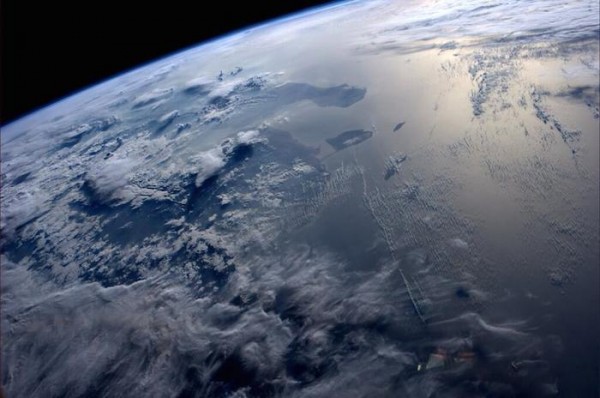
Earth from the ISS
One of Reid Wiseman's Twittered images.

Everyone seems to be literally all a-Twitter at astronaut Reid Wiseman's Earth imagery taken from the International Space Station. He evidently has over a million followers, and as one voice over noted in playing a clip of him doing somersaults at zero g: "With infectious enthusiasm Wiseman lives the life at zero gravity that others can only dream about."

Maybe. But without the use of Russian Soyuz craft he wouldn't even be there, so let's not pretend or make it out like it was by his own steam or virtue that he arrived at the IST - or that it was his own country that enabled it. NO, not at all. His own country, the U.S.,  abandoned its Space Shuttle program over three years ago and has had to depend on the Russians to get crew to the Space Station. Without the Russians allowing Wiseman and his fellow astronaut Swanson to "hitch hike" on the Soyuz, they'd never even be there.

There'd be no majestic Earth photos and certainly no Twitter followers.

Sure,  the U.S. pays for each astronaut to trek to the Station, but the point is that if the Russians still didn't have working craft of their own and a manned space program it wouldn't matter how much the U.S. offered anyone - they wouldn't be able to buy the astronauts' a way into space for anything. It is the Russian craft which made Wiseman's photos possible. Apart from that, if the U.S. pushes its Ukraine pressures excessively, the Russians could easily close the door to the Station - given it is THEIR craft that provide the transport - and only their section of the IST is self -sufficient. (Those who insist the Russians "need the money" - need to check out the recent mammoth $400b gas deal made with the Chinese).

Wiseman, in his understandable exuberance, says he wants to share his perspective and "get people talking about the wonder of space".  As he put it:

"If I can just capture a little of the wonder and spark some imagination for folks around the world, and back in the U.S. in particular, then that's mission accomplished for me."

Bravo to you! Just be sure to acknowledge the Russians, without whose craft you wouldn't have a mission, or any opportunity to obtain your incredible photos.. Or so many enthralled followers on Twitter, who have re-tweeted the 'red die in space' more than a million times.

Let's also hope the U.S. has the sense not to piss off the Russians any more on the Ukraine issue, causing a complete halt to all IST cooperation and any further U.S. astronauts getting to play in the space station, or get fantastic photos.

U.S. space junkies, some of them, assert the U.S. will soon have its own program back, thanks to private outfits like Space-X. But from my vantage point, that is years away. I'd even be amazed if they have a manned craft ready to go to the IST in 3 years. (Robot craft are one thing, but you need lots of redundancy with manned craft and private companies are more likely to cut corners for profit.)  I will bet it's more like five years. So, until then, space junkies and jockeys need to cool their heels and acknowledge it's at the Russkies' pleasure we have any "manned space program" at all!

Monday, April 7, 2014

A Short-Sighted Decision: NASA Suspends Cooperation With Russians in Space

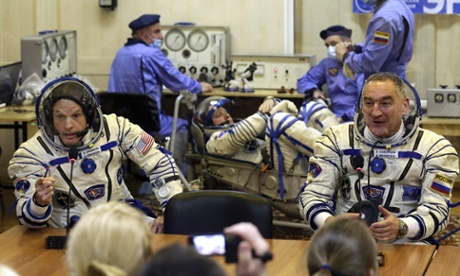
US astronaut Steven Swanson, left, and Russian cosmonaut Alexander Skvortsov prepare for their launch to the International Space Station last month.
American astronaut Steve Swanson (left) and Russian cosmonaut Alexander Skorvtsov, appear last month before their Soyuz launch to the International Space Station.

Evidently, the Russian annexation of Crimea is still eating away at Amerikkan exceptionalists and inspiring more pique and petulance. Like spoiled brats that just can't have their own way, and because  they can no longer bully another nation (which isn't prepared to tolerate their bullshit) they have to find new ways to take their toys away and run home. BWAAAAA....Them bad Russians pickin' on we!

The latest example, which I put under the category of 'supremely stupid' is demanding NASA discontinue its relationship with its Russian counterpart agency, Roscosmos.

After insisting that space relations would not be altered by earthly politics, NASA on Wednesday said it was severing ties with Russia over the Ukraine crisis, except for the International Space Station. (Of course, without the Russians and their Soyuz, we'd never be able to get our people there because like goons we mothballed our only means of transport - the Space Shuttle - cutting thousands of jobs at Cape Kennedy with it)

Can you say hypocrites?

The result of this latest pique? 

- NASA employees cannot travel to Russia or host visitors until further notice.

- They are also barred from emailing or holding teleconferences with their Russian counterparts

In other words, no further cross-fertilization regarding space issues or problems. How fuckin' dumb is this? Pretty fuckin' dumb!

All this is because of Russia's actions in Ukraine, according to a memo sent to NASA  workers. But hey- all activities related to the space station are exempt. NASA and Russia's space agency will "continue to work together to maintain safe and continuous operation" of the space station, NASA said in a statement released late on Wednesday.

Why? Because we can't get our own asses to the station without the assistance of the Russians! Since the  absurd early retirement of the space shuttle, NASA  has depended on Russia to hitch rides to the giant orbiting outpost, paying nearly $71m per trip for a seat on the Soyuz. A Russian rocket last week delivered three astronauts, including American Steve Swanson. The laboratory is a partnership of the US, Russia, Europe, Japan and Canada. US astronauts train in Russia before flying to the space station and the new directive was not expected to affect that.

Previously NASA had insisted US-Russia space relations were fine despite the tensions over Ukraine.  NASA administrator Charles Bolden said on 4 March:

"Right now, everything is normal in our relationship with the Russians,".

NASA reiterated the sentiment last week after Russia annexed the Crimean peninsula from Ukraine, saying:


"We do not expect the current Russia-Ukraine situation to have an impact on our longstanding civil space co-operation with Russia, which goes back decades,"

After the memo leaked on Wednesday, NASA confirmed it was suspending most contact with Russia. But it also took a swipe at Congress, noting that it wouldn't be relying on Russia to fly to the space station if funding had not been cut. The space agency said it was looking at private rocket companies to ferry astronauts in 2017. Yeah, right. If NASA thinks the private bunch will be ready by then they're really smoking some strong stuff!

Space policy experts said they were not surprised with the latest guideline because similar memos suspending Russian contact went out to other federal agencies.  Which leads me to believe it wasn't NASA's idea but it came from the Obama White House, still smarting at numerous barbs from the Likes of John McInsane and others that they aren't doing enough to thwart the Russkies.

Earlier, recall that Congress and NATO took steps to "punish Russia" for its actions in Ukraine by sending Obama a bill to provide $1bn in loan guarantees to Ukraine and add to sanctions against Russia.  These dumb maggots have a billion to piss away on Ukraine but see no problem in slicing billions from the food stamps program so OUR kids starve at night!

NATO''s  warmongering clique of foreign ministers ordered an end to civilian and military cooperation with Russia, which doubtless presaged the NASA move, or rather the WH order mandating it.
.
Scott Pace, space policy director at George Washington University, said it was noteworthy that co-operation on the space station remained intact. He said:

"We and the Russians have a very deep and integrated relationship. We are reliant on them as they are on us. Divorce is not an option."

Pace said there would probably be disruptions for NASA scientists who trade data or work on experiments with Russian researchers. Again, that's why it's a stupid, self-mutilating move that could well impinge on the safety of U.S. astronauts. But do our hare-brained politicos care, so long as they can posture? Hell no!

Former Johnson Space Center Director George Abbey had this to say in a recent interview:

"It’s been very disappointing. Everyone that I’ve spoken with, my fellow colleagues – both engineers and scientists – were quite disappointed. We don’t think it’s a very wise decision and it certainly can affect the safety of operations in space. When you’re flying on an International Space Station you want to enhance cooperation and enhance communication, so when you start taking actions to lessen those communications, it’s not a very safe action and it’s not a very wise thing to do. "

Of course, for our posturing poltroons, none of that matters. So long as they can get one more petulant dig at the Russians, they will risk the lives of whatever American astronauts - devil take the hindmost. It's all about politics in the end, and if you peel back the layers enough - you will see the telltale traces of the Neoliberal imperative.