Showing posts with label solar flare. Show all posts

Saturday, July 26, 2014

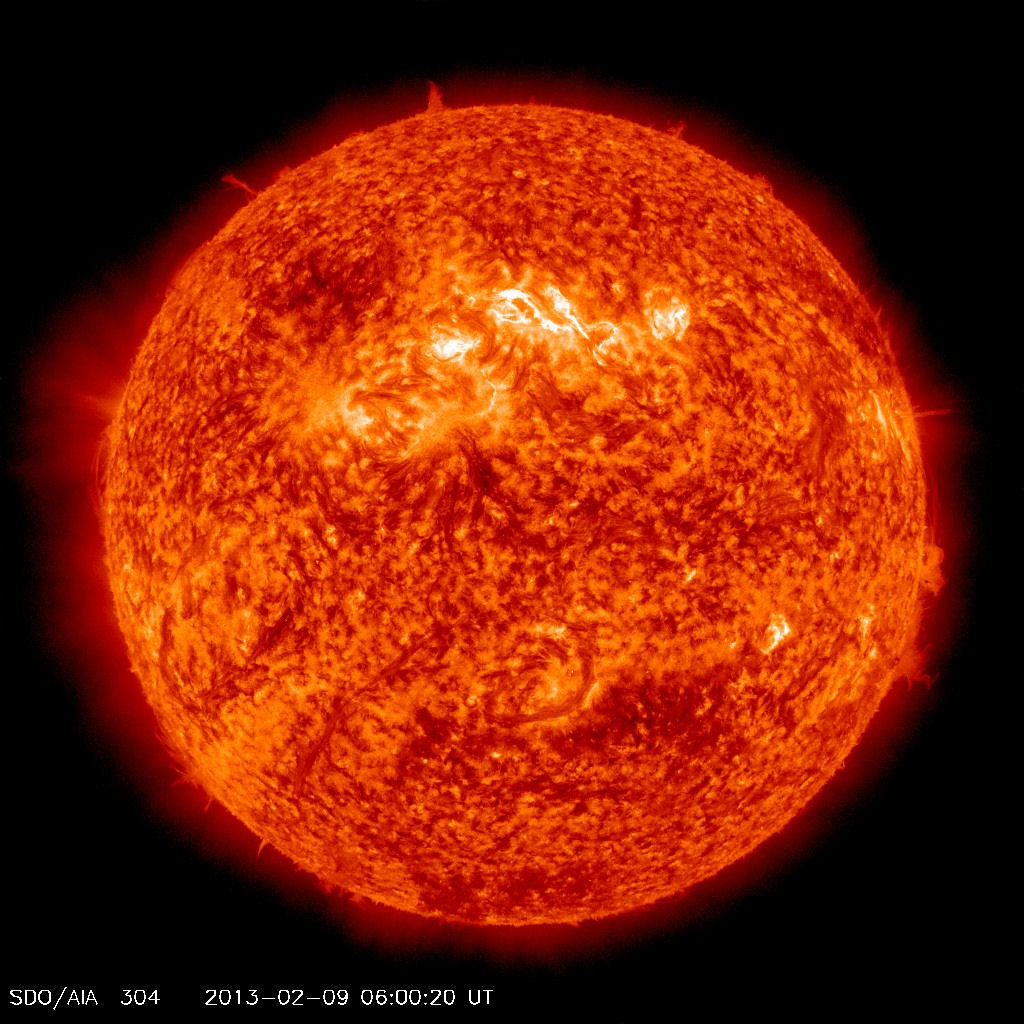
Calming the Hysteria: No, Earth Wouldn't Have Been "Destroyed" Had That Flare-CME Struck

Solar flare nearly destroyed Earth 2 years ago: NASA

As usual, much of the media has to use hysteria to command attention. And so numerous media sources reported in the past few days that a monster solar flare- that erupted two years ago (July, 2012) could have "destroyed the Earth", while others asserted "we'd have been sent back to the Dark Ages."  All that, if the event had occurred a week earlier.


According to an astrophysicist from University of Colorado quoted by The New York Post:

"If it had hit, we would still be picking up the pieces,”

He then added:

"I have come away from our recent studies more convinced than ever that Earth and its inhabitants were incredibly fortunate that the 2012 eruption happened when it did.  If the eruption had occurred only one week earlier, Earth would have been in the line of fire.”

Yes, but "line of fire" doesn't mean the end of civilization.

Sadly, much of this was based on exaggeration and hysteria.  Note I had also referenced the effects of CMEs or coronal mass ejections in earlier blogs, and the expected effects on human civilization, e.g.

http://brane-space.blogspot.com/2012/06/cme-that-you-dont-want-to-see.html

Based on the above content (and other posts I've written on the subject) the Post did get this much correct:

"It’s believed a direct CME hit would have the potential to wipe out communication networks, GPS and electrical grids to cause widespread blackout.......Just 10 minutes without electricity, Internet or communication across the globe is a scary thought, and the effects of this event could last years. It would be chaos and disaster on an epic scale."

Well, uh yeah, things would get very inconvenient! Make no mistake people would likely have to do without their computers, smart phones, Ipads, Facebook, GPS systems for 6 months or so, maybe longer. The NASA release also made some rough analogies to the aftermath of Hurricane Katrina and "disabling everything that plugs into a wall socket" as well as "most people wouldn’t even be able to flush their toilet because urban water supplies largely rely on electric pumps.”

In other words, you'd definitely be faced with horrendous and messy issues in the wake - but "back to the Dark Ages" ? Well ok, maybe for a few months. But it would not compare to the aftermath of a nuclear war, for example, which could erupt if we were stupid enough to follow the advice of Johnno McCain and other dumbass Reeptards to "teach Putin a lesson".

But equating not having internet or smartphones or Facebook to the "dark ages" - that's a bit of exaggeration! Well, ok, maybe not given the extent to which most moderns are hooked on all these devices and pastimes.

But as I noted in the above line to do with CMEs, many of the problems that might be caused by their smacking us at the most inopportune time are soluble. For example, our power grids could be protected by the simple expedient of installing large enough resistor -capacitor systems at critical locations (e.g. near power plants or major cities)  in order to sever any CME-driven upward field aligned current connection to the grid. Recall from my basic physics blog, e;g. http://brane-space.blogspot.com/2011/06/introduction-to-basic-physics-electric.html    that resistors act to limit current and also capacitors can do the same by collecting charge.

The problem? Major U.S. power companies don't want to assume the cost for any voluntary installations, which could run $100,000 per transformer. Hence, the grid remains unprotected against the rare - but potentially calamitous - Carrington event CME that smacks us broadside.

Government, of course, could easily provide subsidies to help pay for the C-R systems to protect the transformers, but the moron Tea Baggers infecting our nation (and one whole party)  won't hear of such a thing. They won't tolerate giving any "blank check" to government to subsidize  power companies, especially to build capacitative-resistance systems to protect our power grids. These jerks with their triangle hats still live in the 1790s, after all!

Ok, so forget the "expensive" solution above. Even a bit of help could still be available if we knew the direction of an oncoming powerful CME event and had some time to prepare. Right now such an entity exists: the Advanced Composition Explorer (ACE) satellite which can measure the intensity and magnetic orientation of any CME that sweeps by it. The problem is that ACE is nearly on its last legs and a replacement monitor is needed.

Fortuitously, a fully -ready space craft that can undertake ACE's duties exists. The problem? This Deep Space Climate Observatory (or DSCOVR) sits mothballed in storage at the Goddard Space Flight Center in Greenbelt,  Maryland. It sits idle because the Obama administration's $47.3 million budget request to refurbish and launch DSCOVR has been forthwith rejected by the Republican-controlled House.

So there it sits, and here we sit, on a planet becoming ever more vulnerable to the ultimate 'blowback' from  the Sun's "burps" - as Neil deGrasse Tyson called them on Bill Maher last night.

So maybe, just maybe, the Reepos really don't care if people have to do without Facebook or smartphones for a half a year, or can't flush their toilets for lack of electric power. I mean, they still haven't furnished all the money needed for the Superstorm Sandy victims, many of whom still sit in darkened homes without electricity or running water.

Maybe the Republicans would prefer that condition for the whole country!

Tuesday, May 20, 2014

The Aurora and the Black Aurora


The aurora is one of the most magnificent sights in the sky and we counted ourselves lucky to see a fairly decent one (captured in the attached photo) in March of 2005, while staying at Chena Hot Springs, Alaska.

 To understand the aurora, one can visualize the Earth as a giant spherical magnet, with magnetic  field lines extending from the north to south (magnetic) pole. These  magnetic field lines have the property that any charged particles (+ protons, - electron or ions) that approach, will spiral along them.

The Earth itself, is "bathed" in the solar wind, a stream of high speed charged particles that flows into space, originating from the Sun's  corona. (A hot, gaseous envelope that spews these particles out continuously, moreso when there’s a violent explosion known as a Solar Flare)

Around the Earth the speed of these particles can reach 400- 500  km/second. (Because of its high temperature, over a million degrees, the corona gas is ionized so must consist of charged particles, mainly (+)  protons, and (-) electrons).

During high solar activity (e.g. near sunspot maximums) a higher flux of these charged particles inundates the solar wind, and the region around the Earth.

The Earth's magnetic field traps the particles, and the highest density is around the polar regions, which we refer to as the "auroral  ovals". In these regions, very large electric currents are set up, as the charged particles start moving in unison about the magnetic field lines. These currents can easily reach a few million amperes.

As this discharge occurs, one or more outer electrons is stripped from the  atoms, for example from oxygen in the atmosphere then recombines again to form new (e.g. oxygen) atoms.  With this recombination there is emission of light, for a certain part  of the visible spectrum. This  is basically what gives rise to the "northern lights", or what we call the aurora.

For example, in the case of recombination of oxygen atoms, their emitted light is in the green region of the spectrum. The aurora or northern lights we see display a kind of green curtain-like shimmering. The remarkable red aurora is produced by emission at the 630 nm (nanometer) line of oxygen and at relatively high altitudes (e.g. 200-600 km) compared to green - which tends to form below 100 km and the oxygen line at 557 nm is excited.

Auroras can display as both diffuse and discrete. In the first case the shape is ill-defined and the aurora is believed to be formed from trapped particles originally in the magnetosphere, which then propagate into the lower ionosphere via wave-particle interactions.  Thus, multiple colored auroras can be explained by emissions from different atoms in the upper atmosphere, mainly in the region of the magnetic poles. This is also why, of course, they are more often seen in the vicinity of the N, S magnetic poles. (Though there have been reports of northern lights being seen as far south as northern Florida, especially during periods of exceptional sunspot activity or large solar flares, massive explosions on the Sun).

A great analogy has been given by Syun Akasofu (formerly of the Geophysical Institute in Fairbanks, AK),  comparing the aurora to images on a TV screen. In this case the (polar) upper atmosphere corresponds to the screen and the aurora to the image that would be projected onto it, say for a TV. The electron beam in the TV (remember we are talking about the old-style cathode ray jobs!) corresponds to the electron beam in the magnetosphere. In the conventional TV motions of the image are generated by the changing impact points of the electron beam onto the screen. Similarly, with the aurora, its motions (i.e. moving sheets or curtains)  are produced by the moving impact points of the magnetospheric electron beams.

In gauging the power and intensity of auroras at different times, it is useful to remember that ultimately the aurora derives its power and potential from the Sun and specifically the charged particles of the solar wind. This is why the most spectacular displays are usually near sunspot maximum. Around those times the currents I noted earlier are “amped” up – no pun intended- to 10^6 A or more. To give an example, during the relatively quiet Sun interval from 2002-08, the residual power for the magnetospheric generator is on the order of maybe a tenth of a megawatt. If we see a new cycle coming on and solar wind activated – we may get that power up to a million megawatts for a few hours.

Not often seen, and alas one we missed, is a variety called the “black aurora”. One such image taken at Fairbanks, AK in December 13 by Deborah Carter, is shown below:


In contradistinction to the normal aurora, the black aurora emerges with dark structures formed when negatively charged particles are sucked up and out of the atmosphere along magnetic field lines that adjoin the normal bright emission aurora. This negative action effectively completes a circuit between the ionosphere and the magnetic field, creating dark vertical shapes that can stretch tens of thousands of miles and remain visible for several minutes.

One of these years we hope to get back to Alaska again and see the black aurora!


Thursday, September 26, 2013

'The Most Complete Observational Evidence for Solar Magnetic Reconnection To Date'


The plasma flow represents the motion relative to the existing (B)-field(say in a local solar field), and its "cutting" action on the field line leads to a change in magnetic flux and induced current.  The only way to avoid this unrealistic situation is for the plasma to be constrained to follow B-field lines rather than cross them. This is what is meant by field freezing.

The region of a large Solar flare, Note the magnetic field lines which follow the solar plasma - this is at about the level of the solar chromosphere.


Magnetic reconnection - the topic of this post- requires solar plasma to temporarily deviate from the infinitely conducting condition displayed in the very top image.  In this situation, when opposite polarity magnetic regions get pushed together, the changing magnetic flux generates a sheet of electric current (called a 'current sheet') that flows perpendicular to the plane of the page. Let this current be strong enough and the plasma's ability to conduct electricity is impeded- which allows the electric field in the plasma to build up and the magnetic field lines to reconnect, generating heat via joule dissipation. The newly connected field lines are then able to lower their energy by snapping back from the reconnection region, converting the magnetic energy into bulk kinetic energy and heat - what we observe in solar flares.


Image of solar corona taken at 211Ă… by the Atmospheric Imaging Assembly of the Solar Dynamics Observatory (SDO). Note carefully the lines - which are magnetic field lines - which have actual reality in the solar corona and are not merely artificial constructs.


      Three years ago NASA launched the Solar Dynamics Observatory, with great expectations. Much was expected on account of the Atmospheric Imaging Assembly (AIA)  equipped with the capability of obtaining images of the Sun with greater speed and resolution than ever before.
 
 
     Now that expectation has more than paid off, with the first detailed observation yet of magnetic reconnection in a solar flare. As one solar researcher, Eric Priest, has put it (Physics Today, September, p. 12): "This is exactly the type of event many of us have been waiting for, for years". 
 
       On paper- or in theoretical plasma physics classes - magnetic field lines are treated as theoretical constructs with no reality in and of themselves. But in the Sun's corona, they have  physical reality, as seen in the last image taken with the SDO's AIA.  Plasma in the corona is an excellent conductor or electricity because the ratio of kinetic energy density to magnetic energy density is less than one, in fact much less than one. In such a circumstance, the magnetic fields are said to be "force free" and the condition applies such that:  J x B = 0
 
     Here J is the current density and B denotes the magnetic field intensity.  This condition means that the magnetic field lines cannot move perpendicularly to the underlying solar plasma - which case is depicted in the top most graphic.  In that case, for a non-force free situation one would have:  grad p = J X B

      where grad p denotes the pressure gradient.  As opposed to this, in the corona, the magnetic field lines are entrained with the plasma and move in the same sense. As the Sun rotates and its plasma convects, the field lines will be affected dynamically by the rotation (think of Coriolis forces as on Earth) and become contorted into an ever more series of complicated loops whose topology (under ideal plasma conditions, i.e. J x B = 0) cannot change. But in force free conditions they can - as described in the text for the second image.
 
        Before going on to the comprehensive SDO discovery - observation, let's be clear what the AIA's limits and capabilities are: It basically uses four telescopes to obtain images of then in ten channels - 7 in the extreme ultra violet (EUV) ranging in wavelength from 94   to  335   -  two in the ultraviolet (UV) and one in the visible spectrum. It can collect one image of the Sun every 12 seconds with a spatial resolution of 0.6 arc seconds (for comparison, the full Moon's diameter is about a half degree or 1800 arcsecs.). It is also possible to collect images even more rapidly by restricting the field of view - say to just part of the Sun, maybe to observe a flare in real time - such as the second image shows.
 
        In the case of the solar flare of interest, and the subject here - Yang Su (University of Graz, Austria) and an international team of collaborators reported the most comprehensive observations of field reconnection ever for a flare that occurred on Aug. 17, 2011, and just after 4h 00m Universal time. While many flares have erupted in the 3 years since SDO's launch none have shown the explicit features of reconnection as well as the 8/17/11 flare. This also meant it didn't saturate the sensitive AIA detectors and obscure the flare region as other events have.
 
      Movies obtained of the entire flare - at the full 12 sec resolution - are even more impressive. The film shows hot solar plasma pinned to the magnetic loops flowing away from the reconnection region. One of the images extracted from the movie is shown here (credit Physics Today:)
Solar magnetic reconnection seen in detail (2013_07_25)
 
 
       One problem the researchers need to reckon with is reconciling the inherent 3D nature of the Aug. 17, 2011  flare  and the typical 2D models of magnetic reconnection. What we need therefore is a proper three dimensional model of reconnection as it would apply to the solar corona's events
 
 
     TO see other events occurring the same date;


Monday, February 11, 2013

Asteroid Hit or Solar Meridian-Centered CME? I’d Take the Asteroid!


The CME captured by the Solar Dynamics and Heliospheric Observatory (from spaceweather.com)

As the asteroid 2012 DA14 approaches Earth, and is set to pass within 17,000 miles (or less than two Earth diameters) on Friday, at a speed of 17,400 mph, a high probability has also arisen of being struck by a CME (coronal mass ejection) three days earlier. This elicits the question- assuming the worst in each case- of which you’d rather have: a strike by a 15 story wide, 130,000 ton asteroid, or being struck by a CME.

First some background: In the case of the asteroid, NASA reports that this is the closest known approach of an object of this size. (They also add there’s no chance whatever of the thing whacking Earth. Well, assuming it doesn’t get deflected after hitting a geostationary satellite). It was discovered in February 2012 by astronomers at the Observatorio AstronĂ³mico de La Sagra; it passed the Earth on Feb. 16th of that year, missing us by a comfortable 2.6 million km (1.6 million miles). The asteroid has a very Earth-like orbit, talking 366 days to orbit the Sun. Its orbit is slightly more elliptical than ours and tilted by about 11° to ours as well. All that’s about to change though: After the encounter this year, the Earth’s gravity will change the orbit of DA14 quite a bit, reducing the period to about 317 days.

The asteroid, with a mass of possibly 10 9  kg would – if it impacts - be about equal to a 20 megaton thermonuclear weapon blast. It obviously would cause considerable damage if it smacked into a city or an island like Barbados – but those odds are even less than our being struck in the first place. The odds are also 3 in 4 that if it did impact it would be an ocean strike, possibly incepting a 20-40 m tidal wave depending on the location, angle of entry, etc.

The CME, meanwhile, was captured by the Solar and Heliospheric Observatory (see graphic)  as it shot away from the Sun at 800 km/s. The initial prediction is that the bulk of the ejected mass will sail over the Earth’s north pole. However, spaceweather.com warns there is still a chance of a glancing blow. The former likely means high latitude observers on Earth will see brilliant auroras, but will experience no serious disturbance. A glancing blow possibly means one or more power grids knocked out such as occurred in Quebec in 1989 after a giant solar flare.

In a 2010 episode (‘Magnetic Storms’) of the series ‘The Universe’, the initial sequence featured a March, 2013 CME event which also triggered brilliant auroras, as far south as Cuba, but which also within hours delivered a head on blow to Earth, that knocked out the entire power grid of the U.S. and every single transformer. Such possibilities were discussed in an earlier blog, e.g. http://www.brane-space.blogspot.com/2012/06/cme-that-you-dont-want-to-see.html


The result of the CME hit depicted then was no power across the U.S. No water, since water in your taps requires electricity to pump it, and no fuel either or gasoline, since gas stations also require electricity to effect pumping. For what awaits us, get another gander at those images after superstorm Sandy Struck NY and NJ in November. Long lines, squabbles over position in lines, fights, and even supermarkets going out of business. In other words, no food either! Such a CME would also knock out GPS satellites, and that would wreak even more havoc. Computer networks everywhere would go down, and without electricity anyway – computers would become museum pieces.

The episode projected some 10-15 million dead since the power wouldn’t be able to come back for years, given all the infrastructure would need to be rebuilt, including transformers, power stations, etc. Imagine then a nation with no power to speak of, hundreds of millions without food, limited canned stores – if they have that, no water, and no way to access critical emergency networks or services. The most vulnerable, as in the case of Sandy, would be the elderly, and sick.


The episode went on to further conjecture of an even worse scenario:  a CME striking at exactly the time when the Earth’s magnetic poles are reversing. With such a reverse there’d be days or weeks with no magnetic field to protect us from the full brunt of high energy solar particles so the entire planet would be affected with up to 2-3 billion dead as a result of all the power knockouts, the starvation to follow, the mayhem. The ‘End of the World’? Technically no, but many would think it was.

So, on that basis, and given my druthers, I’d always pick the hit from an asteroid like 2012 DA14 rather than a full smackdown from a CME.

Let’s hope neither of them transpires!

Sunday, January 22, 2012

Monster Plasma "Blob" Headed for Earth: Is This the End?


Top: Plasma eruption occurring on the Sun. Bottom: a magnificent green aurora of the type that may be visible in many locations this evening.


In the grade B -minus 1992 science fiction movie (Solar Crisis) with Charlton Heston, a massive catastrophe was depicted in a future time when the Earth is threatened by an impending "mega" flare and plasma burst. The energy outburst was forecast to "tear away the atmosphere and shower deadly radiation on everything". We'd end up little better than the hapless humans depicted in the more recent scifi flick, "KNOWING".

Now, we have word from spaceweather.com that a monster plasma burst has erupted from the Sun and is headed our way. Do we have cause to worry from either this event or any powerful flares that might follow it?

First, the energy of flares is limited by how much "free" (extractable) energy can be stored in the magnetic tubes that spawn them. A good analogy is a rubber band. If a rubber band is wound up over and over it gains free potential energy (available for future motion). Release it now and it will rapidly twist apart to its original state. Magnetic tubes on the Sun do something very similar. They are twisted up by the motions of the Sun's turbulent surface and store free magnetic energy as they twist. The more twisted they are, the more free magnetic energy they acquire - to power flares, and the particle bursts that accompany flares.

Second, not all powerfully twisted magnetic tubes are enabled to release all their energy at once. Sometimes it's released in lesser bursts, maybe coronal mass ejections, or lesser flares of lower intensity.

Flare energy is limited because: 1- there is a limit to the size a magnetic tube can attain, 2- there is a limit to how much twist a tube can acquire. Each of these limits the amount of total magnetic energy available for release. On that basis, it is unlikely that humans will ever see flares greater than those which occurred in August, 1972 and March, 1989. In the latter case, the Ottawa power grid was briefly knocked down as its main conducting wires literally melted. Note, however, that these are extreme cases.

What is heading for us is not the high energy radiation (mainly gamma -UV radiation) of a monster flare as such but rather the plasma from a "CME" or coronal mass ejection. So what is the most we might expect?

As reported at spaceweather:

http://www.spaceweather.com/

"A coronal mass ejection (CME) hit Earth's magnetic field at 0617 UT on Jan. 22nd. At first the impact did not appear to be a strong one: the solar wind speed barely lifted itself to ~400 km/s when the CME passed by. Now, however, in the wake of the CME, a dense and increasingly geoeffective solar wind stream is blowing around Earth, setting the stage for possible auroras on the night of Jan. 22nd"

This means there is an excellent chance of seeing some spectacular auroras tonight, perhaps as far south as Florida and Texas. Generally, when such powerful plasma-generated currents impinge on our atmosphere, we can expect these to be translated into powerful sky displays of the northern lights.

So, instead of being overwrought by pseudo-fear (there'll be plenty of time for that later, as the "Mayan Apocalypse" approaches) maybe we all just need to chill out and try to catch some of the bright natural fireworks likely to go off tonight!