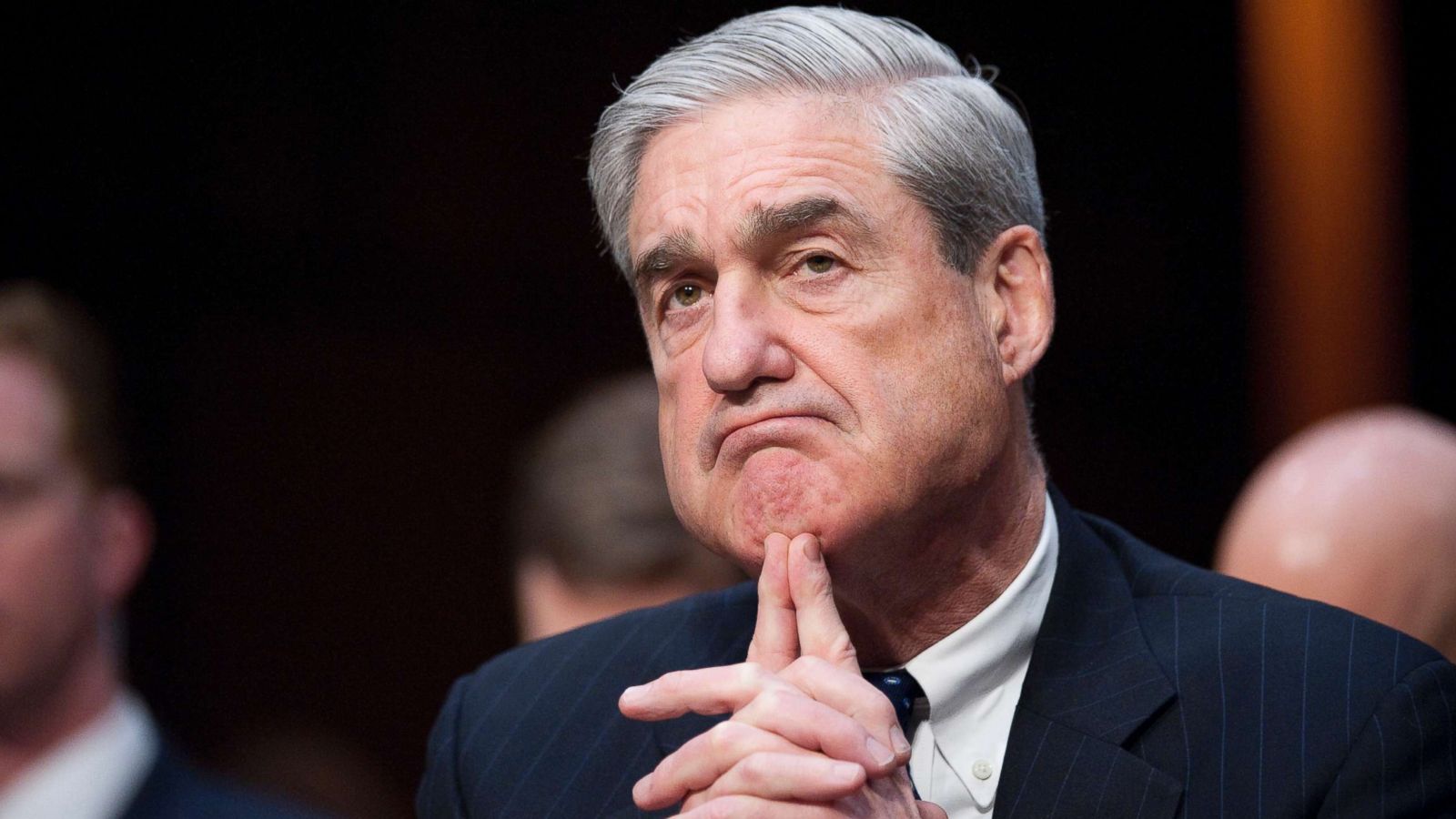
Showing posts with label James Comey. Show all posts

Tuesday, December 10, 2019

IG Report Shows The FBI Had Legitimate Reasons to Open Its Investigation of The Trump Campaign - But Toady Barr Tries To Deny It


Trump's pet toad, William Barr, just felt he had to chime in on the IG report released by David Horowitz, absolving the FBI of any nefarious motives in the investigation of Trump and his campaign in 2016


"Barr's intrusion shows the Justice Department is utterly compromised. Functioning as a political tool for Trump, Giuliani and Sean Hannity."  Chris Hayes last night, on All In.

A Justice Department inspector general’s report examining the FBI’s investigation of President Trump’s 2016 campaign rebutted conservatives’ accusations that top FBI officials were driven by political bias to illegally spy on Trump advisers. The IG Report released yesterday also found broad and “serious performance failures” requiring major changes, which Director Chris Wray has vowed to correct.
The 434-page report issued by Justice Department Inspector General Michael Horowitz concluded the FBI had an “authorized purpose” when it initiated its investigation, known as Crossfire Hurricane, into the Trump campaign. In doing so, Horowitz implicitly rejected GOP assertions that the case was launched out of political animus, or that the FBI broke its own rules on using informants.

It asserted, though, that as the probe went on, FBI officials repeatedly decided to emphasize damaging information they heard about Trump associates, and play down exculpatory evidence they found. The bureau promptly indicated it would implement dozens of corrective measures in response to Horowitz’s report and that disciplinary action remains a possibility.   Trump, not surprisingly,  called the report’s findings “far worse than anything I would have imagined.”    In another one of his deranged stupors he barked:


“This was an overthrow of government.  This was an attempted overthrow and a lot of people were in on it and they got caught, they got caught red-handed.
Thereby again conflating himself with the government.  But lest we be led down the path of insanity like Dotard, let's bear in mind the person actually investigated out in the open back then was Hillary. Indeed, then FBI director James Comey's repeated interjections and  announcements of progress in the FBI email investigation likely cost her the election.  Trump paved the way for his own investigation by firing Comey, after the then FBI Director refused to swear loyalty to the orange maggot.  As I wrote in my May 10, 2017 post:
"A combination of factors alerted Trump's reptilian brain stem it had to act and fast. The easiest response - which killed the most "birds" with one stone-  would be firing Comey. That would amount to an instant act of decapitation, not only of Comey but the FBI's investigation into the Trump-Russkie ties.  Using the ruse of Comey's mishandling of the Hillary email server also would come off - to a dumb media - of casting the Donald as a latter day changeling. Who now would strike down Hillary's tormentor and give Trump "brownie points" in so doing.

The problem, as The Financial Times' Edward Luce has pointed out, is it makes zero sense. In Luce's words:


'Mr. Trump is asking the US public to believe he 'terminated and removed'  the FBI director for having treated Mrs. Clinton unfairly. This was the same opponent whom Mr. Trump said should be locked up for mishandling her emails."
The Trump investigation, meanwhile, remained in the shadows. It only really saw the light of day when Bob Mueller began his own investigation leading to the Mueller report. The appointment of Mueller as special prosecutor  was only triggered when Trump stupidly fired Comey.  This was after he refused to carry out the Don's orders.  As Chris Hayes put it last night, regarding Barr's worthless conspiracy claptrap to do with the FBI:

"The obvious problem with this theory is that it makes no sense. Remember this, during the campaign the only investigation that became public was the one regarding Hillary Clinton, which arguably lost her the election. But the FBI was investigating Trump at the very same time. No one uttered a word about it. If they were so desperate to bring Trump down you'd think someone would have said something.  They didn't. So the whole conspiracy theory doesn't even hold together."

In other words, all Barr has to base his objections on are recycled hot air and assorted brain farts from the psycho conspiracy babblers, i.e. from 8chan, Infowars, QAon and the like.

The report also seemed to open a rift inside the Justice Department.  But this is what happens when one sector or division is committed to paranoid fabrications and the other to justice and adherence to reality. 
Embodying lies, mischief, disinformation and fake news, Attorney General William P. Barr went all out for an encore performance of his whitewashing stunt back in April.  When he sprung his little "summary " of the Mueller report to convey  a specious "exoneration" of  Trump.  (Which then immediately encouraged Trump to seek the Ukraine  extortion- paving the way for the articles of impeachment to be announced today.)

This time, Toad Barr disagreed with one of the inspector general’s key conclusions, saying the FBI launched an investigation of a presidential campaign “on the thinnest of suspicions that, in my view, were insufficient to justify the steps taken. It is also clear that, from its inception, the evidence produced by the investigation was consistently exculpatory.” 
Also, basically concurring with this fulsome baloney was Connecticut U.S. Attorney John Durham, who Barr handpicked to conduct an investigation parallel to that of Horowitz.  In other words, he needed a parallel reality  performing puppet and Durham provided it.   Durham said in a statement:
 “Based on the evidence collected to date, and while our investigation is ongoing, last month we advised the Inspector General that we do not agree with some of the report’s conclusions as to predication and how the FBI case was opened.
This, of course, is total codswallop. How do we KNOW this? We have foreign intercepts of meetings of Trump cronies, e.g. Carter Page, with Russian  (GRU) agents.  It was these intercepts and related documents - including  FISA warrants- that Devin Nunes threatened to release 2 years ago , to expose a supposed "FBI-DOJ conspiracy".   
In fact the FBI's's involvement was totally called for given the U.S. had to enter the picture with its own FISA warrants, surveillance, etc.  after foreign  intercepts were received from the UK, Germany, the Netherlands. Not to do so would have violated agreements with foreign intel sources, assets. 

Former FBI special agent Frank Figliuzzi was so disturbed by Durham's premature interjections into the IG report he had this to say (last night on 'All In'):

"John Durham, by coming out with this statement in the middle of his own investigation, has violated DOJ policy by commenting on other investigations absent a compelling public interest. And I am hard pressed to find a compelling public interest for a DOJ employee to disagree with their own Inspector General. Unless the timing isn't working for them. 

In other words, Horowitz came out with this good finding for the FBI and it doesn't work for  Barr's own report and its timing. So Barr needs to ride this out toward the election. To keep the public hanging, and thinking something wrong is going to get found."

Yet more reasons that Barr himself needs to be impeached and removed from his office which may well be politicized beyond repair.  So much so that we understand many DOJ employees are pining for the days with ol' Jeff Sessions in charge.

See Also:


And:
Attorney General William Barr publicly challenged the watchdog report, defending President Trump.

And:

Friday, May 24, 2019

Mueller Wants To Testify In Private? A Non-Starter - We Need Men (Patriots), Not Mice


The hyper- cerebral, reserved Bob Mueller of today was a courageous FBI head who didn't dodge public hearings in the past.

"I think Robert Mueller is a little bit too concerned that his work could be interpreted politically.  You cannot take quite so much of the politics out of politics. ..While I certainly understand the idea that when you get put in front of a camera - given congress the way that it is - a lot of people are going to be grandstanding to create that one viral moment. 

Nevertheless the idea you don't do it because it could be politicized to the American people, I mean you're working for the American people.  So that doesn't quite add up to me".  Ezra Klein last night on 'Last Word With Lawrence O'Donnell'

The news that broke last night on MSNBC (out of the mouth of Jerrold Nadler), that Robert Mueller has agreed to testify before the House Judiciary Committee in private - but not in public -  left many Dems deflated as it would.   The Mueller news broke mere hours after we earlier learned that Trump has given William Barr unprecedented authority to access select information (e.g. on FBI secret warrants etc.) to declassify.   That gives Barr the total power to control the narrative on the origins of the Russia investigation and the gist of the Mueller report itself. Even more worrying, that this fecal administration - full of obsequious sycophants-  now intends to use the 1917 Espionage Act against Assange as a means to attack and subvert the press and 1st amendment. In the words of Rachel Maddow last night:

"The Justice Department today just put every journalistic institution in this country on Julian Assange's side of the ledger, which I know is unimaginable. But that is because the Trump government is now trying to assert this brand new right to criminally prosecute people for publishing secret stuff. But newspapers, magazine and investigative journalists and all sorts of different entities publish secret stuff all the time. That is the bread and butter of what we do.... This is now a novel, legal effort to punch a huge hole in the first amendment, by labeling it spying, labeling it criminal espionage to publish secret stuff."

Anyone with half a brain should clearly be able to see we are in the midst of a 4-alarm constitutional fire that elicits the question of which patriot or patriots will step forth to put it out. The relentless stonewalling by Trump and his minions of the congress' oversight duty, by blocking all subpoenas, have brought us here. But also Barr himself twisting the significance and findings of Mueller's report two months ago.   

All of which begs the question of whether the guy who spent two years investigating the Trump criminal enterprise (with over 38 indictments) is a man - by that I mean a true patriot in these most parlous times   - or a veritable mouse?  This must be asked because all of Mueller's reservations about not wishing to be a political spectacle aside, his country desperately needs his testicular fortitude right now. Given how many subpoenas have been blown off, Trump aides denied appearing for House hearings,  this is Mueller's time to come forward. This is his time and opportunity to speak to Americans with cameras rolling, like John Dean did 45 years ago. 

The narrative that Mueller is a quiet man of rectitude who opts not to be in the spotlight in the midst of a "political circus" (which we know House GOOPs would create), was also shattered last night.  This was compliments of former Massachusetts Governor Bill Weld (on MSNBCs 'Last  Word').  As Weld pointedly noted:

"I suspect he wants to avoid a circus. But he's testified many times before in high pressure situations with a lot of members from both parties from time to time being angry at the performance of the FBI. And he always stood there and took it. And he can do that again, believe me, he's a tough guy. I've worked shoulder to shoulder with him and he can more than hold his own."

Terrific that Mueller is - or was - a "tough guy"  and "could hold his own" in open hearings, but we need him to do that now in defense of the country, not just the FBI. As former Senator and Watergate prosecutor Elizabeth Holtzman has observed, Americans need to be educated about what's in the report, in open televised hearings such as with Watergate, not just be forced to read about it in an abstract format.  We, the American people, therefore need to see Mueller and hear his voice, not just read his answers on  transcripts! (Besides, as Marshall McLuhan once emphasized, "the medium is the message."  In this case, print simply doesn't carry the same punch as the voice, motions-emotions embodied in television.)


Barr has already made a mockery of Mueller's report, and his failure to render definitive judgments, leaving that to congress. But congress itself has now been hamstrung  in its investigatory oversight role by unilateral and pervasive stonewalling by Trump  - making the Constitution's separation of powers moribund, defeated and now almost irrelevant.

  We indeed are at a precipice where this Republic could find itself soon in a fascist maelstrom, as Trump and his cabal try to ramp up a pseudo investigation of the FBI ("investigate the investigators").  Oh, and use Julian Assange as a vehicle to attack press freedom, via the 1917 Espionage Act.  This move, especially if successful in getting Assange's extradition, would undermine first amendment protections for all citizens.  But especially those in the news media (e.g. NY Times) or those who circulate news ("divulging secrets") second hand that the Trump cabal doesn't want citizens to see - including bloggers like me.

Barely three weeks ago, NY Times columnist Maureen Dowd best summed up the predicament and Mueller's reticence to come to the aid of his country:

"The transformation of William Barr from respected establishment lawyer to evil genius outplaying and undermining his old friend Robert Mueller is a Grand Guignol spectacle.


At many of the most consequential moments in American history, I have watched officials bend over backward to be equitable, only to end up faltering and doing enormous damage to the Republic.

It is possible to be “fair” in a way that is not at all fair.

It’s simply bad judgment, ceding the ground to malevolent actors who use any means to achieve their ends, including flattening and sliming the proponents of “fairness.”

Ms. Dowd at the time was referencing Mueller's overwhelming reluctance to render definitive positions on Trump in his report. Indeed one NY Book Review take on it was that Mueller sought to be scrupulously  "fair".  Well, he was indeed that, to the point of folly and enabling the bad guys to get away with their evil deeds - and now put the good guys in their sights.

The same dynamic is at work  with this desire to do private testimony but with a slight variation: Mueller doesn't want the bright lights and cameras on him (like James Comey faced in 2017, courageously I might add) because it might have "political" fallout and repercussions. Hence, Mueller only wants to be questioned behind closed doors and what he says there released later in transcripts.  But this is the weasel's way out, because Mueller has to know Americans don't have the time or patience to read testimony in transcripts.  Hence, they need to see it live,  televised in real time on TV, for the impact to sink in - precisely Elizabeth Holtzman's point, as well as many other former Watergate staffers, i.e. Jill Wine-Banks.

As a case in point, though I took the time and trouble of excerpting Don McGahn's key testimony to Mueller's investigators - extracted verbatim from the full Mueller report- only 17 have read that Wednesday post up to now.   Not a very auspicious sign, though true, ten times more may read a Mueller transcript. 

This is why we need to hear and see Mueller in full disclosure mode, nothing held back, to do what John Dean did for the nation 45 years ago in his three days of Watergate hearings. We need that patriot to come forward, not the more recent "mouse" iteration who prefers to hide in the shadows - his words emitted second hand in filters. 

This is given how each hearings setback, each subpoena ignored,  is another win for Trump which he will use to beat our Republic into his own fascist autocracy.  The time is critical, and Mueller's testimony in the open now could pave the way for an impeachment inquiry  in the next few weeks

 More to the point, I suspect the Mueller who once had the courage to testify in public hearings - as told by Bill Weld - has since become  a victim of his  own self-perceived rectitude. Perhaps since being named special prosecutor, who knows?   This has engendered  his compulsive 'need' to err on the side of caution:  bending over too far backwards so as not to appear unfair. In the case of his own report, faced with the OLC  trope that "no president can be indicted" -  and Trump's refusal to show up to answer questions in person. Thus he reasoned he had no choice other than to punt. (Though Weld suggests that Barr threatened to kill any indictments if Mueller delivered them.)  Despite all that, as the now nearly 1000 plus former prosecutors attest - his report was an indictment in all but name.   Read it and you will agree as well!  Ah, but yeah, it's too much to read at 448 pages, and hell even a 22 page excerpt is too much to read when there's Fortnite to play and a holiday to enjoy.

The FBI Mueller of recent history, it is true, would face the cameras and speak truth to power -  ally and foe alike. The new "special prosecutor"  Mueller is averse to public testimony because: 1) He doesn't want too many millions of Americans directly seeing and hearing what he said or concluded - because of the political heat he might take, and 2) he doesn't want to lock horns with his old pal and original "mentor" Barr.  But look, that cow escaped after the barn door was left ajar - not long after Barr issued his spurious summary of Mueller's report - when Mueller left that 'door' open to mischief.  I'd also affirm the politics escaped back then too, lest we forget.  

Not too happy about Barr's disingenuous presentation, Mueller wrote in the wake of its release: "There is now public confusion about critical aspects of the results of our investigation. This threatens to undermine a central purpose for which the Department appointed the Special Counsel to assure public confidence in the outcome of the investigations."

The letter in its totality,  according to The Washington Post, was described as laying out Mueller's concerns "in stark terms that shocked Justice Department officials".

So hey, the cat is already out of the bag that Mueller may not be a big fan of Barr's any more. It's long past time then to ditch the bromance and bring on the Brigadung, to use the Bajan parlance.    As Bill Weld put it last night, "believe me, he's a tough guy. I've worked shoulder to shoulder with him and he can more than hold his own."

Well, we will see, indeed whether he has the gumption to go live and in person like James Comey did.  With all the GOP-Trump stonewalling on legislative oversight, spitting on the Constitution in one former Watergate prosecutor's words, we need a patriot and hero to come forth. Someone with the moxie to unflinchingly face those cameras, like Dr. Christine Blasey Ford did back in October. Someone (we hope) who possesses the moral compass and cojones to speak truth no matter the lights, Reepo (or Trump) blowback,  and chaos that might ensue.

Bob Mueller, your country is calling you now! Are you up to it ?  Or will you opt to hide behind closed doors and deliver your testimony via a "transcript" that virtually no one will read?  A move that will only empower Trump further and allow Barr to distort your report even more - as he turns investigators on the investigators. It is time for good (and courageous!)men to come to the aid of their country, as my revolutionary war ancestor Conrad Brumbaugh did over 245 years ago.

If Mueller isn't courageous enough to don the patriot mantle, and disdains descending into the fray, then Jerrold Nadler has no choice but to issue a subpoena for him to testify publicly. No more "Mr. Nice Guy"!

See also:


Cody Fenwick's picture
Article Tools E-mail | Print Comments (0)


Excerpt:

"Mueller doesn’t get to be the ultimate arbiter of what is and isn’t political. And he’s not a flower that will wilt with too much exposure."

And:


nts (0)

And:

Wednesday, May 22, 2019

OK, So Don McGahn Refuses To Testify - Then Let's Look At What He Said In The Mueller Report (Vol.II)

Yes, I admit it would have been classic 'Watergate' -style TV to have Trump former Lawyer Don McGahn -  in front of the TV cameras-   telling the House Judiciary Committee how Trump tried to get him to fire Mueller.  It would have been spellbinding stuff, almost like seeing John Dean deliver his devastating account of Nixon's antics over 40 years ago.  But it was not to be as McGahn - following Trump's orders- failed to appear.  So the next best thing is to read about it, and in this post I have extracted the relevant sections on McGahn's interactions with Trump. (Let's recall that McGahn spoke to Mueller's special investigators for over 30 hours.)

 As the stonewalling by Trump and his minions continues it becomes more and more important Americans know what the hell was in the report that led House Dems to issue subpoenas for the same minions to testify.  .  All of this comes from the Mueller Report Volume II. When reading the relevant sections I have below,  try to imagine McGahn on TV - before the House -  repeating Trump's words, i.e. his orders, or what he related to the Special Counsel.  This is also an opportunity to try to get as many citizens as possible to read the report to get an idea of what these characters would be saying if ever forced to testify, say before the House Judiciary Committee.

--------------------------------------------------------
Commencing on P. 85 :

On Saturday, June 17, 2017, the President called McGahn and directed him to have the Special Counsel removed. McGahn was at home and the President was at Camp David. In interviews with this Office, McGahn recalled that the President called him at home twice and on both occasions directed him to call Rosenstein and say that Mueller had conflicts that precluded him from serving as Special Counsel.

On the first call, McGahn recalled that the President said something like, "You gotta do this. You gotta call Rod." McGahn said he told the President that he would see what he could do.

McGahn was perturbed by the call and did not intend to act on the request. He and other advisors believed the asserted conflicts were "silly" and "not real," and they had previously communicated that view to the President.  McGahn also had made clear to the President that the White House Counsel's Office should not be involved in any effort to press the issue of conflicts. McGahn was concerned about having any role in asking the Acting Attorney General to fire the Special Counsel because he had grown up in the Reagan era and wanted to be more like Judge  Robert Bork and not "Saturday Night Massacre Bork".

 McGahn considered the President's request to be an inflection point and he wanted to hit the brakes.

When the President called McGahn a second time to follow up on the order to call the Department of Justice, McGahn recalled that the President was more direct, saying something like, "Call  Rod, tell Rod  that Mueller has conflicts and can't be the Special Counsel."

McGahn recalled the President telling him "Mueller has to go" and "Call me back when you do it."

McGahn understood the President to be saying that the Special Counsel had to be removed by Rosenstein. To end the conversation with the President, McGahn left the President with the impression that McGahn would call Rosenstein.

McGahn recalled that he had already said no to the President's request and he was worn down, so he just wanted to get off the phone.

McGahn recalled feeling trapped because he did not plan to follow the President's directive but did not know what he would say the next time the President called.  McGahn decided he had to resign. He called his personal lawyer and then called his chief of staff, Annie Donaldson, to inform her of his decision.

He then drove to the office to pack his belongings and submit his resignation letter. Donaldson recalled that McGahn told her the President had called and demanded he contact the Department of Justice and that the President wanted him to do something that McGahn did not want to do. McGahn told Donaldson that the President had called at least twice and in one of the calls asked "have you done it?" McGahn did not tell Donaldson the specifics of the President's request because he was consciously trying not to involve her in the investigation, but Donaldson inferred that the President's directive was related to the Russia investigation.

Donaldson prepared to resign along with McGahn.

That evening, McGahn called both Priebus and Bannon and told them that he intended to resign. McGahn recalled that, after speaking with his attorney and given the nature of the President's request, he decided not to share details of the President's request with other White House staff. Priebus recalled that McGahn said that the President had asked him to "to do crazy shit," but he thought McGahn did not tell him the specifics of the President's request because McGahn was trying to protect Priebus from what he did not need to know.596 Priebus and Bannon both urged McGahn not to quit, and McGahn ultimately returned to work that Monday and remained in his position. He had not told the President directly that he planned to resign, and when they next saw each other the President did not ask McGahn whether he had followed through with calling Rosenstein.

Around the same time, Chris Christie recalled a telephone call with the President in which the President asked what Christie thought about the President firing the Special Counsel. Christie advised against doing so because there was no substantive basis for the President to fire the Special Counsel, and because the President would lose support from Republicans in Congress if he did so.

Analysis

In analyzing the President's direction to McGahn to have the Special Counsel removed, the following evidence is relevant to the elements of obstruction of justice:

a. Obstructive act. As with the President's firing of Comey, the attempt to remove the Special Counsel would qualify as an obstructive act if it would naturally obstruct the investigation and any grand jury proceedings that might flow from the inquiry. Even if the removal of the lead prosecutor would not prevent the investigation from continuing under a new appointee, a fact finder would need to consider whether the act had the potential to delay further action in the investigation, chill the actions of any replacement Special Counsel, or otherwise impede the investigation.

A threshold question is whether the President in fact directed McGahn to have the Special Counsel removed. After news organizations reported that in June 2017 the President had ordered McGahn to have the Special Counsel removed, the President publicly disputed these accounts, and privately told McGahn that he had simply wanted McGahn to bring conflicts of interest to the Department of Justice's attention. (See Volume II, Section II.I, infra.)  Some of the President's specific language that McGahn recalled from the calls is consistent with that explanation. Substantial evidence, however, supports the conclusion that the President went further and in fact directed McGahn to call Rosenstein to have the Special Counsel removed.

First, McGahn's clear recollection was that the President directed him to tell Rosenstein not only that conflicts existed but also that "Mueller has to go." McGahn is a credible witness with no motive to lie or exaggerate given the position he held in the White House. McGahn spoke with the President twice and understood the directive the same way both times, making it unlikely that he misheard or misinterpreted the President's request. In response to that request, McGahn decided to quit because he did not want to participate in events that he described as akin to the Saturday Night Massacre. He called his lawyer, drove to the White House, packed up his office, prepared to submit a resignation letter with his chief of staff, told Priebus that the President had asked him to "do crazy shit," and informed Priebus and Bannon that he was leaving. Those acts would be a highly unusual reaction to a request to convey information to the Department of Justice.

Second, in in the days before the calls to McGahn, the President, through his counsel, had already brought the asserted conflicts to the attention of the Department of Justice. Accordingly, the President had no reason to have McGahn call Rosenstein that weekend to raise conflicts issues that already had been raised.

Third, the President's sense  of  urgency and repeated requests to McGahn to take immediate action on a weekend-"You gotta do this. You gotta call Rod."-supports McGahn's recollection that the President wanted the Department of Justice to take action to remove the Special Counsel. Had the President instead sought only to have the Department of Justice re-examine asserted conflicts to evaluate whether they posed an ethical bar, it would have been unnecessary to set the process in motion on a Saturday and to make repeated calls to McGahn.

Finally, the President had discussed "knocking out Mueller" and raised conflicts of interest in a May 23, 2017 call with McGahn, reflecting that the President connected the conflicts to a plan to remove the Special Counsel. And in the days leading up to June 17, 2017, the President made clear to Priebus and Bannon, who then told Ruddy, that the President was considering terminating the Special Counsel. Also during this time period, the President reached out to Christie to get his thoughts on firing the Special Counsel.

This evidence shows that the President was not just seeking an examination of whether conflicts existed but instead was looking to use asserted conflicts as a way to terminate the Special Counsel.

b. Nexus to an official proceeding. To satisfy the proceeding requirement, it would be necessary to establish a nexus between the President's act of seeking to terminate the Special Counsel and a pending or foreseeable grand jury proceeding.

Substantial evidence indicates that by June 17, 2017, the President knew his conduct was under investigation by a federal prosecutor who could present any evidence of federal crimes to a grand jury. On May 23, 2017, McGahn explicitly warned the President that his "biggest exposure" was not his act of firing Comey but his "other contacts" and "calls," and his "ask re: Flynn."


By early June, it was widely reported in the media that federal prosecutors had issued grand jury subpoenas in the Flynn inquiry and that the Special Counsel had taken over the Flynn investigation.On June 9, 2017, the Special Counsel's Office informed the White House that investigators would be interviewing intelligence agency officials who allegedly had been asked by the President to push back against the Russia investigation.

On June 14, 2017, news outlets began reporting that the President was himself being investigated for obstruction of justice. Based on widespread reporting, the President knew that such an investigation could include his request for Comey's loyalty; his request that Comey "let[] Flynn go"; his outreach to Coats and Rogers; and his termination of Comey and statement to the Russian Foreign Minister that the termination had relieved "great pressure" related to Russia.

And on June 16, 2017, the day before he directed McGahn to have the Special Counsel removed, the President publicly acknowledged that his conduct was under investigation by a federal prosecutor, tweeting, "I am being investigated for firing the FBI Director by the man who told me to fire the FBI Director!"

c. Intent. Substantial evidence indicates that the President's attempts to remove the Special Counsel were linked to the Special Counsel's oversight of investigations that involved the President's conduct-and, most immediately, to reports that the President was being investigated for potential obstruction of justice.

Before the President terminated Comey, the President considered it critically important that he was not under investigation and that the public not erroneously think he was being investigated. As described in Volume TI, Section TI.D, supra, advisors perceived the President, while he was drafting the Comey termination letter, to be concerned more than anything else about getting out that he was not personally under investigation. When the President learned of the appointment of the Special Counsel on May 17, 2017, he expressed further concern about the investigation, saying "[t]his is the end of my Presidency." The President also faulted Sessions for recusing, saying "you were supposed to protect me."

On June 14, 20 17, when the Washington Post reported that the Special Counsel was investigating the President for obstruction of justice, the President was facing what he had wanted to avoid: a criminal investigation into his own conduct that was the subject of widespread media attention. The evidence indicates that news of the obstruction investigation prompted the President to call McGahn and seek to have the Special Counsel removed. 

By mid-June, the Department of Justice had already cleared the Special Counsel's service and the President's advisors had told him that the claimed conflicts of interest were "silly" and did not provide a basis to remove the Special Counsel. On June 13, 2017, the Acting Attorney General testified before Congress that no good cause for removing the Special Counsel existed, and the President dictated a press statement to Sanders saying he had no intention of firing the Special Counsel. But the next day, the media reported that the President was under investigation for obstruction of justice and the Special Counsel was interviewing witnesses about events related to possible obstruction-spurring the President to write critical tweets about the Special Counsel's investigation. The President called McGahn at home that night and then called him on Saturday from Camp David. The evidence accordingly indicates the news that an obstruction investigation had been opened is what led the President to call McGahn to have the Special Counsel terminated.

There also is evidence that the President knew that he should not have made those calls to McGahn. The President made the calls to McGahn after McGahn had specifically told the President that the White House Counsel's Office-and McGahn himself-could not be involved in pressing conflicts claims and that the President should consult with his personal counsel if he wished to raise conflicts. Instead of relying on his personal counsel to submit the conflicts claims, the President sought to use his official powers to remove the Special Counsel. And after the media reported on the President's actions, he denied that he ever ordered McGahn to have the Special Counsel terminated and made repeated efforts to have McGahn deny the story, as discussed in Volume II, Section II.I, infra. Those denials are contrary to the evidence and suggest the President's awareness that the direction to McGahn could be seen as improper.


Commencing on P. 113:

I. The President Orders McGahn to Deny that the President Tried to Fire the Special Counsel

Overview

In late January 2018, the media reported that in June 2017 the President had ordered McGahn to have the Special Counsel fired based on purported conflicts of interest but McGahn had refused, saying he would quit instead. After the story broke, the President, through his personal counsel and two aides, sought to have McGahn deny that he had been directed to remove the Special Counsel. Each time he was approached, McGahn responded that he would not refute the press accounts because they were accurate in reporting on the President's effort to have the Special Counsel removed. The President later personally met with McGahn in the Oval Office with only the Chief of Staff present and tried to get McGahn to say that the President never ordered him to fire the Special Counsel. McGahn refused and insisted his memory of the President's direction to remove the Special Counsel was accurate. In that same meeting, the President challenged McGahn for taking notes of his discussions with the President and asked why he had told Special Counsel investigators that he had been directed to have the Special Counsel removed.

Evidence

I. The Press Reports that the President Tried to Fire the Special Counsel


On January 25, 2018, the New York Times reported that in June 2017, the President had ordered McGahn to have the Department of Justice fire the Special Counsel. According to the article, "[a]mid the first wave of news media reports that Mr. Mueller was examining a possible obstruction case, the president began to argue that Mr. Mueller had three conflicts of interest that disqualified him from overseeing the investigation."The article further reported that "[a]fter receiving the president's order to fire Mr. Mueller, the White House counsel ... refused to ask the Justice Department to dismiss the special counsel, saying he would quit instead." The article stated that the president "ultimately backed down after the White House counsel threatened to resign rather than carry out the directive."After the article was published, the President  dismissed the story when asked about it by reporters, saying, "Fake news, folks. Fake news. A typical New York Times fake story."

The next day, the Washington Post reported on the same event but added that McGahn had not told the President directly that he intended to resign rather than carry out the directive to have the Special Counsel terminated. In that respect, the Post story clarified the Times story, which could be read to suggest that McGahn had told the President of his intention to quit, causing the President to back down from the order to have the Special Counsel fired.


2. The President Seeks to Have McGahn Dispute the Press Reports

On January 26, 2018, the President's personal counsel called McGahn 's attorney and said that the President wanted McGahn to put out a statement denying that he had been asked to fire the Special Counsel and that he had threatened to quit in protest. McGahn's attorney spoke with McGahn about that request and then called the President's personal counsel to relay that McGahn would not make a statement. McGahn 's attorney informed the President's personal counsel that the Times story was accurate in reporting that the President wanted the Special Counsel removed. Accordingly, McGahn's attorney said, although the article was inaccurate in some other respects, McGahn could not comply with the President's request to dispute the story. Hicks recalled relaying to the President that one of his attorneys had spoken to McGahn's attorney about the issue.

Also on January 26, 2017, Hicks recalled that the President asked Sanders to contact McGahn about the story. McGahn told Sanders there was no need to respond and indicated that some of the article was accurate. Consistent with that position, McGahn did not correct the Times story.

On February 4, 2018, Priebus appeared on Meet the Press and said he had not heard the President say that he wanted the Special Counsel fired.After Priebus's appearance, the President called Priebus and said he did a great job on Meet the Press. The President also told Priebus that the President had "never said any of those things about" the Special Counsel.

The next day, on February 5, 2018, the President complained about the Times article to Porter. The President told Porter that the article was "bullshit" and he had not sought to terminate the Special Counsel. The President said that McGahn leaked to the media to make himself look good.The President then directed Porter to tell McGahn to create a record to make clear that the President never directed McGahn to fire the Special Counsel. Porter thought the matter should be handled by the White House communications office, but the President said he wanted McGahn to write a letter to the file "for our records" and wanted something beyond a press statement to demonstrate that the reporting was inaccurate.

The President referred to McGahn as a "lying bastard" and said that he wanted a record from him. Porter recalled the President saying something to the effect of, "If he doesn't write a letter, then maybe I'll have to get rid of him."

Later that day, Porter spoke to McGahn to deliver the President's message. Porter told McGahn that he had to write a letter to dispute that he was ever ordered to terminate the Special Counsel. McGahn shrugged off the request, explaining that the media reports were true. McGahn told Porter that the President had been insistent on firing the Special Counsel and that McGahn had planned to resign rather than carry out the order, although he had not personally told the President he intended to quit.

 Porter told McGahn that the President suggested that McGahn would be fired if he did not write the letter. McGahn dismissed the threat, saying that the optics would be terrible if the President followed through with firing him on that basis. McGahn said he would not write the letter the President had requested.807 Porter said that to his knowledge the issue of McGahn's letter never came up with the President again, but Porter did recall telling Kelly about his conversation with McGahn.

The next day, on February 6, 2018, Kelly scheduled time for McGahn to meet with him and the President in the Oval Office to discuss the Times article.The morning of the meeting, the President's personal counsel called. ,McGahn's attorney and said that the President was going to be speaking with McGahn and McGahn could not resign no matter what happened in the meeting.

The President began the Oval Office meeting by telling McGahn that the New York Times story did not "look good" and McGahn needed to correct it.

 McGahn recalled the President said, "I never said to fire Mueller. I never said 'fire.'  This story doesn't look good. You need to correct this. You're the White House counsel."

In response, McGahn acknowledged that he had not told the President directly that he planned to resign, but said that the story was otherwise accurate.The President asked McGahn, · "Did I say the word 'fire'?"McGahn responded, "What you said is, 'Call Rod [Rosenstein], tell Rod that Mueller has conflicts and can't be the Special Counsel. "' The President responded, "I never said that."

 The President said he merely wanted McGahn to raise the conflicts issue with Rosenstein and leave it to him to decide what to do. McGahn told the President he did not understand the conversation that way and instead had heard, "Call Rod. There are conflicts. Mueller has to go." The President asked McGahn whether he would "do a correction," and McGahn said no. McGahn thought the President was testing his mettle to see how committed McGahn was to what happened. Kelly described the meeting as "a little tense."


The President also asked McGahn in the meeting why he had told Special Counsel's Office investigators that the President had told him to have the Special Counsel removed. McGahn responded that he had to and that his conversations with the President were not protected by attorney-client privilege.

The President then asked, "What-about these notes? Why do you take notes? Lawyers don't take notes. I never had a lawyer who took notes." McGahn responded that he keeps notes because he is a "real lawyer" and explained that notes create a record and are not a bad thing.The President said, "I've had a lot of great lawyers, like Roy Cohn. He did not take notes."

After the Oval Office meeting concluded, Kelly recalled McGahn telling him that McGahn and the President "did have that conversation" about removing the Special Counsel. McGahn recalled that Kelly said that he had pointed out to the President after the Oval Office that McGahn had not backed down and would not budge. Following the Oval Office meeting, the President's personal counsel called McGahn' s counsel and relayed that the President was '"fine" with McGahn.

Analysis

In analyzing the President's efforts to have McGahn deny that he had been ordered to have the Special Counsel removed, the following evidence is relevant to the elements of obstruction of justice:

a. Obstructive act. The President's repeated efforts to get McGahn to create a record denying that the President had directed him to remove the Special Counsel would qualify as an obstructive act if it had the natural tendency to constrain McGahn from testifying truthfully or to undermine his credibility as a potential witness if he testified consistently with his memory, rather than with what the record said.

There is some evidence that at the time the New York Times and Washington Post stories were published in late January 2018, the President believed the stories were wrong and that he had never told McGahn to have Rosenstein remove the Special Counsel. The President correctly understood that McGahn had not told the President directly that he planned to resign. Tn addition, the President told Priebus and Porter that he had not sought to terminate the Special Counsel, and in the Oval Office meeting with McGahn, the President said, "I never said to fire Mueller. I never said 'fire."' That evidence could indicate that the President was not attempting to persuade McGahn to change his story but was instead offering his own-but different-recollection of the substance of his June 2017 conversations with McGahn and McGahn's reaction to them.

Other evidence cuts against that understanding of the President's conduct. As previously described, (see Volume IT, Section ILE, supra), substantial evidence supports McGahn's account that the President had directed him to have the Special Counsel removed, including the timing and context of the President's directive; the manner in which McGahn reacted; and the fact that the President had been told the conflicts were insubstantial, were being considered by the Department of Justice, and should be raised with the President's personal counsel rather than brought to McGahn.

In addition, the President's subsequent denials that he had told McGahn to have the Special Counsel removed were carefully worded. When first asked about the New York Times story, the President said, "Fake news, folks. Fake news. A typical New York Times fake story." And when the President spoke with McGahn in the Oval Office, he focused on whether he had used the word "fire," saying, "I never said to fire Mueller. I never said 'fire"' and "Did T say the word 'fire'?" The President's assertion in the Oval Office meeting that he had never directed McGahn to have the Special Counsel removed thus runs counter to the evidence..

In addition, even if the President sincerely disagreed with McGahn's memory of the June 17, 2017 events, the evidence indicates that the President knew by the time of the Oval Office meeting that McGahn's account differed and that McGahn was firm in his views. Shortly after the story broke, the President's counsel told McGahn 's counsel that the President wanted McGahn to make a statement denying he had been asked to fire the Special Counsel, but McGahn responded through his counsel that that aspect of the story was accurate and he therefore could not comply with the President's request.

The President then directed Sanders to tell McGahn to correct the story, but McGahn told her he would not do so because the story was accurate in reporting on the President's order. Consistent with that position, McGahn never issued a correction. More than a week later, the President brought up the issue again with Porter, made comments indicating the President thought McGahn had leaked the story, and directed Porter to have McGahn create a record denying that the President had tried to fire the Special Counsel.

At that point, the President said he might "have to get rid of' McGahn if McGahn did not comply." McGahn again refused and told Porter, as he had told Sanders and as his counsel had told the President's counsel, that the President had in fact ordered him to have Rosenstein remove the Special Counsel. That evidence indicates that by the time of the Oval Office meeting the President was aware that McGahn did not think the story was false and did not want to issue a statement or create a written record denying facts that McGahn believed to be true. The President nevertheless persisted and asked McGahn to repudiate facts that McGahn had repeatedly said were accurate.

b. Nexus to an official proceeding. By January 2018, the Special Counsel's use of a grand jury had been further confirmed by the return of several indictments. The President also was aware that the Special Counsel was investigating obstruction-related events because, among other reasons, on January 8, 20 I 8, the Special Counsel's Office provided his counsel with a detailed list of topics for a possible interview with the President.

 The President knew that McGahn had personal knowledge of many of the events the Special Counsel was investigating and that McGahn had already been interviewed by Special Counsel investigators. And in the Oval Office meeting, the President indicated he knew that McGahn had told the Special Counsel's Office about the President's effort to remove the Special Counsel. The President challenged McGahn for disclosing that information and for taking notes that he viewed as creating unnecessary legal exposure. That evidence indicates the President's awareness that the June 17, 2017 events were relevant to the Special Counsel's investigation and any grand jury investigation that might grow out of it.

To establish a nexus, it would be necessary to show that the President's actions would have the natural tendency to affect such a proceeding or that they would hinder, delay, or prevent the communication of information to investigators. Because McGahn had spoken to Special Counsel investigators before January 2018, the President could not have been seeking to influence his prior statements in those interviews.

But because McGahn had repeatedly spoken to investigators and the obstruction inquiry was not complete, it was foreseeable that he would be interviewed again on obstruction-related topics. If the President were focused solely on a press strategy in seeking to have McGahn refute the New York Times article, a nexus to a proceeding or to further investigative interviews would not be shown. But the President's efforts to have McGahn write a letter "for our records" approximately ten days after the stories had come out-well past the typical time to issue a correction for a news story-indicates the President was not focused solely on a press strategy, but instead likely contemplated the ongoing investigation and any proceedings arising from it.

c. Intent. Substantial evidence indicates that in repeatedly urging McGahn to dispute that he was ordered to have the Special Counsel terminated, the President acted for the purpose of influencing McGahn 's account in order to deflect or prevent further scrutiny of the President's conduct towards the investigation.

Several facts support that conclusion. The President made repeated attempts to get McGahn to change his story. As described above, by the time of the last attempt, the evidence suggests that the President had been told on multiple occasions that McGahn believed the President had ordered him to have the Special Counsel terminated. McGahn interpreted his encounter with the President in the Oval Office as an attempt to test his mettle and see how committed he was to his memory of what had occurred. The President had already laid the groundwork for pressing McGahn to alter his account by telling Porter that it might be necessary to fire McGahn if he did not deny the story, and Porter relayed that statement to McGahn.

Additional evidence of the President's intent may be gleaned from the fact that his counsel was sufficiently alarmed by the prospect of the President's meeting with McGahn that he called McGahn's counsel and said that McGahn could not resign no matter what happened in the Oval Office that day. The President's counsel was well aware of  McGahn's resolve not to issue what he believed to be a false account of events despite the President's request. Finally, as noted above, the President brought up the Special Counsel investigation in his Oval Office meeting with McGahn and criticized him for telling this Office about the June 17, 2017 events. The President's statements reflect his understanding-and his displeasure-that those events would be part of an obstruction-of-justice inquiry.
----------------------------------

Reading the sections above --  extracted verbatim from the Mueller report - should see every reasonable citizen concur with Justin Amash that Trump committed obstructive acts, i.e. impeachable offenses.  Again, don't just take my word for it, read the whole report yourself and form your own conclusions, e.g.


www.justice.gov/storage/report.pdf

What should also be obvious from reading these sections from the Mueller Report is that it is absolutely critical that the House Democrats get McGahn's in-person testimony - televised live before millions. Why? Because most Americans will not read any of the Mueller report, including the sections for which I've provided a transcript here (minus the footnotes, to reduce the content. To see the footnotes go the pages referenced in the link shown above..)

Let me also remind readers the branches of government are not "co-equal".  By the Article I powers designated in the Constitution the legislative branch (congress) has precedence, and hence oversight over the executive. This is why today's lead WSJ editorial ('Don McGahn's Immunity' )  is rubbish, based as it is on "co-equal" branches.

See also:
Ilana Novick's picture
Article Tools E-mail | Print Comments (0)


And:


And:

Tuesday, March 26, 2019

Other Voices On The Barr Version Of The Mueller Report

Other voices commenting on AG William Barr's 4 -page summary take on the Mueller Report. (Warning: Not for the politically squeamish!)

by P.M. Carpenter | March 26, 2019 - 6:45am | permalink

Excerpt:

I'm still mired in the inescapable epic of Donald J. Trump, Attorney General William Barr and Special Counsel Bob Mueller. For two years we've watched on the screen and read in B & W mounting evidence of Trump Inc.'s multiple ties with Russian intelligence, shady hackers and WikiLeaks' mediation, in addition to evidence of the president's nearly countless obstructions of justice.


Yet in less than two days, Barr both read Mueller's evidentiary submission (of possibly immense length) and wrote a four-page, single-spaced letter to Congress, neatly disclosing that all, after all, is well: The astoundingly criminal Mr. Trump is blameless. This came as even bigger news than the facts that Donald had spooned with Vladimir and has lied about it repeatedly ever since.

Larry Beinhart's picture
Article Tools E-mail | Print Comments (0)

Excerpt:

The "chickenshit club" is a phrase coined by James Comey after he was US attorney for the Southern District of New York back in 2002. The title means he was head of an office of over 200 assistant US attorneys. Several months into his job, Comey, who would later head the FBI for four years before being dismissed by US President Donald Trump in 2017 in what some saw as an obstruction-of-justice move, called a staff meeting.

As reported by Jesse Eisinger in his book, The Chickenshit Club: Why the Justice Department Fails to Prosecute Executives, "Comey asked the seated prosecutors a question, 'Who here has never had an acquittal or a hung jury. Please raise your hand.' The go-getters and resume builders in the office were ready. This group thought themselves the best trial lawyers in the country. Hands shot up. Backs straightened in preparation for praise. Comey looked at his flock with approbation. 'You are members of what we like to call the Chickensh** Club'."

Prosecutors who had never lost a case were prosecutors who had never dared to take tough cases. White collar cases are the toughest to make and there are multiple reasons for this. They tend to take place in linguistic fogs. Instead of money taken at the point of a gun, it's taken by promises and claims that can be made to appear as merely over-ambitious, misunderstandings of complex rules, just careless, or actually made by underlings.

Donald Trump has been playing those games his whole life in white-collar crime court cases he has faced, as did his father before him, as have his children, his foundation, his company, and his associates. Rich white collar defendants have lots of money for their defences. Money throws enough muck around the courtroom to befuddle jurors and bedazzle judges so much that they throw their hands up inconclusively.

If a wealthy white-collar person is convicted, expect their attorneys to appeal. In recent decades the Supreme Court has reversed very solid white collar convictions and federal appeals courts have followed that lead. These have given very clear signals to prosecutors.

Special Counsel Robert Mueller sent out clear - though silent - signals before the release of the report that he had joined the chickensh** club. He didn't indict Donald Trump, Jr and Jared Kushner for possible offences they may have committed, like lying to Congress and failing to disclose foreign contacts, and then interview them, if they were to be charged. That would have set up an interview with the president himself.

by Jaime O'Neill | March 26, 2019 - 7:00am | permalink


Excerpt:

There is, in fact, nowhere to look that isn't dark. As we all try to absorb the deep disappointment of the Mueller Report, it feels more and more like our country has experienced a hostile takeover, a coup that was unfolding in the late summer and fall of 2016 when we were all being told that, though he was a Republican, FBI Director James Comey was a guy with impeccably impartial standards, a comic book model of probity, honor, and adherence to truth, justice, and the American Way, a man who made Superman look a little shaky in his sense of right and wrong. But then Comey did that thing he did when he violated FBI protocol, first by announcing that the investigation into Hillary Clinton's email was being shut down for lack of evidence of wrongdoing, then adding an editorial opinion, stating that in his view, she'd acted recklessly and exercised poor judgment. But that was in June of 2016. In October as the election drew near, he strode forth once more to tell the nation that the investigation into Hillary's emails was being reopened. By nearly all accounts, that act sealed the election for Trump, even as the Comey was withholding the information that an investigation was already underway into the Trump campaign's connections with Russian operatives working to deliver the election to the man they wanted to see become the President of the United States.

From then on, the attempts to hide the truth and obstruct justice became ever more obvious, ever more blatant, ever more open and in plain sight. From the interview with Lester Holt in which Trump said getting the Russian thing off his back was the reason he fired Comey, to the constant denigration of Jeff Session, Trump's hand-picked and deep-dyed racist Attorney General who was insufficiently willing to define the AG's office as being Trump's personal law firm, to the daily Big Lie the Republicans were telling with such determined repetitions: "There was no collusion.

Despite the meetings, the indictments, the money changing hands that enriched Manafort, Trump's campaign manager, to the determination of so many to evade the truth, the "no collusion" mantra was sounded again and again. The word "collusion" was heard ever day, mostly in those denials, but the collusion seemed to be everywhere, not just with Russians, but with the news media that had given Trump so much free air time, that had spent so much time talking about Hillary Clinton's emails, and far too little time airing details of Trump's shady business deals, his inexplicably easy loans from Deutsche Bank, or the host of sexual abuse allegations against him, some of which he seemed to acknowledge, unwittingly, when he was caught on tape bragging to Billy Bush about his pussy grabbing proclivities, or his locker room talk with Howard Stern, radio douchebag.

And, despite daily assaults on our national sense of decency, honesty, class, or dignity, we were told to pin our hopes on Robert Mueller, the pillar of all that was good, right, true, and righteous left in the United States of America. Look up "rectitude" in the dictionary, and there was his picture. Look up Boy Scout, and you'd be told to "see, Mueller, Robert." Look up "hero," and there he was again, with his long face just oozing probity and integrity and gravitas.

He was the bulwark. He was going to save our sorry asses. He was the guy the media had meant to describe when they were saying all those great things about the sainted James Comey. He was the fearless guy who was going to get to the truth. He was, at last, the one goddamned Republican we could trust to put the nation ahead of even the softest whisper of partisanship.

....What took Robert Mueller and his team some 22 months to gather and write took Bill Barr less than a weekend to read and digest, at which time he offered us all a four-page summary concluding that there really wasn't much to see there, that there wasn't much the public needed to know in that undisclosed number of pages that constituted the full report, and that the Republicans could begin to plan how to spend all the loot that would soon flood in for Trump's 2nd Inaugural shindig.

by William Rivers Pitt | March 26, 2019 - 6:24am | permalink

Excerpt:

From the moment the Mueller investigation began to the moment Attorney General William Barr released hissummary of Mueller’s labors, Donald Trump acted like the guiltiest man on Earth. His efforts to obstruct the inquiry were egregious, vocal and constant, his denials facile and unconvincing in their serial repetitions. His now-notorious Twitter eruption the weekend before the report’s conclusion was every inch the child frantically deflecting blame after pushing his sister down the stairs.

The third week in January of this year provided a perfect example of the phenomenon when it was revealed that Trump made a habit of confiscating the translators’ notes after every meeting with Russian President Vladimir Putin before swearing the translators to absolute secrecy. This was unprecedented behavior with potentially staggering implications, and never mind the hypocrisy; had Barack Obama done something similar during his tenure, the outrage on the right would have been visible from space. With Trump, however, it was business as usual.

The announced completion of Robert Mueller’s investigation on Friday launched a 48-hour period of media mayhem not seen since a certain white Bronco was on the loose in California 25 years ago. Those who were expecting a detailed impeachment map to be immediately revealed endured a number of existential crises after exposing themselves to the television coverage. DEAR GOD WHAT DOES IT ALL MEAN was the going media refrain, and no answers were forthcoming until the attorney general released his review on Sunday afternoon.

To the astonished horror of millions, Barr’s very short “summary” announced that Mueller had found no evidence of collusion between Trump’s 2016 presidential campaign and agents of the Russian government. Barr further announced that the report contained no actionable evidence to support charges of obstruction of justice against the president. No new indictments would be forthcoming from Mueller’s end of the pool.

Only one scant sentence out of Barr’s entire four-page letter — “while this report does not conclude that the president committed a crime, it also does not exonerate him” — serves to correctly note that Mueller did not exonerate Trump from wrongdoing. More ominously, Mueller’s office refused to endorse the conclusions reached in Barr’s letter. Perhaps they are playing it with their usual caution, but such an endorsement would have ended the discussion with a resounding thud.

After the initial shock wore off, anger flooded the feed. “Nothing Trump is accused of from now on by the press will be believed by huge chunks of the population,” writes Rolling Stone columnist Matt Taibbi, “a group that (perhaps thanks to this story) is now larger than his original base. There will be people protesting: the Mueller report doesn’t prove anything! What about the 37 indictments? The convictions? The Trump tower revelations? The lies! The meeting with Don, Jr.? The financial matters! There’s an ongoing grand jury investigation, and possible sealed indictments, and the House will still investigate, and…. Stop. Just stop. Any journalist who goes there is making it worse.”

Much respect to Matt — I’m a definite fan — but this journalist is going there, because something reeks. If the moment arrives when crow must be eaten, I will devour my fair portion because it is the writer’s lot to say so when they have been wrong at the top of their lungs. We are not there yet, and Taibbi himself accidently explained why. “There will be people protesting,” he wrote. “The Mueller report doesn’t prove anything!” Here’s the problem: We are not talking about the Mueller report. We don’t know what’s in the Mueller report. All we have to go on is the word of William Barr, and speaking personally, that simply isn’t good enough.

by Marc Ash | March 26, 2019 - 5:53am | permalink


Attorney General William Barr stood before reporters and beside Donald Trump in the Oval Office on March 15th and said with unqualified certainty that the president’s Declaration of an Emergency at the U.S./Mexican border was not only constitutionally legal but absolutely justified by the circumstances there. It seemed a statement tailored to support the conclusion Trump sought and the political outcome Trump wanted.

Sunday’s carefully worded summary of Special Counsel Robert Mueller’s report by Attorney General Barr seems to pursue the same outcome.

The attorney general’s summary does a far better job of supporting Trump’s assertions and talking points than shedding any real light on the substance of the special counsel’s actual report.

If the attorney general’s objective was to preempt that spin cycle and create political ammunition for the White House in advance of the actual report being made available to Congress or the public, this summary seems ideally suited to for that express purpose.

What does Mueller’s report actually say? We are still not permitted to know. Mueller’s report is still the same mystery, the same enigma it has been for two years.

Congress and the public must be allowed to view the special counsel’s report, in its entirety. Not an avowed Trump loyalist’s interpretation of the report.