Showing posts with label asteroid impacts. Show all posts

Saturday, October 21, 2017

If Trump Can't Help Puerto Rico Don't Look For Salvation In A "Zombie Apocalypse"

Image result for Zombie Apocalypse images
Artist's depiction of the "Zombie Apocalypse" : a generic term designed to embody all possible real apocalypses including from CMEs and extinction level asteroid strikes.
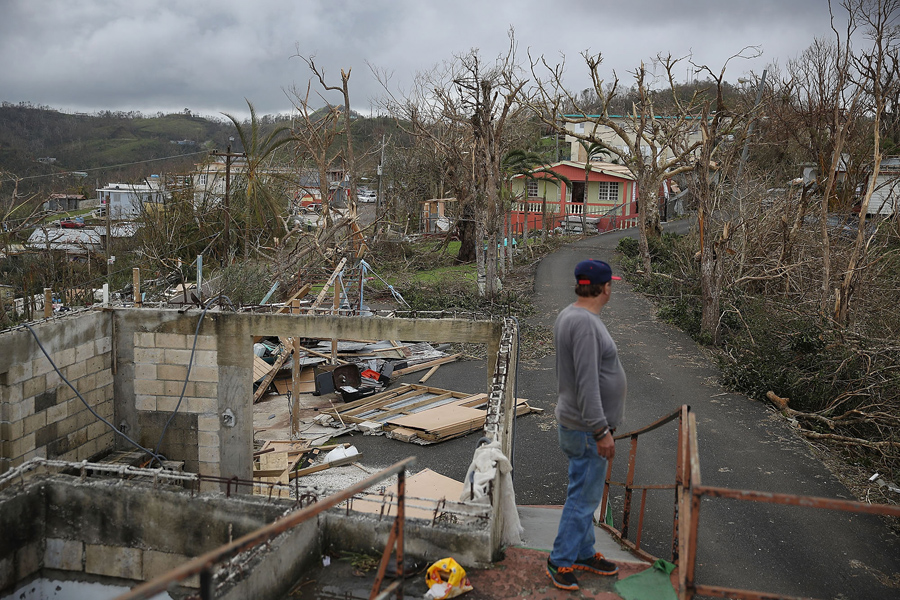
Image result for images of Puerto Rico damage
Devastation in Puerto Rico today - still 85 % without power, water after 4 weeks. How about waiting four YEARS for those essentials to arrive?

As the popular 'Walking Dead' series returns this Sunday, millions waiting with bated breath for Rick & Gang to hollow out the Saviors' skulls, the Zombie Apocalypse resumes once more.  Of course there is no actual possible apocalypse of that sort, i.e. with "walking dead" or  "biters" rampaging across the ravished terrain, though one sometimes wonders about the Trump followers. But we can acknowledge that the term kind of covers all generic end-of world scenarios in the sense of the remaining humans having to fend for themselves to survive day to day. 

In defining these I consider potential catastrophes that have the capability of halting all electric power, as well as water, not just for months - but YEARS. Given electric power can mean the difference between life and death - as we've seen in dozens of scenes from the island of Puerto Rico after Maria struck (mainly in hospitals), and water is essential for life (again as we've seen in Puerto Rico, i.e.


this is a no brainer.  And not a Zombie no brainer either.  Is Puerto Rico an outlier? I don't believe so, and let's dismiss right now Dotard's giving himself a "ten" for dealing with the aftermath. No, this egomaniacal simpleton earns a '1' if that much (disallowing fractional ratings). He's completely blown it, e.g.


If we get struck with any of the major catastrophes in Trump's miserable term, you can basically phone it in, as in 'all over'.

The major takeaway of this year full of catastrophes - from Harvey, to Irma, to Maria and the California wildfires is that counting on your federal government to help save or rescue you is a lost cause. Not if the catastrophe is in the mega class, or if you have to live amongst a lot of brown or black people. But forget even those differences, I am convinced - after seeing the pathetic response in Puerto Rico - NO one will be rescued after a major catastrophe. 

And look, FEMA is overstretched now with the aftermath of 3 major hurricanes and major wildfires, how would they be able to handle a mega catastrophe that wipes out the nation coast to coast?  Over the past decade alone, FEMA's denials and reversals have generated uncertainty and anger in many communities, left others (like in Puerto Rico) at the mercy of water borne diseases, and led to long rounds of appeals in others.

What major catastrophes are we looking at? I list them now in the order of their likelihood:

1) Dotard goes ape shit and in a moment of manic pique punches in all the nuclear codes.

This is likely to happen if the Dotard's minders are unable to control his worst, most degenerate impulses after he loses it. After John Kelly's performance two days ago, I am convinced no one - no "adult" - exists to put a leash on this asshole and stop him from exercising his most depraved instincts..

If he punches in all the nuclear codes, a la Greg Stillson's fantasy in 'The Dead Zone',  we are looking at over 11,000 nuclear warheads landing in a matter of hours from China, N. Korea, U.S. and Russia, Israel. All electric power be out as in vamonos after the first strikes - probably within 1-2 hours - from multiple EMPs (electromagnetic pulses from air burst) across continents.  To get an idea of what this will be like for any survivors, go and watch the movie 'Threads'.


The film is about 1hr and 47 mins long, Brit-made but if it doesn't scare the bejeezus out of you, you are either already: a) brain dead, or b) a zombie and amongst the walking dead.

'Threads' is set in the industrial city of Sheffield, UK, and to be sure one needs to get adjusted to the peculiar accent. But once one does, he or she will be granted an inside look at a future none of us want to face. (One U.S. reviewer said that "Threads makes 'The Day After' look like a day at the races".) Having seen both I concur.

Threads is not for the squeamish or faint-hearted but I do think all those yammering for war or confrontation with North Korea need to see it and let its message soak in. In fact, I think every critically-thinking red blooded citizen ought to see it, if for no other reason to be motivated to let reps know this thing isn't on - not now or ever. (In a recent poll, 46 % of Republican voters indicated they wanted Trump to launch a preemptive strike on North Korea)

Max. estimated time with no power or water: Up to 10 years.


2. Meridian- centered coronal mass ejection (CME)

The coronal mass ejection, such as shown in the image below:
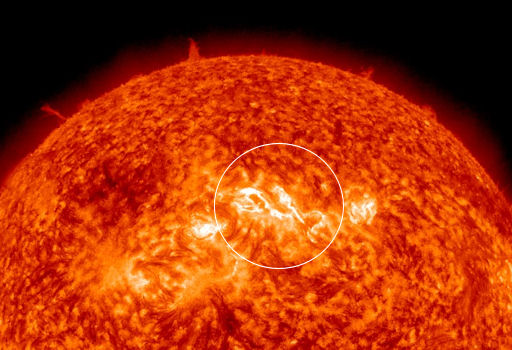
Image result for brane space, CME you don't want to see

is the ultimate plausible nightmare catastrophe. While it is true it's unlikely to cause the loss of life such as for (1) in the worst case scenario you will be looking at months or years without electric power or water. In other words, you will be in the situation of Puerto Rico after a massive Cat 5 hurricane - except there'll be no place to go for succor or help.

We narrowly dodged such a monster five and a half years ago. But let's not fool ourselves, the day is coming when we may not be so lucky and can't expect to continue to escape with a glancing blow or solar "wrist slap" -  as we have.

While it is true - as I noted in previous posts - that flare energy (as well as that to power coronal mass ejections) is limited by the magneto-hydrodynamic potentials available on a star like the Sun, this is not really much consolation if and when a major energy burst whacks us straight on broadside with 1 million amp field-aligned induction currents that have the potential to take out all our power grids in a cascade of failures. Space weather aficionados call such maxi-catastrophes "Carrington Events" after the signature original event that transpired in September, 1859, which incepted geo-magnetic currents so large that for days telegraph operators could actually disconnect their equipment from battery power and send messages solely via the emergent "auroral currents".

In our own current situation, we've become a more vulnerable society by constructing mammoth, interlocked  power grids which can crash if the right combination of factors is imposed. While we do have high voltage transformers that connect directly to the ground (zero or earth potential) to neutralize power surges from lightning strikes, these don't afford any protection against powerful geo-magnetic currents that are induced in the earth and flow upward into the grid. Then ...one such mammoth event, could spark calamity. Possibly no electric power for days, maybe longer ...over vast swatches of North America.

In addition, if a monster flare hurls a super stream of charged particles along with the CME we could expect adverse effects on all GPS positioning satellites. Bear in mind that GPS, besides providing directions for road users, allows synchronized cell phone conversations, as well as orchestrates air traffic not to mention 'date stamping' on most financial transactions and guiding the dynamic positioning of the majority of deep sea oil drilling and gas operations.

Imagine then the same deep sea operations and financial transactions (say if you wish to redeem mutual fund shares) occurring when erroneous GPS info is received because a monster flare's radiation has knocked the timing off by even 1 millionth of a second (given the geo-spatial positioning measures accuracy to a few billionths of a second accuracy)? The resulting hundred fold or more time divergence would have catastrophic consequences.

Given the preceding a proactive solution would be advance protection of our power grids from upward directed geo-magnetic currents. Many experts agree a simple solution would be to install large enough resistor -capacitor systems at critical locations (e.g. near power plants or major cities)  in order to sever any CME-driven upward field aligned current connection to the grid. (Recall from my basic physics blog, e;g. http://brane-space.blogspot.com/2011/06/introduction-to-basic-physics-electric.html     that resistors act to limit current and also capacitors can do the same by collecting charge.)

The problem? Major U.S. power companies don't want to assume the cost for any voluntary installations, which could run $100,000 per transformer. Hence, the grid remains unprotected against the rare - but potentially calamitous - Carrington event CME that smacks us broadside. (As opposed to the glancing blow.)

Even a bit of help could be available if we knew the direction of an oncoming powerful CME event and had some time to prepare. Right now such an entity exists: the Advanced Composition Explorer (ACE) satellite which can measure the intensity and magnetic orientation of any CME that sweeps by it. The problem is that ACE is nearly on its last legs and a replacement monitor is needed, lest we become "blind" to the killer CME with our name on it.

Fortuitously, a fully -ready space craft that can undertake ACE's duties exists.  This Deep Space Climate Observatory (or DSCOVR) could stand between us and utter catastrophe. The problem? The Repukes may want to cut its budget to let it become another useless piece of junk   like the solar satellite shot down as part of a missile test back in the Reagan era.

Max. estimated time with no power or water: Up to 2 years.

3. Asteroid strike:

Of course, the ultimate catastrophe would be  a Torino scale 9 impact, i.e. an "Earth sterilizing event".  Such a calamity would most likely come from an Apollo object, especially a massive Earth orbit crossing object - perturbed out of the asteroid belt.   For example, a  Gaspra (12.5 x 7 x 7.5 miles)  e.g.

impact would obliterate all life on Earth - never to arise again. The crater and blast effects alone would eliminate most of the population on the continent it struck. An ocean strike, creating tidal waves upwards of 2 miles in height, would be even worse. The debris, for its part, would block out most solar radiation for years and probably usher in massive extinction of plants.

The size of object needed is >> 1 km, and an Explosive release: >> 100,000 megatons TNT equivalent.

This is an extreme case and fortunately the odds are in our favor  However, a mass extinction event which could render the entire North American continent rubble is a lot more probable.  The relevant Torino scale would require an object 330' diameter to 1 km (3330') dia. Also an explosive release of  100 Megatons to 100,000 megatons TNT equivalent.

Max. estimated time with no power or water: Up to 10 years.

Let's make this really simple and easy to grasp: the failure to provide power and water access to Puerto Ricans by now - even after 4 weeks after Maria's strike - means there is zero chance the government will help you get through in the case of any of the preceding cataclysms.  And when I write 'you" I refer to anyone in North America and the U.S. in particular.

Wednesday, October 18, 2017

Small Asteroid Early Warning And Targeting Just Got Real With Passage of 2012 TC4

Image result for images for Chelyabinsk asteroid
Image of the Chelyabinsk asteroid's exploded trail  over Chelyabinsk in 2013.

Who could forget the passage of the Chelyabinsk small asteroid as it passed over the city by that name in central Russia in February, 2013? The event was energetic enough to injure over  1,000 people by flying debris as the shock wave from the explosion swept across the Russian city, shattering windows and leaving a trail of damage.  The explosion was estimated to have had a force greater than 30 Hiroshima atomic bombs, according to NASA scientists, and the shock wave was so powerful it travelled twice around the world.

As reported in Physics Today (Sept., 2014, p. 32) the object has now gone down in infamy as being 20 m (66 feet)  diameter, entering the Earth's atmosphere at 19 km/s.   Based on a 3-dimensional simulation using a shock code developed at Sandia National Laboratories (originally intended to model nuclear explosions). the Lab's supercomputer showed that the Chelyabinsk blast was at least a half megaton, or comparable to the yield of many U.S. warheads on ICBMs, like the 'Minuteman'.
No automatic alt text available.
Scandia Lab simulation panel for Chelyabinsk event.(From Physics Today, Sept., 2014)

Some of the ancillary information and insights that the Sandia team has assembled with other data:

- The entry at 19 km/s meant that it originated from the asteroid belt between Mars and Jupiter - not from a ballistically launched missile whose velocity would only be about 11.2 km/s or a short period comet with a mean speed of 35 km/s.

-  The altitude of the blast indicated the object was small and weak. The diameter of 20 m (66 feet) was estimated base on the observed velocity factored together with the assumed density of the material.

- The asteroid first felt the presence of Earth's atmosphere while it was thousands of miles above the Pacific Ocean and for a dozen minutes the 10,000 ton rock fell swiftly and unobserved passing at shallow angle through the atmosphere where the molecular mean free path was much greater than the 20 m diameter.

- When it crossed over the border into Russia at 3:20:20 UT and was 100 km in altitude 99.99997 % of the atmosphere still lay beneath it.

- For the better part of 10 seconds the asteroid hurtled through the air as a rigid body moving at a shallow angle, 17 degrees relative to the horizon and descending 1 km for every 3 km of flight.

- At about 45 km altitude the entry dynamics began to change. The dynamic pressure then built up from 0.7 Mpa (millions of Pascals, where 1 Pa = 1 atm equivalent), Within a couple more seconds, below 40 km, pressure on the now fracturing asteroid increased past 1 MPa, breaking it into a number of smaller fragments.

- As the pressure then grew exponentially the process cascaded and formed ever smaller fragments that rapidly increased the surface to volume ratio. As the fragments ablated the hot gas between them built up finally resulting in a chain reaction and a massive explosion converting the asteroid's kinetic energy into heat and pressure (yielding the shock wave that shattered windows).

All of the preceding is again relevant as learned of the recent close passage of the small asteroid 2012 TC4 over Antarctica  at a too close distance of 27, 200 miles. TC4 was estimated to be travelling through space at roughly 16,000 mph - 4.5 miles a second.


Artist's conception of 2012 TC 4 passing in vicinity of Earth.

2012 TC4, was first spotted five years ago by the Pan-STARRS telescope at the Haleakala Observatory, in Hawaii, before disappearing as it orbits the sun. It then reemerged in July on a trajectory well inside our lunar orbit.  A sketch of the object's trajectory is shown below:
Close approach of asteroid 2012 TC4 poses no danger to Earth
Depiction of the trajectory of 2012 TC 4 on Oct. 12.

Observations reveal that 2012 TC4 is an elongated and rapidly rotating object that has been known to make many close approaches to Earth in the past. The space rock orbits the sun approximately every 1.67 years at a distance of about 1.4 AU. Astronomers estimate that 2012 TC4 has a diameter between 26 to 85 feet (8 to 26 meters).   Note the size which is near the diameter range of the Chelyabinsk object. In other words, had TC 4  entered the Earth's atmosphere it could have delivered a similar air blast to that arising from the Chelyabinsk object.

Thankfully, TC 4's approach was planned for in advance as a test object for an asteroid early warning network - something I've been harping on for over three decades.  Thus, long before it got within a tenth of the Moon's distance NASA had planned to use the flyby to test early warning for incoming space rocks.  Observatories world wide - part of the International Asteroid Warning Network - had been focused in an TC 4 for weeks to test communication and coordination.

Before this close pass, researchers had relied on "tabletop" tests - or computer simulations with no actual asteroids involved.   These sort of simulations make for nice abstract exercises but don't deliver much in terms of real time, actual asteroid threat factors.

What still remains is how one of these beasts might be stopped say if it's trajectory was determined to be headed for New York City, or New Orleans.  Back in March, 2013 I noted the development of  a high-powered 50kW laser by a German firm (http://www.dailymail.co.uk/sciencetech/article-2259639/The-groundbreaking-Star-Wars-laser-shoot-drone-sky-TWO-MILES-away.htmlIt had the power to knock down a drone from two miles away, and cut through a steel girder from 1kilometer away. Yet it was accurate enough to hit a target the size of a mortar round which got me to thinking of using multiple similar lasers in an effort to deflect small (< 50m dia.) asteroids. These would be similar to the Chelyabinsk object that recently exploded over central Russia. The German defense firm Rheinmetall Defence that developed it – could conceivably get its name in lights.

Think then of several Russian and U.S. craft carrying these devices to intercept an oncoming small (‘city buster’) asteroid before it can wreak havoc. If the detailed effects and dynamics can be worked out before hand, I see no reason why the oncoming threat can’t be stopped. Or, would we rather spend $20 billion more on missile “defense” systems that have been shown to be useless?

After the close pass of 2012 TC 4 this becomes much more than an abstract, academic exercise. The recent encounter shows me that it is crucial we not only be able to confidently track small asteroids, but also come up with ways to destroy them - say if one is bearing down on a major population center.

As the hackneyed phrase goes, "if we can send men to the Moon and back......."/

Wednesday, September 12, 2012

Anatomy of an Asteroid Strike


Readers with an interest in astronomy may recall the collision of the Comet Shoemaker-Levy with the planet Jupiter in 1994. That event was quite dramatic and reminded humans of how objects such as comets (basically balls of dust and ice) can effect cosmic cataclysms. It was also a cautionary tale for earthlings to monitor the skies and not be caught off guard (despite the budget cutbacks instigated by the Rs against "Space Guard" and other asteroid monitoring programs)

Have any large asteroids actually been similarly recorded? It turns out the answer is yes, and such an interaction has been documented in the June 1, 2010 issue of Astrophysical Journal Letters.

The authors (A. Sanchez-Lavega, A. Wesley, G. Orton, R. Hueso, S. Perez-Hoyos, L. N. Fletcher, P. Yanamandra-Fisher, J. Legarreta, I. de Pater, H. Hammel, A. Simon-Miller, J. M. Gomez-Forrellad, J. L. Ortiz10, E. Garc´ıa-Melendo, R. C. Puetter, and P. Chodas) - The Impact of a Large Object on Jupiter in 2009 July, documented the strike of a an "impactor" of 0.5 - 1.0 km diameter. At the time they assessed the intruder as "probably an icy body" - but it has since been ascertained to have been an asteroid. (Science News, July 3, 2010, p. 10).

The authors note that:

"The dark impact “bruise” was first noticed on CCD images of Jupiter obtained by Wesley on 2009 July 19 at 14:02 UT, just rotating into view from Jupiter’s west limb"

This "impact bruise" is shown in the photo (left side) with white outline. The time sequence shown at the right side of the graphic shows the disappearance of the "blemish". Bear in mind Jupiter doesn't have a solid surface like Earth, but multiple layers of dense gases. Hence the images probably disclose photo-chemical or other changes associated with the impact, and hence...lessening of original impact effects.

What altered the interpretation to that of an asteroid strike? In the case of the impact of Comet Shoemaker -Levy in 1994,, the impacting fragments that initially comprised the comet head generated extended dark halos visible in Hubble's UV (ultraviolet) images. By contrast, one single body produced the effect seen in the graphic, and no halos were visible at all, leading to the asteroid conclusion.

How major would such an impact have been, if inflicted on Earth instead of Jupiter? If the estimate of diameters is correct, it would place the object that struck Jupiter in 2009 at the (Torino) scale of a "Mass extinction impact". This is applicable to diameter rangers from 100m (~330') to 1 km (3330' across). The last such documented event on Earth was the KT-boundary impact of 65 million years ago that devastated ~ 10 million sq. km., killing all extant dinosaurs and hundreds of other species.

The explosive release is in the range from 100 Megatons to 100,000 megatons TNT equivalent, and the Jupiter impact object was most likely around 75,000 megatons.

In other words, let's be grateful it struck Big Jupe and not Earth!

Tuesday, November 8, 2011

What If That Asteroid Were to Hit Earth?


At 6.28 p.m. Easter time today, an asteroid ¼ of a mile long will pass between the Earth and the Moon (see graphic) and roughly 201,700 miles from our planet. By any reckoning of astronomical distance standards this is what's called a "grazing pass" or if you prefer more colorful parlance, a "near miss". Again, two hundred thousand miles doesn't sound like a "near miss" but by the astronomical standards of astronomical units (1 AU - 93 million miles) and light years, it certainly is.

We understand from the data that no major effects or influences will occur, including gravitational ones - which should mean no tides or any earthquake activity triggered by a differential gravitational pull on Earth's crust. However, it is instuctive to consider the possible effects if this moderate asteroid actually struck the Earth at 46,400 kilometers per hour (12, 900 meters per second), and with a putative or effective mass of 1.2 x 10^11 kg. (After ablation, evaporation of some mass on entry through the atmosphere.)

First, the effective kinetic energy (½ mv^2) would be:

½ (1.2 x 10^11 kg) (12, 900 m/s)^2 = 9.9 x 10^18 J

This is roughly the equivalent of 400 single megaton H-bombs going off, and from my computations, would carve out a crater nearly 7 miles wide and 3,000' deep. In other words, if such a monster hit Manhattan, that would pretty well be the end of it. If it struck Barbados nearly a third of the island would be cratered. A water or ocean strike, meanwhile, would trigger a 90' high tsunami though some low-balled values of 70' have been circulated. (But bear in mind, in the scheme of "rogue waves", 70' is considered more or less high normal and we're talking about an object 200' longer than the Nimitz aircraft carrier striking the ocean at more than 12,000 meters per second!)

It is known that a scale exists, called the "Torino scale" to measure and reference the potential destructive scale of asteroids, much like the Richter scale does for earthquakes. Some of the Torino scale levels and gradations (registered by mass and velocity) are as follows:

i) Regionally devastating impact, e.g. June 30, 1908 Tunguska impact. Devastation range approx. 10,000 sq. kilometers, killing crops, humans, animals.

Size of object: 20 m (~ 66') to 100m (~330') diameter .

Explosive release: 1 Megaton to 100 megatons TNT equivalent. Collision probability between ~ 1 in 100 yrs. and 1 in 1000 yrs

ii) Mass extinction impact: e.g. KT-boundary impact of 65 million years ago . Devastation range ~ 10 million sq. km., killing all extant dinosaurs and hundreds of other species.

Size of object: 100m (~330') diameter to 1 km (3330') dia.

Explosive release: 100 Megatons to 100,000 megatons TNT equivalent.

Collision probability: between ~ 1 in 1000 yrs. and 1 in 100,000 yrs.

iii) Earth Sterilizing Impact: Example......not yet.

Would annihilate every last species on the planet, and sterilize it for thousands of years to come. Devastation-affected area: > 50 x 10^6 sq. km.

Size of object: >> 1 km (3330') dia. (Likely source: any of one hundred Apollo asteroids whose orbits intersect with Earth's)

Explosive release: >> 100,000 megatons TNT equivalent.

Collision probability: Unknown but at least one asteroid specialist (Dr. Basil Booth) has predicted an Apollo asteroid collision some time in the next 250,000 yrs.

As one sees by surveying the preceding, this asteroid falls about midway into the "Mass extinction impact" range. In other words, if it struck the Earth, we'd be looking at a serious disaster indeed, whether water or land strike.

Some bloggers have opined and worried about "How can any scientists actually know that this thing will miss us?"

The answer is that they make use of the highly precise branch of astronomy known as celestial mechanics, especially that branch that has the objective of obtaining the perturbations which an astronomical object is likely to experience under the combined influence of the gravitational forces of other (e.g. larger, more massive ) objects acting upon it. See, by way of illustration,

http://brane-space.blogspot.com/2010/07/another-special-function-legendre.html

Once the object's orbital elements are known, then they can be processed into the perturbation equations and the knowledge obtained of whether there will be any direct interaction or not.

Given I have used celestial mechanics over many decades myself, first in an undergrad astronomy course to compute the position of Jupiter in the year 2010 (from the year 1970) and later to use it to find the perturbations on Halley's comet in 1986, I have no fear...ZERO...that any mistakes will be made.

However, I do believe this close pass endorses once again the saner position of not giving up on manned space flight. As both the late Arthur C. Clarke and Isaac Asimov have observed, it makes little rational sense - given we do have the technology or the potential to develop it - to keep all our eggs on this one little orb in the hope that we will never ever face a mass-sterilizing impact and being wiped out.

The dinos had no choice, as they were merely dumb beasts with brains the size of walnuts.

We have no similar excuses, and saying "we don't have the money" merits a swift kick in the posterior, and nothing more!