Showing posts with label Carrington Events. Show all posts

Monday, December 23, 2019

Why We Need "Knowledge Arks" To Preserve Human Knowledge - Because It Is Currently Vulnerable To Obliteration

Image result for brane space, CMEs
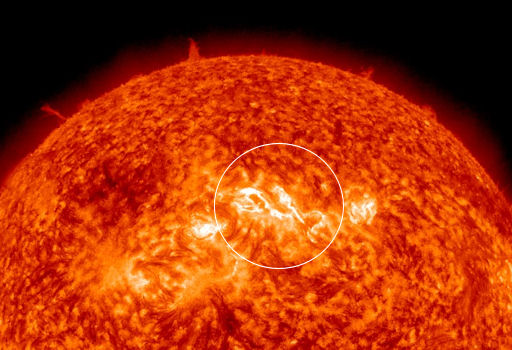
A CME erupts on the solar surface. If a powerful one erupted today on the solar central  meridian we'd have barely 12 hours to protect whatever electronic data stored on drives, disks etc.

Most human knowledge, believe it or not, is hard won - the result of a dedicated synergy of contributions- and significant energy to either collect data, or assemble it in discrete caches.  The urgency and mandate now is not only to protect the storage of historical data, e.g. the archives of sunspot observations, sunspot numbers to define solar cycles, but also incoming future data.  For example, an enormous radio telescope called 'the Square Kilometer Array'-  with installations in South Africa and Australia - is expected to generate 160 terabytes of raw data per second.  How will it be stored, in which digital archives, and how secure will these be? Say from a central meridian coronal mass ejection with the power to obliterate digital storage on millions of hard drives, and even in the 'cloud'.

Let's face the fact that a vast amount of our knowledge - not just in astrophysics -  is on paper, or worse, in electronic form which is even more vulnerable.  Sadly (and pathetically) much of humanity's hard won knowledge and collective achievements are stored on  volatile, vulnerable electronic media.  Many visitors, when they come to our home and see my library, are amused I have such an extensive book collection.  They often ask why I just don't just ditch the books and get their facsimiles in digital form.

But they usually shut up when I point out computer hard drives have  100 % failure rate and any digital item that depends on them for storage isn't going to last long..  And if they have vast gigs stored on such a device - or other, related ones (Ipads, smart phones etc.) , what then, if it's lost say in a freak electrical mishap ?  Jump drives?  They don't last that long either. Meanwhile, I still have college texts I've kept that are 55-56 years old.    I will take those books, old and new, to digital versions, any day. (Especially given most of those texts don't even exist in digital format)  One requires computers, notebooks, tablets and smart phones to access those digital works.  But those tablets, smartphones, etc. are only useful so long as electricity is available or the batteries last.

In the case of the most energetic CME, the electrical grid worldwide could be down for up to a year. And getting it back would not necessarily mean retrieving any stored data or media.   In addition, modern storage media are not as secure or long lasting as you might believe. Both CDs and DVDs degrade over time, and are also subject to powerful electromagnetic interference such as would be expected with an intense CME.   Blue Ray discs have a 'normal' lifetime of 30-50 years.   Jump drives may or may not last as long depending on the nature of the external effects to which they're subjected.    No physicist I know believes any of these media - if not buried deep underground- would survive a central meridian CME's powerful ground currents and disruption..

If a CME were on its way right now we'd have no more than 12 hours to prepare.   Ground currents arising from CMEs alone can melt the  copper windings of transformers leading to massive power outages- such as occurred in Ottawa in 1989.. While it is true - as I noted in previous posts - that maximum flare energy (as well as that to power coronal mass ejections) is limited by the magneto-hydrodynamic potentials available on a star like the Sun, e.g.

E(t ) ≡ −(1/c) dΦ(t )/dt 

Where the rate of change of magnetic flux ( Φ )  drives the change in E-field intensity.  In any case,  this is not really much consolation if and when a major energy burst whacks us straight on broadside with 1 million amp field-aligned induction currents that have the potential to take out all our power grids in a cascade of failures. Space weather aficionados call such maxi-catastrophes "Carrington Events" after the signature original event that transpired in September, 1859, which incepted geo-magnetic currents so large that for days telegraph operators could actually disconnect their equipment from battery power and send messages solely via the emergent "auroral currents".

 In our own present situation, we've become a more vulnerable society by constructing mammoth, interlocked  power grids which can crash if the right combination of factors is imposed. While we do have high voltage transformers that connect directly to the ground (zero or earth potential) to neutralize power surges from lightning strikes, these don't afford any protection against powerful geo-magnetic currents that are induced in the earth and flow upward into the grid. Then ...one such mammoth event, could spark calamity. Possibly no electric power for days, maybe longer ...over vast swatches of North America.

Back to the idea of having secure  "knowledge Arks"  - akin to the mythical Noah's Ark - designed to preserve species in the Flood.  In this case we want knowledge Arks to preserve  cumulative human knowledge  from everything from CMEs, to  the runaway greenhouse effect, to nuclear war and major asteroid impacts etc.  Before one dismisses such concepts as too "far out" or "sci fi" let's remember we already have storage vaults, e.g. for seeds. Thus, the Svalbard Global Seed Vault (also known as the 'Doomsday Vault')  has been designed to preserve diverse seeds to meet whatever comes for future generations. The vault has the capacity to hold 2.5 billion seeds, but alas - even as it's designed to withstand most threats - it is ironically now in danger on account of rising temperatures in the region. (On a remote island halfway between Norway and the North pole).

Let's return to the concept of knowledge vaults for storage of human data and knowledge collected over the centuries. We ask first what other types of long term options for storage media are there?

 In the examples below  none are computer-based:

- Paper, if properly treated, preserved, can easily last over several human lifetimes.  My father-in-law left me several volumes of literature (original works by Alfred Tennyson), including one dated from 1833.   (Books printed on acid-based paper don't last more than a few decades)

-Alkaline book paper has an expected lifespan of 500 years for typical grades and more than 1,000 years for the best grades.  (But only if stored in ideal conditions, of temperature, humidity)

It would appear then, that paper affords a much better means of "safety deposit box" for our knowledge.   But hold strain.  Despite its relatively long  survival timelines,  paper too must one day come to an end.  What if another civilization arrived on our planet one day and came upon a storage facility, say one million years hence, well all the paper works, storage materials, would have long since become dust.

A deep underground facility (like the 'Crypt of Civilization") - beneath Oglethorpe University in Brookhaven, GA. might be feasible, but that is not a true knowledge vault - only a temporal slice of one manifestation of human civilization. (According to Wikipedia, it contains numerous documents and artifacts from American daily life at the time of its creation (between 1937-40).

Is there a better solution?

Perhaps the best option from where I sit, is nanostructured glass. This was recently developed at Southampton University in the UK.  It is thermally stable up to 1,000 Celsius and just one disk can hold up to 360 terabytes of data. It is reported to have the potential to last up to "13.8 billion yeas" by one report. Indeed, items like the Bible have already been embedded into it, e.g.


Image may contain: one or more people and text
Of course, it is immaterial that the medium lasts 13.8 billion years - or even 5 billion - given the Earth will have been long since consumed by the Sun as a Red Giant star, having exhausted all its hydrogen fuel after another 4 b years.

To learn more about nanostructured glass storage go to the video link below:

Saturday, October 21, 2017

If Trump Can't Help Puerto Rico Don't Look For Salvation In A "Zombie Apocalypse"

Image result for Zombie Apocalypse images
Artist's depiction of the "Zombie Apocalypse" : a generic term designed to embody all possible real apocalypses including from CMEs and extinction level asteroid strikes.
Image result for images of Puerto Rico damage
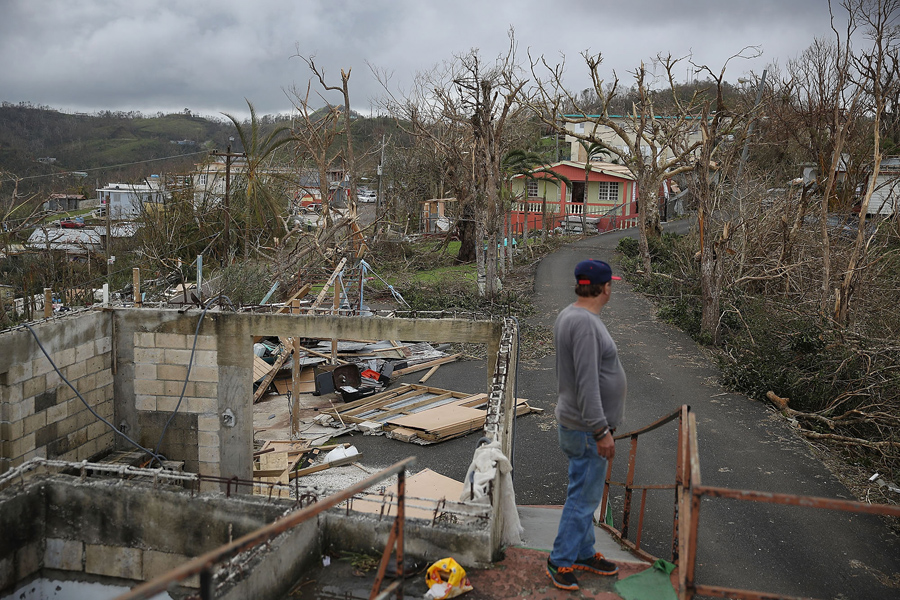
Devastation in Puerto Rico today - still 85 % without power, water after 4 weeks. How about waiting four YEARS for those essentials to arrive?

As the popular 'Walking Dead' series returns this Sunday, millions waiting with bated breath for Rick & Gang to hollow out the Saviors' skulls, the Zombie Apocalypse resumes once more.  Of course there is no actual possible apocalypse of that sort, i.e. with "walking dead" or  "biters" rampaging across the ravished terrain, though one sometimes wonders about the Trump followers. But we can acknowledge that the term kind of covers all generic end-of world scenarios in the sense of the remaining humans having to fend for themselves to survive day to day. 

In defining these I consider potential catastrophes that have the capability of halting all electric power, as well as water, not just for months - but YEARS. Given electric power can mean the difference between life and death - as we've seen in dozens of scenes from the island of Puerto Rico after Maria struck (mainly in hospitals), and water is essential for life (again as we've seen in Puerto Rico, i.e.


this is a no brainer.  And not a Zombie no brainer either.  Is Puerto Rico an outlier? I don't believe so, and let's dismiss right now Dotard's giving himself a "ten" for dealing with the aftermath. No, this egomaniacal simpleton earns a '1' if that much (disallowing fractional ratings). He's completely blown it, e.g.


If we get struck with any of the major catastrophes in Trump's miserable term, you can basically phone it in, as in 'all over'.

The major takeaway of this year full of catastrophes - from Harvey, to Irma, to Maria and the California wildfires is that counting on your federal government to help save or rescue you is a lost cause. Not if the catastrophe is in the mega class, or if you have to live amongst a lot of brown or black people. But forget even those differences, I am convinced - after seeing the pathetic response in Puerto Rico - NO one will be rescued after a major catastrophe. 

And look, FEMA is overstretched now with the aftermath of 3 major hurricanes and major wildfires, how would they be able to handle a mega catastrophe that wipes out the nation coast to coast?  Over the past decade alone, FEMA's denials and reversals have generated uncertainty and anger in many communities, left others (like in Puerto Rico) at the mercy of water borne diseases, and led to long rounds of appeals in others.

What major catastrophes are we looking at? I list them now in the order of their likelihood:

1) Dotard goes ape shit and in a moment of manic pique punches in all the nuclear codes.

This is likely to happen if the Dotard's minders are unable to control his worst, most degenerate impulses after he loses it. After John Kelly's performance two days ago, I am convinced no one - no "adult" - exists to put a leash on this asshole and stop him from exercising his most depraved instincts..

If he punches in all the nuclear codes, a la Greg Stillson's fantasy in 'The Dead Zone',  we are looking at over 11,000 nuclear warheads landing in a matter of hours from China, N. Korea, U.S. and Russia, Israel. All electric power be out as in vamonos after the first strikes - probably within 1-2 hours - from multiple EMPs (electromagnetic pulses from air burst) across continents.  To get an idea of what this will be like for any survivors, go and watch the movie 'Threads'.


The film is about 1hr and 47 mins long, Brit-made but if it doesn't scare the bejeezus out of you, you are either already: a) brain dead, or b) a zombie and amongst the walking dead.

'Threads' is set in the industrial city of Sheffield, UK, and to be sure one needs to get adjusted to the peculiar accent. But once one does, he or she will be granted an inside look at a future none of us want to face. (One U.S. reviewer said that "Threads makes 'The Day After' look like a day at the races".) Having seen both I concur.

Threads is not for the squeamish or faint-hearted but I do think all those yammering for war or confrontation with North Korea need to see it and let its message soak in. In fact, I think every critically-thinking red blooded citizen ought to see it, if for no other reason to be motivated to let reps know this thing isn't on - not now or ever. (In a recent poll, 46 % of Republican voters indicated they wanted Trump to launch a preemptive strike on North Korea)

Max. estimated time with no power or water: Up to 10 years.


2. Meridian- centered coronal mass ejection (CME)

The coronal mass ejection, such as shown in the image below:
Image result for brane space, CME you don't want to see

is the ultimate plausible nightmare catastrophe. While it is true it's unlikely to cause the loss of life such as for (1) in the worst case scenario you will be looking at months or years without electric power or water. In other words, you will be in the situation of Puerto Rico after a massive Cat 5 hurricane - except there'll be no place to go for succor or help.

We narrowly dodged such a monster five and a half years ago. But let's not fool ourselves, the day is coming when we may not be so lucky and can't expect to continue to escape with a glancing blow or solar "wrist slap" -  as we have.

While it is true - as I noted in previous posts - that flare energy (as well as that to power coronal mass ejections) is limited by the magneto-hydrodynamic potentials available on a star like the Sun, this is not really much consolation if and when a major energy burst whacks us straight on broadside with 1 million amp field-aligned induction currents that have the potential to take out all our power grids in a cascade of failures. Space weather aficionados call such maxi-catastrophes "Carrington Events" after the signature original event that transpired in September, 1859, which incepted geo-magnetic currents so large that for days telegraph operators could actually disconnect their equipment from battery power and send messages solely via the emergent "auroral currents".

In our own current situation, we've become a more vulnerable society by constructing mammoth, interlocked  power grids which can crash if the right combination of factors is imposed. While we do have high voltage transformers that connect directly to the ground (zero or earth potential) to neutralize power surges from lightning strikes, these don't afford any protection against powerful geo-magnetic currents that are induced in the earth and flow upward into the grid. Then ...one such mammoth event, could spark calamity. Possibly no electric power for days, maybe longer ...over vast swatches of North America.

In addition, if a monster flare hurls a super stream of charged particles along with the CME we could expect adverse effects on all GPS positioning satellites. Bear in mind that GPS, besides providing directions for road users, allows synchronized cell phone conversations, as well as orchestrates air traffic not to mention 'date stamping' on most financial transactions and guiding the dynamic positioning of the majority of deep sea oil drilling and gas operations.

Imagine then the same deep sea operations and financial transactions (say if you wish to redeem mutual fund shares) occurring when erroneous GPS info is received because a monster flare's radiation has knocked the timing off by even 1 millionth of a second (given the geo-spatial positioning measures accuracy to a few billionths of a second accuracy)? The resulting hundred fold or more time divergence would have catastrophic consequences.

Given the preceding a proactive solution would be advance protection of our power grids from upward directed geo-magnetic currents. Many experts agree a simple solution would be to install large enough resistor -capacitor systems at critical locations (e.g. near power plants or major cities)  in order to sever any CME-driven upward field aligned current connection to the grid. (Recall from my basic physics blog, e;g. http://brane-space.blogspot.com/2011/06/introduction-to-basic-physics-electric.html     that resistors act to limit current and also capacitors can do the same by collecting charge.)

The problem? Major U.S. power companies don't want to assume the cost for any voluntary installations, which could run $100,000 per transformer. Hence, the grid remains unprotected against the rare - but potentially calamitous - Carrington event CME that smacks us broadside. (As opposed to the glancing blow.)

Even a bit of help could be available if we knew the direction of an oncoming powerful CME event and had some time to prepare. Right now such an entity exists: the Advanced Composition Explorer (ACE) satellite which can measure the intensity and magnetic orientation of any CME that sweeps by it. The problem is that ACE is nearly on its last legs and a replacement monitor is needed, lest we become "blind" to the killer CME with our name on it.

Fortuitously, a fully -ready space craft that can undertake ACE's duties exists.  This Deep Space Climate Observatory (or DSCOVR) could stand between us and utter catastrophe. The problem? The Repukes may want to cut its budget to let it become another useless piece of junk   like the solar satellite shot down as part of a missile test back in the Reagan era.

Max. estimated time with no power or water: Up to 2 years.

3. Asteroid strike:

Of course, the ultimate catastrophe would be  a Torino scale 9 impact, i.e. an "Earth sterilizing event".  Such a calamity would most likely come from an Apollo object, especially a massive Earth orbit crossing object - perturbed out of the asteroid belt.   For example, a  Gaspra (12.5 x 7 x 7.5 miles)  e.g.

impact would obliterate all life on Earth - never to arise again. The crater and blast effects alone would eliminate most of the population on the continent it struck. An ocean strike, creating tidal waves upwards of 2 miles in height, would be even worse. The debris, for its part, would block out most solar radiation for years and probably usher in massive extinction of plants.

The size of object needed is >> 1 km, and an Explosive release: >> 100,000 megatons TNT equivalent.

This is an extreme case and fortunately the odds are in our favor  However, a mass extinction event which could render the entire North American continent rubble is a lot more probable.  The relevant Torino scale would require an object 330' diameter to 1 km (3330') dia. Also an explosive release of  100 Megatons to 100,000 megatons TNT equivalent.

Max. estimated time with no power or water: Up to 10 years.

Let's make this really simple and easy to grasp: the failure to provide power and water access to Puerto Ricans by now - even after 4 weeks after Maria's strike - means there is zero chance the government will help you get through in the case of any of the preceding cataclysms.  And when I write 'you" I refer to anyone in North America and the U.S. in particular.

Friday, July 21, 2017

Will Trump Allow Space Weather Prediction Initiatives To Proceed?

Related image


Several posts ago (July 18) I highlighted how our space weather forecasts are rendered replete with errors by virtue of changing magnetic fields. These can be localized solar region fields such as occur near sunspots (and which trigger large flares) or larger scale solar magnetic fields that interact with Earth's magnetosphere.  In any case, space weather research is motivated by the quest (and need) to understand the proximate and distal effects that solar activity has on the near Earth space environment. It also includes the effects on our electronic infrastructure.

In my June 10, 2012 post I noted that the CME (coronal mass ejection) you don't want to see is the one that smacks our planet broadside, sending power grids crashing down like so many tenpins, knocking out GPS satellites, and in general making life miserable for millions. As I noted in an earlier blog:

http://brane-space.blogspot.com/2012/01/monster-plasma-blob-headed-for-earth-is.html

 We narrowly dodged such a monster six months before that blog post was written.  Less well known is that barely five weeks later, on July 23, a solar storm manifested which had a magnitude comparable to the classic Carrington event. It narrowly missed Earth but provided an object lesson on the need to plan and monitor for such intense events.

While it is some comfort to know that flare energy (as well as that to power coronal mass ejections) is limited by the magneto-hydrodynamic potentials available on a star like the Sun, this is not really much consolation if and when a major energy burst whacks us straight on broadside with 1 million amp field-aligned induction currents that have the potential to take out all our power grids in a cascade of failures. Space weather aficionados call such maxi-catastrophes "Carrington Events" after the signature original event that transpired in September, 1859. This event incepted geo-magnetic currents so large that for days telegraph operators could actually disconnect their equipment from battery power and send messages solely via the emergent "auroral currents".

In our own current situation, we've become a more vulnerable society by constructing mammoth, interlocked  power grids which can crash if the right combination of factors is imposed. While we do have high voltage transformers that connect directly to the ground (zero or earth potential) to neutralize power surges from lightning strikes, these don't afford any protection against powerful geo-magnetic currents that are induced in the earth and flow upward into the grid. Then ...one such mammoth event, could spark calamity.

Over the last two years of the scientifically savvy Obama administration, notice was taken of these solar events and a strong impetus provided to monitor space weather and devise strategies for forecasts and dealing with impacts. In October, 2015, for example, the White House Office of Science and Technology released the National Space Weather Strategy:

http://bit.ly/space-weather-strategy


And also an accompanying action plan:

http://bit.ly/space-weather-action


Subsequently, an October 13, 2016 executive order called for space weather preparedness and efforts to minimize the extent of economic loss and human hardship from adverse space weather events such as powerful CMEs. See, e.g.:

http://bit.ly/space-weather-EO


One thing all workshop participants agreed on even then is that despite major developments in space weather modeling, the forecasting is still in its infancy. As I pointed out in my previous post on space weather, a lot of this can be attributed to inadequate data or observations by which to construct theoretical models. Let us note here that these are the gold standard for prediction, as opposed to relying on brute statistics - often using ex post facto methods.

One of the shortcomings which I noted before is the dearth of space craft between Earth and the Sun. One of the primary monitoring craft we have is confined to the L1 (Lagrangian) point i.e. where Earth's and Sun's gravities balance out. This is the Advanced Composition Explorer (ACE) satellite which can measure the intensity and magnetic orientation of any CME that sweeps by it. There is also the Deep Space Climate Observatory (DSCOVR) and the Solar and Heliospheric Observatory (SOHO).

A huge current problem is that ACE is nearly on its last legs and a replacement monitor is needed, lest we become "blind" to the killer CME with our name on it.

Is the Trump bunch doing anything to repair the ACE or ensure the other craft remain in prime monitoring positions? We don't know but it appears all these programs have been left to languish along with the development of forward strategies to deal with space weather cataclysms. One thing we do know is the space budget has been cut and severely.

The biggest need currently is open access  to models in space weather research. Such models being readily accessible to the space weather community will ensure we move forward expeditiously in forecasting, testing and validating models.

On the positive side, . Ed Perlmutter (CO-7th) introduced the Space Weather Research and Forecasting Act.  The Act strengthens space weather research by directing federal agencies to develop new tools and technologies to improve forecasting and set benchmark standards to measure space weather disturbances and their potential impacts to Earth. The legislation outlines clear roles and responsibilities for the federal agencies which study and predict space weather events, including the National Aeronautics and Space Administration (NASA), the National Oceanic and Atmospheric Administration (NOAA), the National Science Foundation (NSF), the Department of Defense (DOD), and the Federal Aviation Administration (FAA).

Additionally, the legislation enhances the relationships between federal agencies, academic researchers and the commercial industry. The legislation also directs NOAA to develop plans to provide a back-up for the aging Solar and Heliospheric Observatory (SOHO) satellite, the only currently operating satellite providing imagery of space weather that could impact Earth.

Even if by some small chance the Act passes the House, we have to hope it also passes the Senate and that Trump manages to muster enough sense to sign it. Don't hold your breath.

See also:

http://www.spaceweather.com/

Sunday, June 10, 2012

The CME That You DON'T Want to See!

                                             Meridian CME headed for Earth

Is the one that smacks our planet broadside, sending power grids crashing down like so many tenpins, knocking out GPS satellites, and in general making life miserable for millions. As I noted in an earlier blog:

http://brane-space.blogspot.com/2012/01/monster-plasma-blob-headed-for-earth-is.html

We narrowly dodged such a monster 6 months ago. But let's not fool ourselves, the day is coming - even as the Sun cranks up toward solar maximum- when we may not be so lucky and can't expect to continue to escape with a glancing blow or solar "wrist slap" -  as we have recently.

While it is true - as I noted in the previous blog - that flare energy (as well as that to power coronal mass ejections) is limited by the magneto-hydrodynamic potentials available on a star like the Sun, this is not really much consolation if and when a major energy burst whacks us straight on broadside with 1 million amp field-aligned induction currents that have the potential to take out all our power grids in a cascade of failures. Space weather aficionadoes call such maxi-catastrophes "Carrington Events" after the signature original event that transpired in September, 1859, which incepted geo-magnetic currents so large that for days telegraph operators could actually disconnect their equipment from battery power and send messages solely via the emergent "auroral currents".

In our own current situation, we've become a more vulnerable society by constructing mammoth, interlocked  power grids which can crash if the right combination of factors is imposed. While we do have high voltage transformers that connect directly to the ground (zero or earth potential) to neutralize power surges from lightning strikes, these don't afford any protection against powerful geo-magnetic currents that are induced in the earth and flow upward into the grid. Then ...one such mammoth event, could spark calamity. Possibly no electric power for days, maybe longer ...over vast swatches of North America.

In addition, if a monster flare hurls a super stream of charged particles along with the CME we could expect adverse effects on all GPS positioning satellites. Bear in mind that GPS, besides providing directions for road users, allows synchronized cell phone conversations, as well as orchestrates air traffic not to mention 'date stamping' most financial transactions and guiding the dynamic positioning of the majority of deep sea oil drilling and gas operations.

Imagine then the same deep sea operations and financial transactions (say if you wish to redeem mutual fund shares) occurring when erroneous GPS info is received because a monster flare's radiation has knocked the timing off by even 1 millionth of a second (given the geo-spatial positioning measures accuracy to a few billionths of a second accuracy)? The resulting hundred fold or more time divergence would have catastrophic consequences.

Now, do we go off and blame the Sun for any such Carrington event calamity? Why would we? The Sun's magneto-physics hasn't basically changed over some billions of years. It still goes through a 22 -year polarity to polarity sunspot cycle and an 11 -year average spot maxima to maxima cycle. It's not the Sun that's changed but humans who have conspired to build these large interwoven power grids but have refused to do enough - politically, institutionally or economically to protect their investments.

A case in point is protection of our power grids from upward directed geo-magnetic currents. Many experts agree a simple solution would be to install large enough resistor -capacitor systems at critical locations (e.g. near power plants or major cities)  in order to sever any CME-driven upward field aligned current connection to the grid. (Recall from my basic physics blog, e;g. http://brane-space.blogspot.com/2011/06/introduction-to-basic-physics-electric.html     that resistors act to limit current and also capacitors can do the same by collecting charge.)

The problem? Major U.S. power companies don't want to assume the cost for any voluntary installations, which could run $100,000 per transformer. Hence, the grid remains unprotected against the rare - but potentially calamitous - Carrington event CME that smacks us broadside. (As opposed to the glancing blow in January)

Even a bit of help could be available if we knew the direction of an oncoming powerful CME event and had some time to prepare. Right now such an entity exists: the Advanced Composition Explorer (ACE) satellite which can measure the intensity and magnetic orientation of any CME that sweeps by it. The problem is that ACE is nearly on its last legs and a replacement monitor is needed, lest we become "blind" to the killer CME with our name on it.

Fortuitiously, a fully -ready space craft that can undertake ACE's duties exists. The problem? This Deep Space Climate Observatory (or DSCOVR) sits mothballed in storage at the Goddard Space Flight Center in Greenbelt,  Maryland. It sits idle because the Obama administration's $47.3 million budget request to refurbish and launch DSCOVR was forthwith rejected by the Republican-controlled House.

So there it sits, and here we sit, on a planet becoming ever more vulnerable to the ultimate 'blowback' as the Sun's fury intensifies with the activity in this Solar Cycle 24. Think about all of that, and especially the Gooper House stupid austerity shtick, when the power grids, and GPS systems go down all around the country after the future nightmare CME strikes us full on!