Showing posts with label John Paul II. Show all posts

Saturday, August 25, 2018

Francis' Moment of Truth - And Morality- Awaits Him This Weekend In Ireland

 nfa-vigliotti-ireland-pope-visit-needs-trk-frame-3798.jpg
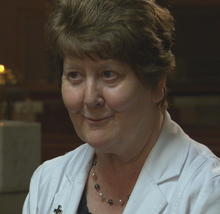
Sr. Liz Murphy  - offered a blunt perspective on the padre crimes in the RC Church and that they are "systemic" and "a virus".

Pope Francis' visit to Ireland this weekend is bound to be fraught with controversy and more than a little rebellion, not only from the "faithful" but also from Ireland's resident ex-Catholics. Both might be said to form a de facto coalition as opponents of the RC Church's presumed absolute moral authority, i.e.  now that the rats inside have been exposed. See e.g.
'Say Nope to the Pope': Irish group snaps up papal mass tickets with ...

 This will also call for a moment of truth and considered moral salience.  In the case of the latter, how important really is morality- especially sexual -  if its values are disrespected and ignored by the clergy?  As we learned in the main story in The Financial Times this morning. the Irish PM Leo Varadkar has "called on Francis to use his power to ensure justice for those who were seriously mistreated" in the wave of clerical sex abuse.  But the use of such power would mean the pontiff recognizes how the widespread sex abuse crimes have delimited his church's moral authority.  This is the truth he will need to appreciate before he can decide on the "power to ensure justice".

 Leaving aside that this will be the first visit by a pope to the Emerald Isle since John Paul II in 1979 — let's grasp the vastly more ominous  pall cast over this  trip. Namely, that it will remind millions of the church’s long history of protecting pedophile priests. In Ireland's case the most notorious padre predator - maybe the poster boy for all such vermin  - is the Rev. Eugene Greene, who served nine years in prison for raping and molesting 26 boys between 1965 and 1982  It is cases like this that enrage many Irish faithful - and even no longer faithful -  who insist the vile deeds exposed make it incumbent on Francis to give them not just words, but action.

That is true not only in Ireland, but also in the United States, where last week a grand jury in Pennsylvania released a sweeping report that the church had covered up the abuse of more than 1,000 minors by some 300 priests over 70 years. Francis himself acknowledged the global scale of the problem this week, when he issued a rare letter to Catholics worldwide condemning such “atrocities.”

In the Irish case, the atrocity was protecting a padre lowlife who committed his crimes with impunity, though the real figure may be far higher - perhaps in the hundreds. Who knows? Yet this year, when Pope Francis needed someone to head a neighboring diocese, he chose Bishop Philip Boyce, who had been heavily criticized for refusing to defrock Greene when the loathsome padre was under his management in the late 1990s

According to a watchdog group that monitors the Catholic Church in Ireland, 14 priests have been accused in recent years, four of whom were convicted.  This may well be but a tiny subset of the total priestly predators.

Francis himself acknowledged the global scale of the problem this week, when he issued a rare letter to Catholics worldwide condemning such “atrocities.”

But the pope offered no specific remedies, though he professed that all lay members ought to partake in efforts at change. What change? He didn't indicate but many outraged laity are now considering the draconian solution of withholding any and all money contributions, e.g. collected at Masses. As one put it: "We don't even know where this money goes?"

 Incredibly, Francis also laid much of the blame for the sex abuse crisis on "excessive deference to the church' hierarchy."   In other words, laying the blame on the "faithful" for being too respectful and gullible of padres' (and bishops')  moral authority. But I've always made it clear - especially since the sex abuse crisis first erupted- that this moral authority has always been tentative and dependent - never absolute.  In fact, we now know papal "infallibility" is itself a myth, a fable - passed on to the gullible to confer some special moral order on the papacy which it doesn't merit.  To fix ideas we can turn to Hans Kung who writes on p. 143 of his book Infallible?

"No one, neither Vatican 1 or Vatican II, nor the textbook theologians, has shown that the Church - its leadership or its theology - is able to put forward propositions which inherently cannot be erroneous."

In other words, NO pope can make error- free pronouncements.   What this means is that if  RC followers take Kung's words to heart - and they should-   then the Vatican has forfeited any moral credibility. More importantly,  to the vast constellation of outside observers-   such forfeiture applies  especially to its catalog of "sexual transgressions", e.g. artificial birth control,  masturbation, etc. In other words, the "pelvic crimes"-   in the words of one priest Ethics professor I knew at Loyola.

Without that moral credibility - and authority -  i.e.  to pass judgments on moral issues ranging from artificial contraception, to abortion, to masturbation, to homosexuality - the Catholic church emerges as an anachronism out of touch and out of its moral depth.  This is the new moral perspective which needs to be endorsed by Catholics themselves, as opposed to showing "deference" to its moral pronouncements. If Francis is demanding the laity step up and cease to be deferential then this is arguably the best way to show it. Give him 180 degrees opposite!  

Meanwhile, one Irish nun, Sister Liz Murphy - was outspoken three days ago on CBS Early Show when confronting another pie-eyed padre  (Cardinal Blase Cupich)   who tried to minimize the magnitude of change needed in this anachronistic church, by first insisting any significant changes "will lead to chaos".  Cupich further claimed that a "series of reforms adopted in 2002 have dramatically reduced abuse cases in the church".  To which I'd reply, 'Total balderdash!'   That's an egregious guess since we really don't know how many parishes are still hiding or shuttling off these predators.  Past is prologue,  after all, and there haven't been any systematic changes to negate or even abate this  continuing evil. 

Sister Murphy, who leads one of the largest religious organizations in Ireland, wasn't having any of it and replied:

"This is a really dark time a darkness within the darkness. I think there's much more needed than just naming individuals".

Adding:

"This is a virus and this is not going to be healed over these coming days. TO expect the pope to come up with the strategic plan for the Catholic Church over the weekend is quite daft."

Many Irish say they are waiting not only for recognition of their suffering, but also for Francis to announce concrete measures to combat and punish such abuses.  Well, they will have a long, long wait! It is obvious the abuses won't end until Catholics themselves attain the mental maturity to depend on their own moral consciences as opposed to relying on degraded, deformed and error -prone intermediaries (and fossils)  in robes.  That will be their moment of moral truth!

See also:

Tuesday, September 6, 2016

The "Mother Teresa" Hype Knows No Bounds - And Catholics Have Another Fake Saint


Dr. Aroup Chatterjee insists Teresa's claimed wonder works have been oversold to a gullible world.

 Roman Catholics now profess to have a new member added to their pantheon of sainthood.  Mother Teresa, aka, Agnes Gonxhe Bojaxhiu,  was officially declared "St. Teresa of Kolkata" on Sept. 3rd,  by Pope Francis. However, there are those- including me - who call into question this entire Vatican dog and pony show and the ongoing agenda to name new "saints" to take the minds of the faithful off past priest abuse.

Years earlier,  atheist Christopher Hitchens, in his book "Hell's Angel",  had excoriated Bojaxhu as  "a lying, thieving Albanian dwarf”  and taking donations from dictators.  Such charges were, of course, denied by the RC Church though it had a much more difficult time denying she received largesse from the sleaze bag behind the infamous Saving and Loan scandal, Charles Keating. See e.g.

https://howgoodisthat.wordpress.com/2008/07/13/charles-keating-gave-other-peoples-money-to-mother-teresa/

And:

http://www.slate.com/articles/news_and_politics/fighting_words/2003/10/mommie_dearest.html

Bruno Maddox, in a review for the New York Times,  described how Hitchens had concluded that Mother Teresa was “less interested in helping the poor than in using them as an indefatigable source of wretchedness on which to fuel the expansion of her fundamentalist Roman Catholic beliefs.”

More to the point, Hitchens' work wasn't totally original but depended heavily on the account of Dr. Aroup Chatterjee.  Chatterjee, an Indian-born British writer, had worked for a year as an intern in one of Teresa’s charitable homes, and documented a catalogue of criticisms against her. In summary, he found fault with the conditions in the facilities of her Missionaries of Charity in Kolkata, which one journalist compared to the photographs she had seen of Nazi Germany’s Bergen-Belsen concentration camp.

Quoted in a NY Times Profile piece (Aug. 27), Dr. Chatterjee asserted:

"I never saw any nuns in those slums that I worked in. I think it's an imperialist venture of the Catholic Church against an Eastern population, an Eastern city , which has really driven horses and carriages through our prestige and honor.  I just thought this myth had to be challenged."

But was it really a myth, or more a branding exercise? One could make the strong argument it was all about the latter. Indeed, as Douglas Roberts writes in yesterday's UK Independent:

"With everything happening in the world, why is this particular person getting so much posthumous airtime? The Catholic Church, after all,  does not enjoy the same access to our political system as the Church of England, so what is the relevance here? Well, it's quite simple really if Mother Teresa was a celebrity, with a very well-managed brand."

In other words, Bojaxhu like Trump had succeeded in creating and catering to a brand, only this case, a religious brand - that of "serving the wretched of the Earth". Those donations from dictators and the likes of Charles Keating subsidized her misshapen brand much like Trump's numerous bankruptcies subsidized his.  There is a parallel to behold if one makes the effort.

Note the  "Mother Teresa" brand also conveys power, and likely much more than Trump can wield. Teresa-Bojaxhu expostulated often against both birth control and abortion.  This is especially odd in the first case, given how the dire misery and destitution for which she claimed a ministry can be directly traced to overpopulation.  Hence, the claim by many skeptics that she loved poverty, not the poor. See also:

http://brane-space.blogspot.com/2015/04/earth-day-alert-biggest-problem-remains.html

Getting back to Dr. Chatterjee, he subsequently traveled the world meeting with volunteers, nuns and authors -researchers who were familiar with the Missionaries of Charity. He conducted over a hundred interviews and heard volunteers describe how workers with very limited medical training administered 10 to 20-year old medicines to patients - while "primitive facilities forced patients to defecate in front of each other" and  "blankets stained with feces were washed in the same sink used to clean dishes."

How could the practices then be anything other than disease -producing? It would have been like a Potemkin care center where hundreds of sick came in, got cursory attention then got sicker - as they also made other patients ill from contact with their bodily effluent (from blankets etc. never properly sanitized the first time).  In other words, Teresa-Bojaxhu  presided over a whole monopoly of sickness and misery  - but used the meticulously cultivated care façade to garner attention and push her zealous moral agenda.

Let's also register that the British medical journal the Lancet published a critical account of the care in Teresa’s facilities in 1994. Then an academic Canadian study a couple of years ago found fault with “her rather dubious way of caring for the sick, her questionable political contacts, her suspicious management of the enormous sums of money she received, and her overly dogmatic views regarding, in particular, abortion, contraception, and divorce.” Multiple accounts say that Teresa’s nuns would baptize the dying and that she had a reputation for proselytizing. Dr.Chatterjee  published his own extremely critical book on Teresa in 2003 which documented a "cult of suffering"  with children "tied to beds and little to comfort patients but aspirin".

But never mind, Teresa-Bojaxhu  and her accomodationists kept the brand going with inflated stories of the success of her care for Calcutta's destitute.  But Dr. Chatterjee's take, in the NY Times piece, is that her "place in the Western canon was enough for some Indians to lionize her as part of an ingrained colonial mindset".

At the same time, he insists Calcuttans "do not associate her with miracles and mumbo jumbo"  just as they "don't associate her with opposition to birth control and abortion."

As for the claimed "miracles" - these appear to have no more than circumstantial support, just as in the case of those claimed for John Paul II, see e.g.

http://brane-space.blogspot.com/2011/01/sainthood-for-john-paul-ii-unbelievable.html

In Teresa-Bojaxhu's cases, the claims arose from a woman  (Monica Besra) in India whose stomach tumor disappeared and a man in Brazil with brain abscesses who awoke from a coma.

Interestingly,  both credited their dramatic recovery to prayers offered to the nun after her death in 1997.   Neither claimed any direct "hands on" intercession or in -person declarations from Teresa-Bojaxhu that they'd been cured.  In effect, acceptance of their cases as miracles is merely a permutation of the post hoc, ergo propter hoc fallacy. That is,  assuming a causal relationship from a merely sequential one. Event Y (in this case an apparent remission or cure) followed Event X (prayers offered to a nun) therefore Event Y must have been caused by Event X. Most people learn to shun such nonsense when they take Logic 101.

Also, in the case of  Monica Besra's alleged "cancer cure" the state health minister has debunked it from the claim's inception and long maintained that Besra had been suffering from a cyst, not a cancerous tumor. The doctors have said she recovered after she received tuberculosis treatment for several months at a government hospital in Balurghat. In other words, if you must attribute the cure to a miracle make sure it's the miracle of modern medical science.

All of this is even more reason why the more advanced sectors of the Roman Catholic Church would like to dispense with the miracle malarkey as well as sainthood and leave the medieval rubbish behind. But their hands are basically tied, because the demographics of the Church have altered so drastically. As the Europeans (and many North Americans) have abandoned the faith, millions in the less developed world - who put lots of emphasis on superstitions and magic - have embraced it. Since the RCs don't wish to lose population power and influence they can no more ditch the mumbo jumbo than they can the opposition to birth control.

A far more potent reason to keep the "sainthood" wheels spinning is to keep the mind of the faithful - as well as outside critics - off the horrific priest sex abuse scandals. Those scandals totally undermined the Church's moral authority and the RCs know it. However, by shifting the accent to morally authoritative squawkers like Teresa-Bojaxhu and earlier, John Paul II, the Church believes it can regain some moral credibility.  I hardly think so, but then I am no longer a Catholic having renounced the baggage of superstitious, medieval rubbish decades ago.  Thus what I think may not matter a whit to hundreds of millions of believers currently awed by the "Saint Teresa of Kolkata" spectacle.

At the same time, it is inevitable that one day the Church will have to change and it will probably come with the arrival of a truly modern Pope who will no longer be hostage to primitive thinking, beliefs and  nonsense. That awakening may take 40 years or 100, but it will happen, you can bank on it.

And what about the campaign of Dr. Chatterjee? He is adamant it will continue even as Western audiences "don't care about whether a third world city's dignity has been hampered by an Albanian nun."  And "so obviously they're more interested in the lies, the charlatans and the frauds going on". But he is intent on getting them to see the whole story, not selective parts to soothe their own wounded souls or fragmented being.  To that end, he says "I will not go away, it's as simple as that."

See also:

http://rationalwiki.org/wiki/Mother_Teresa

Excerpt:

"Mother Teresa was not a friend of the poor. She was a friend of poverty. She said that suffering was a gift from God. She spent her life opposing the only known cure for poverty, which is the empowerment of women and the emancipation of them from a livestock version of compulsory reproduction. (...) Many more people are poor and sick because of the life of Mother Teresa. Even more will be poor and sick if her example is followed. She was a fanatic, a fundamentalist, and a fraud, and a church that officially protects those who violate the innocent has given us another clear sign of where it truly stands on moral and ethical questions."

Sunday, March 27, 2016

'Mere Christianity': Why C.S. Lewis' Book Is Overrated

Monochrome head-and-left-shoulder photo portrait of 50-year-old Lewis
C.S. Lewis authored 'Mere  Christianity' based on BBC radio lectures.

In a recent WSJ essay by Notre Dame Emeritus Prof George M. Marsden  ('Mere Christianity Still Gets A Global Amen', Mar. 25., p. A9) we learn C.S. Lewis never planned for 'Mere Christianity' to be a book. In fact:


"During the dark days of World War II, the writer presented four sets of BBC radio talks on basic Christianity. He had these published in several paperbacks. Not until 1952 did he collect them together into the new  title".

We then learn C.S. Lewis' work has sold "more than 3.5 million copies in English" and "been translated into at least 36 languages". And oh, by the way, it's next only to the Bible in educating Chinese Christians and "is still read by thoughtful evangelicals, along with thousands of Catholics and mainline Protestants."

Why this popularity? Prof. Marsden touches on assorted possible reasons, including: "attention only to the timeless truth of Christianity and not the latest theological fashions",  avoidance of "chronological snobbery" (believing modern tenets of faith are superior to ancient ones) and a "knowledge of many areas of literature and language" as well as history.

In mastering all of the above, Lewis "acts like a guide on the journey from unbelief to faith". Yet in the same breath we're informed by Lewis himself that "becoming Christian isn't an improvement but a transformation".

Which begs the question that if becoming a Christian isn't an improvement then why would there be any impetus to go that route? Why not instead become a Buddhist, or an atheist? 

We're offered no rational answers only told by Marsden that  "not everyone will see the beauty or be persuaded".

Indeed, why would they  - the critical thinking skeptics?   Because if one reads 'Mere Christianity' between the lines as opposed to in a daze, it ought to make them realize Lewis' collection of his BBC radio talks is actually a primitive generic apologia nothing more.

For example, Lewis’ justification for Inquisitional tortures is mind-boggling and effectively renders whatever morality he espouses as useless, and indeed dangerous! In Mere Christianity he pardons the witch burners for a “mistake of fact”, i.e. in believing  that women described as witches were actually evil incarnate1. To quote one critic2:

If Lewis is willing to accept that witches do not exist, and that, while believing in them, it was right to put them to death, what other "ungodly" transgressions can we forgive as mere "mistakes of fact”?

Indeed, Lewis' expeditious moralism is enough - or should be - to convert any sentient being into a committed atheist. Because, contrary to Marsden's depictions, Lewis' debased morality is little better than that invoked by John Paul II and others to defend moving pederast priests around parishes to avoid their prosecution - and a black PR eye for the Church. After all, if JP II simply made a "mistake of fact" why hold him to account now? Heck, go on and expedite sainthood to sweep all questions from further consideration. What better way to try to get the faithful and outside critics to shut up about it and move on?

Interestingly, Lewis’ pseudo-morality would easily have been incorporated into the Third Reich’s justifications for genocide. I mean, if they really believed the Jews were “vermin” – as so much of their propaganda portrayed- why not grant the same license as Lewis grants the Inquisitors and witch hunters? . So by Lewis’ standards, revealed in 'Mere Christianity',   they’d be excused for making a “mistake of fact”.
 Inquisitors gutting, burning and carving up heretics and one lesbian (far left). Did they simply make a "mistake of fact" as C.S. Lewis proclaims in his 'Mere Christianity'?


Lewis might well reply here that the Nazis really knew better than that so their actions were inexcusable. But how do we know that there were not also more percipient Inquisitors who also knew better? Say than to believe that more than a quarter million women burned as witches did not really embody evil or have pacts with “Satan”?

Or, that the heretic caught in the Inquisition's vice grip could not really harm the Church, but by the ruling of ad extirpanda his property could be confiscated ....so why worry? The Church gets richer and it's only at the cost of one life, then another....and another.  Who was counting? (See: The Inquisition of the Middle Ages  by Henry Charles Lea.

It amounts to mere question begging.

Rather than any "beauty" or power of innate persuasion one has to conclude 'Mere Christianity' is perhaps the greatest exercise in artful question begging and moral misrepresentation the world has ever known. Thus, it's just as well when the "greatest religious literature"  was identified (in 'The Greatest Christian Book of All Time Tournament)- as Prof. Marsden notes- it was Augustine's 'Confessions' which came out "first seed", not 'Mere Christianity'. 

The Confessions, which we studied as part of our 2nd year Theology course at Loyola (1966), actually resonates with the reader as Augustine imparts his own path to what he saw as truth via his own experiences, good and bad. In the process, via those intimate disclosures,  an entire morally consistent world view unfolds with deep insights which even an atheist (as I turned out to be) can appreciate. For example, consider Augustine's magnificent foray into the basis for truth, deception  and even happiness (p. 192, Dover edition (1955) and translation by Albert Cook Outler). In the case of the latter Augustine writes:

"Why are they (men)  not happy?  Because they are so fully preoccupied with other things which do more to make them miserable than those which would make them happy, which they remember so little about. "

The universality of insight exposed here could well have been taken right out of the Dalai Lama's collection of meditations and admonitions ('Many Ways To Nirvana', 2004)  or from Buddhist philosopher Alan Watt's book, 'The Book on the Taboo Against Knowing Who You Are’.

 In regard to the general human aversion to truth, Augustine is equally percipient (ibid.):

"Why, then, does truth generate hatred, and why does the servant who preaches the truth come to be an enemy to them who also love the happy life, which is nothing else than joy in the truth - unless it be that truth is loved in such a way that those who love something else besides her wish that to be the truth which they do love. Since they are unwilling to be deceived, they are unwilling to be convinced that they are deceived.  Therefore, they hate the truth for whatever it is that they love in place of the truth. They love truth when she shines on them; and hate her when she rebukes them. And since they are not willing to be deceived, but do wish to deceive, they love truth when she reveals herself and hate her when she reveals them."

Such deep insights can only arrive by deep self-knowledge, not by a secondary imitation of enlightenment, or a synthetic derivation confected from radio talks designed as an apologia - as Lewis created.  Those who have read 'Mere Christianity' are therefore strongly advised to read Augustine's book and make the comparison.

At least enough people already have (in the Christian "Best Book Tournament") and were able to separate substance from sophistry.

1 Lewis: Mere Christianity, 14.

2 Inniss: The Secular Humanist Newsletter, (Spring, 1998), 1

Sunday, February 28, 2016

I Predict The Best Picture Oscar Goes To.......SPOTLIGHT (Minor Spoilers)

Spotlight (film) poster.jpg

"Spotlight" denotes the name of the investigative reporting unit at The Boston Globe. Newly arrived editor Marty Baron (from The Miami Herald) is briefed by Spotlight editor Walter
Robby' Robinson (Michael Keaton) on its warp and woof, in which a given investigation can take 6 months. The critical thing is it be done properly. Well, it's left to the new guy (played by Lev Schreiber), to use a past Globe column as a basis to push the team to look more deeply into the possible coverup of priest sexual abuse in the Archdiocese of Boston.

The bulk of the film follows the Spotlight team of 4 as they dig into the assorted personae and document trail,  tracing back to a lawyer (Mitchell Garabedian) who claimed in an earlier Globe article that Cardinal Law (the Archbishop of Boston) knew that a priest John Geoghan was sexually abusing children and did nothing to stop him.

The suspense in the film is embodied in virtually every scene where roadblock after roadblock is thrown up -  both by Garabedian and Boston's powerful RC Church whose tentacles reach into almost every nook and cranny of the city. But ultimately, it is the victims themselves who are encouraged to finally come forward and lead to the public release of files that break the case open.

For anyone who recalls that investigation and the ones that followed, exposing priest pederasts in hundreds of locations in the U.S. and overseas, it should be a slam dunk that this is the stuff of 'Best Picture' mettle.  It is a serious film about a serious subject that still has left tectonic shifts in the Church itself and in particular undermined its moral authority, especially on sexual issues.

After all, it was only somewhat later that Marty Baron's objective paid off, i.e.  to show the abuse was part of a derelict,  cynical system that was also morally blind. The mandate to hide and shift pedophile priests  from parish to parish extended all the way to the Vatican and the Office of the supreme "inquisitor" (head of the Congregation for the Doctrine of the Faith - the modern name for the Inquisition) Cardinal Joseph Ratzinger - who in turn was following orders from John Paul II.  Most of us at the time perceived  the changes in rules for canonization were done to cast a more "saintly" light on John Paul II and take attention away from the still metastasizing Church sex scandal.

Anyway, one hopes Oscar attention to the movie will spur many more to see it, as I did last night. This is not to take anything away from the other contenders, including "The Revenant" and "The Big Short" but to me, Spotlight ought to be the clear Best Picture winner.  Still, "The Big Short" must be at least a powerful dark horse contender given its light shed on the financial crisis. (Though a number of reviews in the financial media, e.g. the WSJ, panned it for being "too cartoonish". Noting you shouldn't need or use a woman in a bubble bath to explain credit default swaps.)

Amazingly, the much better picture ("99 Homes" )  dealing with the credit meltdown in depth, never got an Oscar nod and did poorly at the box office, with barely a $1.8 m take.  I have to believe the main reason may have been the choice of title. It is incredible how a few words - say in a header or title - can make a huge difference on whether people train eyeballs on it or ignore it.

Lastly, if DiCaprio doesn't win Best Actor for Revenant than surely Brian Cranston will for his role as commie-blackballed screenwriter Dalton Trumbo in 'Trumbo'.  (I was actually amazed the film wasn't also an Oscar Best Picture nominee given all its homage to courageous Hollywood actors that stood up to the 1940s-50s commie witch hunts.) But maybe after last year's win for 'Birdman' the Academy felt one such winner was enough in a two year span.

It's a shame that the "#Oscarssowhite" meme has crept in to challenge the level of diversity of this year's Academy Awards, but hey - what would you expect for a nominating bunch (Academy of Motion Picture Arts & Sciences) that is more than 60 percent composed of old white men over 65?  At least the Academy has taken steps to improve the membership proportions but until all the old white actors, members croak don't look for much.

In the meantime, the host - Chris Rock - should provide some interesting and even suspenseful moments as he draws attention to any deficits.