
In the most recent Population Connection issue
we learn some important facts especially given the barrage of hysteria
concerning the need to expand fertility – especially in the U.S. e.g.
– mostly pumped by clueless politicos. Or lamebrains like Elon Musk who has predicted “catastrophic population collapse.” But all such hand wringing focuses on the wrong issue or index. Typically, warnings about falling fertility in the U.S. case focus on the old-age dependency ratio — the number of retirees relative to the economically active population. In countries where fertility decline started earliest the McKinsey Global Institute (MGI) estimates that the ratio of people over 65 to working-age individuals (aged 15–64) will rise from around one-quarter today to one-half by 2050. In the U.S. the worry is that there will be insufficient active workers to support the elders receiving Social Security and Medicare.
But this assumes that retirement ages remain fixed despite rising life expectancy, thereby conflating two distinct demographic trends: falling fertility and increasing longevity. You'd think a billionaire genius like Elon Musk would get this but they don't.
Second, the standard fertility template ignores the fact that children
are also dependents, which means lower fertility reduces child dependency even
as old-age dependency rises. Politicians - especially on the Right - forget or dismiss that side of the equation. They call for “more babies” but fail to recognize that if birth rates do increase, the total dependency ratio will rise
even faster than before until those children enter the workforce two decades
later.
The major bugbear and fear throughout is spreading inequality, which will surely increase among the elderly worldwide if social support systems - like Medicare and Social Security in the U.S.- are cut. (Which the GOOPs are already planning to do to extend and enhance their abominable 'big beautiful bill' which has already taken a wood chipper to Medicaid and Obamacare.
So the GOP and Trump are quite content to increase the misery index as Paul Krugman recently stated in a podcast.
And will do more damage to social support programs if they manage to get control of government again. But let's get back to whether and how inequality relates to fertility - population increase. Let's assume the GOP degrading factor to add economic misery is eliminated by 2028, then we ask: Can population decline reduce inequality?
Recall Thomas Piketty’s 2013 book, Capital in the Twenty-First Century, showed that wealth-to-income (W/Y) ratios have increased sharply across most of the world’s developed economies over the past 70 years,
Piketty,
Capital, Soaring Stock Markets and Why Americans Aren't Rioting in the Streets
Piketty noted the innate tendency for capital to
increase encapsulated by the shorthand, r > g
with r the long run returns on capital and g is the rate of economic growth.
Basically, it shows the "past devours the future". This is
highlighted by the fact that the heirs of the fatcats pay zero
capital gains taxes on their stocks or other assets. Americans aren't yet into torches and riots because they firmly believe one day they will join the 'upper crust'.
But here's the kicker: Because wealth is distributed far more unequally than income, and because it is inherited, this trend undermines social mobility. Without higher taxes on wealth or inheritance, Piketty argues, W/Y ratios will continue to rise. But the chances of higher taxes on wealth or inheritance are slim to none so long as the Reeps are in power- so how can the equation be made more favorable for those caught in the economic undertow fed by Trump's follies?
It turns out Pikettey's analysis assumes that the annual increase in total wealth equals the savings rate multiplied by total income. In other words, wealth comes from household savings, which implies that the W/Y ratio depends on the savings rate relative to the economy’s growth rate. By reducing GDP growth, then, declining fertility would boost the W/Y ratio.
But hold strain. Piketty’s own data also show that most of the increase in the W/Y ratio is the result of housing prices rising faster than average earnings, driven by competition for limited supply in desirable locations. This implies that, contrary to Piketty’s prediction, population decline would actually slow the rise in W/Y ratios. In other words, inequality could be reduced.
Not only would a slower or falling W/Y ratio benefit those without access to inheritance or the “bank of mom and dad”, i.e. as a path to homeownership. But population decline will also reduce income inequality, benefiting lower-income groups. Let's also bear in mind, as the recent issue of Population Connection notes(p.22)
"Historically, slow population growth — or outright decline —
has tended to benefit workers and disadvantage capital owners. In his 2017
book, The Great Leveler, the Stanford University economic historian
Walter Scheidel notes that the collapse in Europe’s population after the Black
Death of 1348 drove up real wages and cut landowners’ rents. A 2020 study
suggests that these wage increases also spurred innovation, putting northwest
Europe on a path to sustained improvements in living standards."
And maybe the best part of all? A shrinking population would
also enhance human welfare by reducing the burden on natural systems and
resources, especially water. What’s not
to like?
See Also:
Clutter, Capitalism and Inequality: Why So Many Uncaring 'Muricans ?
And:
by Robert Reich | May 23, 2025 - 5:35am | permalink
— from Robert Reich's Substack
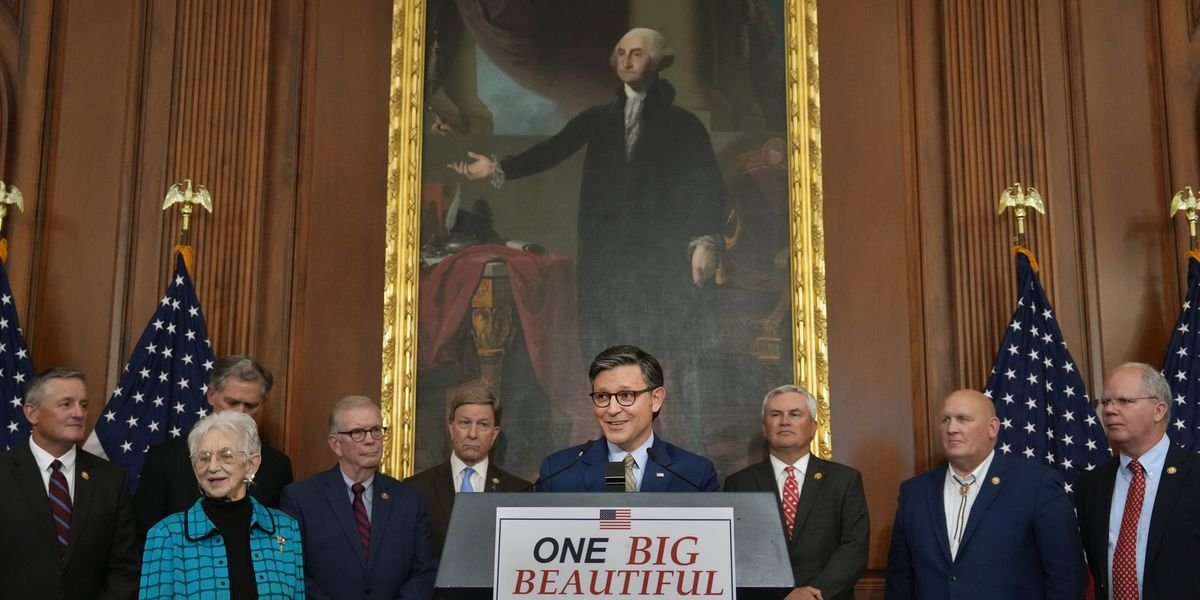
The old professor in me thinks the best way to convey to you how utterly awful the so-called “one big beautiful bill” passed by the House last night actually is would be to give you this short 10-question exam. (Answers are in parenthesis but first try to answer without looking at them.)
1. Does the House’s “one big beautiful bill” cut Medicare? (Answer: Yes, by an estimated $500 billion.)
2. Because the bill cuts Medicaid, how many Americans are expected to lose Medicaid coverage? (At least 8.6 million.)
3. Will the tax cut in the bill benefit the rich or the poor or everyone?(Overwhelmingly, the rich.)
4. How much will the top 0.1% of earners stand to gain from it? (Nearly $390,000 per year).
And:
And:
And:
by Thom Hartmann | December 30, 2025 - 6:18am | permalink
Lower Living Standards For Generations To Come? Thank Global Monetary Policy

No comments:
Post a Comment