
"When Mr. Trump leaves us in three years (if in fact he does), what will things be like? I doubt we will fully return to anything like the pre-Trump days, but my hope is we can emerge from this darkness. Will a glowering JD Vance or the ever-snarling Stephen Miller continue on this course? Will the previously reasonable Marco Rubio take power? Or will a Democrat return our country to us? We never knew how good we had it, did we?"- NY Times Letter writer, Jan. 10
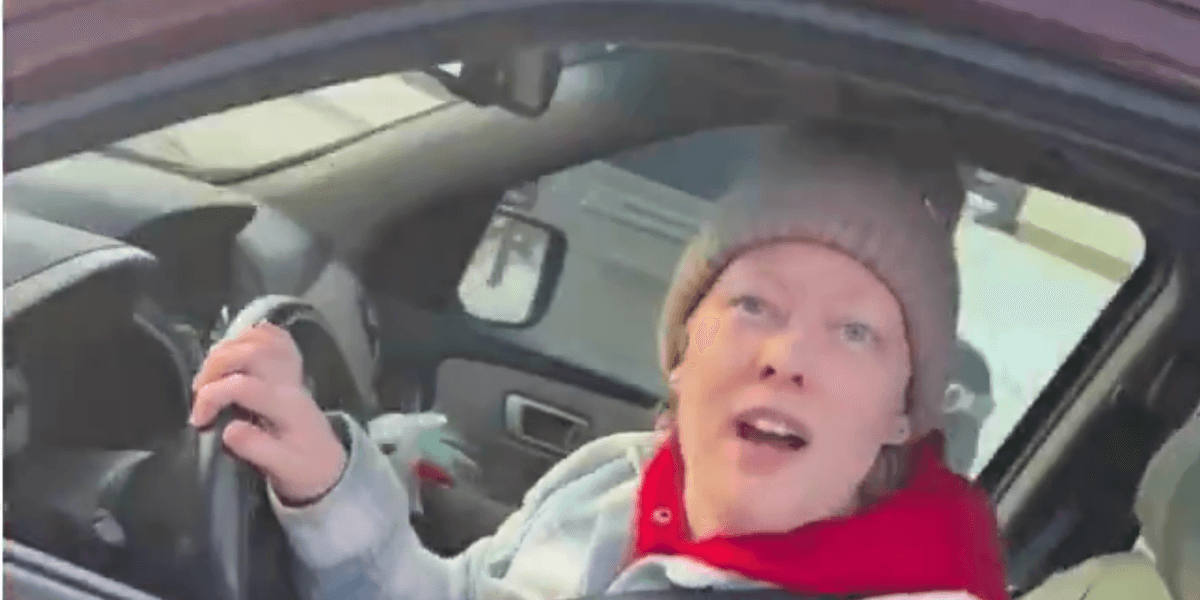
No, we didn't know how good we had it. Not until lies and deceit became normalized, so that now almost half the bedazzled, lied to (and believer) nation (exposed to FOX News propaganda) still think Renee Good was a "domestic terrorist" who got her lawful comeuppance. Not to mention the 40% who still believe the Jan. 6 traitors were just "patriots' exercising their free speech rights when suddenly set upon by D.C.-Capitol police this according to a new White House Website just put up - to spread the lies that Trump as right all along and he and his traitors were really victims of a state intending to subvert their will.
What happened? We (and much of the media, e.g. CBS) let lies triumph. We let FOX News propaganda become normalized as it sucked in the brains and attention of the already cognitively limited portion of the populace. The lot that never studied history and likely can't name three of the rights enumerated in the Bill of Rights.
All of which now has occupied center stage in the ongoing controversy of our attention. Including whether attention spans have now regressed to that for a gnat, i.e. stamped out in a recent NYT piece, "The Multimillion Dollar Battle for Your Attention Is Built On A Lie" ( Jan.9). How so? What lie? When I put the questions to ChatGPT the following answer was received:
"The 'multimillion dollar battle for human attention' is built on the lie that humans have a declining or very short
attention span, often cited as being shorter than that of a goldfish
In reality, human attention spans are not inherently
shrinking; people are capable of focusing intently on content that they find
engaging and substantial. The "lie" serves the agenda of the
attention economy, which monetizes human focus and incentivizes platforms to
employ persuasive, often manipulative, techniques to maximize engagement and
advertising revenue."
Okay, so accepting the essence of that response, the clear issue for discussion becomes conscious discrimination applied to the information, stimuli one is confronted with any given day, or hour, or minute. When I tasked my Psychology professor niece Shayl how this couples with the NY Times' notion of "attensity" (referred to in the piece) she replied:
"Because their use of attensity calls for conscious control and regulation of information inputs. Basically, what they're saying is that most brains today are indiscriminate gobblers of information, good and bad - much of the time bad. And this calls for all of us being 'sentries' as it were at the gates of our minds to ensure what we allow in isn't toxic or misleading garbage."
Or as the Times article puts it:
"We must orient ourselves toward that vision of control. Defeating the forces that frack human beings in order to extract the financial value of their attention is going to require a broad movement: parent activism, new legislation and regulation, novel forms of consciousness raising and collective resistance. It is going to demand fresh civic commitments as well as personal dedication. Call it attention activism or even, as we have come to think of it, a new politics of “attensity.”
When I did some digging in recent WSJ articles I'd saved, I found one in fact, that meshed with Shayl's answer. It came from the Jan. 3-4 Journal and was entitled: 'Your Key Survival Skill For 2026: Critical Ignoring', by Christopher Mims. As the author succinctly puts it:
"It's up to us as individuals to stop ingesting the pink slime of AI slop, the forever chemicals of outrage bait and the microplastics of misinformation for profit. In an age in which information on the internet is so abundant and low quality that it's essentially noise, job number one is to fight our evolutionary instinct to absorb all available information and instead filter out unreliable sources and bad data."
Or in Shayl's parlance: Act as sentries to the gates of our minds. But can we do that? Can we apply what Mims refers to as "critical ignoring"? Which is a term coined by Sam Wineburg in 2021, which he quotes to Mims thusly:
"It's not total ignoring. It's ignoring after you checked out ,some initial signals. We can think of it as constant vigilance over our own vulnerability"
And never has this vigilance been more crucial than in this era of Trump 2.0 when the orange fungal parasite bombards the nation with about ten megabytes of sewage per second out of his depraved brain and Trash Social sewer.
Case in point for exercising critical ignoring: Trump was recently asked in a New York Times interview if there were any limits on his global powers. He responded, “My own morality.”
But there is the giveaway, the signal to ignore if you will. Because the man manifestly lacks any morality. This statement is coming from the traitor who stoked the big lie about the 2020 election and incited his mob to attack the Capitol. Then denied it, and to add moral insult to injury, pardoned all the traitors who carried out his depredations. All this before having 34 felony convictions laid on his orange ass prior to the 2024 election.
And yet 77 million Americans still chose to put this criminal and traitor back in power even after he repeatedly broadcast his intentions and vows for retribution.
Yet another example, the horrific murder of Renee Good in cold blood in Minneapolis by an ICE goon. But still nearly half the country (mostly FOX watchers) believed the DHS twaddle that she was a "leftist agitator" instead of their own eyes and ears.
Attention deficits? No, more like critical ignoring absence. Too many lacked both the will and the common sense to grasp everything Trump told them during the '24 campaign was horse shit, including that he'd stop inflation as well as the Ukraine war "on the first day". Ditto with ignoring the brazen lies of Trump's DHS apparatchiks that Renee Good brought on her own slaying by "interfering" with an ICE agent.
This leads to a particular paragraph in the NY Times piece on attention which stuck out to me:
"The implications are vast and troubling: Kids can’t read, students can’t think and rates of mental illness are spiking. By some accounts, this phenomenon is endangering democracy itself."
Mims in his WSJ piece points out the heart of the issue:
"Social media already trained us to rely on fluency, coherence and social endorsement as proxies for credibility."
But of course they can't be, and neither can the sarcasm and catchy humor which often accompanies Greg Gutfield's spiels on FOX. These don't serve so much as proxies for credibility as distractors from it, or rather triggers to discard critical ignoring.
How so? As Shayl puts it, Gutfield's unique blend of conservative satire, sarcasm, self-deprecation - often delivered with an ironic, humorous tone - bids us not to take his subject seriously - but to take him seriously. This then translates to a win for the propagandizers and Trump echo chamber.
So yeah, the art of critical ignoring matters, as does the converse art of knowing not to discard it in favor of gaslighting and propaganda.
Attensity? Yes. We need it, but before we arrive there we need people to appreciate the importance of critical thinking itself in reaching that enlightened state which yes, may help to save U.S. democracy. If it's not too late already.
See Also:
by Crystal Coache | January 14, 2026 - 6:30am | permalink

None of us should have to watch videos of our fellow citizens and neighbors being killed to get factual information about what happened. Yet the way President Donald Trump and Kristi Noem, the secretary of Homeland Security, described the moment an Immigration and Customs Enforcement agent shot and killed a 37-year-old mom and American citizen in broad daylight was so blatantly far off from what happened that I fear we will need to keep seeing for ourselves.
I never watch videos of people being killed on purpose. Yet, I clicked on a video of a woman in Minnesota in her SUV who seemed to be in a heated verbal exchange with an ICE agent. I saw her try to pull away from an agent who was reaching into her car, only to be shot at close range as she was trying to leave. It happened so quickly I hoped that she got away and the bullet did not hit her, but my hopes gave way to a nauseating pit in my stomach as her car veered off and hit a pole, the way one does when a driver falls asleep. Only, I knew she didn’t fall asleep because moments earlier, I saw an angry man in ICE uniform shoot at her. Her name was Renee Nicole Good, and she was an award-winning poet, wife, and mom of three, her youngest child only 6 years old.
And:
by Mitchell Zimmerman | January 16, 2026 - 5:47am | permalink
Three images taken from videos of the slaying of Renee Nicole Good make it clear that she was not trying to run down an Immigration and Customs Enforcement agent when he shot her three times and killed her.
Videos taken by different people from various angles (see CNN, ABC, and the New York Times) show what happened, including one in slow motion.
We see ICE agents apparently attempting to force Good out of her vehicle, Good backing up, then Good trying escape by turning the wheels to the right and driving forward. And we see ICE agent Jonathan Ross firing a first shot at Good from near the front of the car, then firing two more shots from alongside the car.
Common sense tells us that ICE shooter Ross never considered himself in danger of being run over, since he deliberately stepped in front of the car.
And:
3 Steps to Fix Your Attention Span - The New York Times
Excerpt:
Attention is a learned habit, said Daniel Smilek, a
professor of cognitive neuroscience at the University of Waterloo in Ontario.
And just as short-form content and endless scrolling can condition
your brain to chase novelty, you can also build routines to reclaim your focus.
Step 1: Do an attention audit
In general, people underestimate how much they use their
phones and how often their minds wander, Dr. Smilek said. But spotting these
little detours can blunt their impact and make them easier to defend against,
he added.
Next time you start a task, keep a tally of every time your
attention slips, whether your mind is wandering or there’s an external
distraction — including what exactly distracted you.
Also try mapping out your attentional
rhythm — the natural peaks and valleys of focus — by checking in with
yourself every hour and reflecting on how well you have been focusing,
suggested Gloria Mark, a professor of informatics at the University of
California, Irvine.
See if you can keep this audit going for a full day, added
Jay Olson, a postdoctoral fellow in psychology at the University of Toronto.
And if that feels manageable, repeat it for a few more days, ideally a full
week.
By the end, you’ll have a rough count of how often you tend
to drift, a short list of usual culprits and a sense of when your focus is
strongest.
Step 2: Reduce distractions
There’s no shortage of advice around protecting your focus.
You can try using
a flip phone, quitting
social media or changing
your screen to gray scale. But if you find these tactics unappealing or
hard to sustain, making smaller changes — to your relationship with your phone
and the way you approach tasks — may be more effective than any dramatic reset,
Dr. Olson said.
And:
And:
by Thom Hartmann | January 13, 2026 - 5:59am | permalink

This past week, Donald Trump demanded that the Pentagon produce an invasion plan for Greenland, an action that would have world-changing consequences to the benefit of Putin and the detriment of Europe, democracy, and America. He followed that by suggesting that Marco Rubio should be the next president of Cuba, the same way Putin had promised his generals and oligarchs that they could have Ukraine.
Step-by-step it appears that Donald Trump is trying to turn America into Russia. We saw the latest and most gruesome example this weekend as Kristi Noem — who shot her puppy in the face and then bragged about it — went on national TV to defend Jonathan Ross shooting Nicole Good in the face for being a “fuckin’ bitch.”

No comments:
Post a Comment