Showing posts with label Laure Resplandy. Show all posts

Wednesday, August 19, 2020

The Primary Culprit Spreading Cholera In The Era Of Accelerated Global Warming

Cyclops.jpgImage result for Rita Colwell
Cyclops - the plankton that spreads cholera, and Dr. Rita Colwell, who developed the "cholera paradigm" based on the disease existing in the natural environment.

As Dr. Rita Colwell writes in her summary to her 1996 paper:

https://science.sciencemag.org/content/sci/274/5295/2025.full.pdf


"Vibrio cholerae, a marine vibrio, requiring salt for growth, enters into a dormant, viable but nonculturable stage when conditions are unfavorable for growth and reproduction. The association of Vibrio cholerae with plankton, notably copepods, provides further evidence for the environmental origin of cholera, as well as an explanation for the sporadic and erratic occurrence of cholera epidemics. On a global scale, cholera epidemics can now be related to climate and climatic events, such as El NiƱo, as well as the global distribution of the plankton host.."

This paper ('Global Climate and infectious Disease: The Cholera Paradigm') was a blockbuster revelation in 1996, given the warp and woof of the academic research community still wanted to see the disease as a medical problem - something like smallpox.  This as opposed to something existing in the natural environment and spread by natural, water-borne hosts - the copepods - of which the Cyclops plankton is one example (see top image).  So little wonder it took decades for Dr. Colwell's insights to enter the mainstream.

We know now, thanks to Dr. Colwell's work, there is indeed a "cholera paradigm" at work in spreading the disease and we need to be aware of how climate disruptions are facilitating the spread.  This is especially relevant now as much of her recent research has focused on the role of climate change on vibrio cholerae, the bacterium that causes cholera.

Indeed, this work is even more critical now than in 1996 given the degree to which the planet has gotten much warmer and the CO2 concentration now over 415 ppm.   To fix ideas, a year ago Laure Resplandy , a geoscientist at Princeton University led a startling study published  in the journal Nature  observing:

"If you look at the IPCC 1.5C, there are big challenges ahead to keep those targets, and our study suggests it's even harder because we close the window for those lower pathways. A warmer ocean will hold less oxygen, and that has implications for marine ecosystems.  There is also sea level, if you warm the ocean more you will have more thermal expansion and therefore more sea level rise."
The critical element is the fact that as waters get warmer they release more carbon dioxide and oxygen into the air.  The former then reinforces the existing positive feedback mechanics,

In a 2016 study of the North Atlantic and the North Sea over the past half century, Dr. Colwell found that warming sea temperatures appeared to have multiplied vibrio bacteria and escalated cholera outbreaks.  According to her (WSJ, Aug. 14-15, p. C2):

"We documented the first demonstration of increased infection related to climate change."

The prime takeaway?  The disease seems to be spreading north as the more temperate regions also endure more intense warming, including of the oceans.  All of which is also consistent with a Bulletin Of The Atomic Scientists' warning that the existing climate models are understating the warming trends, e.g.

Climate report understates threat
C
i
proes
to
understanding
the
disease.

Excerpt:

"So far, average temperatures have risen by one degree Celsius. Adding 50 percent more warming to reach 1.5 degrees won’t simply increase impacts by the same percentage—bad as that would be. Instead, it risks setting up feedbacks that could fall like dangerous dominos, fundamentally destabilizing the planet. This is analyzed in a recent study showing that the window to prevent runaway climate change and a “hot house” super-heated planet is closing much faster than previously understood."


The sobering realization from the cholera paradigm is that anywhere on Earth near warming oceans is subject to cholera outbreaks. It isn't just a matter of poor hygiene, but rather of knowing the presence of infected copepods means filtration of water is essential.  This is something the island nations of the Caribbean need to be cognizant of as well.

Tuesday, March 26, 2019

Intensifying Climate Disruption & Ocean Anomalies - Will Big Business Soon Come To The Table?

No photo description available.

Even as the "Green New Deal" continues to be hotly debated - with conservatives (at CPAC) yelping the "Greens" plan to take their burgers away - ominous new falling temperature records signal we may be even closer to the runaway greenhouse.  To fix ideas, this would mean an unstoppable climate forcing dynamic from which neither Earth - nor its human inhabitants - would ever return. We are talking about a process leading to another Venus.  The question that often comes up - especially in the financial media - is whether big business is planning to do much of anything about it. So far the only businesses  we know that are taking climate change totally serious - think of actions not just words - are the re-insurance companies like Munich Re.

The graphic above - from The Wall Street Journal- basically tells the whole tale, at least in terms of the temperature anomalies now recorded,  especially relative to the 1951-1980 average. To the right we can also see the annual and smoothed global surface temperature anomalies compared.   As the article reports:

"The past five years have been the hottest in modern records, federal scientists said....Last year was the fourth warmest year since 1890, according to the report by the National Aeronautics and Space Administration and the National Oceanic and Atmospheric Administration, which track annual climate trends."

Even more ominous (ibid.):

"The report comes after a year of extreme storms, floods and fires across the country, NASA scientists link such extreme weather to rising temperatures, saying that the warming extends fire seasons and fuels bigger storms".

And in terms of the global reach of these effects:

"During 2018 the average temperature across global land and ocean surfaces was 1.42 (0.79 C) above the 20th century average, according to NOAA's report. It noted record high temperatures across much of Europe and the Mediterranean, the Middle East and New Zealand and surrounding oceans - and across Asia, the Atlantic Ocean and the western Pacific Ocean."

In  terms of the latter perilous thresholds are also being reached, again from warmer temperatures. According to  Laure Resplandy , a geoscientist at Princeton University who led the startling study published  in the journal Nature:

"If you look at the IPCC 1.5C, there are big challenges ahead to keep those targets, and our study suggests it's even harder because we close the window for those lower pathways. A warmer ocean will hold less oxygen, and that has implications for marine ecosystems.  There is also sea level, if you warm the ocean more you will have more thermal expansion and therefore more sea level rise."

The critical element is the fact that as waters get warmer they release more carbon dioxide and oxygen into the air.  As Dr. Resplandy made clear:

"When the ocean warms, the amount of these gases that the ocean is able to hold goes down,"  

Adding:

"So what we measured was the amount lost by the oceans, and then we can calculate how much warming we need to explain that change in gases."

The additional IPCC findings help resolve a long-running puzzle about the rate of ocean warming before 2007. when more reliable measurements from devices called “Argo floats” were put to use worldwide. Before that, differing types of temperature records — and an overall lack of them — contributed to uncertainty  about how quickly the oceans were heating up.

The higher-than-expected amount of heat in the oceans means more heat is being retained within Earth’s climate system each year, rather than escaping into space. In essence, more heat in the oceans signals that global warming is more advanced than scientists thought.

As Dr. Resplandy explains:

"We thought that we got away with not a lot of warming in both the ocean and the atmosphere for the amount of CO2 that we emitted.  But we were wrong. The planet warmed more than we thought. It was hidden from us just because we didn’t sample it right. But it was there. It was in the ocean already".
Given ocean temperatures are rising more rapidly than previously calculated, that  leaves nations even less time to dramatically cut the world’s emissions of carbon dioxide. That is, assuming there is any hope in limiting global warming to the ambitious goal of 1.5 degrees Celsius (2.7 degrees Fahrenheit) above pre-industrial levels by the end of this century.  Many newer results show this is overly optimistic and neglecting other factors in play, e.g.


Climate report understates threat

Excerpt:

"So far, average temperatures have risen by one degree Celsius. Adding 50 percent more warming to reach 1.5 degrees won’t simply increase impacts by the same percentage—bad as that would be. Instead, it risks setting up feedbacks that could fall like dangerous dominos, fundamentally destabilizing the planet. This is analyzed in a recent study showing that the window to prevent runaway climate change and a “hot house” super-heated planet is closing much faster than previously understood."
In the midst of all these more recent climate developments it shouldn't be surprising that we learned some of the nation's top oil executives have issued a clarion call that companies "need to actively address climate change and technology concerns that are scaring investors away."  Denver Post, Business,  'Oil Chiefs Issue Climate Call', March 12, p. B3). Still, raising a call or having a conference, is not the same as actual action, given (ibid.):
"Shell is the only giant Western oil and gas company that has agreed to set goals to reduce emissions from the end use of its products."
True, we seem to be a long way from the Climate Deception Dossiers, e.g. 
But alas, we have a long long way to go and there may not be sufficient time to stop the climate change tide even with a Green New Deal.   For example, WSJ columnist Greg Ip has exposed the dichotomy of many businesses which profess concern about climate change, but then "fight solutions that hit their bottom line". ('Climate Change Alarms Business, To An Extent', January 17, p A2).  

The negative takeaways? Many businesses still have to be dragged kicking and screaming to become changelings. Also, "the limited efforts by the federal government under previous administrations are being dismantled by Trump's administration".  Which tells me more businesses - like coal, already on its way out - need to stand up to the Dotard.


 The positive takeaway?  "Many other businesses have concluded some sort of tax or cap and trade system is necessary".  The question remaining is whether global business finally coming to the table now will make an appreciable difference to the fate of our world - the only planet we know is habitable.  At least for humans.

Stay tuned!

Thursday, February 21, 2019

Applying Physics (And Some Math) To The Green New Deal - Why It Can't Work As Set Out


To read the financial press (WSJ, Financial Times) the last few weeks it is evident a form of hysteria has seized the assorted columnists, e.g. Holman Jenkins Jr.

Big Names Bake a Climate Pie in the Sky - WSJ

and editors (e.g. "$1, 973 LEDs and the Green New Deal', WSJ p. A14 Feb.16-17)

Some in the more reactionary enclaves of the media have even warned that if such a Green New Deal comes to pass, Americans will be left with no burgers or pork chops to eat, and will have to bike to work given all cars will ne prohibited.  Amidst this hysteria is there a way to import some sense and a scientific perspective?  I believe so, and that's the purpose of this post.

First, let's turn once more to one of the more sensible and intelligent WSJ columnists, Greg Ip ('Upside Down Economics of Green New Deal', February 14, p. A2).  Among the points noted by Mr. Ip:

- "The premise of the Green New Deal is correct. While the world may not spomntaneously combust in 10 years, global C)2 emissions need to start dropping soon, by a lot - to keep temperatures from rising more than 1.5 Celsius.

-- Because the private market has no incentive to reduce carbon emissions government intervention is necessary."

Given these two propositions are accepted by most insightful - intelligent citizens, what's the problem?  Ip again:

"Kevin Book, head of research at Clearview Energy Partners, estimates replacing 83% of the current U.S. energy generation that is not renewable with solar, wind and biomass, would cost $2.9 trillion - nearly a full year's tax revenue."

In other words, taxes would have to be raised and not just on the wealthy. Now, counterpoise these numbers with a recent U.N. report affirming that hitting the 1.5 C target would cost an average of $3.5 trillion per year through 2050.  This is nearly $1 trillion per year more than the current pledges from government.  But with such enormous demand, the bulk of the money will have to come from the private sector.  Mind you, there are already nibbles of energy efficient improvement (i.e. Walmart has installed more than 1.5 million LED light fixtures across more than 6,000 stores) but much more is needed.

Indeed, lost in the mix is just how much high quality, intense energy is actually needed to run the U.S. economy and industrial civilization overall.   Where will the energy come from to support an industrial-energy intense and consumptive civilization? You can’t just say “new non-fossil sources” and leave it at that. What new sources? Where? As Jay Hanson (www.dieoff.org) pointedly notes:

“The fact that our society can‘t survive on alternative energy should come as no surprise, because only an idiot would believe that windmills and solar panels can run bulldozers, elevators, steel mills, glass factories, electric heat, air conditioning, aircraft, automobiles, etc., AND still have enough energy left over to support a corrupt political system, armies, etc. Envision a world where freezing, starving people burn everything combustible -- everything from forests (releasing CO2; destroying topsoil and species); to garbage dumps (releasing dioxins, PCBs, and heavy metals); to people (by waging nuclear, biological, chemical, and conventional war); and you have seen the future. “

But how correct is he?

One needs to process that different kinds of energy resources have fundamentally different "qualities". For example, a BTU of oil (oil before it is burnt) is fundamentally different than a BTU of coal. Oil has a higher energy content per unit weight and burns at a higher temperature than coal. It is also easier to transport, and can be used in internal combustion engines. A diesel locomotive wastes only one-fifth the energy of a coal-powered steam engine to pull the same train. Oil's many advantages provide 1.3 to 2.45 times more economic value per kilocalorie than coal.

This means you need to factor that increase in for coal  (OR - for any combination of non-fossil fuel sources) to get the same amount of work done.

Ditto with solar. Unlike energy derived from fossil fuels, energy derived from solar power is diffuse and also extremely intermittent: it varies constantly with weather or day/night. If a large city wants to derive a significant portion of its electricity from solar power, it must build fossil-fuel-fired or nuclear-powered electricity plants to provide backup for the times when solar energy is not available. Solar power has a capacity of about 20 percent. This means that if a utility wants to install 100 megawatts of solar power, they need to install 500 megawatts of solar panels. This makes solar power a prohibitively expensive and pragmatically poor replacement for the cheap and abundant fossil fuel energy our economy depends on, especially if one intends to use it operate missile factories.

H.T. Odum's solar "eMergy" (eMbodied energy) measures all of the energy (adjusted for quality) that goes into the production of a product. Odum's calculations show that the only forms of alternative energy that can survive the exhaustion (or replacement)  of fossil fuels are:  muscle, burning biomass (wood, animal dung, or peat), hydroelectric, geothermal in volcanic areas, and some wind electrical generation. Nuclear power could be viable if one could overcome the shortage of fuel. No other alternatives (e.g., solar voltaic) produce a large enough net sej to be sustainable. In short, there is no way out.

Further, Matt Savinar (Life After the Oil Crash) has shown that NONE of the alter-sources usually cited: from methane hydrates, from coal, from geothermal hot dry rock technology, from natural gas, from oil shales and tar sands, from secondary recovery of existing oil fields, and so on- will do squat to totally replace the energy now being consumed for our entire infrastructure, from powering a military-industrial complex with umpteen bombers, and now missile defense, plus more tanks for occupations and wars, not to mention sustaining growth in industries, new computers, maintaining the electrical power grid and building new nuclear reactors.

To further fix ideas and get into the more practical realm it is useful to cite  The Physicist's Desk Reference (Table C, p. 187, Energy Generation by Type) showing the most energy-intense uses (aggressive consumption category, I) for all forms of solar, geothermal and wind are projected to total only about 9 exajoules by next year.Thus, ALL the usual "green" alternatives are projected to barely add up to a blip on the energy "radar" .(Note:  1 EJ   = (1018) joules   J)

For reference, current yearly U.S. energy consumption is 94 EJ.. To put the numbers in a harsher perspective, any serious major effort to "decarbonize" the planet will require an amount of clean energy on the order of 100 trillion kilowatt-hours per year  or 360 EJ. To reach this target even within 3 decades the world's nations would need to add 3.3 trillion more kwh of clean energy every year. Solar and wind simply cannot scale up to that level in that time, so the only remaining form of energy - apart from fossil fuels - is nuclear and at least one climate scientist (James Hansen)  has recommended such incorporation . See e.g.

http://brane-space.blogspot.com/2016/05/top-climate-scientist-advocates-nuclear.html

All told, 220 reactors are currently being built or planned worldwide, with another 324 on the drawing board.  If replacing fossil fuels is a genuine goal, these reactors can't come onstream fast enough.

Leave out nuclear and how long it will take to get to a preponderance of renewables, even using Germany's high standard of adding 0.7 trillion kwh of clean energy per year. Well, even I the most optimistic scenario it would take close to 150 years - by which time this planet would be on the verge of being another Venus.

Given this, one thing the Green New Dealers don't need is flippant or stupid comments, remarks. As Michelle Goldberg noted in a recent NY Times op-ed Ocasio-Cortez’s staff certainly "made a huge mistake by releasing a flip document about the Green New Deal  resolution saying that it will be impossible to fully get rid of farting cows and airplanes in 10 years" .  This was like a gift, providing Republicans an opening to claim that Democrats want to "ban hamburgers and air travel."

Conservo hack Michael Barone (writing in a rag called 'The Washington Examiner') actually claimed the Left - using the Green New Deal - wanted "to abandon even 20th century technology and go back to the 19th century" - including wagon trains and old style steam locomotives.

Of course,  that's nonsense but Dems must be savvy enough to grasp the Reeps and conservo nabobs will search for anything to paint the D progressive wing as commies, out of touch or nuts.  See, for example, my post from yesterday referencing a recent  WSJ  op-ed by Lance Morrow.  This preposterous  piece of twaddle inflated a number of minor progressive proposals (e.g. from the left's LGBTQ  and MeToo wings) to make it seem like progressives as a whole were planning the overthrow of Western civilization. Seriously!   

Meanwhile, Ms. Goldberg also cited. Bloomberg columnist Noah Smith who made a convincing case for a version of a Green New Deal that emphasized funding the development and export of green technologies and also included a carbon tax and carbon tariffs. The United States, after all, is responsible for only about 14 percent of current global greenhouse gas emissions.   But in a hypothetical future where America became a leader on climate, it would probably have to use economic incentives to get other CO2 spewing nations to cooperate. 

But all of this may merely be dodging the core issue: Can alternative sources of energy support this nation's energy demands in 10 or even 20 years?    The $64 question is: Can adequate alternative energy sources fill in most of the gaps, say when the last break -even oil is exhausted and only the very expensive to drill form remains? It’s all very well to speculate and ruminate that future energy needs will be met, but the question remains: HOW? When one does the math, and in particular pays attention to the 2nd law of thermodynamics (the entropy law)  and the ‘net energy equation’. At the heart of all salient considerations to replace fossil fuels - especially oil -  is the latter (cf. Physics Today, July 2004, p. 51)

Q (net) = Q (PR) – [Q (op) + E/T]

To fix ideas:  The planet was endowed with roughly  3,000 billion barrels of oil – of which we’ve consumed 1,700 billion barrels but only  300 billion barrels of relatively cheap oil remains (assuming increased deep sea floor drilling), after which 500 billion barrels of “break-even” oil remains.  Arrival at the latter phase means the EROEI (energy returned on energy invested) is close to zero. In effect, for break-even oil one would find Q(net) = 0

Thus, there is no net gain in energy given the quantity accessed is basically the same as that which must be used to obtain it.  This is what we are approaching now with shale and tar sands oil.  Here's another alarming aspect:  As that usable, higher EROEI oil is depleted how much renewable energy in the form of solar, geothermal, wind, etc. is needed to replace it to sustain our industrial society which also depends on an extensive military component?  It turns out a lot and vastly more than is currently  coming onstream - if nuclear energy is omitted.

Here's an even more sobering wake up call:   The stage is set to add 25 % MORE humans by 2050, topping off at nearly  9.5  billion.  This will necessitate - if we still plan to retain solar in the mix - converting an area the size of Europe to solar panel arrays. In addition, to feed all those hungry mouths, we will need to add an agricultural area the size of the whole continent of South America - especially given how the eating habits of Chinese and Indians have now altered to become more "American" (e.g. much more meat, like steaks, etc. - which re-acquire vastly more water and resources to produce)

The bottom line here isn't very pretty. It reads like this: Alternative energy sources - no matter how many are incorporated - will provide only a very marginal, fractional benefit unless:

a) humans majorly reduce their birth rates around the world, and

b) Our concentrated energy use society is rendered much more delocalized and diffused so that it can better adapt to the diffuse,  lower quality capacity of alternative energy sources.

I suspect neither of these will occur, meaning that as we approach the climate change critical stage, there will be literal hell to pay and no real "Green" salvation to spare us.   The most alarming recent revelation concerns the much more rapid warming of the oceans.   Laure Resplandy, a geoscientist at Princeton University who led the startling study published  in the journal Nature  noted:
"If you look at the IPCC 1.5C, there are big challenges ahead to keep those targets, and our study suggests it's even harder because we close the window for those lower pathways. A warmer ocean will hold less oxygen, and that has implications for marine ecosystems.  There is also sea level, if you warm the ocean more you will have more thermal expansion and therefore more sea level rise."
The critical element is the fact that as waters get warmer they release more carbon dioxide and oxygen into the air.  As Dr. Resplandy made clear:
"When the ocean warms, the amount of these gases that the ocean is able to hold goes down,"  

Adding:
"So what we measured was the amount lost by the oceans, and then we can calculate how much warming we need to explain that change in gases."

Lastly:

"We thought that we got away with not a lot of warming in both the ocean and the atmosphere for the amount of CO2 that we emitted.  But we were wrong. The planet warmed more than we thought. It was hidden from us just because we didn’t sample it right. But it was there. It was in the ocean already".

Given ocean temperatures are rising more rapidly than previously calculated, that  leaves nations even less time to dramatically cut the world’s emissions of carbon dioxide. That is, assuming there is any hope in limiting global warming to the ambitious goal of 1.5 degrees Celsius (2.7 degrees Fahrenheit) above pre-industrial levels by the end of this century.  Many newer results show this is overly optimistic and neglecting other factors in play, e.g.
The takeaway here?  While the Green New Deal definitely sounds promising on its face,  doing the math shows that it simply can't achieve what it claims to in the time - say 12 years.  Certainly not without massive infusions of nuclear power.  This doesn't mean doing nothing, but the humans on this planet have to understand that they are the source of most of the greenhouse gases. 

Cutting human numbers, despite what the loopy economists say (i.e. regarding the need for "more economic growth") is a major first step.  That will mean less CO2 churned out, by fewer autos and coal -fired plants, and less need to chop down more forests. It also means not allowing human numbers to reach anywhere near 9 billion in 30 years. We need, in other words, massive  birth control expansion as well as massive nuclear energy expansion. And that will be just to contain the most dire effects of a rapidly warming planet.

There are bound to be affirmative voices that the Green New Deal can work (see links below), but I'd challenge any of them to do the same physics and math and still claim the plan's objectives can be attained in the given time frame. Especially if nuclear energy is not part of the solution!

See also:


And:

Friday, November 2, 2018

New IPCC Finding Shows More Rapid Ocean Warming - And Accelerated Path To Calamity

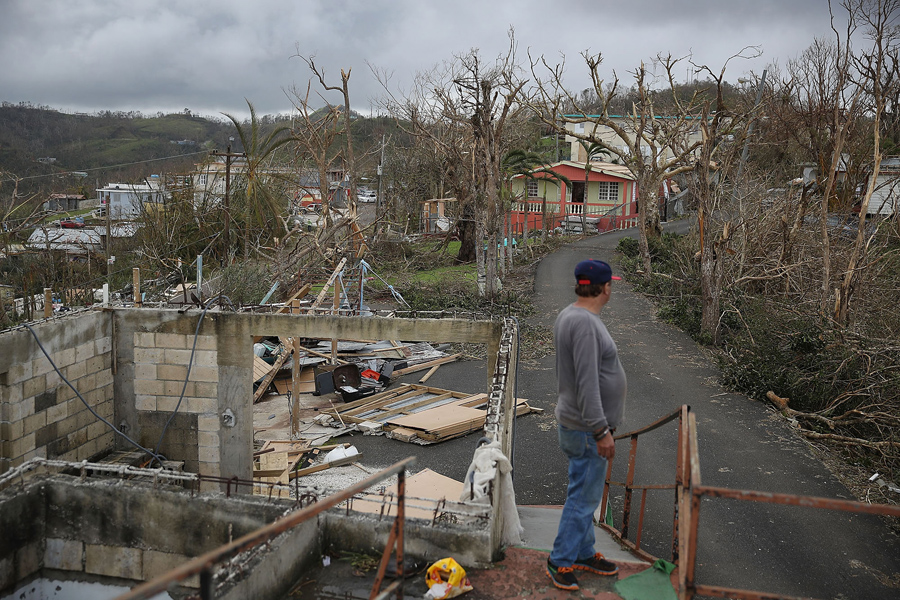
Image result for images of Puerto Rico damageDevastation in Puerto Rico following Hurricane Maria, which climate scientists agree was spawned by warmer ocean temperatures from global warming.

Even as we've learned of the world now projected in an ominous United Nations report — prepared by The Intergovernmental Panel for Climate Change, a new subsidiary report warns of warmer than ever oceans.  According to the last major assessment by the Intergovernmental Panel on Climate Change (IPCC), the world's oceans have taken up over 90% of the excess heat trapped by greenhouse gases.
This new study says that every year, for the past 25 years, we have put about 150 times the amount of energy used to generate electricity globally into the seas - 60% more than previous estimates.   This poses serious problems going forward, not the least of which is the threat to ocean life (such as corals) from warmer temperatures, e.g.
Image may contain: ocean, sky, plant, outdoor, nature and waterImage may contain: plant, sky, outdoor, nature and waterDying coral reef from warmer ocean temperatures (left and a healthy reef.
As well as rising sea levels, and more frequent Category 5 hurricanes (such as Maria, see top graphic) which feed off higher ocean temperatures.
 The IPCC team bases its predictions about how much the Earth is warming by adding up all the excess heat that is produced by the known amount of greenhouse gases that have been emitted by human activities. This new calculation shows that far more heat than we thought has been going into oceans. But it also means that far more heat than we thought has been generated by the warming gases we have emitted. 
All the extra heat being absorbed by the oceans means not only a much greater difficulty of containing increased warming - even to 2 C- but also many deleterious effects for ocean life itself.  According to  Laure Resplandy , a geoscientist at Princeton University who led the startling study published Wednesday in the journal Nature:
"If you look at the IPCC 1.5C, there are big challenges ahead to keep those targets, and our study suggests it's even harder because we close the window for those lower pathways.A warmer ocean will hold less oxygen, and that has implications for marine ecosystems.  There is also sea level, if you warm the ocean more you will have more thermal expansion and therefore more sea level rise."
The critical element is the fact that as waters get warmer they release more carbon dioxide and oxygen into the air.  As Dr. Resplandy made clear:
"When the ocean warms, the amount of these gases that the ocean is able to hold goes down,"  

Adding:
"So what we measured was the amount lost by the oceans, and then we can calculate how much warming we need to explain that change in gases."
The additional IPCC findings help resolve a long-running puzzle about the rate of ocean warming before 2007. when more reliable measurements from devices called “Argo floats” were put to use worldwide. Before that, differing types of temperature records — and an overall lack of them — contributed to uncertainty  about how quickly the oceans were heating up.
The higher-than-expected amount of heat in the oceans means more heat is being retained within Earth’s climate system each year, rather than escaping into space. In essence, more heat in the oceans signals that global warming is more advanced than scientists thought.
As Dr. Resplandy put it:
"We thought that we got away with not a lot of warming in both the ocean and the atmosphere for the amount of CO2 that we emitted.  But we were wrong. The planet warmed more than we thought. It was hidden from us just because we didn’t sample it right. But it was there. It was in the ocean already".
 Of course, this again puts the lie to climate change denier Holman Jenkins' recent bloviations, e.g. 'How Greens Humiliate Themselves', WSJ 

https://www.wsj.com/articles/how-greens-humiliate-themselves-1540939433
That there is oh so much uncertainty and climate scientists are just squandering time and money trying to nail down any real increase in global temperatures.   Of course, this is utter codswallop which merely says more about the deficiencies of the Journal's op -ed writers than anything else. 
Given ocean temperatures are rising more rapidly than previously calculated, that  leaves nations even less time to dramatically cut the world’s emissions of carbon dioxide. That is, assuming there is any hope in limiting global warming to the ambitious goal of 1.5 degrees Celsius (2.7 degrees Fahrenheit) above pre-industrial levels by the end of this century.  Many newer results show this is overly optimistic and neglecting other factors in play, e.g.

Climate report understates threat

Excerpt:

"So far, average temperatures have risen by one degree Celsius. Adding 50 percent more warming to reach 1.5 degrees won’t simply increase impacts by the same percentage—bad as that would be. Instead, it risks setting up feedbacks that could fall like dangerous dominos, fundamentally destabilizing the planet. This is analyzed in a recent study showing that the window to prevent runaway climate change and a “hot house” super-heated planet is closing much faster than previously understood."

Even as we've now been informed of the new ocean warming factor, we also have found out - more than than a year after the fact-  the U.S. Environmental Protection Agency took down information on climate change from its website for an “update”, it now seems uncertain whether it will ever reappear.

In April last year, the EPA replaced its online climate change section with a holding page that said the content was being updated to “reflect the agency’s new direction under President Donald Trump”.
Information previously found at epa.gov/climatechange made it clear that human activity was warming the planet, resulting in harm to Americans’ health as well as crucial ecosystems on which humans depend.
The “update” page has now given way to a page that simply states: “We want to help you find what you are looking for.” Below, one finds links to search other areas of the EPA website, as well as to an archived “snapshot” of the site from the day before Trump became president in January 2017. The switch was observed by the Environmental Data & Governance Initiative, which tracks changes in government websites

In the words of Juidth Enick, former EPA special administrator:.
“It’s an embarrassment. It is a ghost page.  It’s a bit like Amazon not allowing the public to order books via its website – it’s that fundamental. There’s no other issue at the EPA more important than climate change; it affects air, water, health and whether large parts of the world will survive.”
The likely culprit responsible? Scott Pruitt, the climate pseudo - skeptic who was Trump’s pick as EPA administrator until he resigned in July amid a long-running ethics scandal, repeatedly questioned basic scientific understanding of climate change while he headed the agency, such as whether carbon dioxide is a primary driver of planetary warming.

Tuesday provides a small chance to get it right. But if voters fail to follow through, or too many are bamboozled by the "threat" of a caravan of poor Honduran migrants, well they will have a real existential threat to fret over in a dozen years.

See also:

We Have 12 Years to Save—or Lose—Our Only Home