Showing posts with label FCC. Show all posts

Thursday, December 21, 2017

Winners And Losers After Net Neutrality Has Been Trashed


I've always maintained that net neutrality ought to be on the radar screen of any blogger or ordinary person that uses the net frequently. The reason is that its existence is crucial to sustaining quality of communication and also free speech.  If I was unable to get my blog up in an expeditious and timely manner, despite a particular topic (say quantum statistics) that may only be read by 10 people - believe me I wouldn't be doing this much longer. The headaches simply wouldn't be worth it. I do it now because I don't have to pay higher than normal costs to get my material published - whether educational or political opinion..

This elicits the question of why there would be those who seek to abolish net neutrality. Well, as with most arenas in our declining land, the major  Neoliberal moguls detest little guys having any say equal to their own- so hope to buy their way to faster internet speeds at the expense of the rest of us. Or to put it more bluntly, to perhaps eliminate the rest of us.

Who can forget the stirring and robust defense of net neutrality - as well as its explication - by John Oliver some months ago? The  segment can still be seen it at this link:
https://www.youtube.com/watch?v=fpbOEoRrHyU

Oliver argued the net in its current form was not broken, while noting the FCC was
pushing for a 'two tier' system.  Killing net neutrality would allow private companies to go into the fast lane leaving everyone else in the slow line. To get your streaming movies or shows then might take twice as long as it does now, while higher paying corporate entities and ISPs  like Comcast - could either afford to go into the fast lane or (in the case of ISPs) charge more to average Joes to use it.

.To refresh memories, the Obama FCC - to preserve net neutrality - ceased treating the internet as an unregulated information service- instead reclassifying it as a "telecommunications service". Thereby the FCC could assert authority to regulate the net as a utility under Title II of the Communications Act of 1934. Oliver was so energized at the prospect of the new FCC chairman (Ajit Pai) overturning the Obama FCC rules that he provided viewers with a rapid link to enter comments at the FCC - supposedly seeking them for 120 days: www.gofccyourself.com. 

Last week, the unthinkable transpired and Pai represented the tiebreaking vote to enable this travesty to pass. It behooves us then to look at winners and losers and also what the 3-2 decision means for free speech.


Led by Trump  toady Ajit Pai, the FCC is now set to spend the  coming months drafting new rules that, if implemented, will slow down the net considerably for any who use DL'ing, including streaming of videos (including for Netflix and Amazon services).  Pai, like other Trump -appointed hacks (Tom Price at HHS, out to destroy Medicare, Scott Pruitt at EPA, out to destroy that agency or weaken it to the point of uselessness) is convinced the Obama era rules adopted in 2015 have "harmed the internet" by retarding investment in broad band infrastructure. 


In other words net neutrality is a no-no because it represents the continuation of "heavy handed regulation which will chill investment in a service increasingly critical to life in American society".

According to Pai, mastering the lingo of Wall Street speak (WSJ, May 20, p. A11), the small ISPs are being left out of the market because they can't compete with the big boys. Pai claimed he "heard from 19 small, government -owned, municipal broadband providers" who insisted that Title II regs stood in the way of their further investment. In effect, depriving hundreds of thousands living in those municipalities of accessing new services and the small ISPs from deepening their networks.

In Pai's mind,  the basic error of too many on the left is thinking "there is a dichotomy between the consumer and the market". No, there isn't, given consumers help to define the market - but the market so formed has to be fair: not playing favorites. After all, the bible mantra of the capitalists is that the market works best when consumer choice is maximized. But it can't be if my net speed is only 1/4 as fast as that slobby looking Wyatt Koch - son of billionaire Bill Koch, eg.
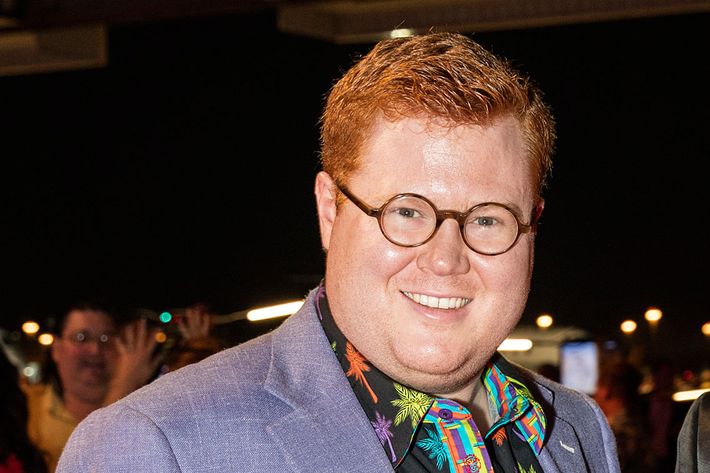
Should that rich slob, just because he's rolling in inherited money,  have more right to higher web speeds (to sell his stupid rich man shirts)  because he can pay for them? Hell no!

 According to Pai (ibid.):

"To me, markets and market -oriented policies have delivered far more value to the consumer than pre-emptive regulation ever has."


If Pai's arguments were really sound why not first do all he and the FCC can to make all net speeds much higher as opposed to "comparable to Estonia" as John Oliver joked in his piece.  The reason is that Pai and his cronies want to slow net speeds down even more for the rest of us so that private entities, that can pay a lot more, get preferential treatment in the form of much greater speed, efficiency.

What about winners and losers in the coming debacle?

After the FCC released its plan in late November, well-known telecom and media analysts Craig Moffett and Michael Nathanson wrote in a note to investors that the FCC plan dismantles “virtually all of the important tenets of net neutrality itself.”

That could result in phone and cable companies forcing people to pay more to do what they want online. The technology community, meanwhile, fears that additional online tolls could hurt startups who can’t afford to pay them — and, over the long term, diminish innovation.

Losers then will almost certainly include most millennials who consume their sports, news, entertainment via online streaming. They can expect speeds to slow to a snail's pace unless they pay more. Also affected will be those who do frequent youtube spots. With no net neutrality they will be relegated to the slow lane and take hours to upload even a five or ten minute video.   In 2007, for example, the Associated Press found Comcast was blocking or throttling some file-sharing. AT&T blocked Skype and other internet calling services on the iPhone until 2009. They also aren’t backing away from subtler forms of discrimination that favor their own services.

Of course, the deep pockets of Google, Netflix, Amazon may well be sufficient - provided their share prices remain high - to pay off ISPs to make sure consumers can access our service.

A far more likely target for loss is free speech.With this FCC ruling, corporations will have control over what content citizens can access on the internet. It could be as simple as Comcast blocking websites with negative comments on their service. Or it could be as sinister as an ISP blocking access to political content, news and writing that it opposes. Just think of it! Much of the content on this blog is highly controversial, for example the strong anti-Trump stance, and also to a degree the anti-conservative stance.

If you are a proponent of every American’s right to free speech, this should be frightening to the core. No company or corporation should be able to control what information we can consume, with a few exceptions, e.g. bomb- making manuals put out by terrorists. But no interested reader should be denied anti-Trump material such as often appears on this blog.

ISPs like Comcast have said they would never take it this far. But why do they even need the option? When Comcast is your only choice, what prevents them from extracting every penny possible from you and the online businesses that constantly inundate our lives?

This is exactly why many of us inveighed against the 1996 Telecommunications Act.  Writing in his book, The Problem of the Media, Robert McChesney had this to say (p. 51);

"The corruption in media policy making culminated in the passage of the 1996 Telecommunications Act, arguably one of the most important pieces of U.S. legislation. The law rewrote the regulatory regime for radio, television, cable television, and satellite communication - indeed, all of electronic communication including the internet.


The operating premise of the law was that the new communications technologies - combined with increased appreciation for the genius of the market- rendered the traditional regulatory market moot.

The solution therefore was to lift regulations and ownership restrictions from commercial media and communication companies, and allow competition in the marketplace to develop, and reduce the government's role to that of protecting private property.

There was virtually no dissent whatsoever to this legislation from either party, the law sailed through both houses of congress, and was signed by a jubilant President Clinton in February, 1996. Corporate CEOs regarded it as their "Magna Carta"."


The preceding  lesson from McChesney ought to be a no-brainer for us now: not to be fooled again by the "deregulation is good for ya" banter. Fool us once, shame on them, fool us twice, shame on US.


So far, there have been hundreds of public protests against Pai’s plan and more than 1 million calls to Congress through a pro-net neutrality coalition’s site. Smaller tech websites such as Reddit, Kickstarter and Mozilla put dramatic overlays on their sites Tuesday in support of net neutrality. Twitter on Wednesday was promoting #NetNeutrality as a trending topic. Other big tech companies were more muted in their support.

Public-interest groups Free Press and Public Knowledge are already promising to go after Pai’s rules in the courts. There may also be attempts to legislate net neutrality rules, which the telecom industry supports. Sen. John Thune, a South Dakota Republican, on Tuesday called for “bipartisan legislation” on net neutrality that would “enshrine protections for consumers with the backing of law.”

See also:

http://www.smirkingchimp.com/thread/david-morris/76842/to-save-the-internet-we-must-own-the-networks

Excerpt:

"Pai is dead wrong that this flurry of activity has been done to advance the public interest. Indeed, as one might expect from a man who once worked for telecom giant Verizon, Pai has directed an unprecedented abdication by the FCC of its responsibility to protect the public welfare. ...The Electronic Frontier Foundation (EFF), the oldest organization defending civil liberties in a digital age, warns that allowing ISPs to monitor and manipulate data makes the web more vulnerable to attacks....

Adding insult to injury, Pai’s FCC also halted enforcement of a rule demanding Internet providers “take reasonable measures to protect customer (personal information) from unauthorized use, disclosure or access."

And:

 http://www.smirkingchimp.com/thread/jacob-sugarman/76774/is-fcc-chairman-ajit-pai-a-closeted-alt-right-sympathizer

Saturday, May 20, 2017

Net Neutrality On The Chopping Block - Thanks To Another Trump Toady

Image result for AjitPai protest images
Protesters outside Ajit Pai's home, for net neutrality and against his scrapping of Title II regs.

Two weeks ago, comedian John Oliver delivered a superb explanation of 'Title I' and 'Title II' regs in respect to the internet and how assorted spinners sought to confuse the public on net neutrality. Oliver argued that Title II regulations are designed to protect the net,  i.e.  barricade it against the sole use of private interests.

Those who missed the segment can watch it at this link:

https://www.youtube.com/watch?v=fpbOEoRrHyU

 
Oliver argued the net in its current form is not broken, while noting the FCC was pushing for a 'two tier' system.  Killing net neutrality would allow private companies to go into the fast lane leaving everyone else in the slow line. To get your streaming movies or shows then might take twice as long as it does now, while higher paying corporate entities - like Comcast - speed their ads through with ease. To refresh memories, the Obama FCC - to preserve net neutrality - ceased treating the internet as an unregulated information service- instead reclassifying it as a "telecommunications service". Thereby the FCC could assert authority to regulate the net as a utility under Title II of the Communications Act of 1934.

Oliver was so energized at the prospect of the new FCC chairman (Ajit Pai) overturning the Obama FCC rules that he provided viewers with a rapid link to enter comments at the FCC - supposedly seeking them for 120 days: www.gofccyourself.com. 

This latest influx of viewer comments came quicker than 2 years ago, adding about 150,000 in a little more than a day . But it appears the FCC Trumpazoids anticipated it and created a Box.com account for bulk comment filings. The effect has been that commenters' requests have been getting blocked or tied up by an automated attack.  It seems that barely any have made it through, but we're expected to believe this change was made to "better handle traffic than last time".

Now we know why. According to a story yesterday in the WSJ Business & Finance section (p. B1) it is clear the FCC plans to "chip away at net neutrality". As reported, the FCC on Thursday "approved a plan to begin rolling back Obama era net neutrality rules".  This was accomplished by virtue of the 2 Repukes on the FCC panel overriding opposition from the lone Democrat to push this perfidy through.

Led by Trump  toady Ajit Pai, the FCC is now set to spend the  coming months drafting new rules that, if implemented, will slow down the net considerably for any who use DL'ing, including streaming of videos (including for Netflix and Amazon services).  Pai, like other Trump -appointed hacks (Tom Price at HHS, out to destroy Medicare, Scott Pruitt at EPA, out to destroy that agency or weaken it to the point of uselessness) is convinced the Obama era rules adopted in 2015 have "harmed the internet" by retarding investment in broad band infrastructure. 

In other words net neutrality is a no-no because it represents the continuation of "heavy handed regulation which will chill investment in a service increasingly critical to life in American society".

According to Pai, mastering the lingo of Wall Street speak (WSJ, today, p. A11), the small ISPs are being left out of the market because they can't compete with the big boys. Pai claimed he "heard from 19 small, government -owned, municipal broadband providers" who insisted that Title II regs stood in the way of their further investment. In effect, depriving hundreds of thousands living in those municipalities of accessing new services and the small ISPs from deepening their networks.

In Pai's mind the basic error of too many on the left is thinking "there is a dichotomy between the consumer and the market". No, there isn't. It's all in our imaginations - or our paranoid ideations- take you pick. According to Pai (ibid., today):

"To me, markets and market -oriented policies have delivered far more value to the consumer than pre-emptive regulation ever has."

It appears then that Pai like his FCC R-commissioners, is ignorant or oblivious to the lessons of the 1996 Telecommunications Act.  That also was promised to us as the be-all 'elixir' to finally get our cable TV rates down because of increased market competition. Instead, after a few years we found (n Maryland) competition diminished and less resourceful companies moved out allowing Comcast to charge whatever it wanted.  People were furious because they'd been sold the "de-regulated bait and switch".

If Pai's arguments were really sound why not first do all he and the FCC can to make all net speeds much higher as opposed to "comparable to Estonia" as Oliver joked in his piece.  The reason is that Pai and his cronies want to slow net speeds down even more for the rest of us so that private entities, that can pay a lot more, get preferential treatment in the form of much greater speed, efficiency.

Writing in his book, The Problem of the Media, Robert McChesney had this to say (p. 51);

"The corruption in media policy making culminated in the passage of the 1996 Telecommunications Act, arguably one of the most important pieces of U.S. legislation. The law rewrote the regulatory regime for radio, television, cable television, and satellite communication - indeed, all of electronic communication including the internet.

The operating premise of the law was that the new communications technologies - combined with increased appreciation for the genius of the market- rendered the traditional regulatory market moot.

The solution therefore was to lift regulations and ownership restrictions from commercial media and communication companies, and allow competition in the marketplace to develop, and reduce the government's role to that of protecting private property.

There was virtually no dissent whatsoever to this legislation from either party, the law sailed through both houses of congress, and was signed by a jubilant President Clinton in February, 1996. Corporate CEOs regarded it as their "Magna Carta"."


The preceding  lesson from McChesney ought to be a no-brainer for us now: not to be fooled again by the "deregulation is good for ya" banter. Fool us once, shame on them, fool us twice, shame on US.

See also:

http://www.smirkingchimp.com/thread/paul-rogat-loeb/72909/how-the-christian-coalition-and-moveon-saved-internet-neutrality-and-why-we-need-to-save-it-again
 

Thursday, November 20, 2014

Net Neutrality: A Case of Free Speech vs. Money Speech

I don't believe any blogger or ordinary person that uses the net frequently is unaware of the consequences if net neutrality is somehow derailed, despite President Obama's recent statement praising an even playing field. But, as with most arenas in our declining land, the major  Neoliberal moguls detest little guys having any say equal to their own- so hope to buy their way to faster internet speeds at the expense of the rest of us.

If I was unable to get my blog up in an expeditious and timely manner, despite a particular topic (say quantum statistics) that may only be read by 10 people - believe me I wouldn't be doing this much longer. The headaches simply wouldn't be worth it. I do it now because I don't have to pay higher than normal costs to get my material published - whether educational or political opinion.

But that may not last, especially as it really comes down to the principle of free speech, the ability of people to speak out on any issues and not be censored or impeded, versus monied speech- which currently inundates and corrupts our political system. In the case of the latter, money can buy whatever it wants and currently dwarfs citizen speech in the political domain. This, of course, is why money can't be considered speech at all. But don't tell the ISP providers that and others that want to take advantage of higher net speeds. If they could slow contentious bloggers to a crawl, believe me they'd do it in a heartbeat.

And if you don't believe this pertains to you, say as a FOX watcher, think again! As has already been noted the scenario of zero net neutrality could allow Comcast (which owns MSNBC) for example, to slow down access to the FOX News site simply because it wishes to limit its competitor. ('Whose Internet Is It?', TIME, Nov. 17, p. 14).

Now, while it is true that the FCC in May did propose new rules that prohibit ISPs from blocking or slowing legal Internet traffic, it did not ban paid prioritization - which to me is a back door means to undermine net neutrality. This "paid prioritization"   means that companies can deliver their particular content faster to their customers for specific paid fees. In other words, the companies gain a technical advantage over the rest of us.

Some deluded citizens see no problem with this, as the case of a letter writer in yesterday's Denver Post, who bawled "There is another urgent need for postal neutrality! Why should my package get there faster than anyone else's just because I can pay more."  But what the meat head fails to grasp is that net speech is not in the same category as package delivery by a business like Fed-Ex, UPS or the USPS. (Which is why the only rational resolution may be to somehow resolve the net into business and speech enclaves - and have net neutrality in the latter and paid prioritization in the former.)  This may be a difficult technological problem, but I don't believe it's insuperable.

If it had been feasible then there wouldn't have been the public outcry in the wake of the FCC's proposed rules which preserved the fees ISPs collect from big content producers like Netflix. They pay to connect directly to the back end of their networks and reach customers more quickly.  When ordinary folks learned of that, nearly 4 million wrote to the FCC to complain.(Ibid.)

Comcast and others claim back end connections have nothing to do with net neutrality, but clearly if the business component of the net is gaining speed advantage, it does. Alas, the FCC's Tom Wheeler also seems to believe paid prioritization over the last mile of broad band ought not be considered a fast lane, though in principle it is.  Thus, it appears the definitions are being obfuscated to disinform the communication landscape - as most tech companies like Google and Facebook don't agree.

Again, the solution appears to be arriving at the ability to separate the net into distinct enclaves - one for speech, the other strictly business. However, this likely wouldn't be remotely feasible until the first real quantum computers come online - and who knows when that will be? Recall that quantum computers use qubits, superpositions of 1s and 0s, as opposed to either one binary bit or the other to code information.

Until then, the only reasonable solution - it seems to me - is for the FCC to propose new rules and reclassify broadband under Title II of the Communications Act which would give the FCC authority to fully regulate broadband. Of course,  the big ISPs will surely oppose this but most savvy internet lawyers are clear that this would be the only way the FCC can have the legal authority to withstand Big Money court challenges.

Yes, in the end it's about free speech vs. money speech, especially as 80 percent of Americans (according to the FCC's Wheeler) with high speed broad band have access to only once choice of ISP. A travesty that was forseeable after the Telecommunications Act was passed in 1996. The long and short of it is the lack of ISP competition means most Americans are hostage to a single ISP. That means any back end moves or paid prioritization effectively detract from free speech.

We can't let this happen no matter how much the Neoliberal free marketeers or their political lackeys scream and bawl.


Tuesday, March 11, 2014

Be A TV Cord Cutter - And Lose Your Net Connection Speed!

Increasingly in the U.S., people are becoming television cord cutters. Aware of how much time can be wasted while plopped on couches watching the tube, and how many stations of a typical cable setup are effectively useless - because they aren't watched at all  - citizens are increasingly 'cutting the cord' and doing more constructive things with their time such as reading books (or books on nooks), going for walks, or otherwise sensibly using time.

Our long time friend 'Nanette' finally got tired of all the stations she never watched on her Comcast lineup, and so decided to 'cut the cord' to one entire subset of them about 4 weeks ago. Well, who told her to do that? Within a day her Comcast-packaged net connection speed had slowed to a literal crawl and she had to wait better parts of an hour for a download, or to upload family photos, etc.  She had, unwittingly become a victim of  collateral damage from Comcast's peculiar types of service contract.

The set up is called 'bundling' and the deliberate excising of unwatched channels, or just plain cutting the tube out altogether, is called 'unbundling'.  The dirty little secret that more and more folks like Nanette are finding out is that there's a price to be paid for any unbundling.  One observer of all this, Craig Aaron, president of the consumer advocacy group Free Press, has put it this way:

"In order for you to get content you like, you're going to be pushed to pay the cable bill too."

This is already evident if one takes the time to peruse Comcast's current rate structure (and bear in mind after the Comcast-Time-Warner merger is likely approved, this practice will become even more widespread).  Thus, as of today, the cheapest internet service - and the one a cord-cutting household might select- goes for $40 a month the first year. It offers download speeds of up to 25 Mbps, which means it's fast enough to stream 2 or 3 videos simultaneously.

The perverse twist is that Comcast's cheapest TV plus internet plan goes for $50 a month the first year - or just $10 more than the cord cutter's plan. Thus, subscribers to the bundled plan get the same streaming speed as the internet only plan, as well as basic TV service that offers a handful of local channels.  In addition, Comcast throws in its service for watching TV shows on your mobile devices.  Even more enticingly, the plan includes access to HBO and its streaming service  HBO Go - which unlike Netflix and Hulu, isn't available to cord cutters. (Take heed all you 'True Detective' fans!)

Also to be noted, is that Comcast warns prices can vary according to location, so you may actually pay more than the quoted price.  The bottom line is that in the Comcast universe, cutting the cord doesn't save you money and you actually end up in an inferior position in terms of overall media access- than if you'd just kept the TV. Comcast has carefully set up the pricing to get you whether you watch shows the old-fashioned way (on the boob tube, fed with cable) or via Netflix or on your iPad.

In either case, you're likely paying hundreds of dollars a year to maintain connections via the web to the outside world, a cost that'll likely soon go up if the Comcast $45b merger is approved. (Sen. Al Franken appeared yesterday on CBS Early show vowing to try to stop it, but let's get real - the odds of that are slim and none.) 

Just more evidence on how the Neoliberal business model operates: the customer (or citizen) can never come out ahead because there will always be in place offsets to neutralize gains, so you regress to where you were or even further behind. Ask all the bosses that keep wages artificially low as the CEOs get fat off your surplus labor! Then they want you to go into debt to support a low aggregate demand economy!

Sunday, December 1, 2013

No! No Cell Phones on Planes!

Back in July, 2009, en route to my dad's funeral, traveling from Colorado Springs to Atlanta at 7 a.m., I was in no mood for babble after boarding. I just wanted to be immersed in my own thoughts and the occasional music piped into my earphones. I was fortunate to be seated next to two Delta air hostesses (both in their 30s) en route back to their hub in Atlanta. They were perfect seat mates for this sort of sympathy travel: they spoke softly to each other, watched the in-flight movie and let me to my own contemplation until about a half hour prior to landing.  Then the young woman seated next to me asked if I was going on holiday. I replied, 'No, headed for my dad's funeral in Port Charlotte, Florida'. This then spawned a longer conversation about his life, after she expressed condolences. Also, we briefly got into my own interests, that I'd just released a new book etc.

Basic point? No air captive wants to be hear babble unless it's: a) welcome, b) at the right time, and c)  is appropriate to the context. Aside from screaming bratskies on planes, one of the worst experiences the contemporary air traveler can have is to be seated adjacent to a narcissistic endless yapper who doesn't know when to call it quits. Fortunately, my encounters with such bozos are infrequent, given my wife and myself most often travel together.

Now, alas, with the FCC prepared to let airlines permit cell phone use during travel, we may be looking at the advent at the endless babbler  contaminating limited air space with noise pollution. Never mind s/he may not be talking to you. Merrill Markoe ('Shut Up and Fly!', TIME, December 9, p. 23) points out the problem eloquently:

"If seatmates start to babble to you, revealing themselves to be primary narcissists so enchanted by the sound of their own chatter that they'll keep talking even when they're out of topics - a nicely executed icy glare will  often ice them into silence....

Once cell phone calls are permitted, the FCC will be offering these people a behavioral pass. If their fellow passengers shut them down they can turn to their cell phones instead. The people on the receiving end of their calls may not even be paying attention. They might be playing video games and going 'Mmm...Mmm.....hmmm'

Meanwhile, the poor beleaguered seatmate remains stuck, listening to these grating narratives being repeated.."

This is spot-on and calls into scrutiny an observation I've made concerning cell phones, which is to say that once a person gets one he believes he's been catapulted into automatic big shot status. He may not be a Fortune 500 CEO but hey, the cell confers power and when he pulls it out he can assume the same power vibe as the CEO using his to demand his cubed vassals take their marching orders.  Thus, the mere ownership of one almost inevitably incites its use and generally this becomes overuse for any stupid reason whatsoever. In this sense, comedian Louis CK was absolutely right when he provoked angst by noting it's merely one more device to keep people thinking they're "doing something"  - when they aren't doing diddly or squat. (Obviously, emergency situations are different.)

Markoe interjects this on noting that the typical response will be "People need their cell phones now!" They "can't expect to exist hours without them!"   Which is balderdash and plays into Louis CK's point that people without a life (a real life) merely employ them to try to escape their own sense of isolation, loneliness. In the olden days, back in the 60s, people read books when on airplanes - but evidently this is no longer "cool". Now,  one must be seen instead holding a stupid little device in his hand and blabbing away to some poor forlorn fool who probably has an actual life and things to do.

Am I a curmudgeon? Well, ok, I do have curmudgeonly tendencies since having lived nearly seven decades I've seen way too much bullshit, and PR crappola that is exploited when people wish to avoid hard truths. It's easier for too many to live in unreality than reality. But consider this: unless you are in Business Class, flying has become increasingly god-awful. There's less and less room between the seats (typical seat widths are now 17-17.5" compared to 22" in the 60s),  and the pitch of seats is now so restricted you can't  lean backward without asking permission of the guy behind you. Meanwhile, the food is like warmed over kibbles, seat interspaces are like small garbage dumps, and any real food (at least closer approximations) costs extra.  See also: http://brane-space.blogspot.com/2013/07/yes-flying-was-really-much-better-in-60s.html

Now, given this, why in hell would any sane person wish to add over-caffeinated road warriors - jabbering away like pseudo big shots - to this already foul environment?

At least the FCC chairman, Tom Wheeler (and his 4 commission cohorts) only issue rule change proposals, they won't be enforcing any. Thus, each airline will get to decide whether it wants to allow passengers to make cell phone calls. Already Delta, after taking an online passenger poll, has found 70% absolutely do not want it. In a statement issued 2 weeks ago Delta said: 'The overwhelming sentiment among our customers is that cell phones can only make their flying experience worse'.

Exactly! But make no mistake other airlines - less classy and less attendant to passengers' wishes - will seek to exploit this as an opportunity to boost profits. In this case, phone companies would charge you extra for the calls made in flight and airlines would get a portion of those fees.  And make no mistake that airlines will want a piece of the action, because - if they accept cell phone calls- they'll have to install telecom equipment to make calls possible. And that won't be cheap.

Other suggestions have been made that are reasonable and ought to strike a balance. One of these is that airlines ought to ban use of cells for any flights 5 hours or less. This is short enough so that anyone who needs to communicate should be able to do so through email or text message just by connecting to the in-flight Wi-Fi service.

On longer flights, airlines could install sound proof phone booths, perhaps about half the size of the airline rest rooms. Such a move would satisfy both the hyper-connected, wannabe big shot traveler- who thinks he's too important to ever be out of reach - and the rest of us who just want to reach our destinations without going ape shit in the cabin and being arrested as "domestic terrorists" for strangling a cell blabber in his seat.

Let's hope other airlines besides Delta see the light, and look to enhancing their passengers' flight experience (or at least not making it worse). But I wouldn't make book on it!